

I was cruising down the highway when that familiar, sinking feeling hit me—the check engine light flickered on. I spent the rest of the drive obsessing over every little noise, wondering if I needed an emergency oil change or if my catalytic converter was about to give up the ghost. But then, the next morning, I turned the key and… nothing. The light was gone. I felt like I’d just dodged a massive financial bullet. I chose to believe my car had simply fixed itself and went about my life. That was a huge mistake that ended up costing me hundreds more than it should have. Trust me, I’ve been there, and ignoring a self-extinguishing light is a gamble you usually lose. Today, we’re going to talk about why your car is playing mind games with you and how decoding vehicle diagnostics can save your engine before the light comes back for good.
The Vanishing Act That Fools Every Car Owner
When your check engine light turns off, it’s rarely because the problem actually went away. Most modern cars operate on what engineers call drive cycles. If your car’s computer detects a hiccup—maybe a loose gas cap or a temporary sensor fault—it triggers the light. However, if the computer runs the same test a few more times and the fault doesn’t happen again, it decides the coast is clear and hides the warning. I remember early in my DIY days, I thought my car was just being moody. I didn’t realize that how advanced vehicle diagnostics prevent costly breakdowns starts with understanding that the computer never forgets. Even when the light is dark, a history code is likely sitting there waiting to be read. According to the Environmental Protection Agency (EPA), the OBD-II system is specifically designed to store these intermittent faults to ensure long-term emissions compliance, meaning that ghost problem is still very much real. It’s all part of the complex dance of vehicle diagnostics explained for the average driver.
Is This Just a Lucky Break or a Looming Disaster?
It is incredibly tempting to just breathe a sigh of relief and never think about it again. But here is the reality: an intermittent fault is usually just a warning shot. For instance, you might see the light go off because the weather changed or the engine reached a specific temperature. I once ignored a light that turned itself off, only to find out later that why your scanner says p0420 but the converter is actually fine was exactly the kind of nuance I should have been looking for. By the time I finally checked it, a simple sensor fix had turned into a much larger repair. If you want to keep your car on the road longer, you have to treat the off light with as much respect as the on light. Have you ever had your car heal itself right before an inspection, only for the light to pop back on the moment you left the shop? I want to hear about it, because that frustration is exactly why we need to dig deeper into these auto repair hacks.
Grab a Scanner Before the Light Returns
If you want to stop guessing and start fixing, you need to treat your car like a patient in an ICU. A doctor doesn’t just look at a patient and guess their internal temperature; they use tools. To get the truth, you must plug in an OBD-II scanner. Think of this tool as a translator that turns your car’s electronic whispers into plain English. Even if that dashboard light is currently dark, the Engine Control Unit (ECU) usually keeps a log of what happened. I’ve seen far too many people wait for the light to come back on permanently before taking action, but vehicle diagnostics explained for the proactive owner means scanning as soon as the first flicker occurs. You can find basic scanners for the price of a tank of gas, and they are the single best investment for anyone interested in top auto repair tips to extend your vehicles lifespan.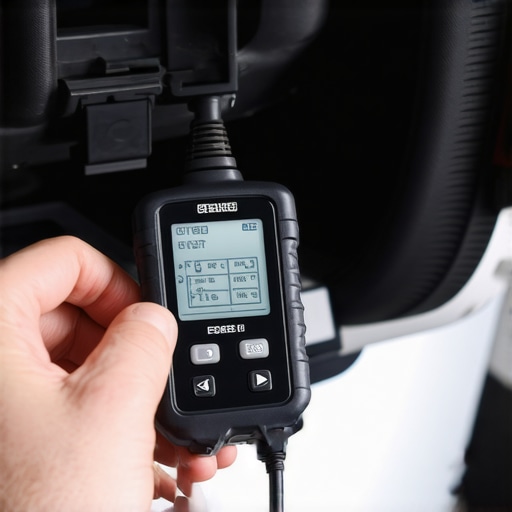
Hunt Down Ghost Codes in Your ECU Memory
Once you plug that scanner in, don’t just look for active codes. You are looking for History Codes or Pending Codes. A pending code is the car’s way of saying, ‘I saw something weird, but I’m not 100% sure it’s a disaster yet.’ If the computer sees the error twice in a row, the light stays on. If it doesn’t, it hides the evidence. I remember a time I was working on an old SUV that would occasionally stutter at stoplights. The light would flash for a second and then vanish. I ignored it for weeks until I finally scanned it and found a pending code for a crankshaft position sensor. Because I waited, that ‘ghost’ eventually became a ‘dead’ sensor that left me stranded in a grocery store parking lot. This is exactly how advanced vehicle diagnostics prevent costly breakdowns; they allow you to catch the component while it is failing, not after it has failed completely.
Stop Relying on Luck and Start Using Data
When you find a code—even a stored one—do not immediately rush out and buy the first part the internet suggests. For instance, a lean condition code (P0171) doesn’t always mean you need a new oxygen sensor; it could be a simple vacuum leak or a dirty mass airflow sensor. This is where decoding vehicle diagnostics becomes a bit of an art form. You have to look at the ‘freeze frame data,’ which shows exactly what the engine was doing the moment the code was triggered. Was the engine cold? Were you going 60 mph? This context is vital. Also, be incredibly wary of the temptation to save a few bucks on the fix. I once tried to solve an intermittent misfire by using a budget sensor I found online, but the truth about using cheap aftermarket sensors in your engine is that they often have different resistance levels that confuse the computer even more. Sometimes, a ‘vanished’ light is actually the result of a the ground wire problem that mimics a bad starter motor or other electrical gremlins that resolve themselves when the engine vibrations shift just right. Data doesn’t lie, but a dashboard light often does.One of the biggest traps in modern essential auto repair strategies for frequent drivers is the urge to replace whatever part is mentioned in the code description. I call this the ‘parts cannon.’ If you get a P0300 misfire code, do not just buy six new spark plugs immediately. It could be a vacuum leak, a failing fuel injector, or even a low-voltage battery. The National Institute for Automotive Service Excellence (ASE) emphasizes that diagnostic trouble codes are merely starting points for testing, not a definitive shopping list. In my years of turning wrenches, I have seen people spend $500 on sensors only to realize a $5 frayed wire was the culprit. Have you ever fallen into this trap? Let me know in the comments.
Don’t Fire the Parts Cannon Just Yet
In my experience, a sensor code is often just the messenger, not the criminal. For example, a code for an oxygen sensor often leads people to swap the sensor, when the real issue is an exhaust leak upstream. This is where decoding vehicle diagnostics requires a detective’s mindset, not just a credit card. If you want to avoid the ‘oops’ factor of wasting money on parts you do not need, you must verify the circuit before condemning the component.
Why Does Your Brake Pedal Feel Soft After a Perfect Pad Swap?
Most DIYers think a brake job is just ‘slapping on pads.’ You might have the best ceramic pads on the market, but if you ignored the hardware, you are set up for failure. I have found that brake service myths busted what really matters for safety usually revolve around the things you cannot see, like caliper slide pin lubrication or internal hose collapse.  If your pedal feels like a sponge even with new hardware, you likely missed the brake fluid color that means you need a flush immediately. Moisture-contaminated fluid compresses differently than pure hydraulic fluid, leading to that terrifying ‘sink’ at the stoplight. A massive trap to avoid is ignoring the caliper slide pins; if they are seized, your new pads will wear unevenly in weeks, effectively throwing your money away.
The Smallest Part You Are Probably Ignoring
Let us talk about the standard oil change. Everyone focuses on the brand of synthetic oil, but the real nuance is often at the bottom of the pan. I cannot tell you how many times I have seen a slow drip attributed to a ‘leaking oil pan’ when the owner simply forgot a fifty-cent gasket. Learning why you should never skip the crush washer on your drain plug is the difference between a clean driveway and a permanent stain. A used washer is compressed and hardened; it will not seal a second time. Cranking the bolt tighter to stop a leak only strips the threads, turning a twenty-minute job into a two-day disaster involving a tap-and-die set. When you dig into the details of maintenance, the success always lies in the hardware, not just the fluids. Stop relying on luck and start focusing on the small mechanical connections that keep your engine sealed and your brakes responsive.The real secret to longevity isn’t just about what you replace, but how you monitor the systems that are still working. If you’re serious about staying ahead of the curve, you need to graduate from a basic code reader to a digital multimeter. I personally use a high-quality digital multimeter because its accuracy when measuring millivolts is unparalleled for catching a parasitic draw before it kills your cells. I’ve found that how to find a parasitic battery drain with a basic multimeter is the most underrated skill in the DIY world. While everyone else is replacing batteries every two years, I’m hunting down the tiny electrical leaks that most people ignore until they are stranded.
How do I keep my high-mileage engine healthy forever?
The answer is simple: data-driven consistency. You shouldn’t just guess when a wheel bearing is going south; you should use a mechanic’s stethoscope or a non-contact infrared thermometer to check for heat differentials after a long drive. Learning how to identify which wheel bearing is actually failing by measuring the temperature of the hubs can save you from replacing the wrong side. This level of precision is exactly what separates a hobbyist from a pro. When you combine these top auto repair tips to extend your vehicles lifespan with high-quality fluids and a commitment to the ultimate guide to brake service for safety and performance, you aren’t just maintaining a car; you’re preserving an asset.  As we look forward, the trend is moving toward predictive diagnostics. We are already seeing the integration of AI-assisted scanning tools that don’t just give you a code but compare your car’s live data against millions of other vehicles to predict exactly when a component will fail. According to technical documentation from SAE International regarding the J2534 standard, the shift toward open-access programming is making it easier for us to perform dealership-level calibrations at home. This means the essential auto repair strategies for frequent drivers will soon involve more software updates than physical wrenching. I want you to try this right now: go out to your car with a multimeter and check the voltage drop across your battery terminals while the engine is off. If it’s below 12.4V, you’ve got work to do. Don’t wait for the click of death; be the master of your machine’s health.
Lessons Bought the Hard Way in the Garage
Over the years, I have realized that a car never actually heals itself; it just goes into remission. When that light flickers out, it is not a victory—it is a countdown. One of my biggest lightbulb moments was realizing that cheap sensors are a trap. I used to think I was being smart by saving money, but the headache of chasing a ghost code for a month taught me that OEM or high-quality equivalents are the only way to go. Another hard lesson? Always check your grounds. A loose wire can mimic a failing alternator or a bad starter, leading you down a very expensive rabbit hole. If you apply a few auto repair hacks like cleaning your battery terminals every season, you will be shocked at how many electronic glitches simply disappear.
My Field-Tested Gear for Serious DIYers
If you are tired of being at the mercy of a shop, you need a small but mighty toolkit. First, get a Bluetooth OBD-II scanner that links to your phone. It allows you to see live data streams while you drive, which is the gold standard for decoding vehicle diagnostics. Second, never underestimate a quality torque wrench. Guessing how tight a bolt is leads to snapped studs and leaking pans. Third, I always keep a bottle of brake cleaner and high-temp grease nearby; they are essential for following the ultimate guide to brake service for safety and performance correctly. Finally, bookmark a reliable repair database for your specific make and model. Having the factory specs for things like how to tell if your timing belt is about to snap is like having the teacher’s edition of a textbook.
#IMAGE_PLACEHOLDER_E#
Take Control of Your Machine’s Future
The transition from a passive driver to an active owner is one of the most rewarding shifts you can make. It is about more than just saving money; it is about the peace of mind that comes from knowing your vehicle is safe and reliable. By using these top auto repair tips to extend your vehicles lifespan, you turn your car from a liability into a well-oiled machine. Don’t wait for the next dashboard warning to start your journey into vehicle maintenance. Have you ever had a ghost problem in your car that seemed to vanish and then come back at the worst possible time? Let me know in the comments below!