
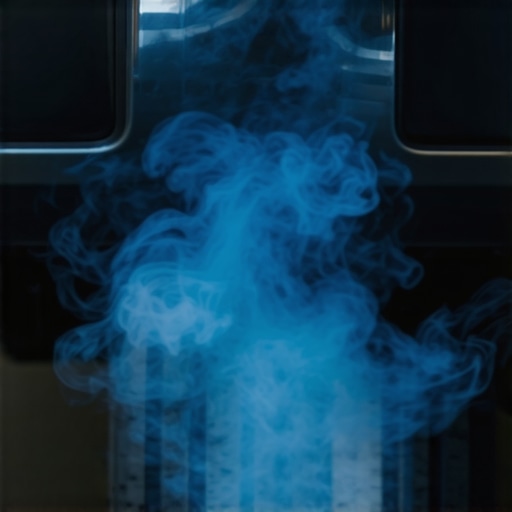
I’ll never forget the morning I turned the key in my old ’06 sedan and saw a thick, blue-tinted fog rolling past my driver’s side window. It wasn’t just a little steam from the cold air; it was a lingering, oily cloud that made my heart sink straight into my stomach. I stood there, coffee in hand, wondering if my car was about to become a very expensive lawn ornament. My biggest mistake? I told myself it was just ‘part of owning a high-mileage car’ and kept driving for three months. That bit of denial eventually turned a simple seal replacement into a catastrophic engine failure that drained my savings. I thought I was being thrifty by avoiding the shop, but I was actually just accelerating the funeral of my favorite daily driver.
When Your Morning Commute Starts with a Blue Cloud
Today, I want to help you avoid that same panic and the massive repair bill that follows. We’re going to look at exactly why your tailpipe is putting on a smoke show and, more importantly, whether you’re looking at a $20 fix or a $3,000 nightmare. Whether you’ve noticed that your car blows smoke only when you first start it or it’s a constant haze behind you, there’s always a reason for it. Usually, it comes down to oil getting where it shouldn’t be—inside the combustion chamber. When oil burns, it creates that distinct blue hue that every mechanic recognizes from a block away.
Have you ever seen that blue puff and just hoped it would go away on its own? I’ve been there, and I know how tempting it is to just turn up the radio and ignore the smell of burning oil. But the reality is that blue smoke is your car’s way of screaming for help. According to data from Consumer Reports, ignoring oil-related issues can lead to fouled spark plugs or a melted catalytic converter, turning a manageable job into a financial disaster that can cost thousands of dollars.
Is My Engine Actually Totaled Already?
The short answer is: not necessarily. If you catch it early, you might just be dealing with a clogged PCV valve or worn valve stem seals. However, if your engine oil is disappearing without a leak on the ground, that oil is being burned, and your engine components are taking the hit. Before you panic, it’s worth performing some vehicle diagnostics explained for the average driver to see if the fix is simpler than you think. Modern oil change innovations have actually made it easier to keep older engines running longer, but they can’t fix a mechanical hole in a piston ring or a cracked head. We’re going to walk through the diagnostics together so you can walk into the mechanic’s shop with confidence instead of a blank check. Don’t let a little smoke cloud your judgment; most of the time, knowledge is the best tool in your kit.
Start with the Engines Lungs
The very first thing you should do when you see blue smoke isn’t to call a tow truck; it is to check your PCV (Positive Crankcase Ventilation) valve. Think of this little plastic component as your engine’s lungs. Its job is to breathe out the pressure that builds up inside the crankcase. If it gets stuck closed, that pressure has nowhere to go and starts shoving oil past gaskets and into the combustion chamber. I once spent an entire Saturday tearing down an intake manifold on a project car because I was convinced a head gasket had failed, only to realize a $15 plastic valve was the culprit. It felt like trying to fix a leaky sink by replacing the entire house’s plumbing. Before you spend a dime on heavy repairs, look into these auto repair hacks that can save you from over-diagnosing a simple problem. 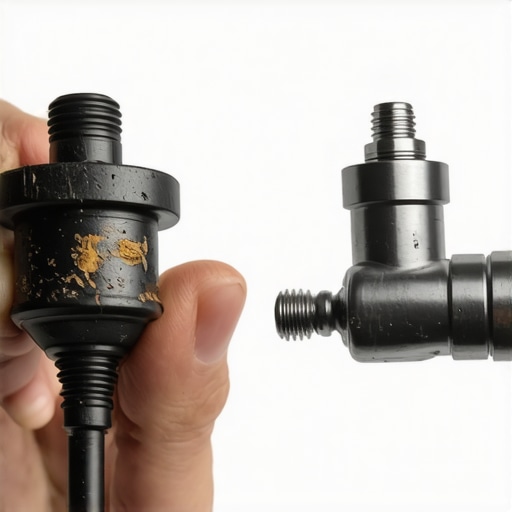
Watch the Tailpipe During a Cold Start
The timing of the smoke is your biggest clue. If you see a distinct puff of blue only when you first turn the key in the morning, you are likely dealing with tired valve stem seals. Imagine these seals as tiny umbrellas sitting on top of your engine’s valves. When the engine is off, gravity pulls oil down the valve stem, and it pools on top of the piston. When you fire it up, that pool vanishes in a sudden cloud of blue. This is a classic reason your car blows smoke only when you first start it. If the smoke stays consistent while you are driving, the problem is deeper—usually the piston rings. Think of rings like the rubber squeegees on a window; if they are worn, they leave ‘streaks’ of oil on the cylinder walls that get burned up during every stroke.
Pressure Tests Reveal Internal Damage
To confirm if your piston rings are truly the ghost in the machine, you need to perform a compression test. This is essentially taking your engine’s blood pressure. By measuring how well each cylinder holds air, you can pinpoint exactly where the seal is failing. This is one of the ways how advanced vehicle diagnostics prevent costly breakdowns by giving you a ‘yes or no’ answer before you start buying expensive parts. If the pressure is low, you have found the reason your engine oil is disappearing without a leak on your driveway.
Choose the Right Oil for High Mileage
Sometimes the fix isn’t a wrench at all—it’s the fluid you’re pouring into the reservoir. If your seals are just starting to weep, switching to a high-mileage oil can buy you significant time. These formulas contain seal conditioners that effectively ‘swell’ the rubber seals back to their original size. There is a lot of debate regarding the truth about synthetic oil vs conventional in older high-mileage cars, but for a car that’s already smoking, a high-quality high-mileage synthetic is often the best medicine to keep it on the road while you save up for a permanent mechanical fix.One of the biggest mistakes I see—and I’m guilty of this too—is the ‘Parts Cannon’ approach. You get a code for a lean condition, and you immediately buy a new oxygen sensor. But here is the nuance: sensors rarely lie, but they often get blamed for the messenger’s news. I’ve seen people replace $200 sensors when they actually had a vacuum leak they could have found with a $5 cigar. Before you buy anything, remember that decoding vehicle diagnostics is about understanding the ‘why,’ not just reading the ‘what.’ Often, the $20 sensor that usually fixes a rough idle is a lucky guess, not a strategy. Real expertise means testing the circuit, not just swapping the part. According to a report by the Equipment and Tool Institute (ETI), nearly one-third of ‘failed’ parts returned under warranty are actually perfectly functional—the mechanic or DIYer simply misdiagnosed the system. Have you ever fallen into this trap? Let me know in the comments.
Stop Chasing Sensors and Start Looking for the Root Cause
Another massive misconception involves your brakes. Many drivers believe that if they have thick pads, their stopping system is in peak condition. But I’ve seen why your brakes squeak even after you replaced the pads, and it usually isn’t the pad’s fault. It’s often a glazed rotor or a stuck caliper slide pin. If you’re following brake service myths busted, you’ll realize that the hardware and the lubrication are just as critical as the friction material itself. Ignoring the ‘oops’ factor of contaminated fluid can lead to a sinking pedal feeling that new pads simply won’t fix. Professional-grade brake service for safety and performance requires checking the entire hydraulic system, not just slapping on new ceramic blocks and calling it a day. 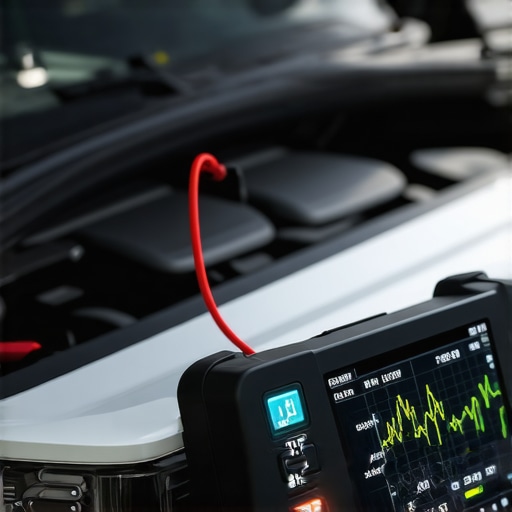
Why New Pads Don’t Always Mean Silent Stops
This brings us to the most debated topic in the garage: the oil change. Most people obsess over the brand of oil but buy the cheapest filter on the shelf. This is a fatal error. I’ve personally diagnosed the oil filter brand that causes low oil pressure lights because the internal bypass valve was so poorly made it failed within a week. If you notice why your engine makes a tapping noise only after an oil change, it might not be the oil weight at all—it could be a restrictive filter starving your top-end of lubrication during those critical first seconds of startup.
Could Your Cheap Oil Filter Be Starving Your Engine?
Beyond the filter, there is also the synthetic oil myth that costs you fifty dollars every visit; high-mileage cars need specific additives, but you don’t always need the most expensive ‘racing’ blend to get the job done. The real secret is consistency and component quality. When you dive into how advanced vehicle diagnostics prevent costly breakdowns, you see that the best mechanics look for patterns, not just single points of failure. Whether it is a blue cloud or a squealing stop, the goal is to treat the disease, not just the symptom. Your car will thank you with another 100,000 miles of service.Building a bulletproof maintenance routine isn’t about having a massive toolbox; it’s about having the right data. I used to rely on a cheap code reader that only gave me cryptic numbers, but I finally upgraded to a bidirectional scan tool. This was a game-changer because it allows me to actually ‘talk’ back to the car. If I suspect a fuel pump is failing, I don’t have to crawl under the tank with a multimeter immediately; I can command the pump to cycle through the software. This is exactly how advanced vehicle diagnostics prevent costly breakdowns by cutting out the expensive guesswork that leads to the frustration of replacing parts that aren’t actually broken.
Invest in a Scan Tool That Actually Talks Back
I personally recommend an Autel or Launch unit for anyone serious about their garage work because they handle everything from electronic parking brake releases to steering angle resets. If you are performing your own brake service for safety and performance, you will find that many modern vehicles won’t even let you compress the rear calipers without a digital command. This shift in technology means decoding vehicle diagnostics is no longer a luxury; it is the modern equivalent of checking your dipstick. 
Stop Guessing the Health of Your Fluids
We spend a lot of time talking about oil, but brake fluid is often the silent killer of master cylinders. I started using a dedicated moisture pen tester every six months during my routine checks. Brake fluid is hygroscopic, meaning it literally pulls moisture out of the air. Once that water content hits three percent, your boiling point drops significantly, and your internal metal components start to corrode from the inside out. You should always watch for the brake fluid color that means you need a flush immediately, but a digital tester provides the hard data your eyes simply cannot see.
How Do I Keep My Engine Happy for the Long Haul?
To truly push a vehicle past the 200,000-mile mark, you have to go beyond the generic owner’s manual. I highly recommend sending an oil sample to a specialist lab like Blackstone Laboratories. For a small fee, they provide a spectral analysis of your used oil, showing you the exact parts-per-million of wear metals like copper and lead. This level of detail is the gold standard for top auto repair tips to extend your vehicles lifespan. According to niche technical research from SAE International (Paper 2003-01-3119), even minor changes in additive chemistry and soot loading can significantly impact engine longevity under high-load conditions.
The Shift Toward Predictive Maintenance
Looking ahead, I see the world of DIY repairs moving toward integrated telematics. We are entering an era where your car will likely email you a health report or a predictive failure warning before a light ever flashes on your dashboard. For now, the best strategy remains being proactive with the tools we have. Try this advanced tip: next time you change your oil, use a pipe cutter to open the old filter and inspect the pleats. If you see shiny metal flakes, you have caught a major mechanical problem before it left you stranded. These types of auto repair hacks are what separate the average owners from the enthusiasts who keep their cars on the road forever. If you are serious about your car’s health, grab a moisture tester for your brake fluid this weekend and see what is actually happening inside your lines.
Lessons From the Oil Stains on My Driveway
Looking back at years of wrenching, the most important thing I’ve learned is that denial is the most expensive tool in your garage. If you see blue smoke, don’t wait for a total breakdown to take action. Applying essential auto repair strategies for frequent drivers means treating every symptom as a clue rather than a nuisance. I’ve realized that most ‘catastrophic’ failures were actually just tiny warnings that got ignored for too long.
Another vital lesson? Stop throwing parts at problems. It’s tempting to swap sensors when you’re frustrated, but taking the time to find a vacuum leak with a cigar and a piece of hose is much more satisfying and cheaper than a ‘guess-and-check’ approach. Finally, remember that your car is a collection of systems; a problem in one, like a clogged filter, can easily masquerade as a failure in another.
The Gear Every High-Mileage Driver Needs
If you’re serious about maintenance, you need more than just a socket set. I never go a month without using my digital brake fluid tester; knowing the brake fluid color that means you need a flush immediately is helpful, but seeing a 3% moisture reading is definitive proof. I also highly recommend keeping a bidirectional scan tool like an Autel unit in your trunk. It transforms you from a passive driver into an active troubleshooter who can command the car to test its own components.
Lastly, I can’t recommend Blackstone Laboratories enough for their oil analysis kits. They literally tell you if your engine is wearing out from the inside. When combined with checking to see how to tell if your mechanic actually changed the oil, you gain a level of transparency that most car owners never experience. These tools are the backbone of my personal maintenance routine.
Reclaim the Confidence in Your Daily Driver
Seeing smoke or hearing a rattle shouldn’t fill you with dread. It is simply your vehicle communicating its needs. By mastering these top auto repair tips to extend your vehicles lifespan, you turn a potential junk car into a reliable companion for years to come. You have the knowledge and the strategy; now you just need to pop the hood. Have you ever had a simple $20 fix save you from a major engine scare? Let me know in the comments below!