

I was cruising down the I-77, coffee in hand and the radio low, when I felt it. A rhythmic, unsettling pulse right against the sole of my right shoe. Here’s the kicker: I wasn’t even touching the brakes. My foot was hovering over the accelerator, yet the brake pedal was jittering like it had a mind of its own. It’s a terrifying sensation that makes your heart skip a beat. I remember thinking my wheels were about to fall off, or worse, the car was going to lock up at sixty miles per hour. That morning was a wake-up call that led me down a rabbit hole of decoding vehicle diagnostics to understand what my car was desperately trying to tell me.
The Time I Ignored the Shuddering and Paid the Price
Early in my DIY journey, I made a classic mistake. I felt a slight shudder and convinced myself it was just a patch of uneven asphalt. I kept driving for weeks, thinking I was being frugal by avoiding the shop. By the time I finally caved, a sticking caliper had toasted my rotor and ruined a brand-new set of pads. This is similar to that vibration at 65 mph that feels like an earthquake, where ignoring it only makes the repair bill grow. Today, I want to help you avoid that same pitfall. We are going to figure out why that pedal is dancing when it should be still, and how you can spot the difference between a tire issue and a failing ABS component.
Is This Mystery Vibration Really Going to Kill My Budget?
I know what you’re thinking. Every time a car makes a weird noise or vibration, it feels like your bank account is about to take a massive hit. But here is the good news: a vibrating pedal when you aren’t stopping often points to specific, identifiable culprits that don’t always require a second mortgage. According to the NHTSA, brake system failures are a leading factor in mechanical-related crashes, so ignoring this isn’t an option, but fixing it might be simpler than you fear. Sometimes, it’s as simple as understanding why your brake pedal vibrates when you stop on a hill or under specific load conditions. Have you ever experienced a vibration that seemed to disappear the moment you finally tapped the brakes? Let me know, because that specific symptom is a huge clue for what we’re tackling next.
Start with the Jack Stand Shuffle
To find out why the pedal is dancing while you are just cruising, you have to get the wheels off the ground. Think of this like a physical exam for your car. When you jack up the front end and spin the wheel by hand, it should rotate freely for at least two full turns. If it drags or stops immediately, that brake caliper is likely clamping down without being told to. This is a critical step in vehicle diagnostics explained for those who want to avoid being stranded. If the wheel spins but you feel a rhythmic catch or hear a scrape every half-turn, your rotor is warped enough to hit the pads even when they are retracted.
Feel for the Heat That Ruins Rotors
I once spent three hours looking for a vibration in my suspension, only to realize the driver-side front wheel was radiating heat like a pizza oven. I did not even have to touch it; the smell of burning friction material was enough. If you have been driving for twenty minutes and one wheel is significantly hotter than the rest, you have a sticking caliper. This constant friction causes the rotor to expand unevenly, leading to that shudder you feel in the pedal. This is often why your brakes squeak even though the pads are new—they are being toasted by a caliper that will not let go. 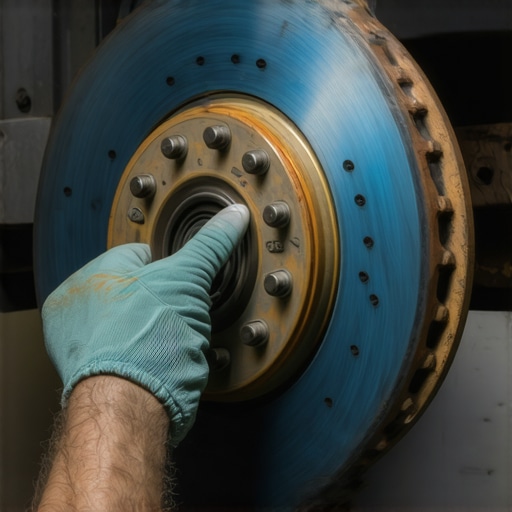
Spot the Difference Between a Bearing and a Brake
Not every pedal vibration is a brake issue, though. If you grab the wheel at the 12 and 6 o’clock positions and feel a click-clack movement, you are looking at a failing wheel bearing. However, if the vibration is only at high speeds, you might need to identify a bad CV joint before it leaves you stranded. A failing CV joint can send a shudder through the entire drivetrain that feels suspiciously like a brake pulse. During my early DIY days on an old ’04 sedan, I mistook a bad CV axle for a warped rotor. I replaced the brakes twice before I realized the axle was wobbling inside the hub.
Test the Slider Pins for Hidden Corrosion
The most common cheap fix involves the slider pins. These are the two bolts that allow the caliper to move back and forth as you apply pressure. If they get dry or rusty, the caliper gets stuck at an angle. To fix this, you do not always need expensive new parts. You can use some of the best auto repair hacks, like cleaning the pins with a wire brush and lubricating them with high-temperature silicone grease. It is a simple part of brake service for safety and performance that most shops skip during a budget pad slap. When the pins are frozen, the inner pad stays pressed against the rotor, creating that phantom vibration that disappears only when you actually apply the brakes and center the pressure.
Stop Blaming Warped Rotors for Everything
Most mechanics will tell you that a vibrating pedal always means your rotors are warped. In my years under the hood, I’ve found that true rotor warping—where the metal actually bends—is incredibly rare. What you are likely feeling is cementite formation or uneven pad transfer. When you get your brakes too hot and then come to a dead stop, a layer of friction material ‘welds’ itself to the rotor in one spot. This creates a microscopic high point that hits the pads every time the wheel spins. This is one of those brake service myths busted that can save you from replacing parts that just need a proper bed-in procedure. If you’ve ever replaced your rotors only to have the shake come back in three months, you’ve likely fallen into this trap. Have you ever fallen into this trap? Let me know in the comments.
Why the Wrong Torque Is Your Brake’s Worst Enemy
There is a specific ‘oops’ factor that ruins more DIY brake jobs than almost anything else: the over-aggressive use of an impact wrench. We’ve all seen it—the guy at the tire shop zipping on lug nuts until the compressor screams. This creates uneven clamping force across the hub. Over time, that uneven pressure causes the rotor to develop Disc Thickness Variation (DTV). It is a slow-motion disaster that often gets confused with a bad alignment or a tire rotation mistake. Always use a calibrated torque wrench in a star pattern. It takes an extra two minutes, but it ensures the rotor sits perfectly flat against the hub. 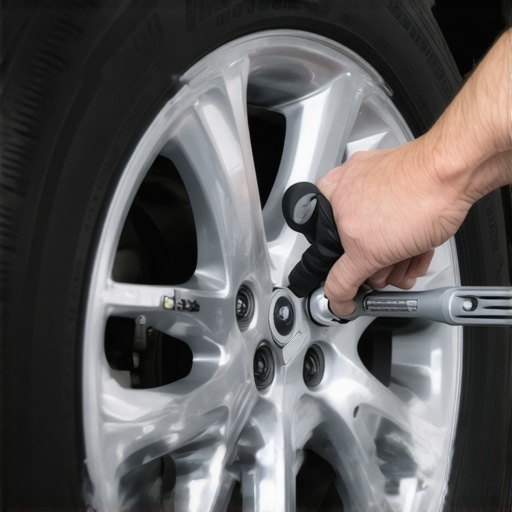
Can a Computer Glitch Cause a Physical Pedal Pulse?
You might be surprised to learn that a vibration in the pedal while cruising can be entirely electronic. According to research by SAE International, modern Anti-lock Braking Systems (ABS) are so sensitive that a cracked or dirty tone ring on a CV axle can send a false signal to the computer. The car thinks one wheel is slipping and starts rapidly pulsing the ABS pump, even though you haven’t touched the brake pedal. This is where how advanced vehicle diagnostics prevent costly breakdowns because you can’t see a ‘ghost’ ABS activation with just your eyes. You need to look at live data to see if a wheel speed sensor is dropping out. If you are chasing a vibration that feels ‘robotic’ and high-frequency, stop looking at the metal and start looking at the sensors. Utilizing some auto repair hacks like cleaning the magnetic sensor tips with a microfiber cloth can sometimes fix a thousand-dollar ‘vibration’ for free. Always remember that the ultimate goal of brake service for safety and performance is consistency, not just new parts.
The One Diagnostic Tool That Saved My Sanity
If you are tired of guessing which corner of the car is causing the vibration, you need to stop eyeballing your parts. I finally invested in a dial indicator with a magnetic base, and it changed everything. This tool allows you to measure lateral runout—the tiny side-to-side wobble of the rotor—down to the thousandth of an inch. While many DIYers just throw new parts at the problem, how advanced vehicle diagnostics prevent costly breakdowns is often just a matter of having the right data. According to technical documentation from Bendix Brakes, a runout of just 0.002 to 0.005 inches can lead to noticeable pedal pulsation. By using the dial indicator, I found out that my ‘warped’ rotor was actually sitting on a hub covered in a thin layer of rust. Five minutes with a wire brush saved me a hundred dollars in unnecessary parts. This is a prime example of auto repair hacks that rely on precision rather than a bigger wallet.
How Can I Keep My Braking System Smooth for the Long Haul?
Maintenance isn’t just about changing pads when they squeak; it is about managing the chemistry inside the lines. Brake fluid is hygroscopic, meaning it literally sucks moisture out of the air. Over time, that water lowers the boiling point of the fluid and corrodes your calipers from the inside out. I make it a point to perform a full flush every two years, regardless of mileage. If you want to get it right, the trick for a perfect brake bleed every single time involves using a pressure bleeder rather than the old ‘pump and hold’ method. It ensures no air bubbles are trapped in the ABS module, which is a key part of brake service for safety and performance. Consistently fresh fluid prevents the sticking pistons that cause the phantom vibrations we discussed earlier.
Don’t Ignore the Oil-Brake Connection
It sounds crazy, but your engine health affects your stopping power. Most modern cars use a vacuum booster to assist the brakes, and that vacuum often comes from the engine’s intake manifold. If your engine is struggling due to poor maintenance, your brake assist can feel inconsistent. I’ve seen cases where a rough idle caused by the $20 sensor that usually fixes a rough idle actually made the brake pedal feel ‘wooden’ or stiff at stoplights. Integrating essential auto repair strategies for frequent drivers means looking at the car as a single organism. Even something as simple as an oil change can be a diagnostic window; checking for leaks can alert you to a failing vacuum pump before you lose power steering or braking assistance. We are moving toward a world of ‘brake-by-wire’ systems, where the physical connection between your foot and the calipers is being replaced by sensors and actuators. In the next decade, decoding vehicle diagnostics will move from the mechanical to the purely digital, but for now, your hands-on maintenance is the best defense. This weekend, I challenge you to take one wheel off and check your slider pins for grease; it is the easiest way to extend your vehicle’s lifespan without spending a dime.
Hard Truths from a Decade of Greasy Knuckles
Looking back at that morning on I-77, I realize how much I did not know. Over the years, I have learned that a lot of what we consider “common knowledge” is actually holding us back. One of the biggest brake service myths busted is the idea that new parts are a cure-all. If you do not clean the hub face or grease the pins, you are just putting a Band-Aid on a problem. I have also learned that your ears and nose are sometimes better than a computer; the smell of hot friction or the click of a bearing tells the story long before a code pops up. Taking the time to do it right—using smart auto repair hacks like wire-brushing the hub surface—is what separates a job that lasts from one that fails in a month.
The Gear I Actually Use Every Saturday
If you are serious about ending the pedal pulse, you need more than a basic socket set. #IMAGE_PLACEHOLDER_E# I personally rely on these items to keep my ride smooth: First, an infrared thermometer to spot sticking calipers before they destroy your rotors. Second, a dial indicator for checking lateral runout, which is essential for how advanced vehicle diagnostics prevent costly breakdowns. Third, the trick for a perfect brake bleed every single time is a pressure bleeder; it makes the job a one-person task and ensures a rock-solid pedal. Finally, I never start a job without a model-specific service manual to verify torque specs, ensuring top auto repair tips to extend your vehicle’s lifespan stay at the center of my maintenance routine.
Take the Fear Out of the Garage
Working on your own stopping power can feel intimidating, but it should not be. Every time you pick up a wrench, you are building a relationship with your machine. By performing the ultimate guide to brake service for safety and performance on your own terms, you are gaining the peace of mind that comes with knowing exactly how your car works. Do not let a little vibration ruin your commute; master the brake service routine and enjoy the silence of a smooth road. Have you ever had a mystery vibration that felt like your car was possessed by a ghost? Let me know in the comments below!