
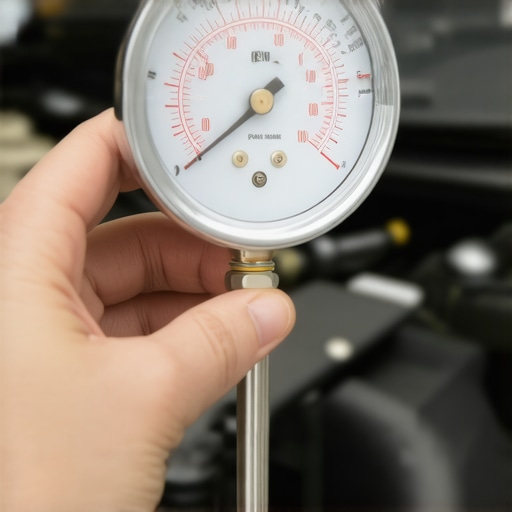
I remember pulling onto the I-77 last summer, flooring the gas to merge, and… nothing. My truck groaned like it was trying to breathe through a cocktail straw. It was embarrassing, frustrating, and honestly, a bit scary when a semi-truck is bearing down on your tailgate. I had already spent a weekend on essential auto repair strategies, swapping spark plugs and filters, but the power just wasn’t there. That was my ‘lightbulb moment’—I realized I was throwing parts at a problem I didn’t actually understand yet. It wasn’t an ignition issue; my engine was literally choking on its own breath.
Why Your Car Feels Like It’s Dragging an Anchor
The struggle with a failing exhaust system is that it often mimics a dozen other problems. You might think you have a fuel pump dying or a transmission that’s finally giving up the ghost. I even spent eighty bucks on a sensor I didn’t need because I fell for some bad advice online. If you’ve noticed the smell of rotten eggs or your engine stalls when you’re just trying to get through a green light, you’re likely dealing with a clogged ‘cat.’ A restricted catalytic converter creates backpressure that prevents fresh air and fuel from entering the cylinders. According to the exhaust experts at Walker Exhaust, even a small increase in backpressure can lead to a massive drop in engine efficiency and thermal stress. Today, I’m going to show you how to stop the guesswork and use a simple vacuum gauge to confirm the culprit before you spend a dime at a muffler shop. Have you ever felt like your car was suddenly down fifty horsepower for no apparent reason?
Is an old-school gauge really better than a fancy scanner?
Most folks assume that if the Check Engine light isn’t screaming at them, everything must be fine. That is a huge mistake I made early on. Modern advanced vehicle diagnostics are great, but they don’t always catch a physical blockage in the exhaust pipe until the damage is severe. A vacuum gauge is a mechanical truth-teller. It doesn’t care about software or sensors; it measures the actual ‘lung’ capacity of your engine. Using one is one of those auto repair hacks that old-timers swear by because it works every single time. It’s the most reliable way to tell if your catalytic converter is actually clogged without having to unbolt the entire exhaust system in your driveway. Let’s get into how to set this up so you can get your power back.
Hooking Up Your Mechanical Truth-Teller
To get started, you need to find a direct line into the engine’s ‘lungs.’ This means locating a vacuum port on the intake manifold. Don’t confuse this with a ported vacuum source on a throttle body; you want full manifold vacuum that stays strong at idle. If you aren’t sure where to plug in, you can often tee into the line going to the brake booster or the PCV valve. Think of this gauge as a stethoscope for your engine. While vehicle diagnostics explained in modern manuals often point you toward expensive scanners, this $20 tool gives you a live look at the physics happening inside the combustion chamber. I remember helping a neighbor who was convinced his fuel pump was dying. We hooked up the gauge, and the needle stayed rock steady at idle, but as soon as we gave it gas, the needle plummeted and stayed down. That was the moment he realized his fuel was fine, but his exhaust had nowhere to go. 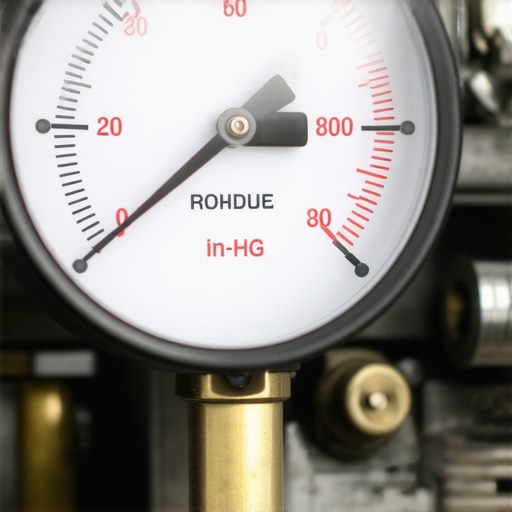
Read the Needle Like a Pro
Once you’re connected, start the engine and let it reach operating temperature. A healthy engine at sea level should pull a steady vacuum between 17 and 21 inches of mercury (in-Hg). If the needle is vibrating rapidly, you might actually be looking at a valvetrain issue, which is why decoding vehicle diagnostics accurately is so vital. To test for a clog, hold the engine speed steady at about 2,500 RPM. In a healthy system, the vacuum will drop for a split second and then return to nearly the same level it was at idle. However, if the needle starts to slowly sink toward zero while you hold the RPM steady, you’ve found your anchor. The engine is trying to pull in air, but the backpressure from the clogged exhaust is filling the manifold with spent gases, leaving no room for a fresh charge. It’s the same reason how a dirty engine air filter ruins your fuel economy—it’s all about restricted flow.
The Snap Throttle Test Secret
If the steady-state test is inconclusive, try the ‘snap throttle’ method. From an idle, quickly flick the throttle wide open and then let it shut immediately. The needle should drop to near zero, then jump way up (usually above 25 in-Hg) as the throttle closes, before settling back at its original idle position. If that needle fails to ‘overshoot’ or sluggishly crawls back to the idle mark, your catalytic converter is likely a melted mess of ceramic. This mechanical reality check is one of the best auto repair hacks because it bypasses the confusion of a the $10 sensor that causes your car to stumble during acceleration. You are measuring the actual ability of the engine to move air, which is the most fundamental requirement for power.I’ve seen so many weekend mechanics fall into what I call the ‘code reader trap.’ They pull a generic P0171 code and immediately start throwing money at oxygen sensors or fuel injectors. But here’s the contrarian reality: your car’s computer isn’t a psychic; it’s an accountant. If your exhaust is physically restricted, the airflow data becomes nonsensical. This is why how advanced vehicle diagnostics are more about interpreting physics than just reading a screen. If you rely solely on the scanner without checking manual backpressure, you’re essentially guessing with your wallet.
Stop Letting a Cheap Filter Ruin Your High-End Diagnostic
There’s a nuance here that even some pros miss. We talk a lot about engine flow, but we rarely talk about how secondary systems can mimic a ‘choking’ engine. For instance, I’ve seen cases where a DIYer thinks they have a major mechanical failure when they really just fell for the synthetic oil myth that costs you fifty dollars every visit or used the wrong grade of lubricant. Even weirder, there is a specific oil filter brand that causes low oil pressure lights because of a faulty anti-drainback valve. It sounds unrelated to a clogged cat, but low pressure can cause variable valve timing issues, which then cause the engine to stumble exactly like a restricted exhaust. You end up chasing your tail because you didn’t look at the basics first. 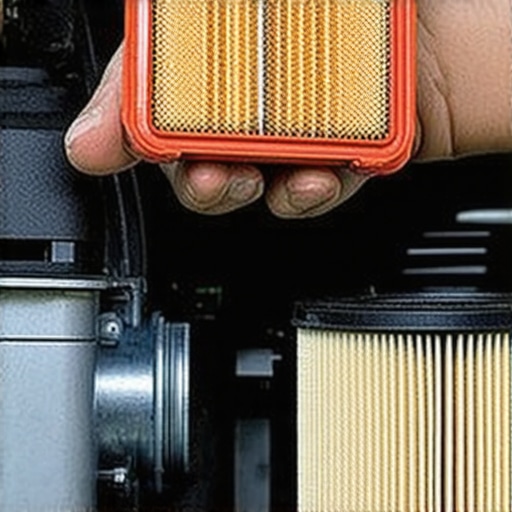
Can a ‘premium’ oil filter actually trigger a false warning light?
In many modern engines, yes. If the filter doesn’t meet the exact micron rating or flow specifications, it can lead to why your engine makes a tapping noise only after an oil change. This tapping is often the sound of dry lifters or cam phasers struggling for oil. The resulting timing lag makes the engine feel gutless, mimicking the backpressure of a clogged converter. Before you unbolt your manifold, check your oil level and the brand of filter you just spun on. The National Institute for Automotive Service Excellence (ASE) notes that a significant percentage of ‘engine power’ complaints are actually related to improper maintenance intervals or lubricant choice rather than catastrophic component failure.
The Trap of Fixing Symptoms Instead of Root Causes
The ultimate ‘oops’ factor in exhaust repair is replacing a melted catalytic converter without asking why it melted in the first place. Converters don’t just ‘wear out’—they are murdered. Usually, it’s by unburnt fuel entering the exhaust, which can happen if you have a failing spark plug or if you’ve been curious about the truth about oil additives and if they actually save your engine. Some additives can coat the catalyst, making it run red-hot until it collapses internally. If you don’t fix the underlying rich condition, your brand-new $800 part will be junk in six months. Have you ever fallen into this trap of replacing the same part twice because you missed the root cause? Let me know in the comments.
The Gear That Separates Guessers from Pros
I stopped playing the guessing game when I finally invested in a high-quality digital multimeter. It’s one thing to see a code on a screen; it’s another to verify the signal with your own eyes. For instance, when you’re dealing with electrical ghosts, knowing the simple test to see if your alternator is killing your battery can save you from a $200 ‘oops’ at the parts store. I personally use a Fluke 87V because the ‘min-max’ capture function catches those split-second voltage drops that cheaper units miss. It’s the difference between finding the $10 sensor that causes your car to stumble during acceleration and replacing the whole throttle body. These auto repair hacks aren’t just about saving cash; they’re about building a workflow that actually solves problems the first time.
How do I keep my engine and exhaust healthy over the long haul?
Maintenance isn’t just about reacting to lights on the dash; it’s about preserving the physical integrity of your hardware. I’ve found that sticking to essential auto repair strategies for frequent drivers—like cleaning your MAF sensor every other oil change—prevents the rich-running conditions that kill converters. According to the Bosch Automotive Handbook (10th Edition), maintaining a precise air-fuel ratio within 1% of the stoichiometric target is crucial for the longevity of the precious metals inside your catalytic converter. This level of precision is why oil change innovations matter more than most people realize. Clean oil keeps your variable valve timing solenoids responsive, which keeps your combustion cycles clean. Don’t forget that a well-maintained engine also puts less stress on your stopping power; the ultimate guide to brake service for safety and performance often highlights how engine vacuum issues can even affect your power brake booster’s performance.
The Future of DIY is Software-Driven
Looking ahead, the gap between ‘shade-tree’ mechanics and master techs is closing because of telematics. We are moving toward a world where your car won’t just throw a code; it will run a self-diagnostic and email you the telemetry data. This is an evolution of how advanced vehicle diagnostics prevent costly breakdowns. Soon, we’ll be using augmented reality (AR) glasses that overlay the vacuum gauge readings directly onto the engine bay as we work. For now, the best thing you can do is master the mechanical basics I’ve shared here. If you want to see if your car is actually healthy or just hiding its symptoms, go out to your driveway today and perform that snap throttle vacuum test. It’s the fastest way to verify your engine’s physical health without getting your hands greasy. If you run into any trouble or find a weird needle wiggle you can’t explain, feel free to contact us or check out our privacy policy for more info on how we handle your technical queries.
Lessons from a Mechanic Who Burned Too Much Cash
If there is one thing I have learned after a decade of skinning my knuckles under the hood, it is that your eyes can lie, but physics never does. Early on, I fell for every marketing gimmick and expensive sensor ‘fix’ in the book. I would spend hours chasing a ghost when the answer was right in front of me. Here are the lightbulb moments that changed how I approach a failing engine:
- Stop trusting your dashboard blindly: Codes are just a starting point. Real decoding vehicle diagnostics happens when you compare what the computer says with what the mechanical parts are actually doing.
- Small leaks cause big headaches: I once replaced an entire exhaust manifold when I actually had a tiny crack in a plastic line. Learning auto repair hacks like the ‘snap throttle’ test saves you from these expensive blunders.
- The ‘Upstream’ rule: Always check if your exhaust is choking before you assume your fuel system is failing. Identifying the $10 sensor that causes your car to stumble during acceleration is much easier when you’ve already confirmed the engine can actually breathe.
My Go-To Kit for Engine Health
You do not need a shop full of industrial equipment to be a pro-level troubleshooter. I personally rely on a simple, well-made vacuum gauge—the kind with a large, readable face—and a set of brass T-fittings for tapping into various manifold lines. Beyond the gauge, I highly recommend keeping a notebook of your engine’s baseline vacuum readings when it is running perfectly; it makes spotting a problem much faster later on. Following top auto repair tips to extend your vehicle’s lifespan means being proactive rather than reactive. I also suggest bookmarking a reliable source for vehicle diagnostics explained so you have a reference guide during those high-stress moments before a big road trip.
You Can Solve This Yourself
Walking away from a repair with the confidence that you actually found the root cause is one of the best feelings a DIYer can have. Don’t let a sluggish engine or a confusing check engine light intimidate you into overspending at a shop. By mastering the vacuum gauge, you are taking control of your vehicle’s health and ensuring you are using essential auto repair strategies that the experts use. Remember, the goal of how advanced vehicle diagnostics prevent costly breakdowns is to catch the small things before they turn into engine-killing disasters. Go grab your gauge, hook it up, and see what your engine is really trying to tell you. Have you ever replaced a part only to find out the real problem was something as simple as a clogged exhaust or a loose vacuum line? Let me know your story in the comments below!