

I’ll never forget the white-knuckle grip I had on my steering wheel while crossing a high-span bridge during a summer road trip. At 65 mph, the car didn’t just feel loose; it felt like it was suggesting a direction rather than following one. Every gust of wind made the front end wander, and I found myself constantly over-correcting just to stay in my lane. It’s a terrifying sensation that turns a relaxing drive into a high-stakes workout. If you’ve ever felt like your steering wheel has a mind of its own once you hit highway speeds, you aren’t alone, and you definitely aren’t just being paranoid. That ‘dead zone’ in the center where you can wiggle the wheel an inch in either direction without the car moving is your vehicle’s way of telling you that the mechanical handshake between your hands and the pavement has been broken. [image_placeholder_1]
Stop Guessing and Start Feeling the Road Again
That disconnect between your hands and the tires is usually a sign that something in your suspension or steering linkage has developed ‘play.’ When components wear down, the tight tolerances required for high-speed stability vanish, leaving you with a car that feels more like a boat on a choppy lake than a precision machine on tarmac. We’re going to walk through the usual suspects today—from worn-out tie rod ends to that frustrating steering rack failure that feels exactly like a bad alignment. By the end of this guide, you’ll know if you’re looking at a quick bolt-on fix or if it’s time to invest in some advanced vehicle diagnostics to save your sanity and your safety. One thing I’ve learned the hard way is that ignoring a ‘vague’ steering wheel is a recipe for a massive repair bill later. Years ago, I ignored a slight shimmy because I thought it was just my old truck being an old truck. It turned out my ball joints were screaming for help. I could have saved a lot of stress if I’d known the simple way to check ball joints with a pry bar before the situation became critical.
Is it just my imagination or is it the wind?
It’s easy to blame a windy day or a grooved section of pavement for a wandering car. However, modern steering systems are designed to be self-centering and stable even in less-than-ideal conditions. According to the National Highway Traffic Safety Administration (NHTSA), steering and suspension issues are a major contributing factor in loss-of-control accidents, often preceded by exactly the kind of ‘loose’ feedback you’re experiencing now. If you have to move your wheel more than a couple of degrees to get a response, it’s not the wind—it’s the hardware. Have you ever felt that ‘floating’ sensation where you’re turning the wheel but the car takes a second to think about it? I’d love to hear about it in the comments. Sometimes the fix is as simple as checking your tire pressure, but other times, you might be dealing with the vibration at 65 mph that feels like an earthquake. Let’s dive into the mechanical gremlins that cause this and how to evict them for good.
Spot the Loose Connection Before You Jack Up the Car
To find where that ‘dead zone’ starts, you need to perform a Dry Park Test. This is the simplest way to see the lag in real-time. Sit in the driver’s seat with the engine off and have a friend stand at the front, looking at the tires. Turn the wheel back and forth just enough to feel the resistance. If your steering wheel moves two inches but the tires stay perfectly still, you’ve just confirmed the mechanical handshake is broken. While you’re doing this, listen for clicks or pops. I once did this on a neighbor’s truck and we realized the intermediate shaft bolt had vibrated nearly all the way out. It’s a terrifying thought, but finding it in the driveway is a lot better than finding it on the interstate. 
Put Your Hands at Three and Nine
Once the car is safely on jack stands, grab one of your front tires at the 3 o’clock and 9 o’clock positions. Give it a firm shake. If you feel a rhythmic ‘thunk-thunk’ or see any wiggle, your tie rod ends are likely the culprit. Think of tie rods as the elbows of your steering system; if the joint is worn out, the movement won’t be crisp. While you’re under there, it’s also the perfect time to look at the rubber boots. If you see grease leaking out or cracks in the rubber, you might be on your way to needing to identify a bad CV joint before it leaves you stranded.
Check the Vertical Play
Now, move your hands to the 12 and 6 o’clock positions. Shake the tire again. Movement here usually points toward the ball joints or wheel bearings. If it’s the ball joints, you’ll want to use the simple way to check your ball joints with a pry bar to confirm. A worn ball joint is like a loose hip socket; it allows the wheel to tilt at angles it was never meant to reach, which is often the reason your car pulls to one side during hard braking.
Stop Ignoring Your Tire Pressure
Sometimes the ‘floaty’ feeling isn’t a metal-on-metal failure at all. If your tires are even 5 PSI under-inflated, the sidewalls become soft and ‘mushy.’ This creates a delay between you turning the rim and the tread actually grabbing the asphalt. It feels exactly like loose steering, but it’s actually just a lack of air. Avoid the tire pressure mistake that ruins your tread in weeks by checking your levels while the tires are cold.
Identify a Failing Steering Rack
If your joints are tight and your tires are full, the issue might be internal. A steering rack failure that feels exactly like a bad alignment is often characterized by ‘morning sickness’—steering that feels heavy or notched when you first start the car, then loosens up as it warms. This usually means the internal seals or the rack-and-pinion gears themselves have developed excessive clearance. If you feel a vibration that seems to come through the floorboards rather than just the wheel, you might be dealing with the clunking sound in your floorboards when hitting small bumps, which often points back to the rack mounting bushings.
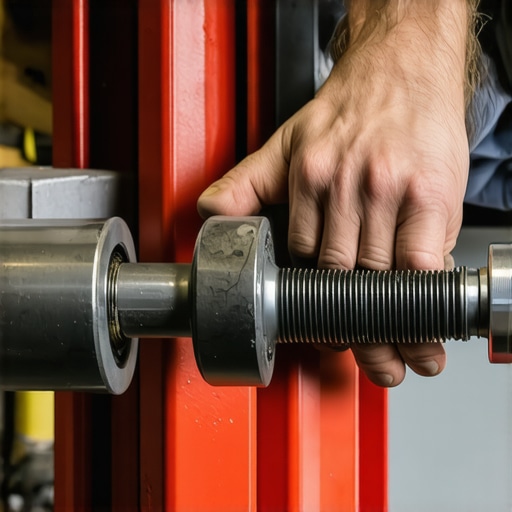
The biggest mistake I see DIYers make when their steering feels like a bowl of overcooked noodles is reaching for the adjustment bolt on the rack-and-pinion. There’s a common myth floating around internet forums that you can simply ‘tighten’ the play out of a steering system by cranking down on the rack pretensioner. In my experience, this is a dangerous shortcut. That bolt isn’t there to compensate for worn-out gears; it’s there to set the initial friction during assembly. If you tighten it to mask a ‘dead zone,’ you’re actually forcing the gears together so tightly that they’ll generate heat, gall the metal, and eventually seize. You’re not fixing the play—you’re just killing the rack faster. To get the real story, you need to be decoding vehicle diagnostics based on mechanical tolerances, not just how ‘stiff’ you can make the wheel feel.
Why Does Your Steering Feel Heavier on Cold Mornings?
If you notice that your steering wander disappears after twenty minutes of driving, you aren’t imagining things, but you aren’t ‘fixed’ either. This is a nuance often missed by general shops: fluid viscosity and thermal expansion. As power steering fluid warms up, it expands and flows more easily through the tiny valving in your rack. If your internal seals are starting to fail, they might bypass fluid when cold—leading to that ‘loose’ or ‘notchy’ feeling—only to swell and seal better once they reach operating temperature. A study by SAE International on steering system fatigue highlights that hydraulic bypass is often the precursor to total mechanical failure. Instead of ignoring it, this is the perfect time for how advanced vehicle diagnostics prevent costly breakdowns by catching seal degradation before you lose power assist on a highway off-ramp.
The Diagnostic Trap Most People Fall Into
Another ‘trap’ is the assumption that if the tires don’t wiggle at the three and nine positions, the steering is fine. I once spent three days chasing a wander on a customer’s SUV where every joint was tight. The culprit? The steering column’s intermediate shaft U-joint. It wasn’t ‘loose’ in the traditional sense; it was binding in one direction and free in the other, creating a ‘false’ sense of play. This is why I always tell people to extend your vehicle’s lifespan by checking the entire path from the steering wheel to the rack, not just the parts near the wheels. We often get distracted by the big components and forget the small linkages that actually transmit our input. Have you ever replaced a part only to find the problem was still there? Let me know in the comments. It’s also worth noting that steering issues are frequently misdiagnosed as brake problems. While brake service myths often focus on the pads, a warped rotor can actually pull your steering rack out of alignment over time due to constant vibration. If you find yourself constantly correcting for a ‘pull’ that only happens at speed, don’t just throw money at new tie rods. Check the ‘health’ of your hydraulic system and even the age of your fluid. Believe it or not, some people think steering fluid lasts forever, much like the truth about oil additives—it’s often more about the quality of the base fluid than the magic ‘stop-leak’ bottles people pour in.
The Gear I Use to Stop the Steering Wander
If you’re serious about moving beyond the ‘shake the tire’ method, you need a few specific tools. I never do a front-end assessment without a magnetic-base dial indicator. This tool allows you to measure the actual thousandths of an inch of movement in a ball joint or tie rod. According to the ASE (Automotive Service Excellence) Study Guides for Suspension and Steering (A4), even a minute deviation beyond manufacturer specs can cause the instability you’re feeling at 70 mph. Using a dial indicator takes the guesswork out of the equation; you either have a part within tolerance, or you have junk that needs replacing.
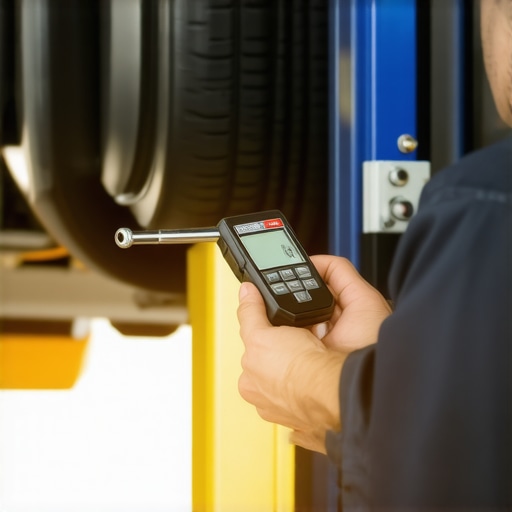
For modern cars with Electronic Power Assisted Steering (EPAS), a basic code reader won’t cut it. You need a scanner capable of reading the Steering Angle Sensor (SAS) data. If your mechanical alignment is perfect but your SAS is off by just two degrees, the computer will constantly try to ‘correct’ your steering, leading to a phantom wander. This is where how advanced vehicle diagnostics prevent costly breakdowns by identifying electronic glitches before they wear out your physical rack gears. I personally use a bi-directional scan tool because it lets me recalibrate the center point myself after any major suspension work.
How do I keep my steering tight for the next 100,000 miles?
Maintenance isn’t just about replacing what breaks; it’s about preventing the wear in the first place. One of the most overlooked essential auto repair strategies for frequent drivers is the simple inspection of the steering rack bellows. These rubber boots keep road grit and salt away from the internal seals of your rack. If I see even a tiny tear, I replace the boot immediately. Once grit gets inside, it acts like sandpaper on the seals, and you’ll be looking at a four-figure steering rack replacement within a year.
I also recommend a steering fluid exchange every 50,000 miles, even if the manual says it’s a ‘lifetime’ fluid. Heat breaks down the anti-foaming agents in the oil, leading to the cavitation that causes that dreaded morning whine. While we’re on the subject of fluids, remember that the truth about oil additives applies here too—don’t rely on ‘stop-leak’ products to fix a mechanical clearance issue. They are a temporary Band-Aid at best.
Look for These Signs Before Your Next Trip
The future of steering is moving rapidly toward full steer-by-wire systems, where there is no physical connection between the wheel and the rack at all. While that sounds futuristic, it makes vehicle diagnostics explained through easy checks even more vital. We are transitioning from wrenching on steel to calibrating sensors. Before you head out on a long drive, do a quick visual check for ‘feathering’ on your tire tread—it’s the earliest warning sign that your steering geometry is fighting itself. To really get ahead of the game, I challenge you to try the ‘Dry Park Test’ I mentioned earlier, but this time, do it while the engine is running to see how the power assist reacts to your input. If you see the shaft turning but the rack doesn’t move immediately, your internal pinion gear is likely worn. Catching this now is the ultimate way to extend your vehicle’s lifespan and keep your road trips stress-free.
The Hard Lessons My Steering Wheel Taught Me
Looking back at my years of wrenching, the biggest takeaway is that a wandering car is rarely just one part failing; it’s a conversation between multiple worn components. I once thought that replacing just the outer tie rods would fix my highway shimmy, but I ignored the inner joints because they were harder to reach. That mistake cost me a set of tires in less than three months. I learned that vehicle diagnostics explained through easy checks are only useful if you’re willing to be honest about what you find. Another insight? High-quality grease is cheaper than new ball joints. Keeping those fittings lubricated is the single best way to avoid the ‘floaty’ sensation that turns a road trip into a stressful chore. [image_placeholder_final]
My Go-To Tools for a Tight Front End
To really get your steering back to factory precision, you need more than just a set of wrenches. I swear by my magnetic-base dial indicator for measuring movement that the human eye simply can’t catch. If you’re tackling this at home, I also recommend checking out auto repair hacks to save money without sacrificing quality, especially when it comes to choosing between OEM and aftermarket steering racks. A bi-directional scan tool is another lifesaver for modern vehicles, allowing you to recalibrate the steering angle sensor without a trip to the dealership. Finally, a heavy-duty pry bar is non-negotiable—it’s the only way to put enough load on a ball joint to see if it’s truly failing.
Stop the Drift and Start Driving Again
There is nothing quite like the feeling of a car that tracks perfectly straight when you let go of the wheel on a flat road. By moving beyond the basics and how advanced vehicle diagnostics prevent costly breakdowns, you’re taking the proactive steps necessary to keep your car safe and responsive. It’s about more than just parts; it’s about understanding the mechanics of your vehicle. Don’t be intimidated by the complexity of the steering rack or the electronic sensors. Once you start decoding vehicle diagnostics and applying these strategies, you’ll find that maintaining your car’s handling is one of the most rewarding ways to extend your vehicle’s lifespan. Have you ever spent money on an alignment only to have the car still wander on the highway? Let me know your story in the comments below!