
There I was, sitting at a busy intersection in the middle of rush hour, staring at the back of a van whose driver was clearly more interested in their phone than the green light. I reached for the center of my steering wheel, ready to give that polite little ‘hey, buddy’ chirp. I pressed. Nothing happened. I mashed it harder, leaning my weight into it. Still, absolute silence. It is a bizarrely helpless feeling when your only voice on the road just vanishes without warning. You feel invisible, and frankly, a little bit vulnerable. Dealing with a silent horn is one of those essential auto repair strategies for frequent drivers that we often ignore until we are staring down a distracted driver merging into our lane. Today, I am going to walk you through exactly why your horn decided to quit on you and how you can get that sound back without spending a fortune at a shop. Have you ever had your horn fail at the absolute worst possible moment? Let me know in the comments because I felt like I was shouting into a void.
That Awkward Silence When You Need to Be Heard
Most people think a car horn is just for expressing frustration, but it is actually a vital safety component. When mine stopped working, I realized I had no way to warn pedestrians or other drivers. It is just as important as your brakes or your lights. I spent the first hour of my weekend decoding vehicle diagnostics on my own, trying to figure out if it was a computer glitch or a mechanical failure. The truth is, most horn issues are simpler than you think, but we tend to overcomplicate them because we assume everything in a modern car requires a PhD to fix. According to data from the National Highway Traffic Safety Administration (NHTSA), functional audible warning devices are critical for preventing low-speed collisions, and in many jurisdictions, a non-working horn is an automatic failure during a state safety inspection.
Wait, is a broken horn really that big of a deal?
You might be tempted to just roll down your window and yell, but that doesn’t pass inspection and it certainly won’t help you on the highway. I made the massive mistake early on in my DIY days of assuming the horn unit itself had burned out. I went out and bought a brand-new assembly, spent two hours wrestling with the bumper, only to find out it was a simple five-cent fuse that had popped. It was embarrassing, but it taught me a valuable lesson: always start with the easiest, cheapest link in the chain. Sometimes, the same the fuse that stops your car from passing emissions or controls your interior lights might be tied into the same circuit as your horn, leading to a cascade of tiny failures. We are going to look at the relay, the wiring, and that tricky clock spring behind your steering wheel to make sure you aren’t throwing money away on parts you don’t actually need.
Check the Fuse First and Save Fifty Bucks
Moving straight into action, the first thing you need to do is crack open that fuse box. In most cars, you will find one under the hood and another under the dash. I remember one rainy Tuesday when my horn went silent, and I spent twenty minutes hunting for the fuse puller that I had inevitably lost. I eventually used a pair of needle-nose pliers, but be careful—I once crushed a perfectly good fuse by being too aggressive. These auto repair hacks save money without sacrificing quality because they take five minutes of your time instead of an hour of shop labor. Pull the fuse labeled ‘HORN’ and look at the U-shaped wire inside. If it is broken or there is a black scorch mark, you have found your culprit. While you are in there, stop letting shops charge you for a free battery test or fuse checks; these are the easiest DIY tasks you can master.
Listen for the Click of a Healthy Relay
If the fuse looks perfect, the next link in the chain is the relay. Think of the relay as a middleman that handles the high-current power so your steering wheel buttons don’t melt. Have a friend press the horn button while you stand near the fuse box. You are listening for a distinct, sharp ‘click.’ This is similar to the metallic click you hear every time you turn the key when a starter solenoid engages. If you don’t hear it, the relay might be stuck. A pro tip I use is to find an identical relay in the box—usually for the cooling fan or the rear defroster—and swap them. If the horn suddenly blares, you just need a new ten-dollar relay. 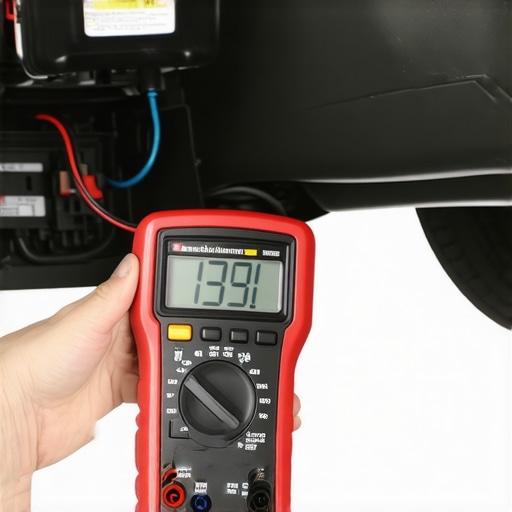
Test the Horn at the Source with a Jumper Wire
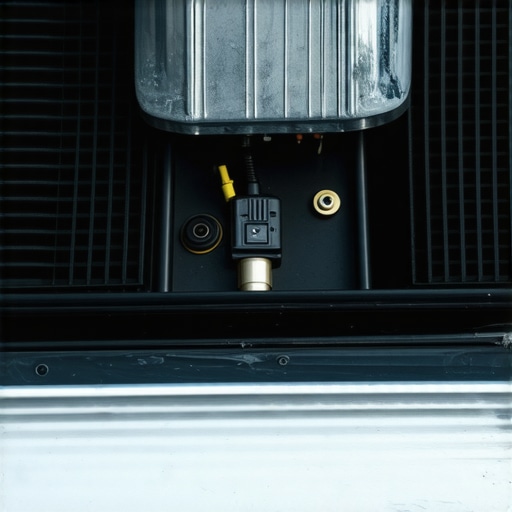
Sometimes the electrical path is fine, but the horn unit itself has physically given up. This happened to me on an old truck where the horn was mounted right behind the grille, exposed to every salt-covered puddle on the road. The internals had simply rusted into a solid block. To test this, you can use a jumper wire to connect the horn terminal directly to the positive battery post. I made the mistake once of using a thin paperclip for this and nearly burned my thumb when it heated up instantly. Use a proper insulated wire. If the horn honks with direct power, your problem is in the wiring between the relay and the horn. Learning the secret to finding a parasitic battery drain with a simple multimeter will give you the skills to probe these wires for a break without guessing.
When the Problem Hides Inside Your Steering Wheel
If the fuse, relay, and horn all pass the test, the issue is likely the clock spring. This is a spiraled ribbon cable that allows your steering wheel to turn while maintaining a constant electrical connection. It is a bit like a Slinky made of wires. If this snaps, your horn loses its connection to the rest of the car. Often, you will see a ‘SRS’ or ‘Airbag’ light on the dash at the same time because they share the same housing. This is a critical part of how how advanced vehicle diagnostics prevent costly breakdowns; the car is literally telling you that the communication line is dead. Before you go pulling the steering wheel off, perform vehicle diagnostics explained easy checks before your road trip to ensure you aren’t missing a loose ground wire under the dash.A lot of DIYers fall for the ‘parts cannon’ trap—firing new parts at a problem until something sticks. But in my years of wrenching, I have found that high resistance is a much sneakier villain than a total break in a wire. Most people think if a multimeter shows 12 volts at the horn connector, the wiring is perfect. In reality, you could have a single strand of copper left in a corroded wire that shows 12 volts on a meter but cannot carry enough current to actually vibrate the horn diaphragm. This is where how advanced vehicle diagnostics prevent costly breakdowns by looking at the load, not just the static voltage. It is the same logic behind brake service myths busted what really matters for safety; it is rarely the big, obvious thing that kills the system—it is the small, overlooked maintenance points like slider pins or ground points. 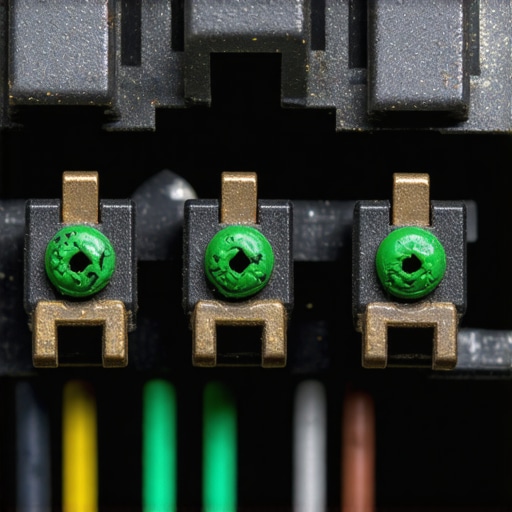
The Phantom Ground and Other Electrical Myths
The Society of Automotive Engineers (SAE) has published research on ‘terminal tension,’ proving that even a microscopic gap or a slightly loose pin in a connector can cause intermittent failures that driving vibrations only make worse. It is why the truth about oil additives and if they actually save your engine is often less about the chemicals and more about preventing the physical sludge that coats sensitive engine sensors. I once saw a driver replace their entire steering rack because of a noise that ended up being a loose bracket on the horn assembly. Always check the physical mounting of the horn; if it is not bolted securely to the frame, it cannot complete the ground circuit, and it will stay silent no matter how many fuses you swap. These auto repair hacks save money without sacrificing quality because they focus on the ‘hidden’ physics of your car.
Why does my horn only work when the engine is running?
Many of you have asked why a horn might work perfectly when you are idling but fail the moment you hit the highway. This is often due to thermal expansion or voltage fluctuations from a struggling alternator. I once spent three days chasing a short circuit that only happened when the cabin warmed up. It turned out to be a harness rubbing against the steering column. Do not be the person who assumes they need a new alternator when the simple test to see if your alternator is killing your battery could save you hundreds of dollars. The ‘oops’ factor here is simple: never assume a connection is tight just because it looks plugged in. Give it a ‘tug test.’ If it wiggles, it is a potential fail point. Much like oil change innovations technologies that save your engine, modern electrical diagnostics are about precision. Have you ever spent money on a big part only to find out it was just a loose wire? Let me know in the comments because we have all been there.
Tools That Actually Save Your Sanity and Your Wallet
If you are going to take your DIY game seriously, you need to stop guessing and start measuring. I’ve reached for my Fluke 115 digital multimeter more times than my socket set lately. Why? Because modern cars are basically rolling computers. Understanding the secret to finding a parasitic battery drain with a simple multimeter is a superpower when your horn or lights start acting up. I also recommend keeping a can of dielectric grease and some specialized contact cleaner in your kit. These prevent the ‘green crusties’ of corrosion that eat away at your connections before you even realize there is a problem. According to the Bosch Automotive Electrics and Automotive Electronics handbook, managing contact resistance is the single most important factor in long-term circuit reliability. Using the secret to keeping your engine bay clean without damaging electronics ensures that when you wash your car, you aren’t accidentally inviting a short circuit into your horn’s relay box.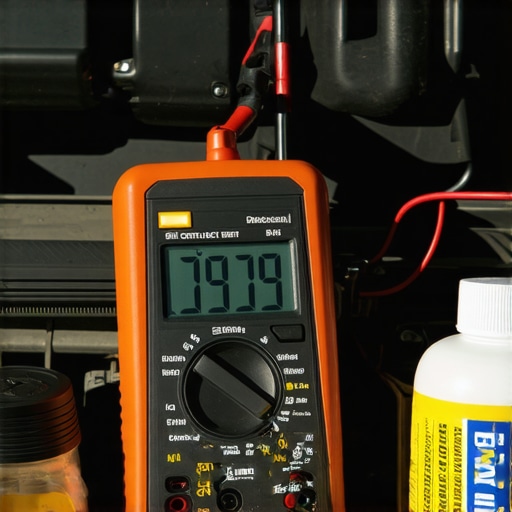
How can I make sure my car’s electrical components last for decades?
The answer is simpler than you think: consistent, boring maintenance. Just like oil change innovations technologies that save your engine, the best electrical fixes are preventative. Every time I do a the ultimate guide to brake service for safety and performance, I take five minutes to inspect the ground straps near the engine block. If those get frayed, your whole electrical system—from your horn to your fuel pump—starts to suffer. These are the top auto repair tips to extend your vehicles lifespan that the pros use to keep high-mileage cars on the road without constant trips to the dealership.
The Future of Honking: Software-Defined Warnings
Looking ahead, the physical horn assembly we know today might soon be a relic. We are moving toward software-defined vehicles where the horn sound is just a digital file played through external pedestrian-warning speakers. Tesla has already experimented with this through customizable external sounds. While it sounds high-tech, it means how advanced vehicle diagnostics prevent costly breakdowns will shift from checking fuses to checking lines of code. My advice? Grab a basic OBD-II scanner and learn to use it now. Go out to your driveway and find your horn’s ground wire today—clean it with a wire brush and apply some grease. You will be surprised how much sharper that sound becomes when it doesn’t have to fight for power.
Why I’ll Never Guess About a Ground Wire Again
Looking back at that first silent commute, I realize my biggest mistake wasn’t a lack of tools, it was a lack of patience. I used to think that electrical issues were mysterious ghosts in the machine. But after years of wrenching, I’ve learned that 90% of failures are physical. Always trust the tug test over a visual inspection; a wire that looks connected might be hanging by a single copper strand. I also learned that the ‘click’ of a relay is the sweetest sound in a diagnosis because it cuts your search area in half instantly. Following top auto repair tips to extend your vehicles lifespan often means just keeping these tiny connections clean and dry.
The Gear That Keeps My Electrical System Alive
You don’t need a professional shop setup to master these fixes, but a few specific items will save your sanity. First, get a decent digital multimeter. Even a budget model is enough to master the secret to finding a parasitic battery drain with a simple multimeter, which uses the same logic as horn testing. Second, keep a can of high-quality electrical contact cleaner nearby. It is the only way to safely remove the oxidation that prevents your horn from getting the juice it needs. Finally, I swear by a dedicated fuse puller; using pliers is a great way to crack a plastic housing and turn a five-minute job into a frustrating ordeal. #IMAGE_PLACEHOLDER_E#
Take Back Your Voice on the Road
Fixing a horn isn’t just about avoiding a failed inspection; it’s about your confidence behind the wheel. When you know you can communicate with other drivers, the road feels a lot less hostile. Don’t let a little silence intimidate you. These auto repair hacks save money without sacrificing quality and prove that you are the master of your machine. Armed with essential auto repair strategies for frequent drivers, you can tackle this project on a Saturday morning and be back to full volume by lunch. Have you ever struggled with finding the right fuse box for your specific car model? Let me know in the comments below!