
I’ll never forget the time I spent a Saturday afternoon under my old sedan, confident I’d nailed a perfect brake job. I’d followed the manual, tightened every bolt, and felt a surge of pride as I backed out of the garage. Then, the first tap of the pedal sent a piercing, metallic shriek echoing through the neighborhood. My face went hot. It’s a special kind of defeat when you put in the work and the car still sounds like it’s dying. We’ve all been there, standing in the driveway with a wrench in one hand and a look of pure confusion on our faces. Today, I’m going to show you why those shiny new parts are acting up and how to silence them without losing your mind or your paycheck.
Silence is Golden: Getting to the Root of the Noise
When I was first learning my way around a toolbox, I assumed [why your brakes squeak even though the pads are new](https://repairmycarpro.com/why-your-brakes-squeak-even-though-the-pads-are-new) was always a sign of a defective part. I actually returned a perfectly good set of ceramic pads once because I thought they were “dud” units. The truth is usually much simpler—and often comes down to the small things we overlook in the heat of the moment. Proper [brake service](https://repairmycarpro.com/the-ultimate-guide-to-brake-service-for-safety-and-performance) isn’t just about swapping old for new; it’s about managing friction and vibration. If those pads aren’t sitting perfectly or if the rotors have a glazed surface, they’re going to sing. Sometimes, [the reason your brake pedal feels different after a long drive](https://repairmycarpro.com/the-reason-your-brake-pedal-feels-different-after-a-long-drive) is tied directly to the heat and vibration issues that cause that initial squeal. I made the classic mistake early on of ignoring the rotor surface, thinking the new pads would just “wear it flat.” Spoiler alert: they didn’t.
Are cheap parts the only reason for the noise?
It’s easy to blame the budget-friendly box you picked up at the local shop, but even high-end pads can scream if they aren’t installed with a little finesse. I once skipped using the anti-seize lubricant on the back of the shims because I was in a rush to get to a BBQ. Big mistake. That tiny bit of grease is often the only thing standing between you and a “fingernails on a chalkboard” experience. Interestingly, research published by the Society of Automotive Engineers (SAE) notes that brake squeal is essentially a “friction-induced unstable vibration,” which can occur regardless of the pad’s price tag if the system isn’t dampened correctly. Have you ever felt that sinking feeling when your “fixed” car starts making a brand-new noise the second you pull out of the driveway? Before we dive into the heavy lifting, we need to understand the physics of the break-in period and [the trick for a perfect brake bleed every single time](https://repairmycarpro.com/the-trick-for-a-perfect-brake-bleed-every-single-time) to ensure the rest of your system is helping, not hurting, the situation.
The Tactical Approach to a Quiet Stop
Before you even touch the new pads, look closely at the caliper bracket. Think of the bracket as the stage and the pads as the performers. If the stage is covered in debris, the performance is going to be shaky and loud. I once spent three hours trying to figure out a persistent clunking sound on an old Honda only to realize I’d left a tiny bit of rust scale under the stainless steel clips. That tiny ridge of rust was pushing the pad into the rotor at a weird angle, causing an uneven vibration. Ensuring a clean surface is the first real step in the ultimate guide to brake service for safety and performance. If you run into trouble early with a seized bracket, knowing the secret to removing a rusted bolt without snapping the head will save you from a whole day of drilling and tapping.
Clean the Factory Film Away
New rotors often come with a thin layer of oil or a specialized coating to prevent rusting while they sit in a warehouse. If you don’t scrub that off with a high-quality brake cleaner, you’re basically frying your new pads in oil the first time you hit the pedal. This creates a hard glaze that is nearly impossible to remove without resurfacing the metal. This is one of those brake service myths busted moments—thinking the heat of driving will just burn the oil off. It won’t; it just bakes it into the friction material. I remember a messy afternoon where I forgot this step and the smoke coming from my wheel wells was enough to make the neighbors call the fire department.
Grease the Sliding Points or Face the Squeak
Vibration is the absolute enemy of silence. You need to apply high-temperature ceramic brake grease to every point where metal meets metal—except for the actual friction surface. Apply it to the back of the pads where the piston touches, the ‘ears’ of the pads that sit in the clips, and especially the slide pins. If those pins are dry or bound up, you might find why your brake pedal sinks to the floor at red lights or why the pads wear unevenly. I once skipped the slide pin lubrication on a project truck, and it resulted in the reason your car pulls to one side during hard braking, which is a terrifying feeling at highway speeds.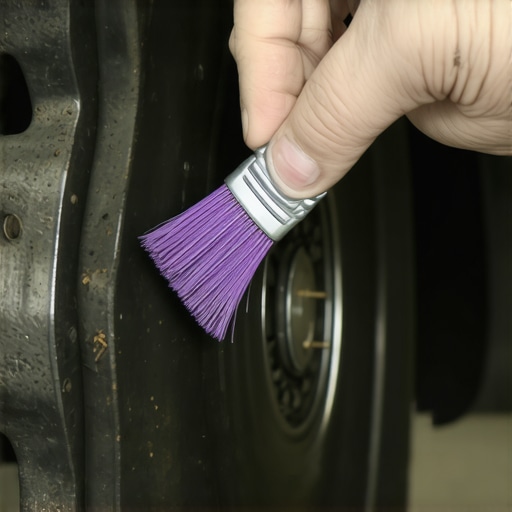
Bed the Pads to Marry the Metal
The final step is the bedding process, which many DIYers ignore. You aren’t just taking a test drive; you’re performing a chemical transfer. You need to get the brakes hot enough to transfer a thin, even layer of pad material onto the rotor surface. This is the primary reason why your brand new brake pads are already squealing. I usually perform five or six moderate stops from 45 mph down to 10 mph, being careful never to come to a complete stop until the system has cooled. This process ‘marries’ the two surfaces together perfectly. If you skip this and just start stop-and-go driving, the material transfers unevenly, which can lead to the vibration at 65 mph that feels like an earthquake every time you try to slow down.It’s not just about the physical installation of parts; it’s about the philosophy of the repair. This ‘install and pray’ mentality often leads to more trouble than it solves, especially when it comes to the complex systems in modern vehicles. Many DIYers think that plugging in an OBD-II scanner is like receiving a divine answer from the car gods. In reality, a code for an O2 sensor doesn’t always mean the sensor is bad; it could be a vacuum leak or a frayed wire. Truly decoding vehicle diagnostics requires you to look at the ‘freeze frame’ data to see exactly what was happening the moment the fault occurred. If you just swap the part the scanner mentions, you are essentially firing a ‘parts cannon’ at your wallet.
The Manual Might Be Lying to You About Maintenance
Here is a contrarian view that might ruffle some feathers: I don’t trust the 10,000-mile oil change interval printed in your owner’s manual. Car manufacturers are locked in a ‘low cost of ownership’ war, and one way they win is by stretching maintenance intervals to the absolute limit. However, if your daily drive involves short commutes where the engine never reaches full operating temperature, or if you live in a dusty environment, you are in the ‘severe service’ category. Under these conditions, oil breaks down and collects moisture much faster than the marketing brochures suggest. Keeping up with oil change innovations is important, but nothing beats the simple insurance of a 5,000-mile interval if you want your car to last 200,000 miles. 
Does Your Choice of Oil Viscosity Impact More Than Just Lubrication?
Advanced drivers often wonder if switching to a ‘high-mileage’ or thicker oil is a magic fix for an aging engine. While it can help with minor leaks, the ‘oops’ factor here is significant. Modern engines use oil pressure to control variable valve timing. If you put 10W-40 in an engine designed for 0W-20, you might actually trigger a check engine light or cause why your engine makes a tapping noise only after an oil change because the oil can’t move through the tiny passages fast enough. According to research by the American Petroleum Institute (API), using the incorrect viscosity can lead to a 1-2% drop in fuel economy and significantly increased wear during cold starts. For those looking for top auto repair tips to extend your vehicles lifespan, sticking to the manufacturer’s weight—but changing it more frequently—is the real secret. Have you ever fallen into this trap of following the ‘lifetime’ fluid myth only to have a component fail prematurely? Let me know in the comments below.For years, I thought I was being a pro just because I owned a torque wrench. But the real game-changer came when I stopped treating my car like a collection of bolts and started treating it like a rolling computer. If you are serious about top auto repair tips to extend your vehicles lifespan, you eventually have to move beyond the $20 code reader. You need a bi-directional scan tool. I remember the first time I used one to manually trigger a fuel pump relay to see if the pump was actually dead or if the wiring was the culprit. It saved me a $400 guess and four hours of dropped-tank labor. Understanding how advanced vehicle diagnostics prevent costly breakdowns is the difference between being a parts-swapper and a technician.
How do I maintain my engine health over the long haul?
The secret isn’t just in the big repairs; it is in the micro-habits. For example, essential auto repair strategies for frequent drivers always include a monthly walk-around with a critical eye. I don’t just look for puddles; I look at the color of the fluids. Is the brake fluid looking like maple syrup? That means it is saturated with moisture and is slowly eating your calipers from the inside out. This is where vehicle diagnostics explained easy checks before your road trip become your best friend. I personally keep a digital log of every single nut I turn. It sounds obsessive, but when you can look back and see that your fuel trims were slightly off six months ago, you can catch a failing vacuum line before it leaves you stranded on the highway.  According to the technical experts at Robert Bosch GmbH, the primary developers of the Unified Diagnostic Services (UDS) protocol (ISO 14229), modern vehicles can report thousands of data points that never trigger a dashboard light. If you only wait for the Check Engine light to glow, you are already behind the curve. As we move toward a future of Software-Defined Vehicles, your laptop and high-speed OBD interface will become more valuable than your heaviest breaker bar. We are entering an era where performance isn’t just tuned with a screwdriver; it is optimized through firmware updates and sensor calibration.
Precision Over Guesswork
I have seen too many people ruin a perfectly good hub assembly because they eyeballed the torque. When you are dealing with aluminum components, tight enough is usually synonymous with stripped threads. If you want to avoid why your car shakes when you apply the brakes at high speeds, you must use a calibrated torque wrench on your lug nuts and caliper bolts. Uneven clamping force is the number one silent killer of rotors. Here is my advanced tip for you this week: The next time you have your wheels off, don’t just check the pads—grab a dial indicator and check the rotor runout. If it is more than .002 inches, you are going to feel it eventually. It takes ten extra minutes but saves you months of annoyance. Give it a try on your next rotation and see what you find.
The Lessons That Transformed My Approach to Auto Repair
I used to think a loud radio was the easiest way to fix a car, but I eventually realized that ignoring those small cues is the fastest way to the scrapyard. One of the biggest brake service myths busted in my own journey was that high price tags automatically mean quiet performance. It’s actually the surgical prep work—the cleaning of brackets and the precise lubrication—that makes the difference. Another lightbulb moment was realizing that your car communicates through vibration and smell long before it fails. If you learn to translate those signals, you can apply auto repair hacks to save money without sacrificing quality and catch problems while they are still just a ten-minute fix.
The Essential Toolkit for Serious DIY Techs
To move beyond being a “parts-swapper,” I recommend investing in a bi-directional scan tool. It is the only way to talk back to your car’s computer and run tests that save hours of guessing. I also believe a calibrated torque wrench is non-negotiable for anyone serious about top auto repair tips to extend your vehicles lifespan. Finally, don’t overlook the value of a dedicated service manual for your specific make and model. While online forums are great for community support, the factory specs are the only “source of truth” you should trust for safety-critical components.
Don’t Just Maintain Your Car—Master It
You don’t need a professional garage to treat your vehicle with professional care. Whether you are performing a complex brake job or a simple fix for a rattling heat shield for the price of a hose clamp, the goal is always precision over speed. By adopting this mindset, you turn every weekend project into an investment in reliability. Taking ownership of your vehicle’s health is one of the most rewarding skills you can develop in modern auto repair. Have you ever spent hours chasing a squeak only to realize you skipped one tiny step? Let me know your most frustrating repair story in the comments below.