

I was cruising down the interstate last July, windows rolled up and the AC humming, when it started. A faint, high-pitched whistle that sounded exactly like a tea kettle reaching its boiling point. I glanced at my dashboard, half-expecting a localized steam cloud to erupt from the vents. At 60 mph, it was a whisper. At 70 mph, it was a piercing scream that made my teeth ache. I spent the next forty miles adjusting the radio volume, but you can’t outrun physics. That sound isn’t just annoying; it is your car’s way of screaming that air is going where it shouldn’t. If you have ever felt that sudden spike of anxiety when a new noise joins your commute, you are in the right place. We are going to track down that ghost in your machine and stop it for good.
That High-Pitched Scream on the Open Road
It is easy to assume the worst. My first thought during my own ‘whistle incident’ was that my turbocharger was about to depart this mortal coil. I actually wasted an entire weekend decoding vehicle diagnostics that had nothing to do with the actual problem. I went down a rabbit hole of vacuum leaks and belt tensioners, only to realize the culprit was a tiny piece of loose plastic trim on my passenger-side mirror. Today, I want to save you that headache by showing you how to distinguish between a mechanical failure and an aerodynamic fluke. Often, why your engine makes a high pitched whistle during acceleration is a completely different beast than the whistle that only appears when the wind hits your car at a specific angle. We will look at seals, trim, and those pesky roof racks that turn your SUV into a giant flute.
Is this noise actually going to cost me a fortune?
The short answer? Probably not, but ignoring it can lead to bigger issues. I made the mistake of ignoring a whistling door seal on an old truck once, thinking it was just a ‘quirk.’ Three months later, a heavy rainstorm proved that where air can whistle through, water can leak through, and I ended up with a moldy carpet and a very damp fuse box. According to the Car Care Council, wind noise is one of the top complaints that leads drivers to seek vehicle diagnostics explained through professional inspections, yet many of these fixes are simple DIY projects. Before you assume your transmission is failing or that why your cars steering feels loose at high speeds is related to the sound, let’s check the easy stuff. Have you ever found yourself frantically pressing on your windshield or door frame while driving just to see if the noise changes? Tell me I am not the only one who has looked like a maniac trying to ‘pinch’ a sound out of existence. Next, we are going to dive into the ‘Painter’s Tape Test’—the absolute best way to find a wind leak without spending a dime.Grab a roll of blue painter’s tape—the low-tack kind used for house painting—and head to a quiet stretch of road where you can safely reach the speed where the whistle starts. This is the gold standard for essential auto repair strategies for frequent drivers. Start by taping over the most likely culprit: the gap between the windshield and the roof. If the noise stays, move to the side mirrors, then the door frames. I remember helping a neighbor with a 2008 Focus that whistled like a freight train. We taped the entire driver’s side door seam and the noise vanished. By peeling back one foot of tape at a time and driving, we found a microscopic tear in the rubber seal near the top hinge. It looked perfect to the eye, but at 65 mph, it turned into a reed. 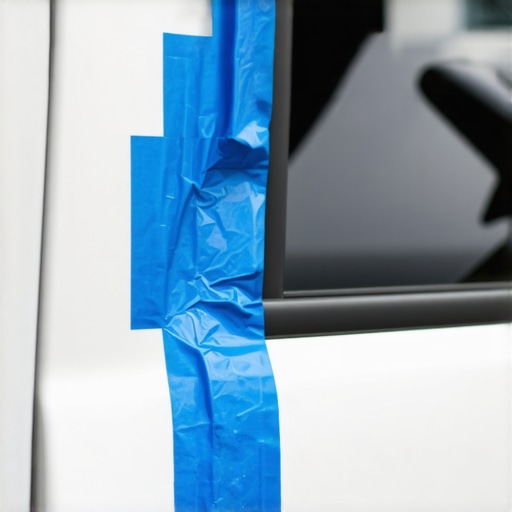
Use the painter’s tape method to find the leak
The logic is simple: if you cover the hole, the air can’t get in, and the noise stops. Don’t use duct tape or packing tape; the adhesive will ruin your clear coat or leave a gummy residue that takes hours to scrub off. Focus your efforts on the ‘leading edges’—the parts of the car that hit the wind first. This includes the top and sides of the windshield, the front edge of the sunroof, and the gap between the hood and the fender. If you’ve recently added aftermarket accessories, start there. Many top auto repair tips to extend your vehicles lifespan suggest checking these external components often, as vibration from wind can eventually loosen trim clips.
Restore your seals without a trip to the shop
If the tape test points toward a door seal, you don’t always need to replace the whole rubber assembly. Over time, the hollow rubber tubes that line your doors lose their ‘memory’ and flatten out. A quick fix is to use a silicone-based weatherstrip conditioner to soften the rubber, allowing it to expand and create a tighter seal. If the seal is physically torn, you can often bridge the gap with a small amount of black RTV silicone. Just make sure to let it cure completely before closing the door, or you’ll glue your car shut. This isn’t just about noise; keeping your cabin airtight is a key part of how advanced vehicle diagnostics prevent costly breakdowns like water damage to your interior electronics.
Is it wind or a mechanical cry for help?
Sometimes the whistle isn’t the wind at all. If the pitch changes with your engine RPMs rather than your speed, you’re likely looking at a vacuum leak or a belt issue. Learning how to find a vacuum leak with a cigar and a piece of hose can help you distinguish an engine problem from an aerodynamic one. Additionally, if the car feels unstable while the noise is happening, consider why your car handles poorly in the wind all of a sudden. A loose wheel well liner or a dragging underbody shield can act like a sail, catching the wind and creating both a whistle and a vibration. Inspect the plastic ‘undertray’ beneath your engine. If the plastic clips have snapped, the wind will catch that panel and make it scream against the chassis.
It is a common trap in the DIY world to assume a ‘new’ part is a ‘perfect’ part. I have seen enthusiasts spend hundreds on high-end ceramic pads only to have them scream louder than the ones they replaced. Most people think the pad material is the only variable, but the real culprit is often the hardware or a lack of proper lubrication on the slide pins. According to a report by the National Institute for Automotive Service Excellence (ASE), a staggering number of brake noise complaints are attributed to improper installation rather than defective components. You might wonder why your brand new brake pads are already squealing, but it is often just physics; without proper dampening, those pads act like a violin bow on the rotor.
The Bedding-In Ritual Most Drivers Skip
One of the biggest ‘oops’ factors I see involves the bedding-in process. People install the pads, drive off normally, and then wonder why they feel a vibration three weeks later. If you do not heat-cycle those pads correctly by performing a series of controlled stops, you will get an uneven transfer of material onto the rotor surface. This leads to ‘pad smear,’ which feels exactly like a warped rotor but is actually a chemical bonding failure. This is one of the many brake service myths busted that can save you from buying expensive rotors you do not actually need. It is about precision, not just bolting things on and hoping for the best.
Why does my car still feel off after I fixed the obvious problem?
Sometimes, fixing the whistle or the squeal reveals a deeper layer of the mechanical onion. If you have addressed the wind noise and the brakes but the car still feels ‘skittish,’ you might be looking at why your cars steering feels loose at high speeds. It is rarely just one thing; the wind might have been masking a subtle vibration from a worn bushing. This is where decoding vehicle diagnostics becomes more of an art than a science. You have to listen to the car as a whole system, not just a collection of parts.
The Synthetic Oil Trap in Older Engines
Everyone tells you that synthetic is better, but there is a nuance most people miss when dealing with high-mileage vehicles. While oil change innovations have made modern lubricants incredible, jumping to a full synthetic in a car that has lived on conventional oil for 150,000 miles can sometimes trigger leaks. Synthetics have smaller molecular structures and higher detergent levels that can wash away the sludge currently holding your old seals together. Before you switch, check out the truth about synthetic oil vs conventional in older high mileage cars to avoid a driveway full of oil. Also, always verify the work; I have seen enough empty promises to know you should learn how to tell if your mechanic actually changed the oil by checking the color and the filter brand before leaving the lot. Have you ever fallen into the ‘new part’ trap where the fix made things worse? Let me know in the comments.
Moving past basic repairs requires a shift in mindset from being a parts-swapper to being a systems analyst. I remember when I thought a basic code reader was the peak of technology, but the moment I stepped up to a bidirectional scan tool, my entire approach changed. You start seeing the car not as a metal box with a squeal, but as a network of communicating sensors. If you’re serious about long-term reliability, you need to master how advanced vehicle diagnostics prevent costly breakdowns by catching sensor drift before the check engine light even blinks. It’s the difference between replacing an alternator because it failed and replacing a voltage regulator because you saw the ripple pattern was erratic on your oscilloscope.
Stop Guessing and Start Reading the Data
I personally rely on an Autel MaxiCheck for my heavy lifting, but even a high-quality Bluetooth dongle like BlueDriver can provide ‘Freeze Frame’ data. This is crucial because it tells you exactly what was happening the millisecond a fault occurred. As noted in the technical documentation by the Society of Automotive Engineers (SAE) regarding the J1979 protocol, real-time data monitoring is the only way to verify ‘closed-loop’ efficiency without a dynamometer. I use this live data to monitor Long Term Fuel Trims (LTFT); if I see them creeping toward +/- 10%, I know I have a vacuum leak or a fuel delivery issue long before the car starts stumbling. 
How do I keep my car running like new for decades?
The secret isn’t just changing the oil; it is the obsession with electrical health and fluid chemistry. I always keep a high-quality digital multimeter in my kit; it’s the secret to finding a parasitic battery drain with a simple multimeter without tearing your hair out. According to the Bosch Automotive Handbook (11th Edition), the stability of the vehicle’s electrical system is the primary foundation for all electronic control unit (ECU) reliability. If your grounds are corroded, your sensors will lie to the computer, and your engine will suffer. These are the top auto repair tips to extend your vehicles lifespan that the dealership won’t usually share because they want you back for a trade-in every five years. The move toward oil change innovations like long-drain intervals is great, but only if you track your wear through oil analysis labs like Blackstone. For the real gearheads, the ultimate guide to brake service for safety and performance is about more than just swapping pads; it’s about measuring rotor runout with a dial indicator to ensure your hub is still true. Looking ahead, I predict that within the next five years, AI-driven predictive maintenance will become the norm for DIYers, with apps analyzing your car’s acoustic signature to tell you which bearing is going to fail next. I want you to try this: next time you are doing a routine check, don’t just look at the dipstick. Plug in your scanner and log your O2 sensor voltages. If the graph looks lazy, replace the sensor—you will gain 2 MPG instantly.
Lessons Learned From Chasing My Tail in the Garage
I spent years throwing parts at problems before I realized that the loudest component isn’t always the broken one. One of the biggest brake service myths busted in my own journey was that expensive parts fix bad habits; they don’t. Precision installation beats premium pricing every single time. Another realization was that auto repair hacks aren’t just for saving cash; they are about understanding the physics of your machine. Finally, never underestimate the power of a simple cleaning. Before you replace a sensor, check the plug for corrosion; it is one of those top auto repair tips to extend your vehicles lifespan that costs nothing but ten minutes of your time.
The Tool Kit That Actually Finds the Problem
If you want to move beyond guessing, you need a few reliable companions. I always keep a BlueDriver Bluetooth Scanner in my glovebox because it makes vehicle diagnostics explained in plain English right on my phone. For electrical gremlins, a Fluke Multimeter is my North Star; it is the secret to finding a parasitic battery drain without guessing which fuse to pull. Lastly, I recommend the Blackstone Labs Oil Analysis kit. It’s like a blood test for your engine, telling you if your bearings are wearing out before you hear a single knock, which is a vital part of how advanced vehicle diagnostics prevent costly breakdowns.
Your Garage Is Waiting for Its First Win
Taking control of your car’s health is one of the most rewarding skills you can develop. It turns a source of anxiety into a source of pride. By mastering decoding vehicle diagnostics and staying ahead of the maintenance curve, you aren’t just driving a car; you are managing a high-performance system. Don’t be afraid of the grease or the learning curve. Every expert was once a beginner with a weird noise and a roll of painter’s tape. Have you ever found a car noise that turned out to be something completely unexpected? Let me know in the comments below!