

I remember the smell of fresh rubber and the shiny sidewalls. I’d just dropped a hefty chunk of change on a set of premium all-seasons. I pulled out of the shop, eager for that smooth-as-silk highway feel, but within two blocks, I realized I was constantly wrestling the wheel to the left. My car was stubbornly drifting toward the ditch on the right. It’s infuriating, isn’t it? You spend money to fix a problem or upgrade your ride, only to leave with a brand-new headache.
Why Your Straight-Line Drive Vanished with Your Old Treads
It is incredibly common to blame the alignment tech immediately, but the reality is more nuanced. Sometimes the new rubber itself is the agitator. I once made the rookie mistake of assuming that “new” meant “perfect.” I ignored a slight rightward tug for a month, thinking the tires just needed to “settle in.” By the time I took it back, I’d already started to see uneven wear. The truth is, sometimes a tire has what we call a “radial pull,” where the internal belts aren’t perfectly centered. This can make your car behave as if it has a steering rack failure that feels exactly like a bad alignment. If you aren’t careful, you might end up needing the ultimate guide to brake service for safety and performance just to keep things stable.
Is it possible the shop just sold me duds?
It is the fear that keeps every car owner up at night after a big repair bill. You wonder if you got a “Friday afternoon” set of tires or if the vehicle diagnostics were handled lazily. While manufacturing defects happen, it’s often a case of the new tires highlighting a suspension component that was already on its way out.
The Invisible Culprits Hiding Behind Your New Sidewalls
New tires provide significantly more grip and have stiffer sidewalls than your worn-out ones. This extra “bite” on the road can amplify a slight suspension sag or a worn bushing that you didn’t notice when your old tires were sliding around. Interestingly, the U.S. Tire Manufacturers Association notes that even a 2 PSI difference between the front tires can cause a noticeable pull, which is often a tire pressure mistake that ruins your tread in weeks if left unchecked. Have you ever experienced a car that drove perfectly on bald tires but went haywire the second you got new ones? It’s a frustrating paradox we’re going to solve today. Check out these top auto repair tips to extend your vehicles lifespan while we dive into the mechanical specifics.
Rule Out the Low Tire Pressure Mistake First
Before you assume the worst, go back to the absolute basics. Think of your car like a bicycle; if one tire is even slightly soft, the bike naturally leans and drifts toward that side because of increased rolling resistance. I once spent two hours diagnosing a complex ‘radial pull’ only to find out the shop’s air compressor was miscalibrated, leaving my front right tire 4 PSI lower than the left. This is a classic tire pressure mistake that ruins your tread in weeks if you just drive through it. Use a high-quality digital gauge—not the flimsy stick gauges—and ensure both front tires are exactly at the manufacturer’s recommended PSI found on your door jamb sticker. If the pull vanishes, you’ve saved yourself a $120 alignment fee.
The Five Minute Pry Bar Test for Suspension
When new, grippy rubber meets the pavement, it places much higher stress on your control arm bushings and ball joints than your old, hardened tires ever did. I remember working on an old SUV that drove straight as an arrow until we put on a fresh set of all-terrains. Suddenly, it wanted to dive into the left lane. We jacked up the front end, and sure enough, the increased traction of the new tread was simply overpowering a worn-out lower ball joint. You can perform the simple way to check your ball joints with a pry bar by lifting the wheel and looking for any vertical or horizontal play. If that joint moves even a fraction of an inch independently of the control arm, your alignment will never stay true, regardless of how many times the shop adjusts it. 
How a Sticking Brake Mimics Bad Alignment
Sometimes the pull isn’t the tire or the suspension at all, but a brake caliper that has decided to partially seize. New tires provide a better ‘feel’ for the road, which often makes a dragging brake more apparent. If one side of your braking system isn’t fully retracting, it’s like walking with one shoe on a treadmill—you’re going to veer. You can identify the reason your car pulls to one side during hard braking or even while cruising by checking the temperature of your wheels after a twenty-minute drive. If one wheel hub is significantly hotter than the rest, you have a mechanical drag, not an alignment issue.
Identify a Radial Pull by Swapping Front Tires
If your pressure is perfect and your suspension is tight, you might actually have a defective tire. This is known as a radial pull. It happens when the steel belts inside the tire aren’t perfectly centered during the curing process. To test this, swap the two front tires with each other. If the car suddenly pulls in the opposite direction, you’ve found your culprit: one of those brand-new tires is a dud. This is why how advanced vehicle diagnostics prevent costly breakdowns is so vital; it helps differentiate between a part failure and a simple manufacturing defect. In some cases, a severe internal belt issue can even mimic a steering rack failure that feels exactly like a bad alignment. Don’t let a shop tell you ‘it’s just how the tires are’—if swapping them changes the direction of the pull, the tire is defective and should be replaced under warranty immediately.
The biggest mistake I see seasoned DIYers and even some chain-shop techs make is treating the alignment rack as the final authority on how a car handles. I’ve had customers come to me with a ‘perfect’ printout—everything in the green—yet their car is still trying to change lanes on its own. The contrarian truth is that those factory specifications are often wide enough to drive a truck through. If your camber is at the far positive edge on the left and the far negative edge on the right, the machine says ‘green,’ but your car is going to pull like a sled dog. This is where how advanced vehicle diagnostics prevent costly breakdowns by looking beyond just the numbers on a screen.
Stop Trusting the All Green Alignment Printout
You need to realize that a computer screen doesn’t drive your car; you do. One specific trap I see people fall into is ignoring the ‘cradle’ or subframe alignment. If you’ve hit a significant pothole, the entire subframe that holds your engine and suspension can shift. Your wheels might be aligned perfectly to the subframe, but if the subframe is crooked to the chassis, you’re essentially ‘dog-tracking’ down the road. New, high-grip tires make this sensation ten times worse because they aren’t sliding over the road surface anymore; they are fighting the chassis. This is why decoding vehicle diagnostics involves checking the thrust angle, not just the front toes.
Why does my car still pull even after a perfect laser alignment?
On modern vehicles, the culprit is often the Steering Angle Sensor (SAS). If your technician adjusted your tie rods but didn’t reset the SAS, your car’s electronic power steering might think you are in a permanent turn. The motor will actually apply ‘assist’ to return the wheel to what it thinks is center, effectively pulling you off the road. According to a technical bulletin by the Tire Industry Association, ‘conicity’—a manufacturing flaw where the tire is slightly cone-shaped—is also a major factor that alignment machines simply cannot detect. If you ignore this and keep driving, you’ll find yourself needing the ultimate guide to brake service for safety and performance much sooner as your stability control system works overtime to keep you straight. 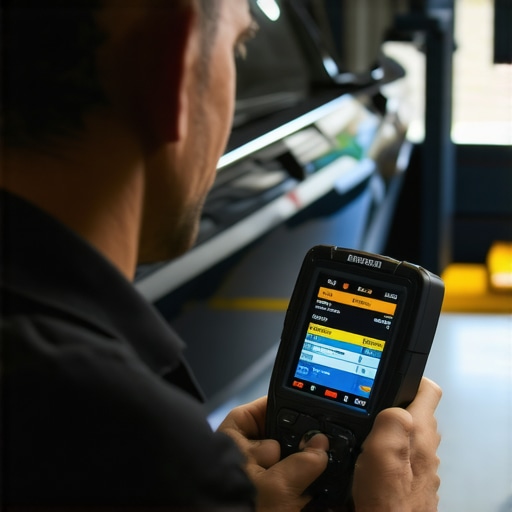
The Critical Error of Ignoring Your Steering Rack
I once worked on a sedan where the owner had replaced the tires three times in two years, chasing a ghost pull. The issue wasn’t the tires or the alignment—it was an internal bypass leak in the steering rack. One side of the hydraulic piston was under slightly more pressure than the other. This creates a steering rack failure that feels exactly like a bad alignment. It’s an expensive lesson to learn, but it’s why I always tell people to check their power steering fluid for metallic flakes during their oil change innovations routine. Have you ever fallen into this trap where a ‘simple’ fix turned into a mechanical mystery? Let me know in the comments below. For more ways to keep your ride healthy, check out these top auto repair tips to extend your vehicles lifespan and stay ahead of the curve.
You can’t just rely on a technician’s word or a computer-generated ‘green’ report when your car is fighting you for control. If you want to stop the cycle of endless shop visits, you need to upgrade your own diagnostic game. I’ve seen too many people get burned because they didn’t realize that the software in modern cars is just as important as the torque on the bolts. When I’m troubleshooting a stubborn pull that won’t go away, I don’t reach for a cheap OBD-II reader from a big-box store. I use a bi-directional scan tool that allows me to talk back to the car’s computer. This is how how advanced vehicle diagnostics prevent costly breakdowns by letting you see the live data from the steering angle sensor in real-time.
Stop Guessing with Generic Code Readers
The biggest hurdle for the average driver is the ‘knowledge gap’ created by high-tech systems. If your car has lane-keep assist, a simple alignment can actually confuse the camera systems. I always recommend using a tool that supports ADAS (Advanced Driver Assistance Systems) calibration. According to technical documentation from Hunter Engineering, failing to reset the steering angle sensor after an alignment can cause the electronic power steering to ‘fight’ the new mechanical center, resulting in a persistent drift. This is why decoding vehicle diagnostics is about more than just reading error codes; it’s about understanding how the software interprets the physical geometry of your car.
How do I keep my car tracking straight for the long haul?
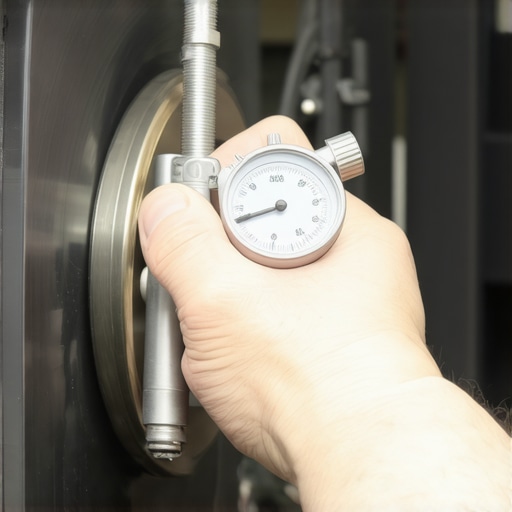
Consistency is your best friend here. Don’t wait for a pull to start thinking about your suspension. I personally use a dial indicator to check for hub runout every time I have the wheels off. If your hub is even slightly warped, it creates a microscopic wobble that the tire translates into a pull over time. You should also perform the simple way to check your wheel bearings for play every 5,000 miles. By catching a loose bearing early, you prevent the tire from scrubbing and developing an uneven wear pattern that will eventually ruin your alignment. Combine this with oil change innovations like high-performance lubricants for your steering rack, and you’ll significantly extend the life of your entire front end.
The Dial Indicator is Your Secret Weapon
If you want to be 100% sure your new tires won’t wear out in six months, you need to measure lateral runout. SAE International standards suggest that runout exceeding 0.005 inches can lead to noticeable vibrations and steering pull. I’ve found that many ‘defective’ tires are actually just mounted on hubs that have tiny bits of rust or debris trapped between the rotor and the wheel. Cleaning those surfaces with a wire brush is a simple top auto repair tip to extend your vehicles lifespan that most shops skip because they are in a hurry. It takes five extra minutes but ensures the wheel sits perfectly flush against the mounting surface.
Watch Out for the Sensor Revolution
The future of auto repair is moving toward ‘self-aligning’ systems, but we aren’t there yet. In the next few years, I predict we will see more vehicles that use real-time tire pressure and temperature data to automatically adjust the power steering assist to compensate for road crown or tire wear. Until then, you are the final line of defense. I challenge you to try this: the next time you get an alignment, ask the shop for the ‘before and after’ printout and specifically look for the ‘Thrust Angle.’ If it isn’t zero, your car will never feel right. For more advanced strategies, look into these the ultimate guide to brake service for safety and performance to ensure your stopping power matches your steering precision.
I remember the smell of fresh rubber and the shiny sidewalls. I’d just dropped a hefty chunk of change on a set of premium all-seasons. I pulled out of the shop, eager for that smooth-as-silk highway feel, but within two blocks, I realized I was constantly wrestling the wheel to the left. My car was stubbornly drifting toward the ditch on the right. It’s infuriating, isn’t it? You spend money to fix a problem or upgrade your ride, only to leave with a brand-new headache.
Why Your Straight-Line Drive Vanished with Your Old Treads
It is incredibly common to blame the alignment tech immediately, but the reality is more nuanced. Sometimes the new rubber itself is the agitator. I once made the rookie mistake of assuming that “new” meant “perfect.” I ignored a slight rightward tug for a month, thinking the tires just needed to “settle in.” By the time I took it back, I’d already started to see uneven wear. The truth is, sometimes a tire has what we call a “radial pull,” where the internal belts aren’t perfectly centered. This can make your car behave as if it has a steering rack failure that feels exactly like a bad alignment. If you aren’t careful, you might end up needing the ultimate guide to brake service for safety and performance just to keep things stable.
Is it possible the shop just sold me duds?
It is the fear that keeps every car owner up at night after a big repair bill. You wonder if you got a “Friday afternoon” set of tires or if the vehicle diagnostics were handled lazily. While manufacturing defects happen, it’s often a case of the new tires highlighting a suspension component that was already on its way out.
The Invisible Culprits Hiding Behind Your New Sidewalls
New tires provide significantly more grip and have stiffer sidewalls than your worn-out ones. This extra “bite” on the road can amplify a slight suspension sag or a worn bushing that you didn’t notice when your old tires were sliding around. Interestingly, the U.S. Tire Manufacturers Association notes that even a 2 PSI difference between the front tires can cause a noticeable pull, which is often a tire pressure mistake that ruins your tread in weeks if left unchecked. Have you ever experienced a car that drove perfectly on bald tires but went haywire the second you got new ones? It’s a frustrating paradox we’re going to solve today. Check out these top auto repair tips to extend your vehicles lifespan while we dive into the mechanical specifics.
Rule Out the Low Tire Pressure Mistake First
Before you assume the worst, go back to the absolute basics. Think of your car like a bicycle; if one tire is even slightly soft, the bike naturally leans and drifts toward that side because of increased rolling resistance. I once spent two hours diagnosing a complex ‘radial pull’ only to find out the shop’s air compressor was miscalibrated, leaving my front right tire 4 PSI lower than the left. This is a classic tire pressure mistake that ruins your tread in weeks if you just drive through it. Use a high-quality digital gauge—not the flimsy stick gauges—and ensure both front tires are exactly at the manufacturer’s recommended PSI found on your door jamb sticker. If the pull vanishes, you’ve saved yourself a $120 alignment fee.
The Five Minute Pry Bar Test for Suspension
When new, grippy rubber meets the pavement, it places much higher stress on your control arm bushings and ball joints than your old, hardened tires ever did. I remember working on an old SUV that drove straight as an arrow until we put on a fresh set of all-terrains. Suddenly, it wanted to dive into the left lane. We jacked up the front end, and sure enough, the increased traction of the new tread was simply overpowering a worn-out lower ball joint. You can perform the simple way to check your ball joints with a pry bar by lifting the wheel and looking for any vertical or horizontal play. If that joint moves even a fraction of an inch independently of the control arm, your alignment will never stay true, regardless of how many times the shop adjusts it.
How a Sticking Brake Mimics Bad Alignment
Sometimes the pull isn’t the tire or the suspension at all, but a brake caliper that has decided to partially seize. New tires provide a better ‘feel’ for the road, which often makes a dragging brake more apparent. If one side of your braking system isn’t fully retracting, it’s like walking with one shoe on a treadmill—you’re going to veer. You can identify the reason your car pulls to one side during hard braking or even while cruising by checking the temperature of your wheels after a twenty-minute drive. If one wheel hub is significantly hotter than the rest, you have a mechanical drag, not an alignment issue.
Identify a Radial Pull by Swapping Front Tires
If your pressure is perfect and your suspension is tight, you might actually have a defective tire. This is known as a radial pull. It happens when the steel belts inside the tire aren’t perfectly centered during the curing process. To test this, swap the two front tires with each other. If the car suddenly pulls in the opposite direction, you’ve found your culprit: one of those brand-new tires is a dud. This is why how advanced vehicle diagnostics prevent costly breakdowns is so vital; it helps differentiate between a part failure and a simple manufacturing defect. In some cases, a severe internal belt issue can even mimic a steering rack failure that feels exactly like a bad alignment. Don’t let a shop tell you ‘it’s just how the tires are’—if swapping them changes the direction of the pull, the tire is defective and should be replaced under warranty immediately.
The biggest mistake I see seasoned DIYers and even some chain-shop techs make is treating the alignment rack as the final authority on how a car handles. I’ve had customers come to me with a ‘perfect’ printout—everything in the green—yet their car is still trying to change lanes on its own. The contrarian truth is that those factory specifications are often wide enough to drive a truck through. If your camber is at the far positive edge on the left and the far negative edge on the right, the machine says ‘green,’ but your car is going to pull like a sled dog. This is where how advanced vehicle diagnostics prevent costly breakdowns by looking beyond just the numbers on a screen.
Stop Trusting the All Green Alignment Printout
You need to realize that a computer screen doesn’t drive your car; you do. One specific trap I see people fall into is ignoring the ‘cradle’ or subframe alignment. If you’ve hit a significant pothole, the entire subframe that holds your engine and suspension can shift. Your wheels might be aligned perfectly to the subframe, but if the subframe is crooked to the chassis, you’re essentially ‘dog-tracking’ down the road. New, high-grip tires make this sensation ten times worse because they aren’t sliding over the road surface anymore; they are fighting the chassis. This is why decoding vehicle diagnostics involves checking the thrust angle, not just the front toes.
Why does my car still pull even after a perfect laser alignment?
On modern vehicles, the culprit is often the Steering Angle Sensor (SAS). If your technician adjusted your tie rods but didn’t reset the SAS, your car’s electronic power steering might think you are in a permanent turn. The motor will actually apply ‘assist’ to return the wheel to what it thinks is center, effectively pulling you off the road. According to a technical bulletin by the Tire Industry Association, ‘conicity’—a manufacturing flaw where the tire is slightly cone-shaped—is also a major factor that alignment machines simply cannot detect. If you ignore this and keep driving, you’ll find yourself needing the ultimate guide to brake service for safety and performance much sooner as your stability control system works overtime to keep you straight.
The Critical Error of Ignoring Your Steering Rack
I once worked on a sedan where the owner had replaced the tires three times in two years, chasing a ghost pull. The issue wasn’t the tires or the alignment—it was an internal bypass leak in the steering rack. One side of the hydraulic piston was under slightly more pressure than the other. This creates a steering rack failure that feels exactly like a bad alignment. It’s an expensive lesson to learn, but it’s why I always tell people to check their power steering fluid for metallic flakes during their oil change innovations routine. Have you ever fallen into this trap where a ‘simple’ fix turned into a mechanical mystery? Let me know in the comments below. For more ways to keep your ride healthy, check out these top auto repair tips to extend your vehicles lifespan and stay ahead of the curve.
You can’t just rely on a technician’s word or a computer-generated ‘green’ report when your car is fighting you for control. If you want to stop the cycle of endless shop visits, you need to upgrade your own diagnostic game. I’ve seen too many people get burned because they didn’t realize that the software in modern cars is just as important as the torque on the bolts. When I’m troubleshooting a stubborn pull that won’t go away, I don’t reach for a cheap OBD-II reader from a big-box store. I use a bi-directional scan tool that allows me to talk back to the car’s computer. This is how how advanced vehicle diagnostics prevent costly breakdowns by letting you see the live data from the steering angle sensor in real-time.
Stop Guessing with Generic Code Readers
The biggest hurdle for the average driver is the ‘knowledge gap’ created by high-tech systems. If your car has lane-keep assist, a simple alignment can actually confuse the camera systems. I always recommend using a tool that supports ADAS (Advanced Driver Assistance Systems) calibration. According to technical documentation from Hunter Engineering, failing to reset the steering angle sensor after an alignment can cause the electronic power steering to ‘fight’ the new mechanical center, resulting in a persistent drift. This is why decoding vehicle diagnostics is about more than just reading error codes; it’s about understanding how the software interprets the physical geometry of your car.
How do I keep my car tracking straight for the long haul?
Consistency is your best friend here. Don’t wait for a pull to start thinking about your suspension. I personally use a dial indicator to check for hub runout every time I have the wheels off. If your hub is even slightly warped, it creates a microscopic wobble that the tire translates into a pull over time. You should also perform the simple way to check your wheel bearings for play every 5,000 miles. By catching a loose bearing early, you prevent the tire from scrubbing and developing an uneven wear pattern that will eventually ruin your alignment. Combine this with oil change innovations like high-performance lubricants for your steering rack, and you’ll significantly extend the life of your entire front end.
The Dial Indicator is Your Secret Weapon
If you want to be 100% sure your new tires won’t wear out in six months, you need to measure lateral runout. SAE International standards suggest that runout exceeding 0.005 inches can lead to noticeable vibrations and steering pull. I’ve found that many ‘defective’ tires are actually just mounted on hubs that have tiny bits of rust or debris trapped between the rotor and the wheel. Cleaning those surfaces with a wire brush is a simple top auto repair tip to extend your vehicles lifespan that most shops skip because they are in a hurry. It takes five extra minutes but ensures the wheel sits perfectly flush against the mounting surface.
Watch Out for the Sensor Revolution
The future of auto repair is moving toward ‘self-aligning’ systems, but we aren’t there yet. In the next few years, I predict we will see more vehicles that use real-time tire pressure and temperature data to automatically adjust the power steering assist to compensate for road crown or tire wear. Until then, you are the final line of defense. I challenge you to try this: the next time you get an alignment, ask the shop for the ‘before and after’ printout and specifically look for the ‘Thrust Angle.’ If it isn’t zero, your car will never feel right. For more advanced strategies, look into these the ultimate guide to brake service for safety and performance to ensure your stopping power matches your steering precision.
Hard-Earned Lessons from a Decade of Chasing Steering Ghosts
The most important thing I’ve learned is that a test drive is worth more than a thousand ‘all green’ alignment reports. If the car doesn’t feel right to you, it isn’t right. I’ve often found that auto repair hacks that save money without sacrificing quality usually start with trusting your gut over a screen. Another lesson: always check the ‘easy’ stuff first; I once saw a customer spend $800 on suspension parts when the real culprit was a tire pressure mistake that ruins your tread in weeks.
- Never ignore a slight vibration at high speeds; it’s the car’s way of saying something is out of balance.
- Always request a ‘Thrust Angle’ measurement; if your rear wheels aren’t following your front ones, you’ll never drive straight.
- New tires are often the ‘messenger’—they don’t cause the problem, they just finally have enough grip to show you what was already broken.
Tools I Use to Outsmart the Alignment Machine
You don’t need a million-dollar shop to get professional results. I personally rely on a few specific items to verify a shop’s work. First, a high-quality digital pressure gauge is non-negotiable. Second, I recommend decoding vehicle diagnostics using a mid-range bi-directional scanner to reset steering sensors yourself. Finally, mastering the simple way to check your ball joints with a pry bar will save you from buying tires twice because of a hidden suspension leak. #IMAGE_PLACEHOLDER_E#
Stop Fighting the Wheel and Enjoy the Road Again
Driving shouldn’t be a workout. When you finally get that perfect, effortless glide down the highway, it changes your entire relationship with your vehicle. Proper auto repair isn’t just about replacing parts; it’s about restoring the harmony between the rubber and the road. If you’re still feeling stuck, don’t hesitate to contact us for more specific guidance on your build. You deserve a car that goes exactly where you point it. Have you ever had a shop tell you your alignment was ‘perfect’ even though the car felt like it was fighting you? Let me know in the comments below.