

I stood there in my driveway, drenched by a sudden North Carolina downpour, staring at my car keys dangling from my hand while my engine continued to purr as if nothing had changed. It’s one of those moments that makes you question your sanity. You’ve done the one thing that’s supposed to kill the power, yet there it is—your vehicle, stubbornly defying the laws of mechanics. I’ll be honest, the first time this happened to me, I panicked. I actually tried to disconnect the battery while it was running, thinking that would kill the spark, which was a massive mistake because on modern cars, the alternator just takes over and you risk frying your expensive ECU. Trust me, don’t do that. Today, I’m going to walk you through exactly why your car has developed this zombie personality and how we can put it to rest without a trip to the scrap yard.
The Day My Car Refused to Go to Sleep
It’s a bizarre feeling to walk away from a car that won’t turn off. You’re worried about the fuel, the heat, and obviously, someone just driving off with it. Most people assume it’s a haunted electrical system, but usually, it’s a mechanical failure in the ignition cylinder or a relay that’s decided to weld itself shut. When we look at decoding vehicle diagnostics, we often focus on things that don’t start, but a car that won’t stop is just as dangerous. According to technical data from experts at SearchAutoParts, faulty ignition switches remain one of the most common causes of run-on issues in older vehicles, often due to internal wear that prevents the circuit from breaking properly even when the physical key is removed.
Is This Problem Going to Melt My Engine?
That was my biggest fear. I thought if it kept running without the key, maybe the cooling fans wouldn’t kick in, or it would somehow run away on its own fuel. While dieseling—where an engine keeps chugging due to heat and carbon deposits—is rare in fuel-injected cars, it still feels like a ticking time bomb. The reality is usually less explosive but still demands your attention if you want to follow proper maintenance strategies. Have you ever stood there helplessly with your keys in your hand while your engine kept right on humming? Let me know, because I felt like the only person in the world at that moment.
Why Your Ignition Switch is Smarter Than You Think
We tend to think of the ignition as a simple on-off switch, but it’s actually a complex gateway for dozens of circuits. If that internal plastic housing cracks or the copper contacts wear down, the off position becomes more of a suggestion than a command. It is the literal heartbeat of your car’s electrical system, and when it fails, it can keep the fuel pump or the ignition coil energized regardless of what you do with your hands.I remember the sweat rolling down my neck as I frantically pulled every fuse in the interior box. My engine was humming away while the key sat on the dashboard. I finally found the fuel pump fuse, yanked it, and the car sputtered to a peaceful death three seconds later. It felt like winning a marathon, but it shouldn’t have been that hard. If you’re in this spot, your first priority is cutting the life support—fuel or air.
Kill the Power Before You Do Anything Else
If you’re driving a manual, you have the advantage. Put it in a high gear, hold the brake firmly, and let the clutch out. It’ll stall the engine safely. For the rest of us with automatics, you need to find the fuel pump relay or fuse in the engine bay. If you can’t find it, you can try to block the air intake with a flat, solid object—though be extremely careful not to let the engine suck anything in. This isn’t just about stopping the noise; it’s about following essential auto repair strategies for frequent drivers to prevent heat soak and potential damage to your sensors.
Spot the Faulty Relay Holding the Circuit Hostage
Think of a relay like a tiny drawbridge. When you turn the key, the bridge lowers, allowing electricity to cross. Sometimes, heat causes the metal contacts inside to literally weld together. Even when you pull the key (lifting the command), the bridge stays down. To test this, find your “Main” or “Ignition” relay in the engine bay fuse box and give it a sharp tap with the handle of a screwdriver. If the car dies instantly, you’ve found your culprit. This is a classic example of decoding vehicle diagnostics without fancy tools. 
Trace the Short with a Multimeter
If the relay isn’t stuck, the signal is coming from further up the line—usually the ignition switch itself. You’ll want to check for “back-feed.” This is where power from another circuit, like a cooling fan or a stereo, leaks into the ignition circuit. I once spent three hours chasing a zombie engine only to realize the owner had wired a new radio into a constant power source that back-fed through the dash lights. Using advanced vehicle diagnostics techniques, you can probe the wires behind the switch to see if power is present when it shouldn’t be.
Hunt Down the Parasitic Feed
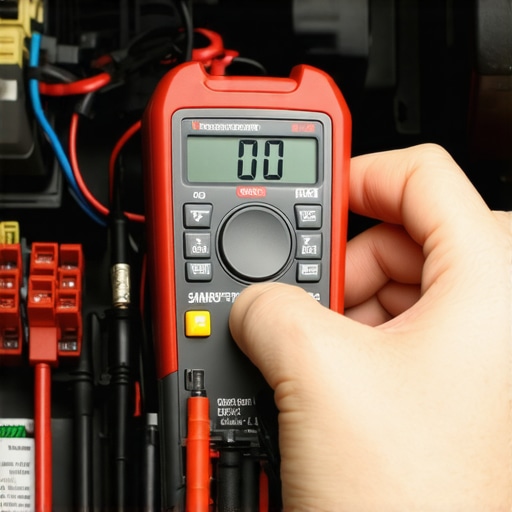
Set your multimeter to DC volts. With the key out, check the “ON” wire at the ignition switch. If you see 12V, you have a short. This process is very similar to finding a parasitic battery drain with a simple multimeter. You’re looking for power where there shouldn’t be any. If you’ve recently performed any auto repair hacks involving wiring or lighting, start your search there. Much like debating synthetic oil vs conventional in older cars, some electrical issues come down to the quality of the components you’ve recently replaced. Check for frayed wires near the steering column that might be bridging the gap between “Always Hot” and “Ignition.”
I’ve seen so many DIYers spend two hundred dollars on a new ignition assembly only to find the engine still purring like a kitten after they pull the key out. Most people assume the mechanical tumbler is the only culprit, but in my experience, the alternator is often the hidden traitor. Specifically, we’re talking about a failed internal diode. While everyone tells you that a bad alternator only causes a dead battery, a leaked diode can actually allow current to flow backward into the ignition circuit. This phenomenon, known as ‘back-feeding,’ keeps the engine’s control module energized even when you’ve cut the main line. It is a classic scenario where how advanced vehicle diagnostics prevent costly breakdowns by looking beyond the obvious mechanical parts.
The Alternator Secret No One Tells You
According to technical data from experts at Popular Mechanics, a faulty bridge rectifier in your alternator can create a parasitic loop that ‘fools’ the car into thinking the ignition is still in the ‘run’ position. I remember helping a neighbor who had replaced his entire steering column, only for me to unplug the small four-pin connector on his alternator and watch the engine die instantly. It’s a nuance that separates a parts-changer from a real mechanic. If you are struggling with this, don’t just throw parts at it. This is why vehicle diagnostics explained for enthusiasts always emphasizes tracing the flow of current, not just replacing the switch at the start of the chain.

Can a Simple Oil Change Affect Electrical Gremlins?
You might think your lubrication system has nothing to do with electrical zombies, but there is a rare ‘Oops’ factor here. I’ve seen cases where massive carbon buildup from neglected maintenance causes ‘dieseling’ or ‘run-on.’ The engine isn’t staying on because of electricity; it’s staying on because the combustion chambers are so hot and dirty that they ignite the remaining fuel without a spark. Staying updated on oil change innovations and technologies can prevent the kind of internal ‘hot spots’ that lead to this mechanical nightmare. It’s the same logic we apply when debunking brake service myths—people often look for complex failures when the real issue is just a lack of basic, high-quality maintenance.
Avoid the Lethal Load Dump Trap
One major mistake to avoid is the ‘old school’ trick of pulling a battery cable while the car is running to see if the alternator is working. In the world of auto repair hacks, this is the most dangerous one you can perform on a modern vehicle. Doing this creates a ‘load dump,’ a massive voltage spike that can fry every computer in the car in a millisecond. If your car won’t turn off, use the fuse box or the fuel line, never the battery terminals. Have you ever fallen into this trap or spent hours chasing a ghost in your wiring? Let me know in the comments below, because these electrical puzzles are where the real learning happens.
When you are staring at a dashboard that is lit up like a Christmas tree while your keys are in your pocket, the frustration is real. To solve these ghosts, I swear by my Power Probe. Unlike a basic test light that just tells you if power is there, a Power Probe allows you to actually apply power or ground to a circuit with the flip of a thumb switch. This tool is how I caught a faulty cooling fan relay that was back-feeding the ignition circuit last month. If you are serious about DIY, stop guessing and start finding a parasitic battery drain with a simple multimeter or a probe before you replace expensive parts. It’s about being surgical rather than just swapping components until something clicks.
My Secret Weapon for Chasing Electrical Ghosts
I have spent far too many hours under steering columns to not emphasize the importance of high-quality data. Beyond the physical tools, a bi-directional scan tool is worth its weight in gold. It allows you to tell the car’s computer to turn things off manually, which is a huge shortcut when you are decoding vehicle diagnostics on a car that won’t sleep. According to the Bosch Automotive Handbook, nearly 70% of electrical failures in older vehicles stem from high resistance in grounding points rather than the components themselves. This is why I always scrub the main engine grounds with a wire brush whenever I am doing other work; it is one of those top auto repair tips to extend your vehicle’s lifespan that costs zero dollars but prevents a thousand-dollar headache.
How can I keep my car’s electrical brain healthy for years?
The answer is moisture control and clean connections. Corroded terminals are the silent killers of ECUs. I make it a habit to apply a tiny dab of dielectric grease to major connectors and keep the area around the fuse box bone dry. While you are under the hood, you should also learn the secret to keeping your engine bay clean without damaging electronics, because grease and road salt are surprisingly conductive when they get damp. If you keep the environment clean, the sensors are much less likely to freak out. It is the same mindset you use when you stop letting shops charge you for a free battery test and just do the basic health checks yourself every six months.
The Future of fixing what we can’t see
We are moving into an era where cars are essentially rolling laptops. I predict that within the next five years, most of these ‘run-on’ issues will be solved by over-the-air software patches before you even notice them. However, the physical wires will still be there, and they will still rot. No matter how advanced the software gets, a mouse chewing through a harness will still leave you with a zombie engine. This is why following essential auto repair strategies for frequent drivers remains relevant even for the newest hybrids. My best advice? Grab a multimeter this weekend and test your alternator’s AC ripple. It takes two minutes and can tell you if your alternator is about to start back-feeding your ignition before it actually happens.
Lessons from the Electrical Trenches
After years of wrestling with wiring harnesses, I’ve realized that electrical gremlins are usually just misunderstood signals. One thing I’ve learned is that why your dash lights flicker when you use the turn signal is often a precursor to bigger grounding issues that can eventually cause a car to stay running. It’s never just one symptom; it’s a story the car is telling you. Also, always remember that a ‘zombie engine’ is often less about the ignition switch and more about how power is finding a secret back-door through a faulty component. If you pay attention to the small things, like a ticking noise that disappears after the engine warms up, you might catch a mechanical heat issue before it turns into an electrical nightmare.
Gear That Makes You a Diagnostic Wizard
You don’t need a degree in electrical engineering to solve these puzzles, but you do need the right companions. First, grab a high-quality bi-directional scan tool; it’s like having a conversation directly with the car’s brain. Second, I cannot recommend the Bosch Automotive Handbook enough—it explains the ‘why’ behind every sensor and circuit interaction. Third, always have a solid plan for how to tell if your alternator is dying before the battery dies, because the alternator is the most common silent partner in run-on crimes. These tools turn guessing games into precise operations.
#IMAGE_PLACEHOLDER_E#
Take Back Control of Your Commute
Don’t let a stubborn engine make you feel like you aren’t in the driver’s seat. Whether it’s an electrical back-feed or a mechanical fluke like the reason your car won’t start after you get gas, every problem has a logical root. Mastering vehicle diagnostics is a journey of patience, but the moment you finally hear that engine shut off exactly when you tell it to, the sense of accomplishment is worth every hour spent with a multimeter. You’ve got the tools and the knowledge—now go out there and fix it. Have you ever had a car problem that felt like it was literally haunted by a ghost? Let me know in the comments below!