
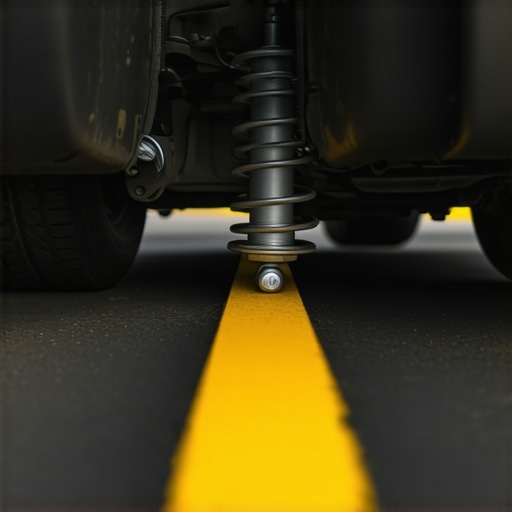
That metallic thud hit me right in the pit of my stomach as I pulled over the curb. I remember sitting there, radio off, waiting for the sound to happen again. It did. Every single time I hit a bump, it felt like my front wheels were loose, or like a heavy mallet was striking the underside of my floorboards. If you are dealing with that same annoying, rhythmic clanking, I want you to know you are not alone—and you might not be looking at a thousand-dollar repair bill. Today, we are going to narrow down exactly what is rattling under your car so you can stop worrying and get back to a quiet, confident ride.
Stop Guessing and Start Listening to Your Suspension
Most people ignore a new noise because they are afraid of what a mechanic might find. I have been there. I used to think every rattle meant a total engine failure, but often, it is just a sign that your top auto repair tips to extend your vehicles lifespan should have included a quick look at your rubber bushings. If your car is making a racket, it might even be related to why your suspension squeaks like a rusty gate over speed bumps. It is your car’s way of saying something is loose and needs attention before it gets worse. Have you noticed the sound getting more pronounced when it rains or when you have extra passengers in the car?
Can you just ignore the noise until your next oil change?
It is tempting to wait. You might think, ‘Hey, the car still drives straight, so how bad can it be?’ But here is the kicker: suspension components do not just stay broken; they cause a nasty domino effect. According to the automotive experts at ASE, neglecting steering and suspension components can lead to rapid tire wear and significantly longer stopping distances. That small clunk is actually a warning light you can hear with your own ears.
How I Wasted a Whole Weekend on the Wrong Repair
I will be the first to admit I have messed this up before. Years ago, I was so convinced my clunk was a failing steering rack that I replaced the whole unit. I spent two days on my back in a cold garage, only to realize the noise was actually a fifteen-dollar sway bar link. I did not take the time to learn how to spot a bad ball joint using a floor jack or use how advanced vehicle diagnostics prevent costly breakdowns techniques at home. I want to save you from that frustration. [IMAGE_PLACEHOLDER] We are going to look at the simple stuff first, like performing the tie rod test you can perform in your own driveway, before we even think about touching the expensive parts. Identifying the source early is the best way to keep your repair bill manageable.
Give Your Car a Push to Hear the Problem
Before you even crawl under the chassis, you can perform what I call the ‘driveway dance.’ This is essentially the bounce test, where you use your own body weight to stress the suspension while the car is stationary. If you push down hard on the front bumper and the car keeps oscillating like a bowl of Jell-O, you are likely looking at worn dampers. I remember a specific Saturday when I was helping a neighbor with his truck; we spent twenty minutes bouncing that front end until we finally heard the squeak coming specifically from the upper mount. By replicating the motion of a bumpy road without the engine noise, you can often pinpoint the exact corner causing the grief. This is one of those auto repair hacks save money without sacrificing quality because it requires zero tools. While you are at it, take a moment to look at the ground. If you see oily spots near the wheels, you need to learn how to tell if your shocks are leaking or just dirty. 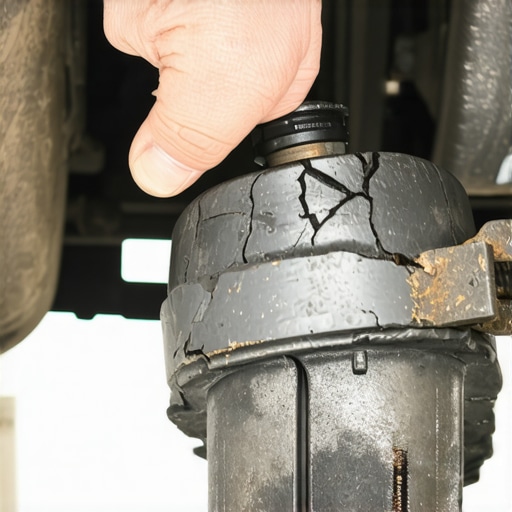
Check These Three Usual Suspects First
Most clunks originate from just a handful of components that take the most abuse from potholes. Think of your suspension like a human skeleton; the bushings are the cartilage, and once that cartilage wears thin, bone-on-bone contact creates that jarring sound.
Sway Bar Links and Bushings
These are the skinny rods that connect your suspension to the stabilizer bar. They have small ball joints on the ends that can develop ‘play’—essentially a tiny gap that allows the rod to rattle inside its socket. I once had a rattle so loud I thought my transmission was falling out, but it was just a sway bar link that had about a millimeter of wiggle room.
Ball Joints and Control Arms
If the clunk happens specifically when you hit the brakes or accelerate from a stop, your control arm bushings might be shot. These rubber pieces are designed to absorb vibration, but when they tear, the metal arm shifts and strikes its mounting bracket. This movement is dangerous because it changes your wheel geometry. If you notice your car drifting, check the tire wear pattern that reveals a bent control arm to see if the metal is actually compromised.
Strut Mounts
If the noise sounds like it is coming from the top of the dashboard, it is almost certainly a strut mount. These contain a bearing that allows the strut to rotate as you turn the wheel. When that bearing dries out or the rubber insulator collapses, every bump sends a shockwave directly into the car’s body.
Is it a Clunk or a Click?
Accuracy matters when you are decoding vehicle diagnostics what your car is trying to tell you. A clunk is usually heavy and metallic, but a rhythmic clicking or popping specifically when you are turning is a different animal entirely. In that case, you are likely dealing with a drivetrain issue rather than just a suspension rattle. You should specifically look for the clicking sound when you turn that means your cv axle is toast. Understanding the difference between a bad wheel bearing and a noisy tire is also vital because a wheel bearing will hum or growl, whereas a suspension clunk is intermittent and sharp. Learning to distinguish these sounds is the fastest way to avoid buying parts you do not actually need.Even if you have identified that annoying clunk, there is a dangerous trap most DIYers and even some shops fall into: the ‘parts cannon.’ This is the expensive habit of replacing every component in a system until the noise finally stops. In my years of wrenching, I have found that the most complex-sounding problems often have the simplest, and sometimes weirdest, causes.
Don’t Let Your Code Reader Lead You Down a Rabbit Hole
Most people believe that when a Check Engine light pops up, the scanner provides a shopping list. It does not. For instance, you might see a code for a failing catalytic converter, but why your scanner says p0420 but the converter is actually fine often comes down to a small exhaust leak or a lazy oxygen sensor. Blindly following a screen without decoding vehicle diagnostics what your car is trying to tell you through physical testing is the fastest way to empty your bank account. Experts at Vehicle Service Pros suggest that electrical voltage drops account for a significant portion of misdiagnosed component failures.
Stop Tightening Suspension Bolts with the Wheels Hanging
This is the ‘oops’ factor that ruins more repairs than anything else. When you replace a control arm or a bushing, you might be tempted to torque everything down while the car is still up on jack stands. Do not do this. If you tighten those bolts while the suspension is fully extended, the rubber bushings will be pre-twisted once the car is lowered. This leads to premature tearing. You must always wait until the vehicle is back on its own weight before performing the final tighten. This is one of those auto repair hacks save money without sacrificing quality because it prevents you from doing the same job twice in three months. 
Why Does a Five Dollar Wire Mimic a Five Hundred Dollar Component?
Sometimes, a mechanical ‘thump’ or a hard-start condition is not mechanical at all. We often overlook the ground wire problem that mimics a bad starter motor or failing transmission sensors. If electricity cannot flow back to the battery, sensors send garbage data to the computer, causing the car to jerk or stall. Before you buy an expensive alternator or starter, clean your ground points. Furthermore, be wary of the ‘too good to be true’ deal online. The truth about using cheap aftermarket sensors in your engine is that modern ECUs have incredibly tight tolerances. Using how advanced vehicle diagnostics prevent costly breakdowns effectively requires high-quality parts that speak the same language as your car’s computer. Have you ever fallen into the trap of replacing a major part only to find the problem was a simple loose wire? Let me know in the comments below!If you want to move past being a ‘parts swapper’ and start being a real troubleshooter, you have to invest in a few key pieces of hardware. I am not talking about a five-thousand-dollar tool chest, but rather the digital eyes that see what your naked eye cannot. For me, a bidirectional scan tool was the turning point in my DIY journey. It allowed me to force the vehicle to perform specific tests—like turning on a fuel pump or cycling an ABS solenoid—without having to take half the car apart. This level of control is essential for vehicle diagnostics explained easy checks before your road trip. When you can talk to your car’s computer and get straight answers, the mystery of the ‘clunk’ or the ‘misfire’ finally disappears.
The Gear That Separates Mechanics From Guessers
Beyond the scanner, my most-used tool is a simple digital multimeter. Most people think these are only for checking if a battery is dead, but they are secret weapons for finding electrical ‘ghosts’ that mimic mechanical failures. I once spent three days chasing a stalling issue that turned out to be a tiny 0.5-volt drop across a corroded fuse. Learning how to find a parasitic battery drain with a basic multimeter can save you from buying a new battery every single winter. I personally recommend a low-profile floor jack with a wide base; it is a lifesaver when you are working on lowered cars or tight suspension components. Combine that with a set of heavy-duty jack stands, and you have built a foundation for safety. I have seen too many people trust a cheap scissor jack, only to have a terrifying close call. When you are under there, it is also the perfect time to practice top auto repair tips to extend your vehicles lifespan by inspecting your rubber boots and lines for any signs of cracking or dry rot. 
How do I maintain my vehicle for the long haul?
Maintenance is not just about reacting to loud noises; it is about a scheduled offensive. I keep a physical logbook in my glovebox because digital apps can be deleted, but paper is forever. Every time I perform a thorough inspection using the ultimate guide to brake service for safety and performance, I note the thickness of the pads and the condition of the rotors. This helps me predict exactly when I will need to spend money next. If you are a high-mileage commuter, you should look into essential auto repair strategies for frequent drivers to stay ahead of the wear-and-tear curve. Do not fall for common brake service myths busted what really matters for safety; instead, focus on using high-quality synthetic fluids and keeping your caliper sliders properly lubricated.
Where Car Repair Is Headed Next
Looking forward, the DIY world is shifting toward software-defined vehicles. We are seeing more ‘over-the-air’ updates, but the mechanical fundamentals remain the same. Technical documentation from Delphi Technologies emphasizes that as engines get smaller and more turbocharged, the tolerances for sensor accuracy are becoming razor-thin. This means you cannot get away with ‘close enough’ anymore. We are also seeing oil change innovations technologies that save your engine, like ultra-low viscosity oils that require specific filtration standards to prevent sludge. To keep your car on the road for 200,000 miles, you have to embrace these technological shifts rather than fight them. Stop guessing and start measuring. Next time you suspect a sensor is bad, do not just swap it—use a multimeter to verify the signal first.
Hard Lessons from the Garage Floor
Over the years, I have learned that the loudest clunk is often the cheapest fix, while the quietest hum can be the most expensive warning. My biggest lightbulb moment was realizing that suspension parts work as a team; if you replace a sway bar link but leave a blown strut, the new link will fail in months. I also learned to trust my hands over my eyes. If you cannot see a tear in a rubber bushing, try to move it with a pry bar while the car is on stands; the movement tells the truth that a static visual inspection hides. Lastly, never underestimate the power of a torque wrench. Guessing how tight a bolt is leads to stripped threads and dangerous death wobbles on the highway. Following top auto repair tips to extend your vehicles lifespan isn’t just about oil changes; it is about the structural integrity of every bolt under your chassis.
Gear I Actually Use Every Weekend
I do not own a professional shop, but these tools are non-negotiable for my personal maintenance. First, a bidirectional scan tool. It is the only way to truly perform how advanced vehicle diagnostics prevent costly breakdowns by testing components like ABS pumps or fuel injectors without disassembly. Second, a heavy-duty floor jack and high-quality stands; never trust your life to a hydraulic seal alone. Third, a simple digital multimeter. It is the secret weapon for solving how to stop the annoying rattle behind your dashboard when that rattle is actually an electrical relay clicking erratically. I trust these tools because they provide objective data, taking the guesswork out of every Saturday morning project.
No More Fear of the Clunk
Your car is a machine, not a mystery. By taking the time to listen, feel, and measure, you take the power back from the repair shop. Whether you are following the ultimate guide to brake service for safety and performance or hunting down a phantom rattle, remember that every master mechanic started with their first thud on a curb. Don’t be afraid to get your hands dirty—it is the best way to learn the language of your vehicle. Using these auto repair hacks save money without sacrificing quality will turn you into the confident owner your car deserves. Have you ever spent days chasing a suspension noise only to find it was something incredibly simple like a loose spare tire or a forgotten tool in the trunk? Let me know in the comments below!