
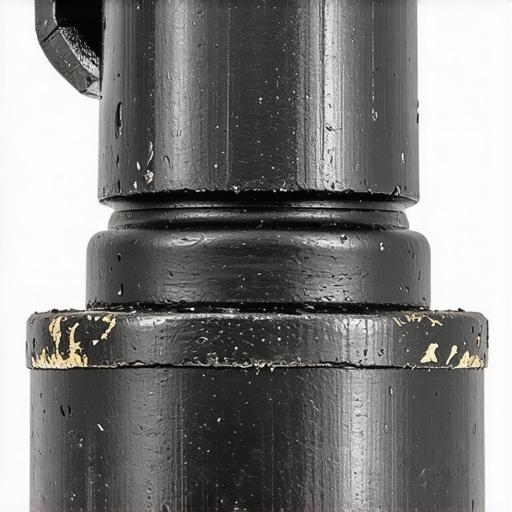
I was sitting at a busy intersection in Charlotte last July, sweat dripping down my neck because the AC was struggling, and then it happened. The RPM needle started dancing like a nervous teenager. My car shuddered, the engine died, and suddenly I was that guy—the one blocking three lanes of traffic during rush hour. I thought my transmission was toast. I even started looking up [why some junk cars in Charlotte fetch $1000](https://repairmycarpro.com/why-some-junk-cars-in-charlotte-fetch-1000-while-others-only-get-scrap-value) while others get nothing, convinced I was headed for the scrap heap. I felt that pit in my stomach, the one that says ‘expensive repair ahead.’ But I was wrong. It wasn’t the transmission, and it wasn’t a total engine failure. It was a single, soot-covered sensor that just needed a little attention.
Stop Throwing Money at Your Rough Idle
It’s a gut-punch when your car starts acting up. Most folks immediately think the worst. They start [decoding vehicle diagnostics](https://repairmycarpro.com/decoding-vehicle-diagnostics-what-your-car-is-trying-to-tell-you) and end up buying expensive fuel pumps or high-end spark plugs. I made that exact mistake early on. I once spent $300 on a new battery and an alternator because my [steering wheel was vibrating at idle](https://repairmycarpro.com/why-your-cars-steering-wheel-is-vibrating-at-idle), only to find out the culprit was a tiny valve that cost about as much as a decent steak dinner. Today, we are going to dive into the Idle Air Control (IAC) valve. This little component is responsible for keeping your engine breathing when your foot isn’t on the gas. When it gets dirty, your car loses its ‘mind’ at stoplights. By the end of this, you’ll know how to save yourself a massive mechanic bill.
Is a Simple Cleaning Actually Better Than a New Part?
You might think a cleaning sounds like a band-aid fix. We’re taught that if a part is failing, you replace it. But here’s the kicker: according to the automotive experts at [Popular Mechanics](https://www.popularmechanics.com/cars/how-to/a6428/how-to-fix-a-rough-idle/), the Idle Air Control valve often ‘fails’ simply because it’s clogged with carbon deposits, not because the internal motor is actually dead. Cleaning it can often restore your car’s smooth performance without a trip to the parts store. Identifying [this $20 sensor that usually fixes a rough idle](https://repairmycarpro.com/the-20-sensor-that-usually-fixes-a-rough-idle) is one of the most effective [top auto repair tips to extend your vehicle’s lifespan](https://repairmycarpro.com/top-auto-repair-tips-to-extend-your-vehicles-lifespan). Have you ever felt that terrifying moment where your car feels like it’s going to stall out while you’re stopped in traffic? It is a helpless feeling, but I promise you, it is often a much easier fix than you think. Let’s get into the grime and show you how to find it.
Find the Carbon Trap Near Your Throttle Body
To fix that stuttering engine, you first need to locate the Idle Air Control (IAC) valve. Think of it as the ‘nose’ of your car; when it’s stuffed up with soot, the engine can’t breathe while you’re at a stoplight. You will usually find it bolted to the throttle body on the intake manifold. It’s a small cylindrical component with an electrical connector. I remember the first time I went hunting for this on my old 2002 truck. I was so focused on the spark plugs that I completely missed the thick layer of black carbon choking this valve. I’d spent hours decoding vehicle diagnostics that pointed to ‘lean conditions’ when the real issue was just a physical blockage. Once you find it, disconnect the battery—safety first—and pop that electrical clip off.
Wrestle the Bolts Without Stripping the Metal
You’ll typically face two or three small bolts holding the valve in place. This is where things can get messy. On that same old truck, I used a cheap, worn-out wrench and rounded the head of the bolt instantly. If you find yourself in that nightmare, you’ll need to know the secret to removing a broken bolt without ruining the threads before you can proceed. Use a proper-sized socket and apply steady, even pressure. Once those bolts are out, pull the valve away. You will likely see a thick, oily black crust inside the ports. That is the enemy. This gunk is what prevents the internal pintle from moving smoothly, causing that erratic RPM dance you’re tired of feeling.
Scrub the Gunk Until the Metal Shines
Grab a can of specialized carburetor or throttle body cleaner. Do not use WD-40 or harsh degreasers that leave a residue. Spray the cleaner into the passages of the valve and let it soak for a minute. Use a cotton swab or a soft-bristled brush to gently scrub the internal surfaces. 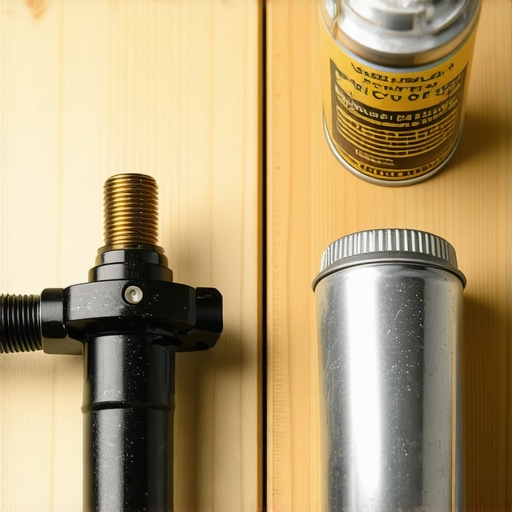 While you are at it, look at the gasket. If it’s brittle or torn, replace it immediately; a bad seal here is just as bad as a dirty valve. If cleaning doesn’t immediately solve the shakes, you might be dealing with how to find a vacuum leak with a cigar and a piece of hose, as extra air entering the system creates the exact same symptoms.
Verify the Fix Before Closing the Hood
After the valve is sparkling clean and dry, bolt it back on and reconnect the sensor. When you first start the car, the idle might be a bit high or stumble for a second as the computer relearns the airflow. This is normal. By taking twenty minutes to clean this $20 sensor that usually fixes a rough idle, you are practicing essential auto repair strategies for frequent drivers that keep you off the side of the road. If the needle stays rock steady at 700 or 800 RPM, you’ve just saved yourself the $150 a shop would have charged for a ‘diagnostic fee’ and a replacement part you didn’t actually need.But here is where most people get cocky and run into the ‘diagnostic trap.’ After a successful DIY fix like the IAC valve, it is tempting to think a $20 OBDII scanner makes you a master technician. In my experience, relying solely on a code reader is the fastest way to empty your wallet on parts you don’t need. Everyone says a ‘Lean’ code means you need a new oxygen sensor, but more often than not, it is actually a vacuum leak or a cracked intake boot. This is why how advanced vehicle diagnostics prevent costly breakdowns is about more than just reading numbers; it is about understanding the relationship between air, fuel, and spark.
Don’t Treat Your OBDII Scanner Like a Magic Wand
The biggest myth in auto repair is that the ‘Check Engine Light’ tells you exactly what is broken. It doesn’t. It tells you which system is reporting data outside of its expected range. If you jump to conclusions, you’ll end up ‘part-slapping’—throwing new components at a problem hoping one sticks. I once saw a neighbor replace an entire fuel pump because of a pressure code, only to realize later it was a $5 fuse. Before you buy anything, spend time decoding vehicle diagnostics by looking at live data. If your fuel trims are high at idle but normalize at 2500 RPM, you aren’t looking at a bad sensor; you are looking for a vacuum leak. 
Why Does My Car Still Stutter When the Computer Says Everything is Fine?
This is the advanced level of car ownership. Computers are smart, but they have ‘blind spots.’ Mechanical failures, like a slightly stretched timing chain or carbon-caked intake valves, won’t always trigger a light until the damage is severe. The experts at the National Institute for Automotive Service Excellence (ASE) point out that ‘soft codes’ or pending monitors can exist for weeks without illuminating the dashboard. If you feel a shudder but the dash is dark, you need to look at vehicle diagnostics explained through the lens of physical inspection, not just digital pings.
The Dangerous Myth of the Free Diagnostic
We have all seen the signs: ‘Free Check Engine Light Testing.’ While these are great for a quick lead, they are rarely a full diagnostic. A true diagnostic involves testing the circuit, checking for ground issues, and verifying the part’s failure. This applies to your brakes too. Many drivers think a squeak always means the pads are gone. But brake service myths busted reveal that high-frequency vibrations often come from un-lubricated slide pins or cheap hardware, not the friction material itself. If you just swap pads without addressing the hardware, you’ll be back in the driveway in a month wondering why your brakes squeak even though the pads are new.
The Reset and Pray Trap
Here is the ‘Oops’ factor that bites most DIYers: clearing the codes and heading straight to the inspection station. This is a guaranteed fail. When you clear a light, you reset the ‘Readiness Monitors.’ Your car needs a specific ‘drive cycle’ to verify the repair. If you are struggling with emissions, check the fuse that stops your car from passing emissions because a lack of power to the diagnostic port can be a hidden showstopper. Even in basic maintenance, like an oil change, the nuances matter. Modern oil change innovations mean we aren’t just dumping 10W-30 into everything anymore; the wrong viscosity can actually throw a variable valve timing code. Have you ever fallen into this ‘part-slapping’ trap or been misled by a ‘free’ scan? Let me know in the comments.
I’ve seen neighbors spend five grand on professional-grade Snap-on scanners only to be completely stumped by a dead circuit that a simple test light could have found. The reality of modern car maintenance is that you don’t need a computer science degree; you need a few core tools and the patience to use them before you start buying parts. When I’m deep in the engine bay, I’m not just looking for broken things; I’m looking for consistency.
Ditch the Guesswork for a Real Multimeter
The tool I reach for more than any other is my digital multimeter. While a code reader tells you a sensor is ‘bad,’ a multimeter tells you if the wiring is actually getting power. This is the difference between a ten-minute fix and a three-day headache. For instance, if your battery keeps dying overnight, you need to learn the secret to finding a parasitic battery drain with a simple multimeter rather than just buying a new alternator. According to the technical specifications of the Fluke 88V Automotive Multimeter, its 0.1% DC accuracy and high impedance are essential to avoid ‘ghost voltages’ that can fry sensitive engine control units. Using a cheap, low-impedance meter on a modern car is like trying to do surgery with a butter knife.

Why Vacuum Gauges Still Beat High-Tech Scanners
You might think mechanical gauges are relics of the past, but a vacuum gauge is often faster at diagnosing internal engine health than a thousand-dollar scanner. If you suspect an exhaust restriction, knowing how to tell if your catalytic converter is clogged using a vacuum gauge can save you from a massive repair bill. It provides a physical ‘live stream’ of what is happening inside the cylinders. This level of vehicle diagnostics explained through physical pressure is a lost art that every DIYer should master to truly understand how advanced vehicle diagnostics prevent costly breakdowns.
How can I maintain my car’s complex systems over time?
Maintenance isn’t just about what you do when things break; it’s about the data you collect while they are working. I keep a small notebook in my glovebox where I record the ‘normal’ operating temperatures and voltages of my car. This makes it incredibly easy to spot when a component is starting to drift before the light even comes on. Staying ahead of the curve is one of the top auto repair tips to extend your vehicle’s lifespan. Additionally, don’t ignore the fluids. With recent oil change innovations, we have access to lubricants that can actually clean internal deposits, but you have to be consistent with your intervals to see the benefit. These are essential auto repair strategies for frequent drivers who want to reach the 300,000-mile club.
Prepare for the Software-Locked Future
I predict that the next five to ten years will see a massive shift toward software-locked car components. We are already seeing manufacturers require proprietary ‘handshakes’ just to register a new battery or brake pad. This is why investing in ‘Right to Repair’ compatible tools now is vital. If you want to keep your costs low, focus on auto repair hacks to save money without sacrificing quality, like learning to use open-source diagnostic software. My challenge to you today: grab a multimeter and check your battery’s resting voltage versus its voltage while the engine is cranking. It is the quickest way to see if your car is truly ready for the next season.
What I Learned After Years of Chasing Ghost Codes
After decades of grease under my fingernails, I’ve realized that the car’s computer is often more of a witness than a judge. I used to think a sensor code meant the sensor was dead, but often it is just the messenger being choked by a bad ground or a simple vacuum leak. If you want to avoid ‘part-slapping,’ remember that air, fuel, and spark are a relationship, not isolated systems. Always check the easiest things first, like decoding vehicle diagnostics to see if a reading actually makes sense before you open your wallet. I’ve saved thousands just by looking for green corrosion on a plug rather than assuming a computer module had failed.
The Gear That Saved My Sanity in the Driveway
If you are serious about moving beyond basic maintenance, you need tools that speak the car’s language. I never go under the hood without my Fluke 88V; it is the only way to perform the secret to finding a parasitic battery drain with a simple multimeter without guessing. I also highly recommend keeping a physical vacuum gauge in your kit; it is a true ‘lie detector’ for internal engine health that no software can replicate perfectly. Finally, I swear by official factory service manuals over generic booklets. While internet forums are great, a manual gives you the exact torque specs and wiring diagrams required for essential auto repair strategies for frequent drivers.
Taking Back Control of Your Commute
There is a specific kind of confidence that comes from knowing you do not have to be at the mercy of a dealership diagnostic fee. By learning the nuances of how advanced vehicle diagnostics prevent costly breakdowns, you are not just fixing a machine; you are ensuring your own freedom and reliability on the road. Don’t be intimidated by the wires and sensors. They are just puzzles waiting for you to solve them with a bit of patience and the right mindset. Have you ever replaced an expensive part only to find out the real culprit was a dirty sensor or a blown fuse? Let me know in the comments below.