
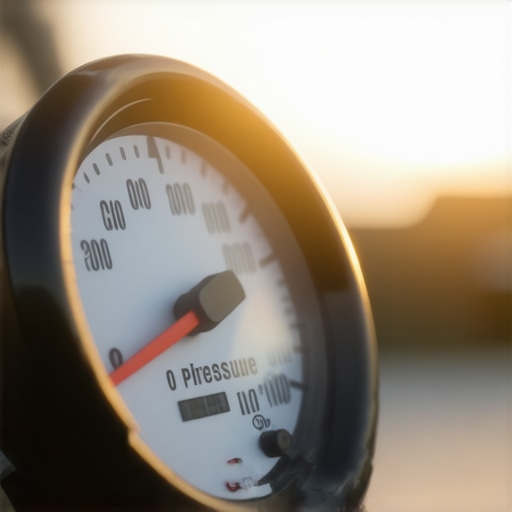
I remember the first time it happened to me. I was cruising down a dark stretch of highway in my old ’98 pickup when I noticed it: the oil pressure gauge wasn’t just sitting still—it was twitching. It looked like a nervous tick. Every time I hit a small bump or let off the gas, the needle would dance between the middle and the red zone. My heart rate spiked instantly. I pulled over, convinced my engine was about to seize up right then and there. It turns out, that jittery needle is a common cry for help, but it doesn’t always mean your car is headed for the scrap heap. It is a terrifying visual because we have been taught that oil is the lifeblood of the engine, and seeing that lifeblood appear to ‘flicker’ is enough to ruin any road trip. But after years of turning wrenches and making my own share of expensive mistakes, I have learned that your car is often just a terrible communicator. We are going to get to the bottom of this together, starting with the most likely culprits that won’t require a second mortgage to fix.
Why Your Dashboard Needle Is Having a Panic Attack
When that needle starts jumping, your brain immediately goes to the worst-case scenario. You start hearing phantom knocks and imagining a five-figure repair bill. But here is the thing: a dancing gauge is often a communication breakdown rather than a mechanical catastrophe. I learned this the hard way early in my DIY days when I spent an entire weekend—and about $400—replacing an oil pump that was perfectly fine. The actual culprit? A $20 sending unit that had simply given up the ghost. It was a humbling lesson in checking the small things first. Before you go ordering heavy parts, you need to start decoding vehicle diagnostics to see what your car is actually trying to say. According to the National Institute for Automotive Service Excellence (ASE), most modern engines should maintain between 20 and 65 psi at operating temperature, and any wild fluctuation outside of that usually points to a sensor failure or an electrical ground issue. If the needle jumps when you hit a pothole, it is almost certainly a loose wire or a bad connection. If your car is also idling poorly, you might find that the $20 sensor that usually fixes a rough idle is part of the larger electrical gremlin affecting your dash readings. We are going to look at why this happens and how you can figure out the cause without losing your mind or your savings. Often, the gauge is just reacting to electrical noise rather than actual oil flow issues.
[IMAGE_PLACEHOLDER]
Does a Flickering Needle Always Mean Your Engine Is About to Explode?
This is the fear that keeps us up at night. You see that needle move and you think the oil has stopped flowing. It is natural to be skeptical when a mechanic tells you it is ‘just a sensor.’ You wonder if they are missing a deeper problem. While low oil pressure is a serious emergency, a “dancing” needle is frequently just a sign of a failing oil pressure sending unit or even a loose wire. If the pressure was truly dropping to zero and back, you would likely hear a chorus of metallic clattering from your valves. Sometimes, it is as simple as realizing why your oil light flickers only when you are stopped, which can be tied to oil viscosity or a worn-out sensor. If you have been keeping up with oil change innovations, you know that modern synthetics handle heat better, but they cannot fix a bad electrical connection or a clogged passage to the sender unit. Have you ever seen that needle start jumping and felt your heart sink into your shoes? Let’s dive into how to tell the difference between a minor glitch and a major problem so you can drive with confidence again.
Start with the Dipstick and a Clean Rag
Before you get into the high-tech stuff, you have to verify the basics. Low oil level is the most common cause of a flickering light or a jumping needle because the pump starts sucking in air bubbles along with the lubricant. If your oil is low, the pressure fluctuates wildly as those air pockets hit the sensor. I once spent an hour diagnosing a potential pump failure on a neighbor’s car only to find out they were three quarts low because of a slow leak they hadn’t noticed. It’s a simple check, but it’s the most important one. While you are under there, it is a good time to verify the quality of the work done during your last service; you can even learn how to tell if your mechanic actually changed the oil by looking at the color and the filter’s exterior. If the oil is full and looks clean, we move to the wires.
Wiggle the Wires Before You Buy the Parts
Automotive electronics are essentially a conversation between sensors and your dashboard. When that conversation gets interrupted by a loose or corroded wire, the gauge starts ‘stuttering.’ Find your oil pressure sending unit—usually a small plug located near the oil filter or on the engine block. I remember a specific job on a Jeep where the needle would drop to zero every time the owner turned left. It wasn’t the oil moving; it was a frayed wire brushing against the steering column. These kinds of vehicle diagnostics explained often reveal that the problem is external to the engine. Give the connector a firm wiggle. If the needle jumps on the dash while you’re doing it, you’ve found a bad connection. Cleaning the terminal with some electrical contact cleaner can often save you the cost of a new sensor entirely.
The Real Way to Tell if Your Sensor Is Lying
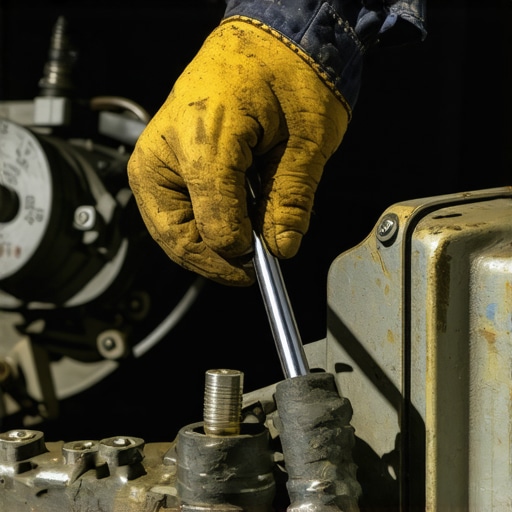
The sending unit is essentially a pressure-sensitive resistor. Over time, the internal diaphragm can rupture or get gummed up with sludge, leading to erratic readings. This is a common hurdle for those following essential auto repair strategies for frequent drivers because high mileage wears these sensors out faster. If your wiring is solid but the needle is still twitching like a caffeinated squirrel, the sensor is the prime suspect. You can test this by unplugging the sensor and grounding the wire to the engine block; if the gauge sweeps smoothly to the maximum or minimum (depending on the car), your dashboard and wiring are fine, and the sensor is definitely the liar. When you go to replace it, you might find the old one is stuck tight, but don’t panic—there is even a simple trick to removing a stuck oil filter or similar stubborn parts that applies to these sensors too.
Bypass the Computer with a Mechanical Test
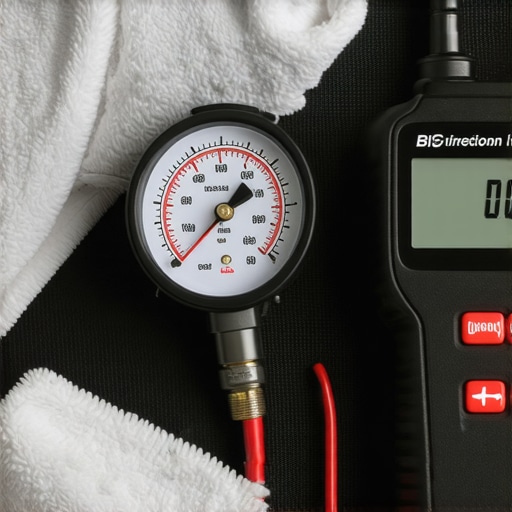
If you want 100% certainty before you start tearing into the oil pan, you need a mechanical oil pressure test kit. Think of this as the ‘lie detector’ for your engine. You temporarily remove the electronic sender and screw in a physical hose and gauge. This bypasses all the electrical gremlins, the dashboard wiring, and the computer entirely. When I did this on my old pickup, I saw a rock-steady 45 psi even when the dash needle was jumping. That was the moment I knew my engine was healthy and my dashboard was just being dramatic. This is one of the most effective auto repair hacks to save money because it prevents you from replacing expensive mechanical components when the issue is just a $20 electronic glitch. If the mechanical gauge stays steady, you can breathe a sigh of relief and focus on the small stuff.
Once you have confirmed the mechanical health of your engine, it is time to talk about the nuances that even some seasoned mechanics miss. Most ‘old school’ guys will tell you to just throw in a bottle of thick honey-like additive or switch to a heavier weight oil to stop that needle from dancing. In my experience, that is one of the worst pieces of advice you can follow for a modern vehicle. Everyone says ‘thicker is better’ for old engines, but the truth about oil additives and if they actually save your engine is that they often mask a deeper mechanical clearance issue while simultaneously making it harder for the oil to reach the top of your valvetrain during a cold start. Pressure is simply a measurement of resistance to flow; if you increase the resistance (viscosity) too much, you might see a prettier number on the dash while your camshafts are actually starving for lubrication. According to research by SAE International, modern engine tolerances are so tight that using the wrong viscosity can lead to ‘boundary lubrication’ failures where metal-on-metal contact occurs despite a high pressure reading. This is why following essential auto repair strategies for frequent drivers means sticking to the manufacturer’s specs, not the advice of a guy who last rebuilt a carburetor in 1984. High-viscosity oils create more heat through internal friction, which can actually degrade the oil faster in high-heat environments.
Why Does Your Pressure Only Drop After the Highway Exit?
This is a classic ‘pro’ level diagnostic mystery. You drive for twenty minutes at 70 mph with perfect pressure, but the moment you hit the off-ramp and slow to an idle, the needle starts its frantic dance. This happens because oil thins out significantly as it reaches its full operating temperature. If you have worn main bearings, the increased clearances allow the hot, thin oil to bleed off too easily at low RPMs when the pump is spinning slowly. While it is tempting to panic, first check if you have recently changed oil brands or weights; sometimes why your engine makes a tapping noise only after an oil change comes down to a low-quality filter with a poor anti-drainback valve rather than a catastrophic internal failure. Before assuming your engine is toast, remember that how advanced vehicle diagnostics prevent costly breakdowns often involves checking the thermal properties of your oil and the health of your cooling system first. 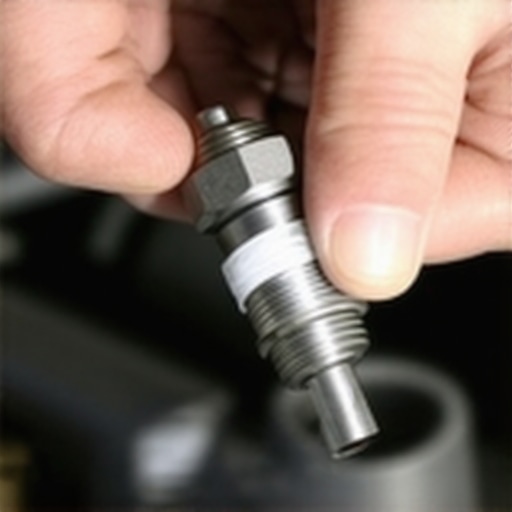
The Teflon Tape Mistake That Kills Your Reading
Here is the ‘oops’ factor that bites almost every DIYer at least once. When you install a new oil pressure sending unit, you see those threads and your instinct is to wrap them in thick layers of white Teflon tape to prevent leaks. Stop right there. Most oil sensors are single-wire units that rely on the engine block for their electrical ground. If you wrap the threads in plastic tape, you effectively insulate the sensor from the block. The result? A weak or intermittent ground that makes the needle jump or sit at zero even though the engine is perfectly healthy. I have seen people spend hundreds on new instrument clusters because of a five-cent piece of tape. Always use a conductive thread sealant or just a tiny dab of pipe dope at the top of the threads, leaving the bottom ones bare to make metal-on-metal contact. This subtle mistake is exactly why decoding vehicle diagnostics requires a physical understanding of how the circuit is completed. Have you ever fallen into this trap? Let me know in the comments. Learning these small details is what separates a parts-changer from a true mechanic. It’s about more than just swapping sensors; it is about ensuring the environment the sensor lives in is actually conducive to a clean signal.
Building a reliable maintenance routine isn’t just about owning a socket set; it’s about having the right data. If you’re serious about your car’s health, you need to move past the $20 code reader. I personally rely on a bi-directional scan tool because it allows me to perform functions that used to require a dealership visit, like cycling an ABS pump during a brake service. When you can talk back to the car’s computers, you aren’t just guessing; you’re performing vehicle diagnostics explained at a professional level. This is how you spot the reason your brake pedal feels different after a long drive before it turns into a complete hydraulic failure. It is about moving from being a passive driver to an active manager of your machine’s mechanical integrity.
How do I maintain my engine’s oil system over time?
Consistent health comes from a mix of high-quality fluids and regular data points. I always recommend sending a sample of your used oil to a lab like Blackstone Laboratories every third change. They provide a spectral analysis of wear metals in your oil, which can tell you if your bearings are wearing out long before a gauge starts jumping. This is one of those auto repair hacks to save money that professionals use to prevent engine swaps. By following top-auto-repair-tips-to-extend-your-vehicles-lifespan, you aren’t just reacting to problems; you are managing the aging process of the vehicle. Remember, according to the SAE J300 engine oil viscosity classification, even a small shift in how your oil handles heat can impact the longevity of your internal components. Staying ahead of these microscopic changes is the secret to hitting that 300,000-mile mark without a major rebuild.
Why You Should Stop Guessing and Start Measuring
If you really want to scale your DIY game, start a vehicle logbook. I know it sounds like something your grandfather would do, but tracking every oil change innovation you implement and every diagnostic code you have cleared creates a map of your car’s specific quirks. This data is invaluable when you’re trying to figure out how advanced vehicle diagnostics prevent costly breakdowns. In the very near future, I predict we will see AI-integrated OBD2 dongles that don’t just give you a code but use predictive modeling to tell you exactly which part is 500 miles away from failing based on live sensor data streams. We are moving from fix it when it breaks to fix it before it even knows it is broken. If you want to stay ahead of the curve, I challenge you to perform a mechanical pressure test this weekend even if your gauge is steady. Knowing your baseline pressure is the only way to recognize when things start to go south. It is the ultimate way to apply essential auto repair strategies for frequent drivers and ensure your car stays on the road for the long haul.
Hard-Earned Lessons from the Garage Floor
After years of chasing shadows under the hood, I have realized that a flickering needle is usually a symptom of aging electronics, not necessarily an engine’s death rattle. One of the most vital things I learned is that never ignoring a flicker is just as important as not overreacting to one. I once watched a friend sell a perfectly good SUV because he was convinced the oil pump was failing, when in reality, a corroded ground wire was the culprit. Trust your ears more than the gauge; if the engine sounds smooth but the needle is jumping, you are dealing with a data problem. Always verify your suspicions with a mechanical gauge before you start a major teardown. This is a core part of auto repair hacks to save money while maintaining high standards.
The Gear That Saved My Engine (And My Wallet)
If you want to move from guessing to knowing, you need a few specific items in your arsenal. First, a mechanical oil pressure test kit is non-negotiable for anyone serious about their vehicle’s health. It is the ultimate “lie detector” that bypasses the electrical noise. Second, I highly recommend keeping a bi-directional scan tool in your toolkit. While a basic reader is fine, a bi-directional tool allows you to perform decoding vehicle diagnostics that reveal the true health of your sensors. Lastly, don’t underestimate the power of a lab report from Blackstone Laboratories; it’s a small investment that provides a window into your engine’s future, often preventing the need for a premature oil change or unnecessary part replacement.
[IMAGE_PLACEHOLDER]
Master Your Machine and Stop the Panic
You now have the tools and the mindset to handle one of the most stressful dashboard sights with total confidence. Don’t let a dancing needle dictate your peace of mind or your travel plans. By staying proactive and applying these top auto repair tips to extend your vehicles lifespan, you are transforming yourself into a savvy owner who understands the language of their car. Your vehicle is a complex machine, but it doesn’t have to be a mysterious one. Have you ever had a dashboard light or needle turn out to be a total liar? Let me know in the comments below.