
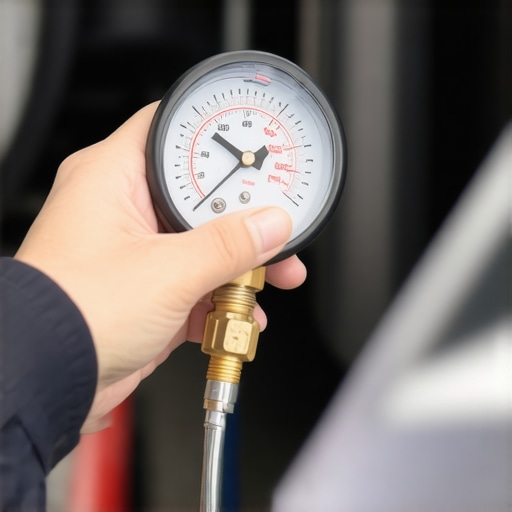
I was merging onto the highway last July, foot pinned to the floor, and my trusty truck just… wheezed. It felt like I was trying to sprint a marathon while wearing a heavy winter coat and breathing through a cocktail straw. I had just finished decoding vehicle diagnostics on my laptop, and everything looked perfect on paper, yet the power was gone. I spent three full weekends chasing ghosts and replacing sensors that weren’t even broken. It turns out, my engine wasn’t dying; it was just suffocating from the back forward. Today, I want to show you how to spot that ‘suffocating’ feeling before you start throwing money at a problem that is actually sitting right in your tailpipe.
When My Engine Started Acting Like It Was Running Underwater
I remember one specific Saturday morning where I was absolutely convinced my fuel pump was giving out. I even started looking into auto repair hacks to avoid a massive shop bill, but the hesitation persisted. The car would idle perfectly in the driveway, but the second I asked for real speed on an on-ramp, it fell flat on its face. It is a frustrating, sinking feeling that makes you lose trust in your ride. I made the classic rookie mistake of thinking a restricted exhaust would always be loud or rattling. In reality, it is often the opposite; your car becomes strangely quiet and lethargic. If you have ever felt your car lose its spirit on a steep hill or during a quick pass, you know exactly what I am talking about. We are going to dive into how you can identify the culprit, ranging from the unmistakable smell of rotten eggs to that weirdly quiet hiss coming from under the floorboards.
Is a Restricted Exhaust Actually Worth the Stress?
You might be tempted to think that a little lost horsepower is just part of the ‘charm’ of owning an older vehicle. I thought that too, until I realized how much heat was backing up into my engine block. A restricted exhaust is not just about sluggishness; it is about dangerous internal pressure. According to the engineering experts at Delphi Technologies, excessive backpressure can force spent exhaust gases to remain in the combustion chamber, which dilutes the fresh air-fuel mixture and destroys your fuel economy. I ignored my sluggish acceleration for a month, and I am honestly lucky I did not melt a valve or blow a head gasket. [IMAGE_PLACEHOLDER]
Spot the Blockage Before Your Engine Cooks
The simplest way to start your diagnosis is with your own senses and a little bit of common sense. You do not need a master’s degree in mechanical engineering to notice when your car is struggling to exhale. Often, a clogged system will cause the engine bay to feel incredibly hot, even if the gauge on your dashboard says the coolant temperature is within the normal range. You might notice your gas mileage taking a sudden, unexplained nose-dive. Some folks even start using a vacuum gauge to see if the needle drops steadily as they hold a steady RPM—a classic sign of a bottleneck. Have you ever noticed your car feeling significantly slower and more ‘muffled’ after a long drive compared to when it is cold? That is often the heat building up and expanding the internal clogs in your catalytic converter or muffler. It is a slow-motion disaster, but it is one we are going to stop right here in your driveway.
Use Your Intake to Diagnose Your Exhaust
To get down to business, you need to verify if the air coming out of your engine has a clear path to the rear bumper. Think of it like trying to blow air through a straw that has a piece of gum stuck in the middle. You can blow as hard as you want, but eventually, the pressure builds up in your cheeks. In your car, that pressure stays in the cylinders and prevents new air from entering. While how advanced vehicle diagnostics prevent costly breakdowns is usually about software, a simple mechanical gauge often tells the real story. I remember a 2004 sedan that would barely reach 40 mph. The owner thought the transmission was shot, but after five minutes with a vacuum gauge, I knew the engine was just gasping for breath.
Why the Vacuum Gauge Never Lies
Hook your vacuum gauge to a direct intake manifold port. At idle, you should see a steady reading between 17 and 21 inches of mercury. Now, hold the engine at a steady 2,500 RPM. If the needle starts to slowly drop toward zero, you have a restriction. It is like the engine is slowly inhaling its own waste. This is much more telling than just checking if you have a how a dirty engine air filter ruins your fuel economy because the filter affects the ‘inhale,’ while the exhaust affects the ‘exhale.’ If your gauge shows this drop, your catalytic converter is likely the bottleneck. You can learn more about how to tell if your catalytic converter is clogged using a vacuum gauge to confirm these readings before you start buying parts.
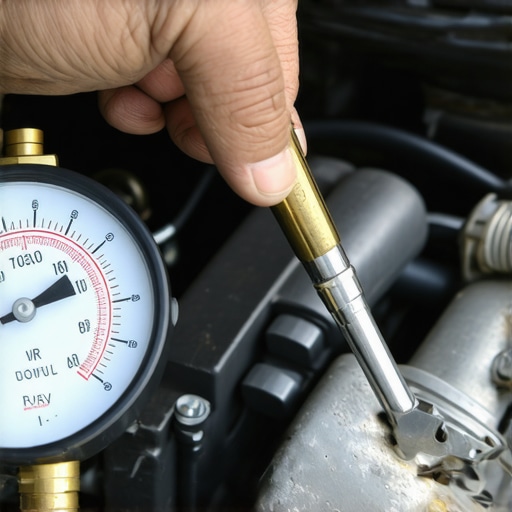
Open the Upstream Port for Instant Results
If you want a ‘quick and dirty’ test that does not involve gauges, try removing the upstream oxygen sensor. This sensor is located before the catalytic converter. By unscrewing it, you are effectively creating a ‘vent’ for the exhaust gases to escape before they hit the potential blockage. If the car suddenly regains its pep—even though it will be incredibly loud—you have found your problem. Be careful though; the exhaust is hot enough to melt nearby plastics or burn your skin. I once did this on an old SUV and it went from a lawnmower-level turtle to a roaring beast instantly. It is a messy but effective way to confirm that your smell of rotten eggs is indeed a sign of a melted internal core.
Hunt for Temperature Spikes with an Infrared Gun
Another solid trick is to use an infrared thermometer. A healthy catalytic converter should be hotter on the outlet side than the inlet side because of the chemical reaction happening inside. If the inlet is significantly hotter, or if there is a massive temperature drop across the unit, the core has likely collapsed. This is similar to how to tell if your radiator is clogged without taking it apart; you are looking for the thermal ‘logjam’ where the energy stops moving. Using top auto repair tips to extend your vehicles lifespan often starts with these simple thermal checks before you start unbolting heavy, rusted components.
Check for Physical Obstructions in the Tailpipe
Do not overlook the simple things. I once chased a suspected clogged cat for three days only to find that a customer’s kid had stuffed a tennis ball into the tailpipe as a prank. Use a flashlight and peer into the end of the exhaust. Also, look for any crushed pipes under the chassis. If you have recently gone off-road or hit a tall speed bump, a pinched pipe can cause the same symptoms as a failed sensor or an evap system leak detected warning. A restricted pipe creates backpressure that essentially acts as a speed governor for your engine, keeping you from reaching highway speeds no matter how hard you push the pedal.
I see it every single week in the shop: a frustrated owner who has already spent $1,200 on new oxygen sensors and a catalytic converter, yet the car still moves like it is stuck in wet cement. The ‘parts cannon’ is the most expensive way to fix a car. Everyone says that when the check engine light stays on, you just buy whatever part the code mentions. In my experience, that is exactly how you waste a weekend and a paycheck. Most people jump to conclusions, but how advanced vehicle diagnostics prevent costly breakdowns is really about interpreting the data, not just reading a screen. If your exhaust is restricted, the code is just the symptom; the real question is what killed the component in the first place.
Stop Firing the Parts Cannon at Your Engine
The ‘Oops’ factor here is huge. If you replace a clogged catalytic converter without identifying the root cause, you are basically throwing money into a furnace. A catalytic converter is a passive device; it doesn’t just ‘die’—it is murdered. Usually, it is murdered by an engine that is running too rich or consuming oil. It is the same logic as the reason your engine is consuming oil but not leaking it—the problem is often invisible until it causes a massive secondary failure. According to the Society of Automotive Engineers (SAE), nearly 40% of emissions-related sensor failures are actually caused by external factors like vacuum leaks or poor fuel quality rather than the sensors themselves. Before you drop $800 on a new cat, check for the spark plug gap error that is killing your gas mileage or a misfire that’s dumping raw fuel downstream.

Why a P0420 Code Doesn’t Always Mean Your Catalytic Converter is Dead
Have you ever had a mechanic tell you that your ‘cat is shot’ without even looking under the car? That is a red flag. An advanced diagnostic should involve looking at your short-term and long-term fuel trims. If your fuel trims are double digits on the positive side, your engine is overcompensating for a lean condition, which can overheat the exhaust system and mimic the symptoms of a blockage. I always tell my friends to verify the basics first, even how to tell if your mechanic actually changed the oil, because dirty or incorrect oil can actually lead to phosphorus poisoning of the exhaust core. We need to look at the car as a complete ecosystem, not a collection of independent parts.
The Hidden Link Between Oil Health and Exhaust Flow
Let’s talk about nuances that most DIYers miss: the chemistry of your oil. Many people ignore the truth about oil additives and if they actually save your engine, but some high-zinc additives can actually accelerate the clogging of your exhaust if your valve seals are leaking even a tiny amount. It is a slow, chemical restriction that a simple visual inspection won’t catch. If you are chasing a performance loss, stop looking for one ‘big’ broken part and start looking for the ‘death by a thousand cuts’ scenario. Have you ever fallen into this trap of replacing a part only to have the same check engine light pop back up two days later? Let me know your ‘parts cannon’ stories in the comments; I’ve heard some wild ones, and it usually starts with ignoring the data. Let’s make sure your next repair is the last one you need for a long time.
I’ve learned the hard way that a clean exhaust starts at the front of the car, not the back. If you want to avoid that ‘suffocating’ feeling ever again, you need to be proactive about what’s going into your cylinders. I’m a huge advocate for using high-quality synthetic lubricants because oil change innovations and technologies that save your engine are specifically designed to reduce the ash and phosphorus that eventually coat and kill your catalytic converter. I personally stick to a 5,000-mile interval regardless of what the dashboard says, simply because the cost of an extra oil change is nothing compared to a $1,500 exhaust overhaul.
How Can I Keep My Exhaust Flowing Smoothly for Years?
It comes down to staying on top of your fuel system and ignition. A single misfiring spark plug can dump enough raw fuel into your exhaust to melt a catalytic converter core in less than an hour of highway driving. That’s why essential auto repair strategies for frequent drivers always prioritize the ignition system. If you feel even a slight ‘stumble’ at a red light, don’t wait for the light to flash. Fix it now. I also recommend checking your hangers and shields regularly; how to fix a rattling heat shield for the price of a hose clamp is a great way to prevent physical damage from vibrations that can break the ceramic brick inside your converter.
Stop Guessing and Start Measuring with a Bidirectional Scanner
While I love my old-school vacuum gauge, my daily driver doesn’t move without a quick check-up from a bidirectional scan tool. I personally use an Autel unit because it lets me command the EGR valve or the fuel pump to perform tests while the car is idling. This isn’t just for pros; having the right tool is one of those top auto repair tips to extend your vehicles lifespan because it removes the guesswork. According to the ASE (Automotive Service Excellence) Engine Performance Specialist (L1) documentation, verifying fuel trim data under different load conditions is the only way to catch a ‘lazy’ oxygen sensor before it ruins your fuel economy. 
Why Future Engines Won’t Need Us to Play Detective
Looking ahead, I suspect we are nearing the end of the ‘detective’ era of auto repair. We are seeing a massive shift toward predictive maintenance where the car’s onboard computer will detect a restricted exhaust flow or a degrading sensor weeks before it affects performance. These systems will likely suggest a specific ultimate guide to brake service for safety and performance or an exhaust cleaning cycle automatically. It’s exciting, but for now, the responsibility is still on us. My challenge to you? Next time you’re under the hood, don’t just look for leaks. Grab a thermometer or a scanner and check your numbers. If your fuel trims are consistently above plus or minus 5%, you’ve got work to do. Don’t wait for the ‘suffocation’ to start; your engine and your wallet will thank you.
Three Hard Truths About Living With a Clogged Exhaust
Over the years, I’ve realized that a restricted exhaust is rarely the primary villain in the story; it’s usually the victim of a poorly maintained engine. First, don’t assume a quiet car is a healthy car. When my truck started losing power, it was actually quieter than usual because the exhaust gases couldn’t escape. Second, if you ignore the smell of rotten eggs, you are literally watching money evaporate from your wallet. Finally, trust the data over your gut. A simple check using how to tell if your catalytic converter is clogged using a vacuum gauge will save you more time than any hunch ever will.
My Go-To Kit for Diagnosing Airflow Issues
If you want to stop guessing and start fixing, you need a few reliable tools in your corner. I never tackle an exhaust issue without my long-reach infrared thermometer; it’s the fastest way to find a thermal bottleneck. I also swear by bidirectional scanners because how advanced vehicle diagnostics prevent costly breakdowns is all about seeing what the computer sees in real-time. For general maintenance that keeps these parts alive, I follow the top auto repair tips to extend your vehicles lifespan, which always includes keeping the intake system clean. These aren’t just gadgets; they are the eyes and ears you need to avoid the parts cannon frustration.
[IMAGE_PLACEHOLDER]
Reclaiming Your Horsepower
Fixing a restricted exhaust isn’t just about passing an emissions test; it’s about making your car fun to drive again. There is no better feeling than pulling onto a highway and feeling that immediate, crisp response when you tip into the throttle. By implementing essential auto repair strategies for frequent drivers, you ensure that your engine can breathe freely for the next 100,000 miles. Whether you are dealing with a simple commute or a long road trip, a clear exhaust path is the secret to a happy engine. Just like a proper ultimate guide to brake service for safety and performance keeps you safe on the stops, a healthy exhaust keeps you moving forward with confidence. Have you ever replaced a part thinking it was the problem, only to realize your car was just choking from a clogged pipe? Let me know your story in the comments below!