

I remember one freezing February morning, hunched over my steering wheel, wearing two pairs of gloves and praying for just a sliver of heat. My old sedan was humming along, but the vents were puffing out air that felt like a light breeze in a refrigerator. I was convinced the heater core had finally given up the ghost—a repair that would have cost more than the car was worth. I spent three hours researching why your car’s heater takes forever to warm up, only to realize I was overthinking it. It wasn’t a catastrophic failure; it was just a tiny, cheap valve acting like a stubborn teenager.
Stop Freezing and Start Diagnosing Like a Pro
The truth is, most of us jump to the worst-case scenario. We see a temperature gauge that won’t move and think ‘engine failure’ or ‘blown head gasket.’ But often, it’s just a tiny, spring-loaded piece of metal that’s decided to take an early retirement in the open position. When your thermostat is stuck open, coolant flows through the radiator constantly, never allowing the engine to reach its optimal operating temperature. It’s not just about your comfort, either. According to the U.S. Department of Energy, an engine running below its designed temperature can significantly tank your fuel economy because the computer keeps the fuel mixture rich to compensate for the ‘cold’ engine. I’ll admit, I made the classic rookie move years ago. I replaced a perfectly good water pump because I saw the temp needle hovering near ‘Cold.’ I didn’t know how to spot a bad water pump back then, and I wasted a whole Saturday. If I had just done the simple check I’m about to show you, I would have saved eighty bucks and a lot of sweat. This is part of mastering top auto repair tips that keep your car on the road without draining your wallet.
Is a Cheap Little Part Actually Ruining My Gas Mileage?
It sounds too easy, right? You might be thinking that a fifteen-dollar part couldn’t possibly be the reason your SUV is guzzling gas like a tank. But when your engine stays cold, it’s like running with the choke on in an old lawnmower. It’s dirty, it’s inefficient, and it causes carbon buildup. If you’ve noticed your gas mileage tanks every time the temperature drops, you’re likely dealing with exactly this. Have you ever sat in your driveway for twenty minutes just waiting for the frost to melt, only to give up and scrape it yourself? Drop a comment and let me know—I want to see if I’m the only one who’s suffered through a winter with a ‘lazy’ thermostat. [image_placeholder]
The Five Minute Touch Test for a Stuck Thermostat
Before you go out and buy a bunch of tools or book an appointment for advanced vehicle diagnostics, you can do this check right now in your driveway. All you need is a pair of hands and a little bit of patience. We’re going to use the engine’s own heat cycle to tell us the story. This is one of my favorite auto repair hacks because it requires zero specialized equipment. We are going to feel the radiator hoses as the engine warms up to see if the coolant is moving when it shouldn’t be.Pop the hood before you even think about turning the key. To get an accurate reading, we need to start with a ‘stone cold’ engine. If you’ve just come back from a grocery run, give it an hour to rest. Think of your thermostat like a gatekeeper. When it’s closed, it keeps the coolant trapped in the engine block so it can heat up quickly—like putting a lid on a pot of water. Once that coolant reaches about 190 degrees, the gate opens, and the liquid rushes into the radiator to cool down. If the gate is stuck open, that lid is off from the very start, and your engine will struggle to ever reach its proper operating temperature.
Touch the Hoses Before the Heat Kicks In
Start by identifying your two main radiator hoses. There is usually a thick one coming off the top of the engine and another one near the bottom. This is where vehicle diagnostics explained: easy checks before your road trip come in handy. You are looking for the ‘upper’ hose, which carries the hot coolant out of the engine toward the radiator. While you are down there, keep an eye out for any white crusty residue near the clamps; that is the trick to spotting a hairline crack in your radiator before it turns into a roadside emergency.
Perform the Cold Start Observation
Now, start the car and let it idle. Immediately put your hand on that upper radiator hose. In a perfectly functioning system, that hose should stay relatively cool for several minutes while the engine warms up internally. I remember doing this on my buddy Mike’s old truck last winter. He was convinced he needed a whole new radiator. We stood there in his driveway, coffee in hand, and within sixty seconds of starting his cold engine, that upper hose was already getting lukewarm. That was the ‘smoking gun.’ The thermostat was stuck wide open, letting heat escape to the radiator before the engine was even ready to use it. 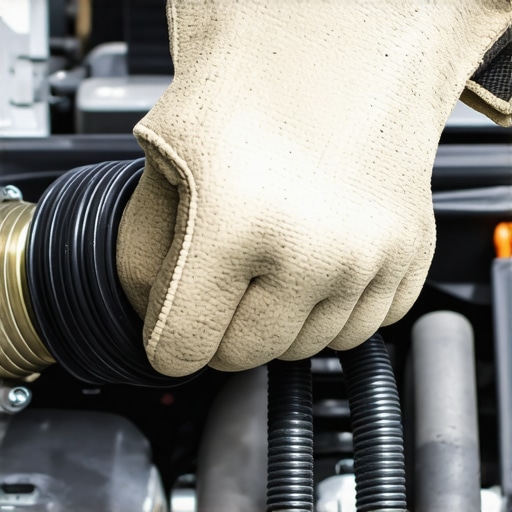
Decipher the Thermal Feedback
If you feel that hose getting gradually warmer from the moment you start the engine, your thermostat is definitely a ‘lazy’ one. It has essentially bypassed its duty, and you are losing fuel efficiency every mile you drive. This is one of those essential auto repair strategies for frequent drivers because it prevents the ‘cold-running’ state that leads to nasty sludge buildup in your oil. When an engine does not get hot enough, moisture does not evaporate out of the crankcase, which can make your next oil change innovations: technologies that save your engine much more critical for removing contaminants.
Know When It Is Not the Thermostat
If the hose stays cold for a long time and then suddenly gets hot all at once, your thermostat is actually doing its job perfectly. It held the ‘gate’ closed until the engine reached the right temperature and then snapped open. In that case, if you still have no heat in the cabin, you might be looking at a clogged heater core or a failing pump. Knowing how to spot a bad water pump before your engine overheats will help you differentiate between a flow problem and a valve problem. If the pump isn’t moving the fluid at all, neither hose will get hot, and you will see the temp gauge start to climb toward the red zone rather than staying at the bottom.
Why Not Overheating Isn’t Always a Win
Many drivers assume that as long as the needle isn’t in the red, the engine is happy. I used to think the same until I saw the inside of a cylinder head that had spent five years in a ‘lukewarm’ state. While we all fear a meltdown, running too cool is a silent, slow-motion disaster. Everyone says ‘heat kills engines,’ but in my experience, a lack of heat is what actually creates the sludge that clogs your lifters. According to research by SAE International, engines that fail to reach a steady operating temperature of at least 180°F (82°C) cannot effectively boil off the water and unburned fuel that naturally blow past the piston rings. This moisture mixes with your oil, turning it into a milky, acidic mess that eats away at your bearings. This is why some oil change innovations are specifically designed to combat low-temperature moisture buildup. Have you ever noticed a creamy white substance under your oil cap during winter? Have you ever fallen into this trap? Let me know in the comments—it’s usually the first sign of a ‘cold-running’ engine. 
Why does my car seem to run better after a long highway trip?
It’s not your imagination. A long drive allows the oil to stay hot enough for long enough to ‘self-clean’ through evaporation. If you only do short trips, you are essentially marinating your engine in its own waste. This is where the truth about synthetic oil vs conventional in older high-mileage cars becomes critical; synthetics generally handle these moisture cycles better, but they aren’t a cure-all for a stuck thermostat.
The Dangerous Trap of the Bargain-Bin Oil Filter
One of the biggest ‘oops’ factors I see involves DIYers trying to save five bucks by grabbing whatever is on the clearance rack. You might think a filter is just a filter, but I’ve seen the oil filter brand that causes low oil pressure lights ruin a perfectly good Sunday. These cheap filters often lack a proper anti-drainback valve, meaning every time you start your car, the engine runs bone-dry for several seconds. When you combine that with a cooling system that isn’t reaching temperature, you’re doubling the wear on your internals. Part of top auto repair tips to extend your vehicle’s lifespan is realizing that the cheapest part can often be the most expensive mistake.
Don’t Ignore the Hidden Signs
We often focus on the big stuff, like brake service myths busted, but the health of your car is usually found in the nuances of decoding vehicle diagnostics. If your heater is lukewarm, don’t just ‘live with it’ by wearing a heavier coat. You are actively degrading your engine’s longevity. Whether you are performing your own maintenance or trying to tell if your mechanic actually changed the oil, you need to be an advocate for your car’s thermal health. A fifteen-dollar thermostat today is much cheaper than a three-thousand-dollar engine swap next year.
The One Tool That Saves Me Every Saturday
If you really want to stop guessing about your engine’s health, you need to add an infrared thermometer to your arsenal. I am not talking about the one you use for a fever; I mean a non-contact industrial laser thermometer. This tool changed how I approach auto repair hacks forever. By pointing that laser at the inlet and outlet of your radiator, you can see the exact temperature drop happening in real-time. If the difference is too small, your radiator is likely clogged with scale. If it is too large, your coolant flow is restricted by a failing pump. When I first started using my Fluke 62 Max, I realized I could diagnose a failing heater core in thirty seconds without even getting my hands dirty. It turns how advanced vehicle diagnostics prevent costly breakdowns from a guessing game into a simple data-driven decision. This isn’t just for cooling, either; I frequently use it to check for dragging brake calipers after a long drive to see if one rotor is significantly hotter than the rest, which is a massive safety catch. #IMAGE_PLACE_HOLDER_D#
How can I keep my cooling system healthy for the long haul?
Maintenance is not just about fixing what breaks; it is about preserving the chemistry inside the metal components of your car. Most people forget that engine coolant is an electrolyte-balanced fluid designed to prevent galvanic corrosion. Over time, these corrosion inhibitors break down, and the liquid becomes acidic. According to a technical bulletin from the Gates Corporation, even slight chemical imbalances in the coolant can lead to cavitation that eats away at your water pump’s impeller blades like acid. To prevent this, I recommend a full system flush every 50,000 miles, regardless of what the ‘lifetime’ fluid claims on the bottle. This is one of those top auto repair tips to extend your vehicle’s lifespan that most DIYers ignore until they see a puddle of orange sludge on the driveway. Pair this with a thorough review of the ultimate guide to brake service for safety and performance during your annual inspection, and you will stay ahead of nearly 90% of common roadside failures.
The Future of Doing It Yourself
We are moving toward an era where vehicles will be more like mobile computers than traditional mechanical beasts. I predict that within the next decade, we will not even be feeling hoses for heat. Instead, we will be using smartphone apps that interface with built-in fiber-optic thermal sensors to give us a real-time ‘health score’ for every individual cooling passage and bearing. But until that high-tech future arrives, you have to be the sensor for your car. This proactive mindset is vital for essential auto repair strategies for frequent drivers. Whether you are tracking the latest oil change innovations or just trying to survive a winter commute, the data is there if you know where to look. My challenge to you this weekend is this: grab a laser thermometer—they are cheaper than a tank of premium gas now—and ‘map’ your engine while it is running well. Learn what ‘normal’ looks like today so you will know exactly what ‘wrong’ looks like before the smoke starts pouring out. It is the single easiest way to master vehicle diagnostics explained: easy checks before your road trip without needing a degree in mechanical engineering.
Hard Truths from my Most Expensive Cooling Mistakes
After years of turning wrenches, I’ve realized that the cooling system is often the most misunderstood part of the car. I used to think that as long as it wasn’t overheating, everything was fine. I was wrong. Here are a few lightbulb moments I’ve had while shivering in my driveway:
- The ‘Normal’ Needle is a Liar: Most modern temperature gauges are electronic and buffered. They stay perfectly in the middle even if the engine is 20 degrees too cold or 10 degrees too hot. Don’t trust the dash; trust your infrared thermometer or an OBDII live data feed.
- OEM or Bust: I once bought a five-dollar thermostat from a discount bin and it failed ‘closed’ within a week. Now, I only use original equipment manufacturer parts for cooling. It is one of those top auto repair tips to extend your vehicle’s lifespan that I swear by.
- Moisture is the Silent Killer: If you don’t let your car get hot enough to burn off condensation, you are basically creating an acidic sludge bath for your engine bearings.
Tools That Belong in Your Trunk This Weekend
You don’t need a professional shop to get professional results. If you want to dive deeper into decoding vehicle diagnostics, these are the three things I never work without:
- Non-Contact Infrared Thermometer: As mentioned, this is the gold standard for finding hot spots or stuck valves without burning your fingers. It’s also great for verifying the ultimate guide to brake service for safety and performance by checking rotor heat.
- OBDII Bluetooth Adapter: Pair this with an app like Torque. It lets you see the actual coolant temperature in degrees right on your phone. This is how how advanced vehicle diagnostics prevent costly breakdowns by giving you the data the dashboard hides.
- A Good Service Manual: Whether it is a Haynes manual or a digital subscription, knowing the exact torque specs for your thermostat housing prevents cracked plastic and messy leaks.
Your Engine Deserves a Healthy Heat Cycle
Taking care of your car isn’t just about reacting to loud noises or smoke; it is about listening to the subtle clues your vehicle gives you every morning. By performing these simple touch tests and staying proactive with your essential auto repair strategies for frequent drivers, you are ensuring that your car stays reliable for years to come. Don’t let a small, cheap part like a thermostat turn into a major headache. Get out there, pop the hood, and get to know your machine. Have you ever ignored a lukewarm heater only to find a milky mess under your oil cap later? Let me know in the comments below!