
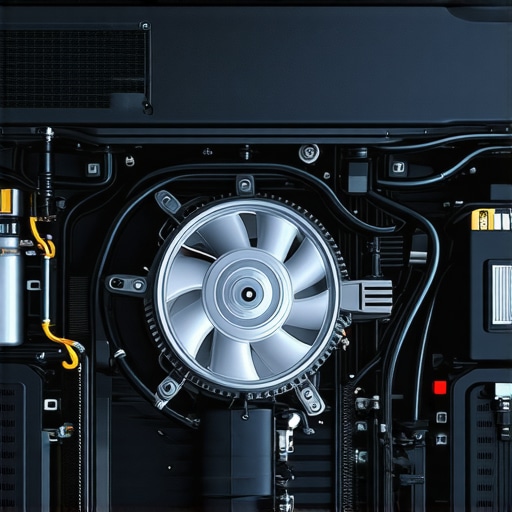
The first time I noticed my car behaving oddly, I was just pulling into my driveway after a long drive. As I stepped out of the car, I realized the radiator fan was still running loudly. It was like my car had a mind of its own, keeping that fan spinning long after I turned off the engine. At that moment, I felt that familiar mix of frustration and curiosity that every car owner knows all too well.
Understanding Why the Fan Keeps Running Post-Drive
Many drivers face this perplexing issue—it’s as if your vehicle has a secret life, with the fan humming away in the background. But why does this happen? The radiator fan is designed to cool the engine and prevent overheating. Normally, it turns off once the engine reaches a safe temperature. However, there are several reasons why yours might persist after parking, ranging from sensor glitches to thermostatic switch failures. It’s important to address this because it can point to underlying problems that, if ignored, might lead to engine overheating or increased wear and tear.
Are These Fan Issues Actually Worth the Worry?
Early on, I made the mistake of ignoring that constant fan noise, thinking it was harmless. But I soon learned that it could be a symptom of a more serious issue, such as a faulty coolant temperature sensor or stuck relay. According to automotive experts at RepairMyCarPro, such problems can escalate if unchecked, leading to costly repairs down the line. Do you find yourself wondering if your vehicle’s fan staying on is just a minor glitch or a sign of trouble? If so, you’re not alone. Many car owners overlook this issue until it’s too late, which is why understanding these signs now can save you a lot of headaches—and money. Ready to dig into the common causes and simple fixes? Let’s explore how to troubleshoot this lingering fan problem effectively.
Test the Cooling Fan Relay
Start by locating your vehicle’s relay box, usually under the hood or near the dashboard. Remove the relay responsible for the radiator fan, then reconnect the battery and observe if the fan stops running. This step helps determine if the relay is stuck open or closed, causing the fan to stay on. I once did this on my SUV, and after swapping a faulty relay, the fan shut off immediately, saving me from more extensive repairs.
Inspect the Coolant Temperature Sensor
The sensor tells your car’s computer when to activate or deactivate the fan based on engine temperature. Disconnect the sensor and test its resistance with a multimeter—refer to your car’s manual for specific values. If the sensor’s readings are out of spec, replace it. I replaced mine following the procedure in this guide, which was straightforward and resolved my overheating issue.
Check for Wiring Short Circuits
Inspect the wiring harness connected to the fan, relay, and sensor for any damage, frayed wires, or corrosion. Use a wiring diagram for your specific vehicle model to trace circuits accurately. I once found a chewed wire near the engine bay that was causing a short circuit and keeping the fan running. Repairing or replacing damaged wiring restores proper communication between components.
Test the Thermostat and Cooling System
A stuck thermostat can cause engine overheating, prompting the fan to stay active. Remove the thermostat housing, then test the thermostat by boiling it in water—if it doesn’t open at the specified temperature, replace it. Replacing my thermostat based on this test eliminated the persistent fan issue, as it was a root cause.
Use Diagnostic Tools for Deeper Analysis
If the above steps don’t resolve the problem, connect an OBD-II scanner to read engine codes and live sensor data. This can reveal hidden faults influencing the fan operation. I used a scanner to monitor coolant temperature readings in real-time; discrepancies indicated a faulty sensor. For complex cases, professional diagnostics may be necessary, but these initial steps often resolve common causes efficiently.
When it comes to vehicle maintenance, many car owners believe they understand the basics but overlook crucial nuances that can lead to costly mistakes. Contrary to popular belief, not all brake pad replacements are equal; some mechanics recommend replacing components prematurely simply because of surface wear, ignoring the fact that certain parts can be reused if inspected properly. This oversight can cause unnecessary expenses and compromise safety. A common myth is that regular oil changes are sufficient to keep the engine healthy, but many overlook the significance of analyzing oil samples for contaminants, which can reveal engine wear or coolant leaks long before visible issues arise.
Can Modern Diagnostics Detect Hidden Engine Problems Before They Cause Damage?
Advanced diagnostic tools have evolved beyond simple error codes, enabling technicians to analyze sensor data in real time. Studies, like those cited in the SAE journals, highlight that integrating these technologies can predict component failures with higher precision, saving vehicle owners from sudden breakdowns. Therefore, relying solely on transmission fluid or coolant inspections without leveraging such tools may leave underlying issues unnoticed. A potential trap many fall into involves ignoring subtle signs such as fluctuating oil pressure or irregular engine idling, which often serve as early warnings. For example, neglecting to check [your oil pressure](https://repairmycarpro.com/the-dirty-reason-your-oil-pressure-light-wont-go-away) can accelerate engine wear unseen by routine visual inspections. Additionally, choosing the wrong repair approach—like over-tightening drain plugs without cracking the pan—can lead to stripped threads or leaks, complicating maintenance further. Remember, a proper diagnosis isn’t just about replacing parts; it’s about understanding what the vehicle truly needs. For more insights on common pitfalls and expert tips, visit our article on [the importance of proper brake caliper inspection](https://repairmycarpro.com/stop-replacing-calipers-before-you-check-the-rubber-hoses). In the end, mastering these nuances ensures longevity and safety for your vehicle. Have you ever fallen into this trap? Let me know in the comments.Maintaining your vehicle effectively requires investing in the right tools and software to streamline diagnostics and repairs. One of my go-to diagnostic devices is the **OBD-II scanner**, specifically the **BlueDriver Bluetooth OBD2 Scanner**. I prefer this model because it pairs effortlessly with my smartphone and provides comprehensive code reports along with live sensor data, making complex troubleshooting accessible without a shop visit. Additionally, I always keep a **digital multimeter** like the **Fluke 115** in my toolbox. Its durability and precision are invaluable when testing sensors, relays, and wiring continuity, such as when diagnosing a persistent cooling fan issue. For oil analysis and longevity, I rely on a **magnetic oil filter drain plug**—it not only traps ferrous contaminants but also simplifies regular oil changes, allowing me to monitor oil health over time. The **Fel-Pro head gasket kit** is another critical component in my set for engine repairs, especially when addressing head gasket leaks that often mimic other issues. Beyond physical tools, I recommend using **AutoEnginuity’s ScanTool**, a professional-grade software that interfaces with various vehicle makes and models, providing in-depth diagnostics beyond standard codes. This software is instrumental in predicting potential failures before they escalate, aligning with the future trend of predictive maintenance. Looking ahead, vehicle diagnostic technology is advancing towards AI-powered analysis, promising even greater accuracy and preventive insights. To keep your vehicle running smoothly over the long haul, establish a routine of using these tools at regular intervals—trust me, early detection often saves you from costly repairs. How do I maintain diagnostic accuracy over time? Consistently update your software and calibrate your sensors annually to ensure precise readings and reliable troubleshooting. Incorporate a detailed vehicle log to track issues and repairs, which can reveal patterns and preempt system failures. If you haven’t tried using an advanced scanner like the BlueDriver, I highly recommend giving it a shot during your next maintenance session. It dramatically shortens diagnosis time and increases confidence that your vehicle is in top condition. Remember, investing in proper tools is the cornerstone of effective auto care, helping you catch problems early and keep your car reliable for years to come.
3 Unexpected Truths About Vehicle Diagnostics That Changed My Approach
One of the biggest lightbulb moments in my auto repair journey was realizing that relying solely on error codes can be misleading. Sometimes, a vehicle shows a code for a sensor, but the real issue lies elsewhere, like a wiring short or a stuck relay. This taught me to dig deeper and use comprehensive diagnostics tools instead of quick fixes.
Another lesson was understanding how minor sensor anomalies can cause major coolant fan issues. Early on, I ignored subtle temperature fluctuations, but now I know that monitoring sensor data in real time with quality tools can prevent overheating problems before they escalate, saving time and money.
Lastly, I learned the importance of cross-referencing multiple diagnostic sources. My favorite tool, the BlueDriver scanner, combined with a Digital Multimeter, has become my go-to for verifying sensor readings and wiring integrity, leading to more accurate repairs and happier customers.
Tools and Resources That Elevated My Repair Game
For anyone serious about vehicle diagnostics, the OBD-II scanner is essential—it transforms guesswork into precise data. I personally trust the BlueDriver Bluetooth OBD2 Scanner because of its intuitive interface and detailed reports that help identify lurking issues early.
Pair it with a high-quality multimeter like the Fluke 115. It’s invaluable for testing sensors and wiring circuits, especially when diagnosing persistent fan problems or coolant sensor failures.
Don’t overlook diagnostic software like AutoEnginuity. Advanced tools provide insights beyond basic codes, helping spot hidden issues such as parasitic drains or intermittent wiring faults that can cause unpredictable fan behavior.
Investing in these tools not only speeds up repairs but also enhances your confidence — turning auto repair from a guessing game into a precise science. Regularly updating your diagnostic software and maintaining your tools ensures you’ll be ready for whatever your vehicle throws at you.
Your Next Victory Starts Here
Taking control of your vehicle’s health is empowering. By embracing advanced diagnostics and learning from real-world experiences, you can prevent minor issues from turning into costly repairs. Remember, every challenge is an opportunity to become a better, more confident car owner or mechanic. So, why wait for that stubborn radiator fan issue to become a breakdown? Start applying these insights today and keep your vehicle running smoothly for miles to come.