

I still remember that Tuesday afternoon in July. I was three cars back at a long light, the kind where the asphalt literally shimmers in the heat. My AC was blasting, keeping me cool, but then I glanced down. My temperature needle wasn’t just high; it was aggressively waving at the red zone. I felt that instant pit in my stomach. Panic. My first instinct? Floor it to get some air moving. I quickly learned that was the worst thing I could do. Sitting there, watching that needle climb, is a visceral kind of stress that every driver dreads. Today, I want to walk you through exactly why your car is throwing a tantrum the moment you stop moving.
Why Your Needle Dances Toward the Red Line
Most of us do not think about our cooling system until it fails, but idling is actually the hardest job your car has to perform. When you are moving at 60 mph on the highway, air is shoved through your radiator by sheer force. At a red light, you are relying entirely on a fan and a water pump to do the heavy lifting. If one of those parts is even slightly tired, the heat builds up fast. I have seen so many people think they just need a quick oil change or a splash of coolant, but often it is a symptom of something deeper. Early in my DIY days, I made the mistake of thinking my fan was fine because I heard it spinning. Little did I know, it was not spinning at the high speed required to actually pull heat away while stationary. It cost me a radiator and a lot of pride. Trust me, decoding vehicle diagnostics early saves you from a $1,000 repair bill later.
Is My Car Just Getting Old or Is Something Actually Broken?
It is easy to shrug it off and say, “Oh, it is just a hot day.” But a healthy car should be able to sit at a red light indefinitely without the temperature spiking into the danger zone. According to the Society of Automotive Engineers, your cooling system must dissipate nearly one-third of the total energy produced by fuel combustion just to keep the engine from melting itself. If you have noticed that your car AC blows ice cold on the highway but warm at every stoplight, you are likely dealing with a lack of airflow or a failing radiator fan. Have you ever had to turn your heater on in the middle of summer just to keep your engine from exploding? I want to help you stop doing that. We are going to look at how to tell if your thermostat is stuck or if you are looking at a blown head gasket. Let us get your car idling cool again so you can stop staring at that needle in fear.
Listen for the Fan Before You Spend a Dime
To figure out why the heat stays trapped when you stop, you need to think of your radiator like a giant heat sponge. On the highway, the wind squeezes the sponge for you by forcing air through the fins. At a red light, you are completely dependent on an electric fan to mimic that wind. I once spent three hours wrestling with a water pump on my old Honda, only to realize the real culprit was a $20 relay that prevented the fan from kicking into high gear. If you do not hear a distinct ‘whoosh’ when the needle starts to climb, your fan motor or its fuse might be toast. It is one of the most overlooked top auto repair tips to extend your vehicles lifespan because heat is the ultimate engine killer. When that fan fails, the coolant sitting in your radiator just gets hotter and hotter, losing its ability to absorb any more thermal energy from the engine block. 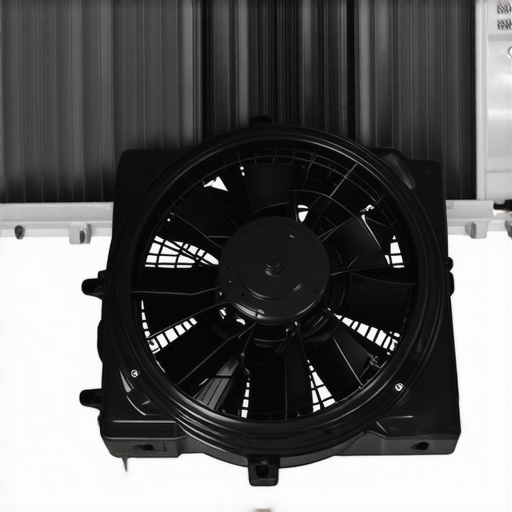
Why Bubbles in Your Reservoir Mean Trouble
If your fan is screaming but the needle is still rising, you might have air trapped in the system. Air is a terrible conductor of heat. When air pockets get stuck near the temp sensor, it reads incorrectly, or worse, prevents coolant from flowing through the narrow passages of the head. Look for the reason your coolant reservoir is bubbling after a drive; this often points to a system that isn’t holding pressure. Think of it like a straw with a tiny hole in it; you cannot get the liquid up because the vacuum is broken. This is a crucial part of decoding vehicle diagnostics at home. If you see bubbles, you likely have a leak or a failing radiator cap that is allowing the boiling point of your coolant to drop dangerously low.
Test Your Hoses Without Expensive Tools
Sometimes the problem is a physical blockage you cannot see. A radiator hose can look perfectly fine from the outside while the inner lining has collapsed, acting like a one-way valve that shuts when the engine is under stress or at a specific temperature. This is exactly the radiator hose failure you cannot see from the top. While the engine is warming up, carefully (and I mean very carefully) feel the temperature of the upper and lower hoses. If the top hose is scorching hot but the bottom one is ice cold, your radiator is internally clogged or your thermostat is refusing to open. Learning how to tell if your car thermostat is stuck open or closed is a five-minute check that can save your head gasket. I remember a buddy who ignored a ‘cold’ bottom hose for a week; he ended up warping the cylinder head because the engine was literally boiling its own internal fluids while the radiator sat there uselessly, unable to contribute to the cooling process.
Clear the Path for Fresh Air
Finally, do not underestimate the power of a garden hose. Over time, the exterior of your radiator gets packed with dead bees, road grime, and bits of plastic. If the air cannot pass through the metal fins, it does not matter how fast your fan spins. Use a low-pressure stream of water to wash the radiator from the engine side out toward the front of the car. You would be shocked at how much ‘mud’ comes out of a radiator that looks clean from the front. This simple cleaning can often drop your idling temperature by ten degrees instantly, providing that extra margin of safety you need during a summer traffic jam.
The Invisible Electrical Thief Killing Your Cooling Fan
Most people assume that if a fan isn’t spinning, the motor is dead. They run to the parts store, drop $150 on a new assembly, and then feel that crushing disappointment when the new one stays silent too. In my experience, the biggest nuance people miss is the health of the electrical return path. The ground wire problem that mimics a bad starter motor can just as easily kill your radiator fan’s efficiency. If there is corrosion on the frame where that fan grounds, it won’t matter how ‘new’ the motor is; it won’t have the current to pull air. This is where decoding vehicle diagnostics becomes about more than just reading codes; it is about understanding circuit integrity. I have seen enthusiasts spend a fortune on oil change innovations to keep their engine cool, completely ignoring a fuzzy, green battery terminal that was starving their cooling system of voltage.
Why Does My Modern Car Feel So Much More Fragile Than Older Models?
It is not just your imagination. Modern Engine Control Units (ECUs) are incredibly sensitive to voltage fluctuations. According to a technical report by the Car Care Council, neglected electrical connections are a leading cause of ‘phantom’ cooling failures. While an old truck might run fine with a loose belt, a modern car uses Pulse Width Modulation (PWM) to control fan speed. If your alternator is slightly under-performing—perhaps your car alternator is overcharging the battery or under-charging it—the ECU might prioritize essential functions and shut down high-draw items like the high-speed fan setting. This is a sophisticated safety ‘limp’ that often happens without a check engine light.
Stop Treating Your Scanner Like an Oracle
A common ‘oops’ factor I see is the blind trust in OBD-II codes. If your car is running hot and the scanner says P0420, your first instinct might be to replace the catalytic converter. However, why your scanner says p0420 but the converter is actually fine often links back to engine temperature and fuel trim issues. An overheating engine runs lean, which can trick sensors into thinking the exhaust system is failing. Furthermore, do not fall into the trap of using budget components to fix these high-stress systems; the truth about using cheap aftermarket sensors in your engine is that they often have higher resistance thresholds, causing the fan to kick in five degrees too late—exactly enough time for your head gasket to begin its slow exit.
Small Fluids, Big Consequences
Everyone talks about coolant, but let’s talk about the fluids you are ignoring. If you have been following essential auto repair strategies for frequent drivers, you know that heat radiates. If your brake fluid is old, it can actually contribute to a general ‘heat soak’ in the engine bay during stop-and-go traffic. Check the brake fluid color that means you need a flush immediately. Dark fluid absorbs more heat and can cause your master cylinder to swell, adding friction to your wheels and making the engine work harder just to stay stopped. Even the mistake of using the wrong oil viscosity can increase internal friction enough to spike temps at a red light. Have you ever fallen into the trap of replacing a ‘broken’ part only to find out it was just a dirty wire or the wrong fluid? Let me know in the comments below.I have spent too many nights in my garage frustrated by expensive parts that did not fix the problem. If you really want to graduate from a ‘parts swapper’ to a true diagnostic pro, you need to stop guessing. My absolute favorite weapon in my cabinet is a bidirectional scan tool. Unlike those cheap $20 code readers that just give you a cryptic number, a bidirectional tool allows me to talk back to the car. I can command the radiator fan to turn on at a 50% or 100% duty cycle while the engine is stone cold. This immediately tells me if the motor, the relay, and the wiring are intact without me having to wait for the car to overheat just to see if the fan works. It is one of the best auto repair hacks I know because it removes the ‘what if’ from decoding vehicle diagnostics.
How can I keep my cooling system healthy for years?
Maintaining these high-stress systems is not just about reacting when things go wrong; it is about proactive stress-testing. Every spring, before the peak heat hits, I perform a cooling system pressure test. It takes ten minutes and a relatively inexpensive kit. By pumping the system up to 15 PSI, you will see leaks from hoses or the radiator seams before they become catastrophic failures on the freeway. This falls under essential auto repair strategies for frequent drivers because a tiny pinhole leak today is a blown head gasket tomorrow. Pete Meier, a lead technical editor at Motor Age, emphasizes that many modern aluminum engines have zero tolerance for even a single overheat event. One spike to the red, and the head is warped. That is why understanding how advanced vehicle diagnostics prevent costly breakdowns is a concept you should master; catching a failing water pump bearing or a weak fan early is the only way to get 200,000 miles out of a modern vehicle. Looking ahead, I predict we are moving away from traditional mechanical water pumps toward ‘intelligent thermal management’ modules. These electric units vary flow rates precisely based on internal temperatures, which is a massive leap for fuel efficiency but makes DIY repairs more complex. Your standard top auto repair tips to extend your vehicles lifespan will soon include checking software versions and electrical resistance more than physical belts. My final advice for right now? Buy a vacuum coolant refiller. It uses shop air to create a vacuum that collapses your hoses, then sucks the coolant in to fill every corner of the engine. It is the only way to ensure 100% of the air is out, preventing those mystery bubbles that cause localized hot spots. Take twenty minutes this weekend to verify your fan’s high-speed setting using a scan tool; you will sleep much better during your next summer commute.
The Hardest Lesson I Learned About Stubborn Temp Needles
I used to think that as long as I could hear the fan spinning, the cooling system was doing its job. I was wrong. A fan motor can ‘spin’ but fail to reach the high-speed RPM necessary to pull heat through the radiator when you are stuck in traffic. I also learned the hard way that a radiator can be perfectly clean inside but completely clogged with road debris outside. This realization changed how I approach top auto repair tips to extend your vehicles lifespan. Finally, never ignore your ground wires; a corroded connection can drop your fan’s efficiency by 30% without ever blowing a fuse. This is a core part of decoding vehicle diagnostics that many pros miss.
My Go-To Arsenal for Coolant System Victory
If you want to stop guessing, you need the right gear. I swear by a bidirectional scan tool; it allows you to bypass sensors and force your fans on, which is one of my favorite auto repair hacks for fast troubleshooting. Next, a vacuum coolant refiller is non-negotiable for modern engines with complex plumbing; it ensures you never have a trapped air pocket again. I also keep a handheld infrared thermometer to check for cold spots on my radiator, and I regularly check my brake fluid color that means you need a flush immediately to keep total engine bay heat in check. For deep technical knowledge, I always turn to Motor Age technical bulletins—they provide the data that even most factory manuals skip over.
Take Charge Before the Red Zone Wins
Overheating at a red light is a terrifying feeling, but it doesn’t have to mean the end of your engine. By focusing on airflow and electrical integrity, you can master your cooling system and drive with confidence even on the hottest days. Start with the small stuff—clean your radiator fins and check your relays—before you jump to expensive water pumps. Mastering vehicle diagnostics is about observation and patience. You have the tools and the knowledge now to keep that needle exactly where it belongs. Have you ever had to blast the heater in the middle of summer just to keep your engine from melting? Let me know your most stressful overheating story in the comments below!