

I still remember the sweat on my palms as I tried to merge onto the I-77 in Charlotte. I jammed my foot down on the accelerator, expecting that familiar surge of power, but instead, my engine just… gasped. It felt like the car was holding its breath. For three terrifying seconds, I was a sitting duck in front of a semi-truck. That ‘hiccup’ or hesitation isn’t just annoying; it’s a safety hazard that makes you lose confidence in your ride. [image]
That Terrifying Moment the Power Just Disappears
It starts small. Maybe it’s just a little stumble when you’re leaving a red light, or a tiny flutter in the RPMs that you try to ignore. Then, one day, you’re trying to pass a slow-moving tractor on a two-lane road and your car acts like it’s having a philosophical debate about whether or not to actually move. If you’ve felt this, you’re probably worried your transmission is toast or your engine is on its last legs. I’ve been there, staring at the dashboard, wondering if I should just call a tow truck right then and there. I’ve spent way too much money on parts I didn’t need in the past because I was panicking. Today, we’re going to look at why this happens and how you can stop it without getting taken for a ride at the local shop.
Is this just a sign that my car is ready for the scrap heap?
I get the fear. When a car stumbles, it feels expensive. I remember early in my DIY days, I was so convinced my transmission was failing because of a shudder that I almost sold my favorite old truck for parts. I spent hours decoding vehicle diagnostics that I didn’t quite understand, convinced the computer was lying to me. It turns out, I made the classic rookie mistake: I overlooked the absolute basics because I was looking for a complicated disaster. I once replaced a perfectly good, expensive fuel pump because I didn’t know how to perform the simple test for a failing fuel pump first. The real culprit? A dirty mass airflow sensor and a tiny, cracked vacuum hose that cost me about $30 to fix. It wasn’t the engine dying; it was just the engine being ‘blinded’ by bad data.
Small Parts That Cause Massive Headaches
Think of your engine like a giant air pump. It needs a very specific mix of air and fuel to create the internal combustion that moves you forward. According to technical experts at the National Institute for Automotive Service Excellence (ASE), even a tiny deviation in that air-fuel ratio—often caused by a sensor that has just given up the ghost—can lead to massive performance drops and that signature hesitation. Often, your car is actually trying to warn you about these air-fuel issues before they leave you stranded. For instance, you might notice why your car stalls when you come to a stop sign before the hesitation becomes a constant problem during acceleration. By utilizing advanced vehicle diagnostics, we can pinpoint if the issue is a ‘lean’ condition where you have too much air, or a ‘rich’ condition where there is too much fuel. Have you ever felt that heart-stopping pause when you’re trying to pull out into traffic? I want to hear about it, because knowing exactly when it happens—uphill, downhill, or only when cold—is the first step to a cheap fix. Let’s dive into the common culprits that cause that delay.To get your car’s punch back, we have to stop thinking of the engine as a mysterious black box and start seeing it as a series of simple systems. First, we tackle the ‘nose’ of the car: the Mass Airflow (MAF) sensor. Think of it like trying to run a marathon while wearing a heavy mask; if that sensor is dirty, it can’t tell the computer how much air is coming in. I once spent a whole weekend trying to fix a ‘misfire’ on an old Camry, only to realize a single piece of fuzz on the MAF wire was causing the whole mess. Using a specific MAF cleaner—never brake cleaner—can save you hundreds, but avoid the temptation of using cheap aftermarket sensors that might send even worse data to your ECU. 
Hunt Down the Stealthy Vacuum Leaks
A vacuum leak is like a hole in a straw; you’re sucking hard, but you’re mostly just getting air instead of the ‘milkshake’ of power you want. This is a common culprit for the reason your car loses power when climbing hills. I remember working on a neighbor’s Jeep that would stumble so hard it felt like the engine was falling out. I sprayed a bit of soapy water around the intake manifold—a trick similar to how to find a slow puncture using only dish soap—and watched for bubbles or listened for a change in RPMs. Sure enough, a tiny plastic T-fitting had snapped. If you hear a high-pitched hiss, why your engine makes a whistling sound while idling is usually a vacuum line that’s given up the ghost.
Verify Your Fuel Delivery Before Buying Parts
If the air is fine, we move to the fuel. If your car hesitates only under load, it’s often because the pump can’t keep up with the demand. I once made the mistake of replacing an entire ignition system because I thought I had ‘bad spark.’ I was wrong. It was a clogged fuel filter that was starving the engine. You need to know how to tell if your fuel pump is dying by checking the fuel pressure at the rail. Performing the simple test for a failing fuel pump with a rented gauge from the auto parts store takes ten minutes and stops you from guessing. If you notice why your car smells like rotten eggs during acceleration, that’s often a sign that the engine is dumping unburnt fuel into the cat because the air-fuel mix is so skewed.
Let the Computer Point the Way
Finally, stop ignoring the ‘Service Engine Soon’ light. It’s not a suggestion; it’s a map. Even if the light isn’t on, there are ‘pending’ codes that can explain that weird stumble. By decoding vehicle diagnostics, you can see ‘fuel trims.’ If those numbers are high, the computer is screaming that it’s trying to compensate for a problem you can’t see yet. This level of advanced vehicle diagnostics isn’t just for pros; a $20 Bluetooth scanner can tell you if you’re dealing with a sensor issue or a mechanical failure.The biggest myth I see in the car world—and I used to fall for it too—is that the OBD-II port is a crystal ball. Most people believe that if a scanner spits out a code, it’s giving you a shopping list for the auto parts store. In reality, a code is just the start of a story, not the ending. For example, why your scanner says P0420 but the converter is actually fine is a classic case where a $300 part gets replaced when a $5 gasket was the real problem. According to experts at the Society of Automotive Engineers (SAE), diagnostic codes pinpoint the ‘circuit’ or ‘system’ that is out of range, but they can’t tell you if the wire is frayed, the sensor is dirty, or the mechanical part has actually failed.
Why does my check engine light vanish only to return a week later?
This is the ‘phantom’ problem that drives most drivers crazy. It usually happens because why your check engine light turns off on its own is often just the computer seeing a temporary return to ‘normal’ parameters during a specific driving cycle. If you’re only driving short distances, the computer might not even finish its self-tests. This is also where you might see the real reason your engine oil is disappearing without a leak—it could be an internal PCV issue that only triggers a code under specific highway loads. 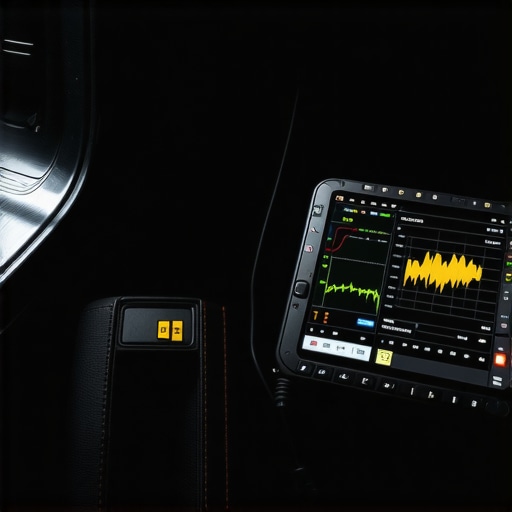
Don’t Fire the Parts Cannon Just Yet
The most expensive way to fix a car is to start ‘firing the parts cannon’—replacing every sensor in sight and hoping for a miracle. I’ve seen folks spend $500 on an alternator when the ground wire problem that mimics a bad starter motor was the actual culprit. It’s about the nuances. Even something as small as why you should never skip the crush washer on your drain plug can lead to slow leaks that eventually trigger low-pressure sensors. Before you buy that expensive catalytic converter or fuel pump, use how advanced vehicle diagnostics prevent costly breakdowns by looking at ‘live data’ instead of just the code. Have you ever fallen into this trap of replacing a part only to have the light come back on an hour later? Let me know in the comments below!
The Diagnostic Tools I Actually Keep in My Glovebox
After years of getting burned by ‘guessing’ and throwing money at problems that didn’t exist, I finally invested in a decent Bluetooth scanner. I’m not talking about a million-dollar shop setup, but something that allows me to see ‘Live Data’ on my phone. When your car is hesitating, you need to see exactly what the computer is seeing at that exact moment. I use how advanced vehicle diagnostics prevent costly breakdowns to monitor my ‘Short Term Fuel Trims’ while I’m actually driving. If I see that number spike to +20% the second I touch the accelerator, I know I’m dealing with a massive air leak or a fuel pump that’s gasping for air. This is one of those essential auto repair strategies for frequent drivers that empowers you to walk into a mechanic’s shop with data, not just a vague complaint about a ‘stumble.’ It changes the whole dynamic of the conversation. 
How do I keep my engine running this smooth for the long haul?
Longevity isn’t a result of luck or buying a ‘reliable’ brand; it’s about being obsessed with the tiny maintenance details that most people ignore until it’s too late. I’m talking about staying ahead of the curve with oil change innovations technologies that save your engine and making sure you’re not overpaying for services you don’t need, like the synthetic oil myth that costs you fifty dollars every visit. You want to follow a rhythm of top auto repair tips to extend your vehicles lifespan, which includes cleaning your Mass Airflow sensor every time you swap your air filter. According to technical bulletins from the Car Care Council, over 70% of vehicles on the road have at least one unperformed maintenance task that is actively hurting fuel economy. Even something as small as why you should never skip the crush washer on your drain plug matters because it prevents those ‘invisible’ slow leaks that eventually lead to low oil pressure and catastrophic metal-on-metal contact.
Maintain Your Whole Machine in Perfect Harmony
While we’ve been focusing heavily on the engine’s ‘breath’ and fuel, don’t forget that performance is a total package deal. A car that can accelerate like a rocket but can’t stop safely is just a fast-moving liability waiting to happen. That’s why I always integrate the ultimate guide to brake service for safety and performance into my seasonal inspection routine. Looking ahead, I predict we are entering the era of ‘Self-Diagnostic’ cars where AI-driven telematics will alert your phone the second a spark plug starts to foul, long before you feel that first hiccup on the highway. Until that becomes standard on every budget sedan, you have to be the chief engineer of your own ride. My challenge for you this weekend is to grab a basic scanner and check your idle fuel trims; you might be shocked at the story your engine is trying to tell you.
The Day I Stopped Trusting My Gut and Started Reading the Data
Looking back at my first few years under the hood, I realize I wasted thousands of dollars trying to outsmart the car’s computer. One major lightbulb moment was realizing that the truth about using cheap aftermarket sensors is that they often create more problems than they solve. I also learned that why your check engine light turns off on its own isn’t a sign the car fixed itself; it’s just a pause in the diagnostic cycle. Most importantly, I found that auto repair hacks save money without sacrificing quality when you focus on cleaning components rather than just replacing them. Finally, never ignore the basics like how to tell if your serpentine belt is about to fail, because power delivery depends on the whole system working in sync.
The Diagnostics Kit That Lives in My Trunk
I don’t leave home without a few specific items that have saved my skin on the road more than once. First is a reliable OBD-II Bluetooth adapter; it’s the only way to perform vehicle diagnostics explained easy checks before your road trip. Second, I always carry a can of specialized MAF cleaner and a basic multimeter to test for the ground wire problem that mimics a bad starter motor. I also keep a copy of my car’s specific torque specs, especially for things like why you should never skip the crush washer on your drain plug. These tools turn a breakdown into a minor inconvenience.
Take Back Control of Your Drive Today
Hesitation is a thief—it steals your confidence and your safety. But now that you know how to hunt down vacuum leaks and interpret fuel trims, you don’t have to be at the mercy of a dealership’s service desk. Mastering vehicle diagnostics is the ultimate superpower for any driver. It’s time to pop the hood and see what your car is trying to tell you. Have you ever had a hesitation problem that turned out to be something incredibly simple? Let me know in the comments below!