

I still remember the first time I felt that punch of sulfur. I was merging onto the interstate, late for a first date, and as I stepped on the gas, it felt like a stink bomb went off in the back seat. I panicked. I thought maybe I had run over something, or worse, that my car was about to explode. I made the classic rookie mistake: I convinced myself I just bought a bad batch of gas and kept driving for three weeks. By the time I finally took it in, my exhaust system was practically fused shut. It was a costly lesson in why you shouldn’t ignore what your nose is telling you. Today, we are going to get to the bottom of that funky scent so you do not end up stranded with a melted tailpipe.
That Sulfur Stench Isn’t Just Your Imagination
If you are smelling rotten eggs when you are heavy on the throttle, your car is essentially crying for help. Most of the time, this points directly to your catalytic converter, but it is not the only culprit. When you accelerate, your engine pumps more fuel through the system. If that fuel is not burning properly, it hits the converter as raw sulfur, and well, you know the result. I have seen folks spend a fortune replacing parts they did not need because they did not start with vehicle diagnostics explained for the everyday driver. You might think it is a death sentence for your wallet, but catching it early is the difference between a simple tune-up and a multi-thousand dollar exhaust overhaul.
Is a Rotten Egg Smell Always an Expensive Fix?
It is the question that keeps every car owner up at night. The short answer? Not necessarily, but you have to act fast. Sometimes it is just a faulty fuel pressure regulator or even a battery that is overcharging and boiling over. However, if you notice the reason your car loses power when climbing hills accompanied by that smell, you are likely looking at a restriction in the exhaust. According to the Environmental Protection Agency (EPA), a healthy catalytic converter can reach operating temperatures of nearly 1,600 degrees Fahrenheit, and when they fail, they can actually become a fire hazard. Have you ever had to pull over because the smell inside your cabin got too intense? I want to help you figure out how to tell if your catalytic converter is actually clogged before you start throwing money at parts you do not need. Sometimes understanding why your scanner says p0420 but the converter is actually fine is the key to a much simpler fix than you would expect. Let us look at the specific steps to diagnose this without losing your mind. [image_placeholder]
Narrowing Down the Source of that Sulfur Smell
To fix this without going broke, you have to play detective rather than a parts-replacer. Start with your dashboard. Even if the Check Engine light isn’t staring you down, the computer often stores ‘pending’ codes that haven’t quite reached the threshold to trigger a warning. I once spent a whole Saturday tearing apart an exhaust manifold only to find out it was a simple oxygen sensor glitch that hadn’t triggered the light yet. This is where decoding vehicle diagnostics becomes your best friend. If you see a P0420 code, don’t just buy a new converter immediately. Take a minute to learn why your scanner says p0420 but the converter is actually fine because a vacuum leak or an exhaust leak upstream can trick the sensor into reporting a failure that doesn’t exist.
Use an Infrared Thermometer to Find the Clog
Think of your catalytic converter like a digestive system. It needs to be hotter on the way out than it was on the way in because the chemical reactions inside generate heat. Grab an infrared thermometer—it is the $20 tool every driver needs for basic electrical troubleshooting and mechanical checks. With the engine fully warmed up, point the laser at the pipe just before the converter and then at the pipe just after it. A healthy converter should be at least 100 degrees hotter at the outlet. If the outlet is cooler than the inlet, the internal ceramic honeycombs are likely melted or clogged. It is like trying to run a marathon while breathing through a tiny coffee stirrer; the engine just cannot exhale, and that sulfur smell is the byproduct of that struggle. 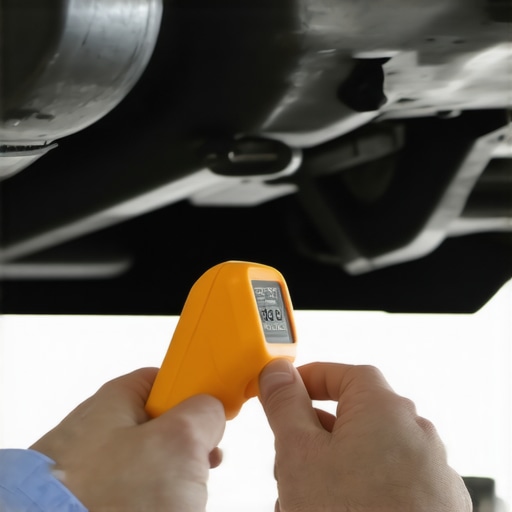
Rule Out a Boiling Battery Before Buying Exhaust Parts
Sometimes that rotten egg smell isn’t coming from the tailpipe at all, even though it feels like it is. I remember a neighbor who was convinced their exhaust was dying, but the smell was actually wafting from under the hood. Their alternator was pushing too much voltage, essentially boiling the battery acid and venting sulfur gas right into the cabin air intake. You need to know how to tell if your car alternator is overcharging the battery before you drop a thousand dollars on an exhaust overhaul. A quick voltmeter check across the battery terminals while the engine is running should show between 13.5 and 14.7 volts. If you see 15 volts or more, you have found your ‘stink bomb’ and saved yourself a massive repair bill.
The Backpressure Reality Check
If the car feels sluggish, almost like it is dragging an anchor, you might have a physical blockage. This is often the reason your car loses power when climbing hills. A simple way to check this at home is to remove the upstream oxygen sensor—the one located before the converter—and take a short, very loud drive around the block. If the power suddenly returns and the car feels alive again, you have confirmed that the exhaust path is restricted. It is a messy, noisy test that will definitely annoy your neighbors, but it provides an undeniable answer that no computer sensor can fake. Understanding how to tell if your catalytic converter is actually clogged through these physical tests ensures you only replace the parts that are actually broken.Let’s dig deeper into why most people—and even some shops—get the sulfur smell diagnosis completely wrong. Most mechanics will tell you that a P0420 code is a death sentence for your exhaust, but I have found that to be a lazy assumption. People often think the onboard computer is an all-knowing oracle, but it is actually just a data logger. If you blindly replace the converter because of a code, you are ignoring the nuance of how sensors interact. This is why how advanced vehicle diagnostics prevent costly breakdowns is a skill every driver should value. I once saw a DIYer replace their converter twice in one year because they did not realize a small, whistling vacuum leak was the real culprit, tricking the computer into thinking the exhaust was the problem.
Stop Assuming the Computer is Always Right
A common myth is that the oxygen sensor only monitors emissions. In reality, it is the primary feedback loop for your fuel trim. When that sulfur smell hits, the ‘oops’ factor usually comes down to the quality of the replacement parts you choose. I see folks trying to save fifty bucks by buying generic parts from massive online marketplaces, but the truth about using cheap aftermarket sensors in your engine is that they often have different resistance values than original equipment. Your car’s computer will detect that slight variation and throw the same error code you just spent hundreds to fix, leading you to believe the catalytic converter is still bad. It is a frustrating, expensive loop that is easily avoided by sticking to OEM-spec components. 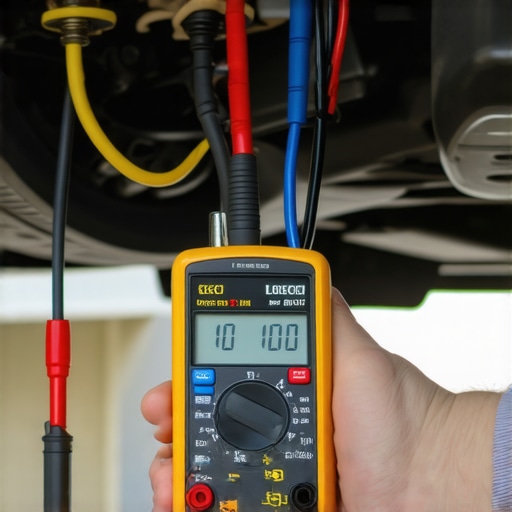
Can Your Engine Oil Actually Kill Your Exhaust System?
You might think an oil change has nothing to do with a rotten egg smell, but the two systems are intimately linked. If your engine is consuming oil—even if it is not dripping on the driveway—that oil is being vaporized and sent directly into the catalytic converter. Over time, the phosphorus and zinc in the oil coat the precious metals inside the converter, ‘poisoning’ the chemical reaction and causing that unmistakable odor. This is often the reason your engine consumes oil without a visible leak. If you stay on top of oil change innovations, you are not just protecting your internal bearings; you are protecting your $1,500 exhaust system from a premature death.
The Expert Reality of Diagnostic Accuracy
According to the National Institute for Automotive Service Excellence (ASE), the most common error in modern repair is ‘part-swapping’—the practice of replacing components based on a code description rather than testing the circuit. For example, if you notice why your engine oil level rises between oil changes, it could mean raw fuel is diluting the oil, which eventually superheats and destroys the converter’s internal honeycomb. Have you ever fallen into this trap of replacing a part only to have the same warning light pop back up a week later? Let me know in the comments.If you want to stop the cycle of part-swapping and actually fix your car’s issues, you need to upgrade your toolkit beyond a basic code reader. While I love a bargain, the biggest game-changer for me was investing in a bi-directional scan tool. Unlike those cheap dongles that just give you a code, a bi-directional tool lets you talk back to the car. For example, if you suspect that sulfur smell is coming from a rich fuel condition caused by a stuck-open injector, you can manually shut off individual injectors while the engine is running to see if the trim levels balance out. This is exactly how how advanced vehicle diagnostics prevent costly breakdowns by pinpointing the failure to a specific cylinder rather than a whole bank of expensive sensors. 
Your Car Deserves More Than a Cheap Code Reader
Most people don’t realize that their car’s computer is hiding deep secrets in ‘Mode $06’ data. According to the SAE J1979 standard, which governs OBDII communication protocols, Mode $06 allows you to see the results of self-diagnostic tests that haven’t yet triggered a dashboard light. If I had checked this data years ago, I would have seen my catalytic converter’s efficiency slowly dipping toward the failure threshold months before the stink started. By monitoring these ‘non-continuous monitors,’ you can catch a failing component while it is still a $50 sensor issue rather than waiting for it to become a $1,200 exhaust disaster. This level of foresight is one of the essential auto repair strategies for frequent drivers who can’t afford to be off the road.
How can you prevent these diagnostic nightmares before they start?
Staying ahead of the curve means looking at your car as an integrated ecosystem. You cannot expect your exhaust to stay clean if you are neglecting basic maintenance elsewhere. For instance, oil change innovations have introduced low-SAPS (Sulfated Ash, Phosphorus, and Sulfur) oils specifically designed to protect the delicate honeycombs inside your catalytic converter. If you use the wrong viscosity or a low-quality oil, you are essentially feeding your exhaust system slow-acting poison. Incorporating top auto repair tips to extend your vehicles lifespan, like cleaning your MAF sensor every other oil change, ensures the air-fuel mixture stays perfect, preventing the unburnt fuel that causes that rotten egg stench.
The Future of Finding the Stink
I truly believe we are moving toward a world of predictive AI diagnostics where your phone will alert you that a sensor is drifting out of spec before you ever smell sulfur. Until then, you are the primary defense. The next time you hear a strange sound or smell something funky, don’t just reach for a generic part; reach for your scanner and look at the live data stream. I want you to try this: the next time you are under the hood, check your long-term fuel trims. If they are higher than 10%, you have a lingering issue that is currently cooking your catalytic converter. Catch it now and save your future self a massive headache.
The Costly Truth About Smelly Exhaust I Wish I Knew Sooner
I have spent years under the hood, and the most painful lesson I learned is that a bad smell is often a symptom, not the root cause. If I could go back in time, I would tell myself to stop assuming the worst-case scenario immediately. For instance, never skip the basics like checking for vacuum leaks before buying a thousand-dollar part. I have seen so many drivers get overwhelmed when they could have used auto repair hacks save money without sacrificing quality by focusing on testing rather than guessing. Another lightbulb moment was realizing how much the truth about using cheap aftermarket sensors in your engine can derail a repair. Those generic sensors often lead to phantom codes that make you think your catalytic converter is still dead when it is actually fine. Finally, remember that your car’s smell is a direct line of communication; ignoring that sulfur punch today is an invitation for a breakdown tomorrow.
The Essential Gear for Hunting Down Engine Gremlins
If you want to handle these issues like a pro, you need more than just a basic wrench set. I personally rely on three specific resources to keep my vehicles running sweet instead of stinky. First, an infrared thermometer is non-negotiable for checking exhaust temperatures and finding clogs without disassembly. Second, I always recommend starting with vehicle diagnostics explained for any driver who wants to avoid being taken advantage of at the repair shop. Third, invest in a mid-range bi-directional scanner. While it costs more than a basic code reader, it is the only way to see if your fuel system is actually causing that rotten egg rich condition by controlling individual components in real-time. These tools do not just fix cars; they provide a level of data that takes the mystery out of maintenance.
Take Control of Your Drive and Save Your Exhaust
You do not have to be a master mechanic to keep your car from smelling like a swamp. By using your senses and a little bit of logic, you can diagnose almost any sulfur issue from your own driveway. The goal is to move from being a reactive driver to a proactive owner. When you master decoding vehicle diagnostics, you are not just saving money; you are ensuring your vehicle stays safe and efficient for years to come. Do not let a little sulfur smell intimidate you into an unnecessary debt. Get out there, run your tests, and keep your engine breathing clean. Have you ever been told you needed a new catalytic converter only to find out it was a much cheaper fix? Let me know your story in the comments!