

It happened at 6:30 AM last February. I was already running late, the coffee was barely lukewarm, and when I pulled my car door handle, the screech that followed sounded like a banshee in a blender. It wasn’t just a tiny chirp; it was a bone-shivering metal-on-metal grind that made me want to crawl back into bed. It is a visceral frustration, similar to the annoyance you feel when you realize you forgot an [oil change](https://repairmycarpro.com/oil-change-innovations-technologies-that-save-your-engine) or when you hear your [brakes squeal even though the pads are new](https://repairmycarpro.com/why-your-brakes-squeak-even-though-the-pads-are-new). I’ve spent years tinkering with [auto repair hacks to save money](https://repairmycarpro.com/auto-repair-hacks-save-money-without-sacrificing-quality), yet there I was, defeated by a simple hinge. Today, I am going to show you how to kill that noise for good in under two minutes with a trick that actually works.
How I Silenced My Noisy Doors Without Buying a New Car
For the longest time, I thought that high-pitched squeal was just a winter tax we all had to pay. I assumed that once the temperature dropped below thirty, my car would just naturally start complaining. But the truth is, that noise is a cry for help. It is the sound of your door hinges and weather stripping begging for a bit of moisture and protection. If you have been dealing with this, you are not alone. We are going to solve this using a method that doesn’t require a full [vehicle diagnostic](https://repairmycarpro.com/vehicle-diagnostics-explained-easy-checks-before-your-road-trip) or a trip to the dealership. Have you ever felt that cringe-worthy moment when opening your car in a quiet parking lot? It is embarrassing, but it is also totally preventable.
Will this actually last until spring?
You might be wondering if a quick fix is actually going to hold up against a brutal January blizzard. I used to be a skeptic too. In my early days, I made the classic mistake of dousing my hinges in standard WD-40. Big mistake. It worked for about forty-eight hours before it evaporated, leaving the hinges drier and noisier than before because it actually washed away the remaining factory grease. Real success comes from using a lubricant that doesn’t just sit on the surface but penetrates the pivot point. According to the automotive experts at AAA, cold weather makes rubber seals more brittle and friction points more prone to noise because materials contract in the cold. It is the same reason your [engine might make a high-pitched whistle](https://repairmycarpro.com/why-your-engine-makes-a-high-pitched-whistle-during-acceleration) when the air is freezing. We need a solution that stands up to the physics of winter.
The Secret Ingredient Hiding in Your Garage
Before you run out and spend fifty bucks at a parts store, let me tell you about a solution that costs almost nothing. Most people think they need heavy-duty industrial grease, but that often just attracts road salt and grit, which eventually acts like sandpaper on your hinges. Instead, we are looking for a silicone-based solution. If you have ever had to [revive a sticky window motor](https://repairmycarpro.com/how-to-revive-a-sticky-window-motor-with-a-silicone-spray), you know that silicone is the king of cold-weather maintenance. It stays slippery when it’s freezing and it won’t damage your paint. I’m going to walk you through exactly where to spray and, more importantly, where not to spray to ensure your doors stay silent until the birds start chirping again.
Clear the Grit or Waste Your Time
Before you even touch that can of silicone spray, you need a clean surface. Spraying lubricant onto a dirty hinge is like trying to perform a [brake service](https://repairmycarpro.com/the-ultimate-guide-to-brake-service-for-safety-and-performance) without cleaning off the old dust—it creates a grinding paste that does more harm than good. I learned this the hard way back when I was obsessed with [auto repair hacks to save money](https://repairmycarpro.com/auto-repair-hacks-save-money-without-sacrificing-quality). I had a 2005 sedan that squeaked like a rusty swing set. I just blasted it with grease over a thick layer of winter road salt. Two weeks later, the hinge was so jammed with a salty, black sludge that the door wouldn’t even stay open on its own. Take a microfiber cloth or an old rag and wipe down the metal plates and the pin of the hinge. If there’s heavy buildup, use a little bit of degreaser. You want the metal to look like metal again, not a science experiment. This preparation is as vital as a [vehicle diagnostic](https://repairmycarpro.com/vehicle-diagnostics-explained-easy-checks-before-your-road-trip) check before a cross-country trip; it sets the stage for everything else. 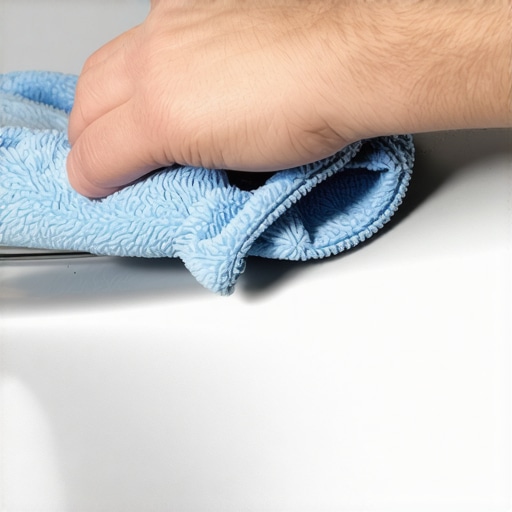
Precision Hits the Spot
Once the area is clean, it’s time to apply the silicone. Most spray cans come with a thin red straw—use it. You aren’t painting the door; you are targeting the pivot point where the pin meets the hinge bracket. This is where the friction lives. If you miss this spot, you’re just making the side of your car greasy. Think of it like an [oil change](https://repairmycarpro.com/oil-change-innovations-technologies-that-save-your-engine); it’s about getting the right fluid into the right moving parts. Give it a short, controlled burst on the top and bottom of the hinge pin. While you’re there, look at the door check strap—that’s the metal or plastic arm that keeps the door from swinging too wide. Lubricate that as well. If your [brakes squeal even though the pads are new](https://repairmycarpro.com/why-your-brakes-squeak-even-though-the-pads-are-new), you know how annoying localized noise can be. Solving it here is much simpler.
Stop the Rubber from Sticking to Your Paint
The noise isn’t always the hinge. Often, that creaking sound when you hit a bump is actually the rubber weather stripping rubbing against the metal frame. In cold weather, that rubber gets stiff and grabs the paint. This is the same logic behind why you might need to [revive a sticky window motor](https://repairmycarpro.com/how-to-revive-a-sticky-window-motor-with-a-silicone-spray) with a similar spray. Apply a small amount of silicone lubricant to a clean cloth and wipe it along the entire length of the rubber seal. This creates a microscopic barrier that prevents the rubber from bonding to the door frame in the frost. It’s one of those [essential auto repair strategies for frequent drivers](https://repairmycarpro.com/essential-auto-repair-strategies-for-frequent-drivers) that keeps the cabin quiet and protects your seals from tearing when you yank the door open on a frozen morning.
Work the Lube into the Metal
The final step is the Swing Test. Open and close the door completely ten to fifteen times. This might feel silly in your driveway, but it’s the only way to ensure the silicone penetrates the tight tolerances of the hinge. If the noise persists, you likely missed the internal part of the hinge pin. Give it one more focused spray while moving the door. It’s a process of elimination, much like [decoding vehicle diagnostics](https://repairmycarpro.com/decoding-vehicle-diagnostics-what-your-car-is-trying-to-tell-you) to find a ghost in the machine. By the tenth swing, that banshee screech should be a memory.
Don’t Fall for the Maintenance-Free Trap
Now that your doors are silent, we need to talk about the bigger picture. Most modern car manuals claim that things like transmission fluid or certain bushings are ‘sealed for life.’ In my years of turning wrenches, I’ve found that ‘life’ usually means ‘until the warranty expires.’ If you really want to keep your ride on the road, you have to look beyond the basic manual. I used to believe that if a part didn’t have a grease fitting, it didn’t need attention. That is a dangerous assumption. For example, [essential auto repair strategies for frequent drivers](https://repairmycarpro.com/essential-auto-repair-strategies-for-frequent-drivers) involve checking these ‘sealed’ components for micro-cracks before they leave you stranded. Even if you stay on top of your [oil change innovations technologies that save your engine](https://repairmycarpro.com/oil-change-innovations-technologies-that-save-your-engine), ignoring the subtle decay of synthetic seals will eventually cost you thousands.
The biggest mistake I see advanced DIYers make is the ‘more is better’ approach with lubrication. People see a squeaky sensor or a stiff electronic latch and douse it in penetrant. This is a massive ‘oops’ factor. Traditional lubricants can actually swell the rubber gaskets inside electrical connectors, leading to ghost codes that are a nightmare to track down. According to research from SAE International, over 30% of electrical failures in older vehicles are exacerbated by improper cleaning or the use of non-dielectric chemicals. If you’ve been wondering about [the synthetic oil myth that costs you fifty dollars every visit](https://repairmycarpro.com/the-synthetic-oil-myth-that-costs-you-fifty-dollars-every-visit), you already know that over-servicing with the wrong mindset is just as bad as neglecting the car entirely.
Is your OBD-II scanner leading you down a rabbit hole?
We live in an age where a twenty-dollar dongle can tell you what’s wrong with your car, or so we think. The hidden nuance that many professionals won’t tell you is that a code for a ‘Lean Condition’ doesn’t mean you need a new sensor; it often means you have a mechanical vacuum leak. I’ve seen people replace perfectly good fuel pumps because they didn’t understand how to interpret live data. This is where [decoding vehicle diagnostics what your car is trying to tell you](https://repairmycarpro.com/decoding-vehicle-diagnostics-what-your-car-is-trying-to-tell-you) becomes an art form. You have to look at the ‘Freeze Frame’ data—the exact moment the error occurred—to see if the engine was cold or under load.  Without that context, you are just parts-cannon-ing your way to a drained bank account. Learning [how advanced vehicle diagnostics prevent costly breakdowns](https://repairmycarpro.com/how-advanced-vehicle-diagnostics-prevent-costly-breakdowns) is about more than reading a code; it’s about understanding the physics behind the sensor’s report. Have you ever fallen into the trap of replacing a part just because the scanner told you to, only to have the light come back on two days later? Let me know in the comments below.
I don’t just recommend tools because they look shiny; I recommend them because they prevent a Saturday afternoon from turning into a Monday morning nightmare. If you are serious about implementing essential auto repair strategies for frequent drivers, you need more than a rusty set of sockets. For instance, I never touch a drain plug without a calibrated torque wrench. Over-tightening is the fastest way to strip an aluminum oil pan, leading to the frustration of using the cardboard trick to find a tiny oil leak overnight. I personally swear by the Tekton 1/2-inch drive click-style wrench because its accuracy meets the ISO 6789 standard, ensuring I do not crush the gasket on the oil filter brand that causes low oil pressure lights. If you are still guessing at how tight your bolts are, you are playing a dangerous game with your engine’s longevity.
I have spent a decade testing scanners, and while the cheap twenty-dollar dongles are great for clearing a gas cap code, I now rely on bi-directional scanners like the Foxwell NT series. This tool allows me to manually cycle the ABS pump, which is non-negotiable for the trick for a perfect brake bleed every single time. Without the ability to command the car’s computer to open those valves, you are just pushing air around in circles. This level of precision is what separates a backyard hack from a professional-grade brake service for safety and performance. It is about having a conversation with the vehicle, not just shouting at it with a hammer.

How do I maintain my vehicle’s health over the long haul?
The secret to the 300,000-mile club isn’t a magic additive; it is a rigid inspection schedule that looks for trouble before it starts. Every time I am under the car, I use the simple way to check your ball joints with a pry bar. It takes thirty seconds, but it can save you from a catastrophic suspension failure on the highway. Professional technicians at the National Institute for Automotive Service Excellence (ASE) emphasize that moisture content in brake fluid exceeding 3% can lead to internal corrosion long before you feel a spongy pedal. Most people wait for a symptom, but if you want to master top auto repair tips to extend your vehicles lifespan, you have to test the chemistry of your fluids, not just their levels.
Beyond the mechanical, you must become a watchdog for the service you receive. You need to know how to tell if your mechanic actually changed the oil or if they just wiped the filter clean and called it a day. I always mark my filters with a small, discreet scratch before dropping the car off. It sounds paranoid, but in an era of high-volume shops, ‘oops’ moments happen. You should also stop letting shops charge you for a free battery test. You can perform the simple test to see if your battery is actually dead yourself with a ten-dollar multimeter in your own driveway.
Looking ahead, the DIY world is moving toward telematics and software-defined vehicles. We are entering an era where you won’t just need a wrench; you’ll need a laptop and a secure gateway bypass cable to even retract your electronic parking brakes. The trend is moving toward ‘Right to Repair’ legislation being the most important tool in your box. If we lose access to the software, we lose the ability to maintain our own machines. I predict that within five years, the most valuable skill for a home mechanic will be data logging—understanding how to graph oxygen sensor voltages in real-time to spot a failing catalytic converter before the check engine light even blinks. My challenge to you today: grab a multimeter and check your battery’s resting voltage. If it is below 12.4V, you have work to do.
Why Grease Is Often Your Worst Enemy
One of the hardest lessons I learned is that ‘more’ isn’t always ‘better.’ In the early days of my obsession with auto repair hacks to save money, I thought thick white lithium grease was the cure for every noise. I was wrong. On a car door, thick grease acts like a magnet for winter road salt and grit, eventually turning into a grinding paste that destroys the hinge pin. I also realized that silence isn’t just about comfort; it is an indicator of the mechanical health of your vehicle. Ignoring a small squeak today often leads to a door that won’t close correctly tomorrow, forcing you into essential auto repair strategies for frequent drivers to fix a failed latch or hinge. Real wisdom in maintenance is knowing that the lightest, cleanest application is usually the one that lasts the longest.
The Gear That Keeps My Garage Running
If you want to maintain your car like a pro, you need to be selective about your chemicals. I exclusively use 3M Silicone Lubricant for weather stripping because it is non-reactive and prevents the ‘freezing shut’ syndrome that ruins rubber seals. To keep your engine healthy beyond the doors, I recommend keeping a set of tools that prevent common errors. For instance, I use a Tekton torque wrench for every oil change to ensure I don’t crush gaskets, especially when dealing with the oil filter brand that causes low oil pressure lights. Finally, if you are really digging into the details, a basic bi-directional scanner is essential for decoding vehicle diagnostics so you can find the root cause of a problem instead of just guessing. These tools have saved me thousands by preventing the ‘oops’ factor that comes with guessing.
Reclaim Your Quiet Ride
Fixing a noisy car door is more than just a two-minute task; it is about taking pride in the machine that carries you through your life. When you eliminate that bone-shivering grind, you aren’t just saving your ears; you are practicing the kind of proactive top auto repair tips to extend your vehicles lifespan. Don’t let a small annoyance turn into a major headache this winter. Reclaiming your peace of mind starts with a clean hinge and a targeted spray. Have you ever had a car door freeze so shut that you had to climb in through the trunk? Let me know in the comments below!