
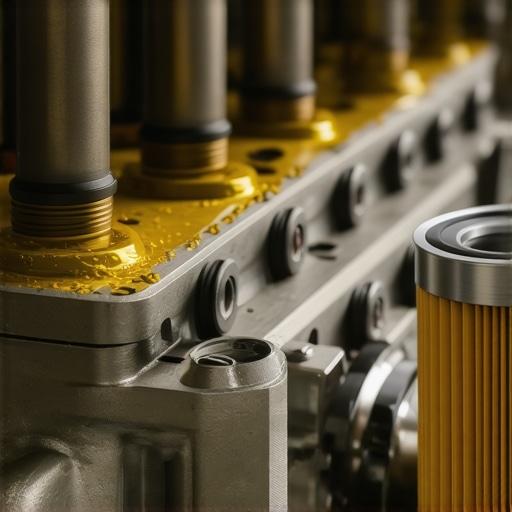
I stood there in my driveway, oily rags in hand, feeling like a weekend warrior king. I had just finished what should have been a routine maintenance task, feeling proud of the fresh golden liquid now resting in my oil pan. But the second I turned the key, my heart did a somersault. Instead of that smooth, rhythmic purr I expected, I heard a distinct tap-tap-tap echoing from under the hood. It felt like a total betrayal. I did everything right—or so I thought. This is exactly the kind of situation that sends most folks into a full-blown panic, wondering if they’ve just bricked their daily driver. I’ve been there, staring at the dipstick in the fading light, wondering where it all went wrong. Today, we are going to dive into the mechanical gremlins that cause this specific frustration. Whether you did the work yourself or you’re wondering how to tell if your mechanic actually changed the oil correctly, we’ll get to the bottom of that noise. I’m going to share the exact checklist I use to silence the valvetrain and explain why fresh oil sometimes makes an engine sound worse before it sounds better.
That Dreaded Sound Right After the Drain Plug Goes Back In
It’s a cruel irony, isn’t it? You give your car the best “blood” possible, and it responds by clicking at you like an angry typewriter. The first time this happened to me, I was twenty years old and working on an old 4-cylinder sedan. I had used the cheapest filter on the shelf and a generic oil that probably wasn’t right for the mileage. I learned the hard way that why your engine makes a tapping noise only after an oil change often boils down to pressure and flow, not just “newness.” The sound usually comes from the hydraulic lifters. These tiny components rely on oil pressure to stay quiet. If the oil is too thin, or if the filter is restrictive, they complain loudly. According to the Society of Automotive Engineers (SAE), choosing the wrong viscosity can lead to insufficient lubrication during those critical first seconds of a cold start. It’s a common blunder, but it is one we can fix without tearing the whole block apart.
Is My Engine Actually Dying Already?
This is the fear that keeps us up at night. You think, “Did I just dislodge some sludge that’s now clogging a vital artery?” It’s a valid concern, especially if you’ve neglected service in the past. However, most of the time, it’s a much simpler fix related to the filter or the oil weight. Have you ever noticed this sound appearing right after a service, or are you worried that your recent DIY job went south? Let me know in the comments.
The Oil Filter Mistake I Made So You Don’t Have To
One of the biggest culprits is something most people overlook: the anti-drainback valve. I remember swapping out a filter on a Sunday afternoon, thinking a filter is just a filter. I was wrong. A low-quality filter allows oil to drain out of the upper engine when it’s sitting. When you start it back up, those lifters are dry for a few seconds. Sometimes, people try to mask the sound with extra chemicals, but you really need to know the truth about oil additives before you go pouring “mechanic in a bottle” into your crankcase. Often, the solution is just getting the right parts back in the first place.
Swap That Filter Before You Do Anything Else
If you’re hearing a rhythmic clicking, the very first thing I do—and the thing you should do—is look at that new filter. Think of the oil filter like a heart valve; if it’s too restrictive or the internal spring is weak, the rest of the system starves. I remember one specific Saturday working on a high-mileage SUV. I’d grabbed a bargain-bin filter because I was in a rush. Within ten minutes of idling, the top end sounded like a bag of marbles. I swapped it for a high-quality synthetic-media filter, and the silence was instantaneous. Many budget filters lack a proper anti-drainback valve, causing the oil to settle in the pan rather than staying up where the lifters need it. If you find your filter is stuck during this troubleshooting, you can use the simple trick to removing a stuck oil filter without a wrench to get it off quickly. Getting the right hardware is one of those top auto repair tips to extend your vehicles lifespan that people often ignore until they hear the noise.
Match the Weight to Your Engine’s Reality
The numbers on the cap—like 5W-20 or 10W-30—aren’t just suggestions; they are the blueprint for your oil galleries. When you’re dealing with an older vehicle, the debate between the truth about synthetic oil vs conventional in older high-mileage cars becomes critical. If you accidentally went too thin, the oil won’t have enough ‘body’ to cushion the lifters. I once made the mistake of putting 0W-20 into a truck designed for 10W-30 during a brutal winter, thinking I was helping with cold starts. Instead, the engine tapped incessantly because the oil was essentially water at operating temperature. It couldn’t maintain the pressure required to keep the hydraulic adjusters pumped up. Check your manual one more time. If you’ve gone too light, you might need to drain a quart and supplement with a slightly higher viscosity or just start the fill over with the correct spec.
Give Your Lifters a Moment to Breathe
Sometimes the noise isn’t a part failure; it’s just trapped air. When you drain the oil, the galleries empty out. When you refill, an air pocket can get trapped behind the oil pump or inside a lifter. This is why why your engine makes a tapping noise only after an oil change is such a common search term. To fix this, I usually take the car for a gentle 15-minute drive once I’ve confirmed the oil level is correct. You need to get the oil up to full operating temperature to allow the air to bleed out of the tiny orifices in the valvetrain. If the tapping persists after the engine is warm, you aren’t dealing with air; you’re dealing with a flow restriction.
Listen to What the Metal is Telling You
If the tap is deep and heavy, it’s not a lifter; it’s a bearing. But if it’s a light, metallic ‘tink,’ you are almost certainly looking at a top-end lubrication issue. Using decoding vehicle diagnostics techniques, like using a long screwdriver as a makeshift stethoscope against the valve cover, can help you pinpoint exactly which cylinder is complaining. This is a classic move in auto repair hacks to save money without sacrificing quality because it prevents you from replacing parts blindly. If the sound is localized to the very top, you know your oil isn’t reaching the rockers fast enough. Usually, a quick check of the oil pressure sensor or a filter swap resolves the issue before any permanent damage occurs.
Let’s peel back another layer of the onion because the ‘common wisdom’ you hear at the parts store is often what leads to these noises in the first place. For decades, the go-to advice for a noisy engine was to simply ‘run thicker oil.’ While that might have worked on a 1970s pushrod V8, doing that today can be a death sentence for your valvetrain. Modern engines use oil as a hydraulic fluid to control Variable Valve Timing (VVT). If you swap to a high-viscosity oil to mask a tap, you might find that the truth about synthetic oil vs conventional in older high-mileage cars is more about flow than thickness. According to the National Institute for Automotive Service Excellence (ASE), using the incorrect viscosity can prevent VVT solenoids from actuating, leading to sluggish performance and permanent mechanical wear.
Thicker oil isn’t a cure-all for old engines
I’ve seen too many DIYers fall into the trap of thinking they are ‘cushioning’ their engine with heavy weight oil. In reality, you are likely starving the top end during the most critical time: the first five minutes of operation. If the oil can’t reach the overhead cams quickly, you aren’t just hearing a tap; you are hearing the sound of metal-on-metal friction. This is why oil change innovations have moved toward thinner, more stable synthetics that flow instantly. If you are chasing a ghost in the machine, how advanced vehicle diagnostics prevent costly breakdowns starts with verifying that your oil pressure matches the manufacturer’s spec at both idle and 2,500 RPM.
Watch out for the double gasket disaster
Here is the ‘oops’ factor that haunts even experienced mechanics: the double gasket. When you unscrew your old oil filter, the rubber O-ring can sometimes stick to the engine block instead of coming off with the filter. If you don’t catch it and screw the new filter on top, you’ve created a weak point that will eventually blow out under pressure. It starts as a faint hiss or a drop in pressure that causes the lifters to tick, and it ends with your oil all over the pavement. It’s one of those top auto repair tips to extend your vehicles lifespan that seems too simple to be true, but I check for it every single time.
Why do my brand new brake pads still squeak?
It’s not just oil changes that throw curveballs. I get asked this constantly after someone does their own brake job. Most people assume the pads are bad, but the culprit is usually the lack of proper lubrication on the slide pins or the failure to resurface the rotors. Just like a bad oil filter causes engine noise, improper hardware installation causes brake noise. If you find yourself in this boat, reading about why your brakes squeak even though the pads are new will show you that the ‘hidden nuance’ is often in the preparation, not the parts. You have to look at the whole system—from the calipers to the fluid—to ensure safety. You can find more about this in the ultimate guide to brake service for safety and performance.
Get more out of your vehicle diagnostics
When the tapping doesn’t stop with a filter swap, it’s time to move beyond guesswork. I always suggest that drivers stop letting shops charge for things they can verify themselves; for instance, you should stop letting shops charge you for a free battery test or basic code scans. Use a dedicated OBD-II scanner to look at your long-term fuel trims. Sometimes, what sounds like a mechanical tap is actually a ‘lean pop’ or an injector clicking excessively because it’s compensating for a vacuum leak. Exploring vehicle diagnostics explained can save you from a thousand-dollar teardown when the fix was actually a twenty-dollar sensor. Have you ever fallen into this trap of over-repairing a simple problem? Let me know in the comments.
Once you have moved past the panic of a post-oil change tick, you start to realize that the ‘weekend warrior’ lifestyle is actually about building a relationship with your machine. I stopped relying on those cheap, generic code readers years ago. If you really want to get serious, you need a bi-directional scan tool. These aren’t just for clearing codes; they allow you to command the vehicle’s computer to perform specific tasks, like cycling the ABS pump or testing an EGR valve. This level of control is exactly how advanced vehicle diagnostics prevent costly breakdowns because it lets you find a failing part before it leaves you on the side of the interstate. When I am working on a complex electrical ghost, I always reach for my Fluke 87V multimeter. Most people don’t realize that the secret to finding a parasitic battery drain with a simple multimeter is actually patience—letting the car’s CAN-bus system go to sleep, which according to the Bosch Automotive Handbook, can take up to thirty minutes on modern luxury sedans.
Stop guessing with a pro-grade scanner
I remember trying to diagnose a misfire on a friend’s truck that felt like a mechanical failure but turned out to be a simple software glitch. By using decoding vehicle diagnostics, I could see the live data stream for the fuel trim in real-time, which pointed directly to a vacuum leak at the intake manifold. This is one of those auto repair hacks to save money without sacrificing quality: invest in the diagnostic tool once, and you’ll save thousands in ‘parts cannon’ repairs over the life of your vehicle.
How do I maintain high-mileage engines for another decade?
The key to longevity isn’t just changing the oil; it’s about consistency and high-quality filtration. One of the top auto repair tips to extend your vehicles lifespan is to perform a used oil analysis (UOA) every few changes. Sending a sample to a lab like Blackstone Laboratories can tell you if your bearings are wearing or if fuel is diluting your oil. For those who drive heavy miles, following essential auto repair strategies for frequent drivers means you aren’t just reacting to noises; you are anticipating wear. Whether you are following the ultimate guide to brake service for safety and performance or just checking your tires, that pro-active mindset is the difference between a 300,000-mile car and a pile of scrap.
Telematics and the end of the check engine mystery
Looking ahead, the way we maintain our cars is shifting toward predictive telematics. We are entering an era where your car’s onboard computer will analyze sensor data and send a notification to your phone saying, ‘Your water pump bearing is showing 15% increased vibration; replacement recommended in 500 miles.’ This is the logical evolution of oil change innovations and smart sensors. It’s exciting because it takes the guesswork out of the equation for everyone. My advice? Get comfortable with a basic OBD-II scanner now. Download a live-data app on your phone and try to identify your car’s normal operating temperatures and fuel trims today, so you’ll know exactly when something is ‘off’ tomorrow.
The Hardest Lessons I Learned Under the Hood
Over the years, I’ve realized that mechanical empathy is more important than any torque wrench. One of the biggest ‘lightbulb moments’ for me was discovering that engine noise isn’t always a part failure; often, it’s just a communication breakdown between components. I once spent three days chasing a lifter tick only to realize I had a loose spark plug—the escaping compression made a rhythmic snapping sound that mimicked a valvetrain issue perfectly. Always check the easy stuff first. Another critical realization: patience is a physical tool. If you rush an oil change and ignore the ‘small’ things like checking the old gasket, you’re setting yourself up for a nightmare. High-mileage engines don’t need miracles; they need consistency. If you ever see blue smoke from your exhaust along with that tap, you know it’s time to look deeper than just the oil filter.
Tools That Keep My Cars Running
I don’t believe in buying every gadget at the auto parts store, but three things stay in my kit forever. First, a high-quality OBD-II scanner like the BlueDriver. It takes the mystery out of decoding vehicle diagnostics and gives you real-time data on oil temperature and pressure. Second, I swear by Blackstone Laboratories oil analysis kits. They are the only way to truly see what is happening inside your engine without taking it apart. Third, I always keep a dedicated magnetic drain plug; it acts as a silent sentinel, catching tiny metal shavings before they can reach your lifters. Integrating these into your routine is one of the top auto repair tips to extend your vehicles lifespan that actually pays dividends.
The Future of Your Engine Is in Your Hands
Repairing your own vehicle is about more than just saving a few bucks at the shop; it’s about the peace of mind that comes from knowing exactly how your machine works. Don’t be discouraged by a temporary noise or a flickering light. If your oil light flickers only when you are stopped, don’t panic—troubleshoot systematically. Whether you’re dealing with a simple tapping noise only after an oil change or diving into more complex repairs, remember that every successful fix builds your confidence for the next one. Keep your hands oily and your mind sharp.
#IMAGE_PLACEHOLDER_E#
Have you ever had an engine noise that completely baffled you until you found a simple fix? Let me know in the comments below—I’d love to hear your DIY success stories.