

I remember cruising down the I-77, coffee in the cup holder, feeling like I had my life together until I hit exactly 58 mph. Suddenly, my steering wheel turned into a paint shaker. It wasn’t a ‘get off the road now’ kind of shake, but more of a rhythmic, annoying buzz that tickled my palms. I did what most people do: I sped up to 70. The vibration vanished. I thought, ‘Problem solved.’ Man, was I wrong. Ignoring that specific window between 55 and 65 mph is a classic rookie move that ended up costing me a set of front tires and a very sheepish conversation with my mechanic. We’re going to dive into why your car does this ‘Goldilocks’ dance and how to stop it. Have you ever felt your steering wheel start to chatter the moment you merge onto the highway? Drop a comment below if you’ve been there. Today, we’re fixing that shimmy for good.
Stop Your Steering Wheel from Shaking at Highway Speeds
It’s the weirdest thing, isn’t it? Below 55, the car is smooth as glass. Above 65, it’s like nothing ever happened. But in that narrow ten-mile-per-hour band, it feels like the front end is trying to liberate itself from the chassis. This isn’t just a quirk of your car; it’s physics. When I first started working on my own rigs, I assumed a shake was a shake. I didn’t realize that the vibration at 65 mph that feels like an earthquake is often a completely different beast than a low-speed wobble. This specific speed range is almost always the ‘resonant frequency’ of an unbalanced tire. According to industry experts at Tire Rack, a tire that is out of balance by just half an ounce can exert the force of a sledgehammer hitting your suspension hundreds of times per minute at highway speeds. I once let a ‘minor’ shimmy go for three months, thinking I was saving money. By the time I took it in, my tie rods were shot and my tires looked like they’d been through a cheese grater. Using top auto repair tips to extend your vehicle’s lifespan means catching these small tells early.
Do I Actually Need a Professional for a Tiny Shiver?
You might be tempted to just ‘drive through it’ or wait until your next scheduled maintenance, but that’s a dangerous game. Following essential auto repair strategies for frequent drivers involves understanding that this vibration is literally vibrating your car’s components apart. It’s not just about comfort; it’s about your wallet. If you find the car shaking at 70 mph or higher, the problem might have already escalated. We are going to look at the three main culprits today: tire balance, bent rims, and those sneaky worn suspension bits that mimic a bad alignment.
Start with the Low Hanging Fruit: Balancing Your Rubber
First, we have to talk about the heavy spot. Think of your tire like a washing machine during the spin cycle. If the whole load of laundry bunches up on one side, the machine tries to walk out of the laundry room. Your tire behaves exactly the same way. A lead weight as small as a grape falling off your rim is enough to trigger that 60-mph earthquake you are feeling. This is where decoding vehicle diagnostics: what your car is trying to tell you becomes vital. Most shops use a high-speed balancer that spins the wheel and tells the technician exactly where to tap on a new weight to counteract the heavy side. I once spent two weeks chasing a rhythmic vibration in my old SUV, only to find out a clump of dried red clay was stuck to the inside of the rear rim. I felt like a total rookie, but it is a great reminder: always spray out your wheels before you pay for a professional balance. 
Is Your Wheel Actually Round?
Sometimes the tire is balanced, but the wheel itself is the enemy. This happens a lot if you live in a city with deep potholes. A bent rim will wobble like a plate on a stick, and no amount of lead weights can fix a circle that is now an oval. You can usually spot this by jacking up the car and spinning the wheel while looking at the tread from the front. If you see the tire moving up and down or side to side, you have a structural issue. This is often the reason your tires are making a humming sound on the highway alongside that physical shake. If the rim is bent, a reputable wheel repair shop can often straighten it for a fraction of the cost of a new OEM replacement.
Look Beyond the Tires for Hidden Faults
If the tires are balanced and the rims are straight, but you still feel a shimmy, it is time to get your hands dirty. I remember a client who insisted his tires were the problem, but we found that his wheel bearings had about a quarter-inch of play. This is a common point of confusion. You can use the simple way to check your wheel bearings for play by grabbing the tire at the 12 and 6 o’clock positions and shaking it. If it clunks, your tires aren’t the issue; your hub is.
Is It Vibration or Just Your Brakes Acting Up?
We also need to distinguish between a constant highway shake and a shake that only appears when you slow down. If the steering wheel only fights you when you are shedding speed, you are likely dealing with warped rotors or a sticking caliper. Knowing why your steering wheel vibrates only when you hit the brakes helps narrow the search. However, if the shake is constant, focus your efforts on the rotating mass of the tire and wheel assembly first. Utilizing how advanced vehicle diagnostics prevent costly breakdowns ensures you aren’t just throwing parts at a ghost. You need to isolate the component that is actually out of sync with the road.Everyone tells you that if your car pulls or shakes, you need an alignment. That is the biggest myth in the garage. In my years of wrenching, I’ve seen hundreds of drivers pay for an alignment only to have the same shimmy on the way home. Here is the nuance: alignment is about the angle of the tires relative to the road and each other, not the weight distribution of the rotating assembly. If you see the tire wear pattern that means your alignment is perfect but your shocks are dead, you’ll realize that the bounce is coming from elsewhere. Alignment issues usually cause pulling or uneven wear, but rarely a rhythmic high-speed vibration. High-speed vibrations are almost exclusively a rotational issue involving the tires, wheels, or drivetrain components.
Is Road Force Balancing Actually Worth the Extra Cash?
Standard balancing just spins the wheel in the air to find the heavy spot. However, as experts at the Car Care Council point out, tires are not perfectly uniform circles; they have varying levels of stiffness in the sidewalls. A Road Force balancer uses a large roller to press against the tire with hundreds of pounds of force, simulating the actual weight of the vehicle on the pavement. It can detect if the internal structure of the tire is defective or if there is a ‘hard spot’ in the rubber, even if the wheel looks perfect on a standard machine. I’ve had cases where how advanced vehicle diagnostics prevent costly breakdowns by revealing a shifted internal belt inside a brand-new tire that would have otherwise gone unnoticed. Don’t fall for the trap of a simple “zero-out” balance that doesn’t account for road pressure. Have you ever fallen into this trap and paid for three balances in a week? Let me know in the comments. 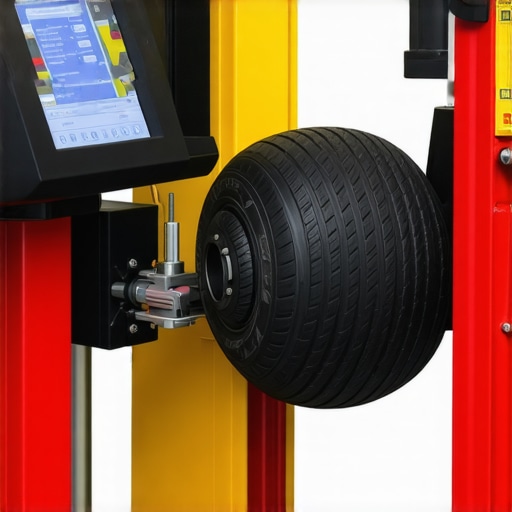 Another subtle mistake is ignoring the steering rack itself. Sometimes the steering rack failure that feels exactly like a bad alignment is actually the source of your vibration. If the internal bushings in the rack have developed “slop,” they allow the wheels to oscillate back and forth at specific resonant frequencies. This is often misdiagnosed as a rotor issue, but while we often discuss brake service myths busted: what really matters for safety, remember that a shake during cruising is almost always rotational. One last “oops” factor to watch for is the cleanliness of your rims. If a technician sticks adhesive weights over a layer of brake dust or road grime, those weights will fly off the moment you hit the highway. Always ensure the mounting surface is prepped correctly, or you’ll be right back in the shop by Monday morning. Utilizing top auto repair tips to extend your vehicle’s lifespan means looking at these microscopic details before they turn into major component failures.
Why Your Basic Code Reader Is Not Enough Anymore
I see it all the time: someone buys a twenty-dollar dongle from a big-box store, plugs it in, and thinks they are a master tech because they can clear a check engine light. If you are serious about stopping that highway shake for good, you need to step up to a tool that reads live data streams. I personally rely on a mid-range bidirectional scanner because it allows me to command the car’s computer to test individual components, like a fuel pump or an ABS actuator, while I’m standing right there. This is where how advanced vehicle diagnostics prevent costly breakdowns by letting you see the ‘why’ behind the wobble. If your scanner shows a misfire count on cylinder three but no code yet, you’ve just saved yourself a breakdown on the turnpike.
Invest in a Torque Wrench Before You Touch Your Brakes
When I first started doing my own brake jobs, I used to tighten lug nuts until my face turned red. I thought ‘tighter is better.’ I was dead wrong. Over-tightening or unevenly tightening your wheel bolts is the fastest way to warp a brand-new brake rotor, leading right back to that steering wheel vibration. I never touch a wheel now without my 1/2-inch drive click-style torque wrench. Following the ultimate guide to brake service for safety and performance means respecting the factory specs—usually between 80 and 100 foot-pounds for most passenger cars. It keeps the pressure even across the hub and prevents the metal from distorting under heat. If you’re looking for auto repair hacks to save money without sacrificing quality, a calibrated torque wrench is the single best investment you can make for your suspension’s longevity. 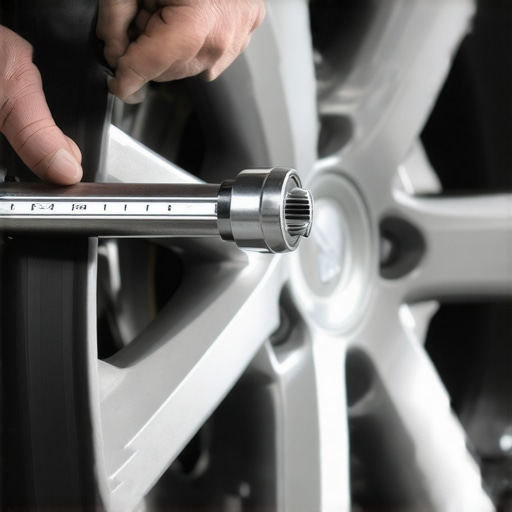
How can I keep my car from vibrating again in six months?
The secret isn’t a one-time fix; it’s a rhythm of inspection. Every time I do an oil change, I spend five minutes with a pry bar checking my ball joints and tie rod ends. According to the Society of Automotive Engineers (SAE) standards, specifically the J300 classification system, maintaining the precise oil viscosity is crucial not just for lubrication, but for the hydraulic functions of modern variable valve timing systems that keep your engine smooth. This ties directly into oil change innovations: technologies that save your engine. Looking ahead, I predict we’re moving toward ‘predictive telematics,’ where your car will alert your phone that a wheel bearing is 500 miles away from failing based on vibration harmonics. Until then, you are the best sensor your car has. Using top auto repair tips to extend your vehicle’s lifespan means being proactive rather than reactive. If you’ve been ignoring a minor buzz, I challenge you to get under there this weekend and check your torque specs—it might save you a thousand-dollar repair bill later.
The Reality Check Most Mechanics Won’t Give You
After years under the lift, I’ve realized that the ‘ghost in the machine’ is rarely a mystery; it’s usually just something we overlooked during our initial panic. Here are a few lightbulb moments I wish I had sooner: First, tires have a shelf life regardless of miles. If your car sat for a long period, those tires likely have ‘flat spots’ that no amount of balancing will fix. Second, never underestimate the ‘Clean Hub’ rule. I’ve seen countless shakes caused simply by rust buildup between the brake rotor and the wheel hub. If that mating surface isn’t surgical-grade clean, your wheel will never sit true. Lastly, don’t trust the ‘good enough’ technician. High-speed vibrations require precision, not approximations, and getting it ‘close’ is just another way of saying it’s still broken.
Gear That Actually Makes a Difference
You don’t need a professional-grade shop to do the preliminary legwork that saves you hundreds in labor. I always recommend keeping a few specific tools in your garage to maintain a smooth ride. A reliable, calibrated torque wrench is non-negotiable; it is truly the core of the ultimate guide to brake service for safety and performance. I also suggest using a locator for Hunter Engineering Road Force balancers to find a shop that can handle sensitive assemblies. Before any long trip, I personally perform vehicle diagnostics explained: easy checks before your road trip to ensure no bushings have perished. Utilizing these auto repair hacks to save money without sacrificing quality allows you to catch the small wobbles before they become expensive failures.
The Peace of Mind That Comes with a Steady Ride
There is a unique sense of confidence that comes from a car that tracks straight and true, even as you merge into fast-moving traffic. When you finally stop your steering wheel from shaking at highway speeds, you aren’t just making the drive more comfortable—you’re ensuring that your suspension and steering components aren’t being hammered into an early grave. Don’t be afraid to get your hands a little dirty checking those wheel weights or spraying out your rims. It’s the small, proactive steps that keep you on the road and out of the waiting room. Have you ever found something bizarre, like a chunk of dried mud or road tar, causing a massive vibration in your steering? Let me know in the comments below!