

I was cruising home from a weekend trip, the sun was setting, and the road was wide open. I pressed the accelerator, and the moment the needle touched 70 mph, my dashboard started rattling like it was filled with loose marbles. My heart sank. I had just finished some routine maintenance and thought everything was fine. I slowed down to 65, and the shaking vanished. I sped back up, and there it was again—that rhythmic, bone-deep shudder that makes you wonder if a wheel is about to fly off. It is a classic problem, but one that drives people crazy because it feels so selective. Why does it happen only at that specific speed? I remember one of my biggest blunders early on; I replaced my entire front suspension because I was convinced a control arm was shot, only to realize later it was a simple $20 wheel balance issue. I want to save you that same headache. Today, we are diving into why your car throws a tantrum at highway speeds and how you can pinpoint the culprit without draining your bank account. Have you ever had your car start to tremble the second you tried to merge into the fast lane?
The Centrifugal Nightmare Keeping Your Car Off the Highway
The physics of a car at high speed are actually pretty wild. When you are doing 70 mph, your tires are spinning over 800 times per minute. At that velocity, even the tiniest imperfection becomes a violent force. Most people assume they need a full brake service for safety and performance the moment they feel a vibration, but if you are not touching the pedal, the brakes probably are not the problem. You need to look at essential auto repair strategies for frequent drivers to understand how tires interact with the road. According to the experts at the Car Care Council, unbalanced wheels are the number one cause of vehicle vibration, and ignoring it does not just annoy you—it destroys your tires and suspension components over time. It is much cheaper to fix a balance issue now than to deal with the tire wear pattern that reveals a bent control arm six months down the line.
Could This Be a Sign Your Car is Actually Unsafe to Drive?
It is easy to dismiss a little shimmy as a quirk of an aging vehicle. You might think, I will just stay at 65 and it will be fine. But that vibration is a symptom of energy going where it should not. It is rattling your tie rods, your ball joints, and your sanity. If you have noticed the reason your steering wheel is vibrating at low speeds is different from this high-speed shake, you are already halfway to a diagnosis. We need to distinguish between the difference between a bad wheel bearing and a noisy tire to ensure your quick fix actually works. Don’t let a simple maintenance task turn into a reason for a tow truck; using top auto repair tips to extend your vehicles lifespan starts with addressing these minor annoyances before they become catastrophic failures.I once spent three hours scouring the front end of an old Dodge Neon, convinced I had a loose tie rod. It turned out to be a massive clump of dried mud stuck to the inside of the wheel rim. That tiny bit of off-center weight acted like a lead anchor at 65 mph. Before you buy parts, clean your wheels and look for the small silver squares clipped to your rims. If one is missing, you’ve found your ghost.
Stop Assuming Your Suspension is Broken
Start with the simplest variable: the wheel balance. Imagine a ceiling fan with a single coin taped to one blade. At low speed, it’s fine. At high speed, the whole fixture starts to sway. Your tires are the same. If a balance weight falls off, the tire develops a heavy spot that fights against the spindle 800 times a minute. Think of your wheel assembly like a high-speed centrifuge; at 70 mph, even a quarter-ounce of weight being out of place generates pounds of force every time the wheel rotates. While you’re down there, look at the rubber itself. You need to distinguish the difference between a bad wheel bearing and a noisy tire because a “choppy” tread pattern—where some blocks are higher than others—will create a rhythmic thrum that mimics a mechanical failure. If you see uneven dipping in the tread, you might be looking at the tire wear pattern that reveals a bent control arm or a dead strut. 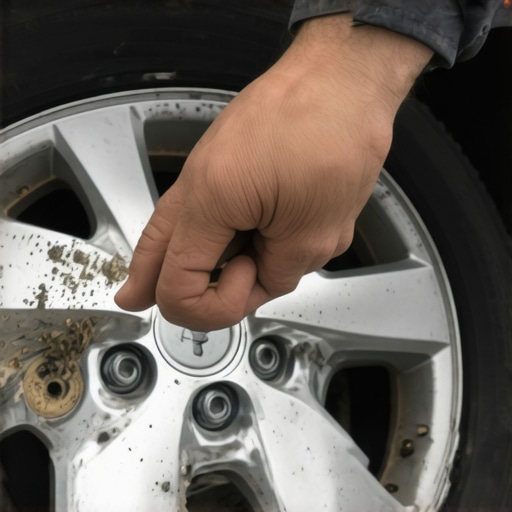
Test the Driveline While You’re Moving
There’s a specific trick to tell if the shake is coming from your engine’s power delivery or the wheels themselves. When the car starts vibrating at 70 mph, lift your foot completely off the accelerator and let the car coast. If the vibration instantly stops or changes dramatically, it usually isn’t your tires—it’s likely your CV axles or the torque converter. This is known as the transmission shudder that disappears when you lift off the gas. CV axles are basically the “elbows” of your car’s drivetrain. When the internal joints wear out, they lose their ability to spin perfectly centered under load. If you hear a click while turning at low speeds, that’s the clicking sound when you turn that means your cv axle is toast.
Check for Slack in the Front End
If the shake happens regardless of whether you are accelerating or coasting, the hardware holding your wheels on is the next suspect. You don’t need a degree in engineering to check this; you just need a bit of leverage. Using how to spot a bad ball joint using a floor jack, you can lift the car and wiggle the tire at the 12 and 6 o’clock positions. Any “clunk” or movement means the joint is failing. When you use a pry bar, you’re looking for movement in the ball joint that your muscles simply can’t simulate. Place the bar between the lower control arm and the steering knuckle. A tiny bit of vertical movement—even just a millimeter—is enough to cause a terrifying shudder when you’re merging onto the interstate. If you suspect the hub itself, learning how to identify which wheel bearing is actually failing will prevent you from replacing the wrong side. Don’t forget that the simple way to check your ball joints with a pry bar can reveal hidden play that your hands alone aren’t strong enough to find.One of the most persistent myths in the garage is the idea of warped brake rotors. If your steering wheel pulses while you slow down from highway speeds, every forum on the internet will tell you to toss your rotors. But let’s dig deeper: cast-iron rotors almost never actually warp from heat in typical street driving. What you are actually feeling is often ‘cementite’ or uneven pad material transfer. According to technical studies by the Society of Automotive Engineers (SAE), what enthusiasts call warping is usually Disc Thickness Variation (DTV) caused by inconsistent pad deposits. When you get your brakes hot and then sit at a stoplight with your foot mashed on the pedal, a layer of pad material transfers to one spot on the rotor, creating a high spot. Before you pay for a full brake service for safety and performance, try a few aggressive stops to re-bed the pads. This is a prime example of how brake service myths busted can save you hundreds in unnecessary parts. 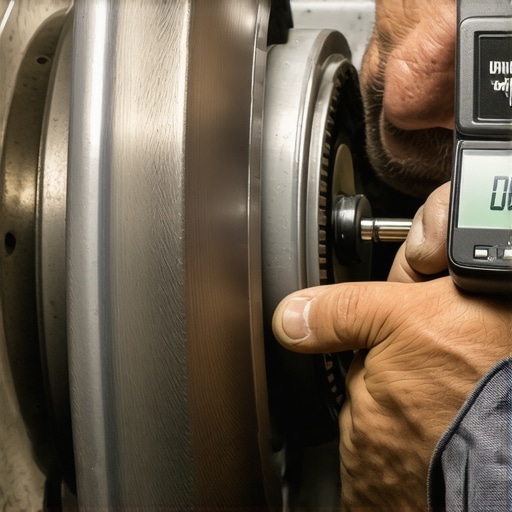
Why is your engine still tapping after a fresh oil change?
It is incredibly frustrating to finish a maintenance task only to hear a new noise. If you have ever wondered why your engine makes a tapping noise only after an oil change, you might have fallen into the trap of using the wrong filter or ignoring viscosity nuances. Many modern engines use oil pressure to timing components; a restrictive, low-quality filter can starve the top end of the engine for those first few critical seconds. Furthermore, while many shops push for frequent intervals, the synthetic oil myth that costs you fifty dollars every visit often overlooks that the oil itself isn’t the failure point—it’s the additive package breaking down or the filter bypassing. When you look at oil change innovations, the focus is now on long-term chemical stability rather than just ‘cleanliness.’
Don’t fall for the cheap sensor trap
When that high-speed vibration is accompanied by a check engine light, your first instinct might be to grab the cheapest sensor available online. This is the ultimate ‘oops’ factor. In my experience, the truth about using cheap aftermarket sensors in your engine is that they often operate on the very edge of the car’s electrical tolerance. A cheap Oxygen or MAF sensor might work for a week, but their slow response times can cause the computer to chase its own tail, leading to poor fuel economy or ‘ghost’ vibrations. Instead, understanding how advanced vehicle diagnostics prevent costly breakdowns means looking at live data streams, not just reading a code. By decoding vehicle diagnostics properly, you identify the root cause—like a vacuum leak—rather than just replacing the sensor that reported the lean condition. Have you ever fallen into the trap of replacing a major part only to find out it was a $10 fix? Let me know in the comments.For years, I relied on a $20 code reader that gave me generic P-codes. It was like trying to diagnose a fever with a thermometer but no medical degree. If you want to stop the parts-cannon approach, you need bidirectional control. This isn’t just reading data; it’s commanding the car to perform tasks. I use a tablet-based scanner to force an ABS pump to cycle or to test individual injectors. This level of how advanced vehicle diagnostics prevent costly breakdowns is what separates the driveway tinkerers from the pros. When I can command a cooling fan to turn on or a solenoid to click, I eliminate the guesswork entirely.
Bidirectional Control is My Secret Weapon
Using a tool like the Autel MaxiCOM or an Enthusiast-grade Launch scanner allows you to perform an ‘Active Test.’ This means if you suspect a fuel pump is failing, you can command it to run at 100% duty cycle and watch the pressure gauge. It cuts diagnostic time in half. These auto repair hacks save money without sacrificing quality because you aren’t replacing a $300 pump when it was actually just a $10 relay.
How do I keep my car running smoothly for a decade?
Maintenance isn’t just about changing oil when the light comes on. It’s about ‘active’ monitoring. I personally swear by keeping a digital log of fuel trims. If I see my long-term fuel trim creeping up past 10%, I know I have a small vacuum leak or a tiring fuel pump before the car even stumbles. Applying essential auto repair strategies for frequent drivers means you are looking for the ‘drift’ in performance. For brakes, I don’t just check pad thickness; I check the moisture content of the fluid with a $15 tester. If it’s over 3% water, I perform a flush using the trick for a perfect brake bleed every single time. This prevents internal corrosion in the ABS module—a $1,200 part you really don’t want to replace. 
The Future of Fixing Things
As noted in the Bosch ESI[tronic] technical documentation, modern vehicle architectures are moving toward ‘DoIP’ (Diagnostics over IP). This means our cars are becoming rolling servers. In the next five years, your local mechanic won’t just need a wrench; they’ll need to understand Ethernet protocols. If you’re a DIYer, now is the time to start decoding vehicle diagnostics beyond just reading engine codes. You’ll eventually be diagnosing battery management systems and radar sensors for lane-keep assist. Take one of your scanners today and look at your live data stream for the oxygen sensors—if they aren’t switching between 0.1 and 0.9 volts rapidly, you might be looking at the sensor that causes your car to stall at stop signs before the light even hits the dash.
Why I Stopped Trusting My Gut and Started Trusting the Data
After years of chasing vibrations, the biggest “lightbulb moment” for me was realizing that your car is constantly talking—most of us just don’t know the language yet. I used to think I could feel the difference between a bad tire and a bad bearing, but human senses are easily fooled by harmonics and road conditions. Now, I never start a repair without first decoding vehicle diagnostics to see what the sensors are actually reporting. It saves me from the expensive and exhausting ‘parts cannon’ frustration.
Another tough lesson? Price doesn’t always equal performance, but quality definitely does. I’ve seen the oil filter brand that causes low oil pressure lights ruin a perfectly good engine swap because someone tried to save three dollars at the parts counter. When it comes to high-speed stability, the small things matter most. Even a simple the tire pressure mistake that ruins your tread in weeks can mimic a serious suspension failure at highway speeds, throwing off your alignment and your confidence.
The Diagnostic Gear I’d Never Travel Without
If you’re serious about maintaining your own vehicle, stop buying cheap $10 sensors and invest in tools that give you real-time insight into your car’s brain. I personally rely on a high-quality Bluetooth OBD-II adapter paired with live data apps to watch my fuel trims and wheel speed sensors while I’m on the road. These auto repair hacks save money without sacrificing quality because they let you identify a failing component before it leaves you stranded. For long-distance road trips, I always perform vehicle diagnostics explained easy checks before your road trip to ensure I won’t be dealing with a limp-mode event in the middle of nowhere. Finally, keep a digital log of your car’s behavior; knowing exactly when a vibration started is half the battle in how advanced vehicle diagnostics prevent costly breakdowns.
Take Control of Your Commute Again
Mechanical problems can feel overwhelming, but remember that every machine is just a collection of parts following the laws of physics. That 70 mph shake isn’t a ghost in the machine; it’s a physical symptom waiting for a logical solution. By staying proactive and using professional vehicle diagnostics and auto repair strategies, you can turn a nerve-wracking commute back into a smooth, enjoyable drive. Don’t let a small shimmy steal your peace of mind or your wallet. Have you ever replaced a major part like a CV axle only to find out it was just a $20 wheel balance issue? Tell me about your most frustrating diagnostic mystery in the comments below!