

I was cruising down I-77 last summer, windows down and music up, when my SUV suddenly decided it wanted to be a vibration machine. The whole floorboard started trembling like I had just driven onto a never-ending set of rumble strips at seventy miles per hour. My heart sank. I have been around cars long enough to know that the word “expensive” usually follows any unexplained vibration. But then I did something instinctive—I let off the accelerator to prepare for pulling over, and just like that, the shaking vanished. It was bizarre. If you are feeling that same rhythmic trembling that only shows up when you are asking the car for power and disappears the second you coast, you are not alone. Today, I am going to help you pinpoint exactly why your car is throwing this temper tantrum and how to fix it without immediately draining your savings account.
That Washboard Feeling at Sixty Miles per Hour
When a car shakes specifically under load and stops the moment you coast, it is your vehicle trying to tell you something very specific about its drivetrain. Early in my DIY days, I made the massive mistake of replacing all four tires and getting an alignment because I was convinced it was a balance issue. It was not. I wasted three hundred dollars because I did not understand how vehicle diagnostics actually work for transmission issues. By the time I realized the tires were fine, I had already spent my weekend chasing the wrong ghost.
Is a New Transmission Actually My Only Option?
The short answer is: probably not. Most folks panic and think a shudder means a five-thousand-dollar rebuild is the only way out. In reality, this specific symptom—the one that leaves when you lift off the gas—often points toward torque converter clutch (TCC) shudder. The torque converter is the bridge between your engine and transmission. When the fluid gets old or the internal friction material starts slipping, it creates a rhythmic vibration. Interestingly, the Automatic Transmission Rebuilders Association (ATRA) notes that many shudder complaints are actually resolved by a simple fluid service rather than a full hardware replacement.
Stop the Shudder Before It Becomes a Crisis
If you are a frequent driver, you need essential auto repair strategies to catch these things before they leave you stranded. Have you ever felt that shudder when shifting that feels like a rumble strip? If so, tell me—how long did you ignore it before the anxiety finally drove you to look under the hood? The first thing we need to do is look at the lifeblood of your gearbox. If you do not have a specialized tool handy, you can still learn how to check your transmission fluid without a dipstick to see if it is burnt, oxidized, or low. Let us dive into the step-by-step process of ruling out the cheap fixes first.
Find the Culprit Without a Scanner
To determine if your vibration is mechanical or internal to the transmission, you need to perform a simple diagnostic test while driving. It is essentially a stress test for your torque converter. Get the car up to the speed where it usually starts acting up—typically between forty and sixty miles per hour. Keep your right foot steady on the accelerator to maintain that shuddering sensation. Now, take your left foot and very lightly tap the brake pedal—not enough to slow the car down, just enough to trigger the brake light switch. In most modern vehicles, this tap sends a signal to the computer to disengage the torque converter clutch. If the vibration disappears the instant you touch that brake, you have confirmed that the issue is the torque converter slipping and not a balanced tire or a bent rim. I remember doing this on an old Ford that felt like it was falling apart; the moment I touched that brake, the ride became smooth as glass. It is a powerful bit of how advanced vehicle diagnostics can save you from a massive repair bill before you even open your wallet. 
Read the Clues in Your Transmission Fluid
Once you suspect the torque converter, you need to look at the fluid. Transmission fluid should be a translucent cherry red. If it looks like dark coffee or smells like burnt toast, it has lost its ability to provide the necessary friction for the clutch to hold. If you cannot find a dipstick under the hood, you can learn how to check your transmission fluid without a dipstick by locating the check plug on the side of the transmission case. I once helped a friend who was about to trade in his truck because of a dying transmission. We pulled the plug and found the fluid was pitch black. We did not do a rebuild; we did a high-quality fluid service and added a friction modifier. That truck ran for another fifty thousand miles. This is one of those auto repair hacks that can save you thousands. If the fluid is clean but the shudder persists, you might be looking at a mechanical failure elsewhere.
Check Your CV Axles Before Moving to the Transmission
If the brake pedal test did not change anything, the shaking might be coming from your driveline, specifically the inner CV joints. While a bad outer joint usually causes the clicking sound when you turn, a worn inner joint causes a heavy side-to-side wobble specifically when you are accelerating. Think of your CV axle like a human elbow. If the joint is dry or pitted, it will not rotate smoothly under pressure. Get under the car and look for torn rubber boots. If you see grease splattered everywhere, the joint has likely lost its lubrication and started grinding itself into oblivion. You should also check for a clicking sound coming from your engine at low speeds which can sometimes be misdiagnosed as transmission noise when it is actually an axle or a loose motor mount.
Rule Out the Simple Hardware First
Do not forget to check your engine and transmission mounts. If a mount is cracked, the engine will shift slightly when you hit the gas, causing the axles to sit at an awkward angle and vibrate. It is like trying to run with only one shoe on; everything is out of sync. You can often see this by having a buddy watch the engine while you shift from Park to Drive with your foot firmly on the brake. If the engine jumps like it is trying to escape the engine bay, you have found a much cheaper problem to fix than a full gearbox replacement. Using essential auto repair strategies like these ensures you are tackling the most likely culprits before assuming the worst-case scenario.The “brake tap” test is a classic diagnostic trick, but it is not always the end of the story. Here is where the real nuance kicks in: a slight engine misfire under load feels almost identical to a torque converter shudder. Most DIYers—and even some professional shops—jump straight to a transmission flush when the real culprit is a failing ignition coil or a fouled spark plug. You have to realize that at cruising speeds, the engine is under high load but low RPM, which is the perfect “torture test” for your ignition system. If you have ever wondered why your scanner says P0420 but the converter is actually fine, you already know that computers often report the symptom rather than the disease.
The Code Reader is Lying to You
Many people treat an OBD-II scanner like a magic wand, but a code for a “TCC Slip” doesn’t always mean the transmission is dead. It could be a sensor reporting bad data. I have seen countless drivers waste a fortune because they didn’t understand how to decode vehicle diagnostics properly. Technical service bulletins from major manufacturers frequently point out that light-load engine stumbles are frequently misdiagnosed as torque converter issues. This is a massive “oops” factor in auto repair. Before you commit to a major repair, check your secondary ignition components. If you are tempted to save money by using cheap aftermarket sensors in your engine, be warned: they often lack the precision required for modern computer-controlled drivetrains and can actually create new, ghost vibrations that weren’t there before.
Can a Small Vacuum Leak Really Feel Like a Mechanical Failure?
Absolutely. A lean condition caused by a pinhole leak in a vacuum line can cause the engine to “hunt” for a steady idle or stumble during steady-state cruising. This oscillation feels like a rhythmic vibration through the steering wheel. This is why I always advocate for advanced vehicle diagnostics that look at live data streams rather than just reading stored codes. 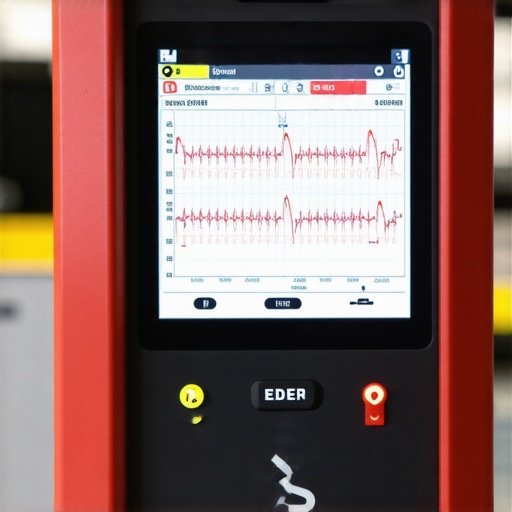
Stop Spending Money on the Parts Cannon
One of the biggest mistakes is the “parts cannon” approach—firing new parts at the car until something sticks. I have seen people perform a full brake service for safety and performance because they thought a vibration was a warped rotor, only to find the shaking persisted because it was actually a dry inner CV joint. If you read up on brake service myths, you will learn that brake-related vibrations almost exclusively happen during deceleration. If it happens while your foot is on the gas, put the brake pads back on the shelf. Similarly, don’t assume a fresh oil change will quiet a mechanical shudder. While clean oil is vital, it won’t fix a failing torque converter clutch or the reason your engine oil is disappearing due to internal wear. Have you ever spent hundreds of dollars on a part only to find out it did not fix the vibration? I have been there, and it is a gut-punch. Let me know in the comments if you have ever fallen into this trap—let’s help each other avoid the parts cannon.So, you have managed to stop the shaking for now, but how do you keep it from returning like a bad movie sequel? I have found that the secret lies in a mix of professional-grade tools and a religious maintenance schedule. After years of struggling with basic equipment, I eventually stopped relying on those generic $20 Bluetooth dongles and invested in a real bidirectional scan tool. Why? Because I wanted the power to actually command the transmission solenoids. If you can force the torque converter clutch to engage while the car is idling in your driveway and the engine stalls out, you have just proven the mechanical linkage is solid. That is the kind of vehicle diagnostics explained that separates the weekend warriors from the pros who know exactly where to look. 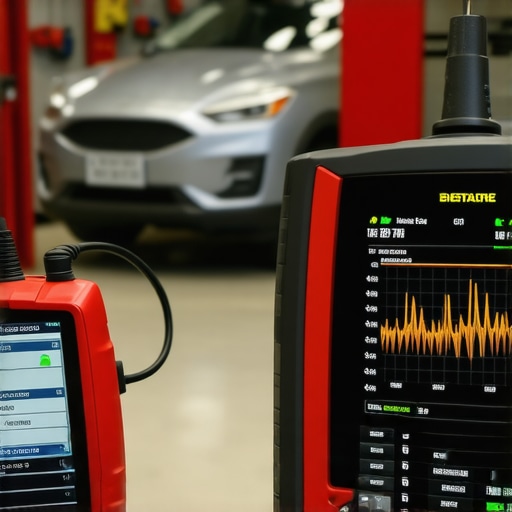
Invest in Tools That Talk Back to the Car
I personally recommend anything that allows for live data graphing. When I am hunting a vibration, I am not just looking for a red or green light; I am looking at the RPM of the engine versus the output speed of the transmission. If there is a discrepancy when the clutch is supposed to be locked, I know exactly where the slip is occurring. This is one of the top auto repair tips to extend your vehicles lifespan because it allows you to see the wear before it becomes a physical sensation in the steering wheel. Do not be afraid of the learning curve; modern interfaces are much more user-friendly than the clunky boxes we used in the nineties.
How do I maintain my transmission health over the next decade?
The answer is simpler than you think: stop believing the ‘lifetime fluid’ myth. Many manufacturers claim their transmission fluid never needs changing, but if you want your car to last, you have to ignore that. According to technical bulletins from Sonnax Industries, a leading specialist in drivetrain components, many shudder issues are traced back to wear in the TCC regulator valve bore, which causes inconsistent pressure applied to the clutch. By performing regular services and using oil change innovations and technologies for your gearbox, you keep the grit and metal shavings from acting like sandpaper on those delicate valves. Just like you should watch for the brake fluid color that means you need a flush immediately, you should keep a sharp eye on your transmission oil for any signs of darkening or a burnt odor.
The Future of Why Your Car Shudders
Looking ahead, I predict that traditional diagnostic guessing will be completely replaced by AI-driven telematics. We are already seeing high-end vehicles that monitor the friction coefficient of internal clutches in real-time. Soon, your car will likely send a notification to your phone saying ‘Transmission Service Required’ because it detected a micro-shutter that a human being could never feel. Until that day comes, you are the primary sensor. Combine your physical senses with a thorough brake service for safety and performance to ensure your entire chassis is tight. My challenge to you this weekend is to go out and check your transmission fluid color. Is it cherry red or coffee black? Catching it now could save you three grand later.
Three Myths About Transmission Shudders That Cost Me a Fortune
#IMAGE_PLACE_PLACEHOLDER_E#
Over the years, I have seen so many people throw away hard-earned money because they believed the ‘common knowledge’ that isn’t actually true. First, the biggest myth is that a shudder always requires a full rebuild. In many cases, it is simply a fluid quality issue or a computer software glitch. Second, many believe that if there is no Check Engine Light, there is no problem; however, I have dealt with vibrations that were clearly mechanical but never triggered a code until a major component failed. I learned the hard way that the solenoid failure that locks your car in limp mode often starts with these tiny, ignored shudders. Third, never assume every shake is the transmission, as a failing fuel system can mimic these symptoms. I have seen cases where learning how to tell if your fuel pump is dying was the real key to solving a ‘transmission’ shake.
Where I Go When the Shop Manual Fails
When standard manuals do not give me the answer, I turn to three specific sources. I highly recommend the Sonnax technical blog—they are the industry wizards of torque converter hydraulics and provide deep dives you won’t find anywhere else. For real-world data, I check professional forums where mechanics share ‘confirmed fixes’ for specific makes. Finally, I never underestimate the power of manufacturer Technical Service Bulletins (TSBs). Utilizing these auto repair hacks keeps me from guessing. I also keep a close eye on other maintenance markers, like the reason your engine consumes oil without a leak, because car health is an ecosystem where one failing part can cause a chain reaction of vibrations.
Take Control of Your Commute Again
There is nothing quite like the feeling of a vehicle that drives exactly the way it was designed to. When you finally track down that vibration and kill it, you get more than just a quiet ride—you get your confidence back. You stop flinching every time you merge onto the highway and start enjoying the journey again. By using top auto repair tips to extend your vehicles lifespan, you are protecting your budget and your safety. Dealing with a mysterious car vibration can be a headache, but you now have the tools to handle it. Have you ever had a mystery vibration that felt like it would never go away? What did it end up being? Let me know in the comments below!