
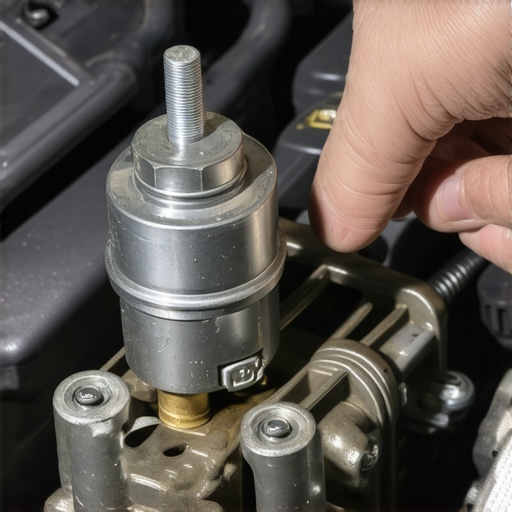
I remember it like it was yesterday. 6:00 AM on a Tuesday, freezing cold, and my trusty old truck decided to just crank and crank without a hint of life. I smelled gas. I panicked. My first instinct was that the fuel pump had finally given up the ghost, leaving me with a hefty bill and a long walk to work. But as I sat there in the driver’s seat, frustrated and shivering, I realized I was looking at the wrong end of the fuel line. It wasn’t the pump; it was a tiny, often-ignored component called the fuel pressure regulator.
Stop Blaming Your Fuel Pump for Every Starting Struggle
When your car starts acting like it has a mind of its own, it’s easy to jump to the most expensive conclusion. You might notice your engine stumbling during acceleration or see a cloud of black smoke that makes you think you’re driving a steam engine. Before you go out and buy a new pump, you need to understand what your car is trying to tell you. A failing regulator can mimic the symptoms of a dozen other problems, but it has its own specific set of ‘tells’ that will save you a fortune if you catch them early. We are going to dive into those signs today so you don’t end up throwing parts at a problem like I used to do. Most people don’t realize that advanced vehicle diagnostics aren’t just for mechanics with five-figure scanners; you can do a lot of this in your own driveway with a little patience.
Is This Tiny Part Really Worth the Headache?
You might be skeptical. Can a small metal valve really cause your car to stall at a red light or make your gas mileage plummet? Absolutely. In fact, when the regulator fails, it can dump raw fuel directly into your vacuum lines. I made the massive mistake early on of replacing my spark plugs, wires, and even the coil packs because of a rough idle, only to find out a $40 regulator was the culprit. According to the Car Care Council, nearly 80% of vehicles on the road have at least one unperformed maintenance item, and fuel system health is frequently near the top of that list. If you’ve noticed that your gas mileage tanks or you’re smelling fuel in the cabin, you are likely dealing with this exact issue. Have you ever spent a whole weekend swapping out parts only to have the same check engine light staring back at you on Monday morning? It is the most defeating feeling in the world.
Knowing how to identify a bad fuel pump is important, but checking the regulator first is the smart move for your wallet. It’s about being a detective, not just a parts changer. Let’s look at the specific physical signs you can find under the hood right now.
Pull the Vacuum Line to Find the Ghost in Your Engine
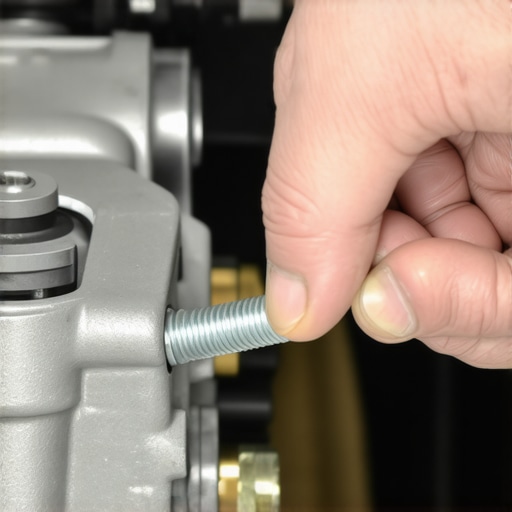
Think of your fuel pressure regulator as a bouncer at a club. Its only job is to keep the pressure in the fuel rail exactly where it needs to be, usually by bypassing excess fuel back to the tank. When that bouncer falls asleep on the job—or worse, starts letting anyone through the door—your engine drowns in gasoline. The simplest way to see if the internal diaphragm has ruptured is the ‘vacuum test.’ Locate the small rubber hose attached to the regulator. With the engine off, pull that hose. If gasoline drips out of that vacuum port, you have found your culprit. I remember helping a neighbor with his old Buick that would not start; the second I yanked that vacuum line, a jet of pressurized fuel shot out and hit me right between the eyes. It was gross, smelled terrible, and ruined my favorite shirt, but it proved the regulator was shot without spending a dime on a mechanic. This is one of those auto repair hacks that can save you a $100 diagnostic fee in about thirty seconds.
Sniff for Trouble Before You Start Spending
If you do not see liquid fuel, do not assume the part is perfect. Lean in and take a whiff of that vacuum line. If it smells like a gas station, the diaphragm is likely weeping. A tiny pinhole leak here acts like a straw, sucking raw fuel into the intake manifold. This creates a rich condition that confuses your computer, leading to a hunt for the sensor that fixes a rough idle when the problem is actually mechanical. When raw gas enters the intake through that vacuum line, it fouls your spark plugs almost instantly. I have pulled plugs that were sooty and wet just minutes after a cleaning, all because that tiny diaphragm had a hole no bigger than a needle tip. It is a classic case where finding a vacuum leak is not about air getting in, but fuel getting out where it does not belong. It is a similar principle to checking for air in your lines during a brake service; if the pressure is not consistent, the system is compromised.
Put a Gauge on It to See the Real Pressure
Sometimes the failure is not a leak; it is a spring that has lost its tension. This is where you need to get surgical. You will want to hook up a fuel pressure gauge to the Schrader valve on your fuel rail—it looks just like the air valve on your tires. Think of this like taking your car’s blood pressure. When you turn the key to the ‘on’ position, the pressure should jump to a specific PSI (check your manual, but it is often between 35 and 45). If the pressure drops the moment the pump stops priming, your regulator is likely bleeding off. If you see the needle on that gauge fluttering or dropping instantly to zero after you turn the engine off, the regulator’s internal check valve has failed. It is like having a hole in your bucket; no matter how fast the pump works, it cannot keep up with the loss. This ‘leak-down’ test is the gold standard for verifying if you are dealing with a bad regulator or a failing pump check-valve. This is one of those easy checks before a road trip that prevents you from getting stranded. If you are trying to master essential auto repair strategies, owning a basic pressure gauge is non-negotiable.
The biggest mistake I see DIYers—and even some green professionals—make is treating an OBD-II scanner like a crystal ball. Everyone thinks that if the tool says ‘P0171 Lean,’ you should immediately go out and buy a new oxygen sensor. In my experience, that is the fastest way to set fire to your paycheck. A code is not a diagnosis; it is a starting point for a conversation between you and the ECU. For example, that lean code could be caused by a vacuum leak, a clogged fuel filter, or, as we’ve been discussing, a failing fuel pressure regulator. If you don’t understand what your car is trying to tell you through the live data stream, you’re just guessing with an expensive piece of plastic in your hand.
Stop Treating Your OBD-II Scanner Like a Magic Wand
Here is the nuance most people miss: sensors often fail ‘in range.’ This means the computer doesn’t see a problem because the sensor is still sending a signal, but that signal is flat-out lying. This is where how advanced vehicle diagnostics prevent costly breakdowns by looking at ‘Fuel Trims.’ If your Short Term Fuel Trim is pegged at +25%, your computer is screaming for more gas. If you’ve already verified the regulator is good using the vacuum test I mentioned earlier, you might be looking at the $20 sensor that usually fixes a rough idle—the MAF sensor. But again, don’t just swap it. Clean it first. I’ve seen countless people throw away perfectly good parts because they didn’t realize a bit of dust was skewing the data.
The One Mistake That Turns a $20 Repair Into a $500 Nightmare
The ‘Oops Factor’ in modern car repair is ignoring the relationship between systems. I once watched a guy replace his entire brake master cylinder because his pedal felt ‘mushy,’ only to realize later he had a tiny air pocket in the ABS module that required a specific electronic bleed procedure. This is why the ultimate guide to brake service always emphasizes following the factory sequence. The same applies to your engine’s heart. You might think a tapping sound is a mechanical failure, but sometimes it’s just low oil pressure from using the wrong viscosity. Modern oil change innovations have made engines more efficient, but also more sensitive to neglect. If you aren’t using essential auto repair strategies like checking for stored codes even when the light is off, you’re missing the early warning signs of a total system meltdown.
Can Your Oil Quality Actually Mess Up Your Diagnostic Readings?
Surprisingly, yes. In many modern vehicles with Variable Valve Timing (VVT), dirty or incorrect oil can cause the cam phasers to stick, throwing ‘timing over-advanced’ codes that look like a broken timing chain. According to a technical brief by the National Institute for Automotive Service Excellence (ASE), nearly 25% of ‘engine mechanical’ codes in VVT-equipped vehicles can be traced back to oil condition rather than actual component failure. This is why I always check the dipstick before I ever hook up a scan tool. Have you ever fallen into this trap and replaced a major part only to find out it was something simple like a loose gas cap or dirty oil? Let me know in the comments. It’s a rite of passage for every home mechanic, but hopefully, by focusing on the ‘why’ instead of just the ‘what,’ you can avoid the headache next time.
Why Bidirectional Control is the Holy Grail of Your Toolbox
If you are still using a $20 code reader from the bargain bin at the auto parts store, you are essentially trying to perform surgery with a butter knife. The real shift in my diagnostic game happened when I upgraded to a tool with bidirectional control. This allows you to talk back to the car. Instead of wondering if your fuel pump relay is dead, you can literally command the ECU to turn the pump on. If you hear it click, the circuit is good. This level of advanced vehicle diagnostics takes the guesswork out of the equation and prevents you from hanging parts on a car that doesn’t need them. I personally use an Autel or a Launch unit because they allow me to toggle individual fuel injectors to see which cylinder is causing a misfire without even getting my hands dirty.

As you get more comfortable with these tools, you’ll realize that the real power lies in graphing live data. Reading a digital number that jumps from 0.1 to 0.9 volts is useless. You need to see the wave. As noted in the Bosch Automotive Handbook, an oxygen sensor’s switching frequency should occur at least once per second at 2500 RPM to be considered healthy; anything slower indicates a ‘lazy’ sensor that ruins fuel economy long before it ever trips a ‘Check Engine’ light. By decoding what your car is trying to tell you through these waveforms, you can spot a failing catalytic converter or a vacuum leak that only appears under load. It’s about seeing the problem in real-time, not just reading the history of what went wrong.
The Long Game of Keeping Your Systems Precise
Maintenance isn’t just about changing fluids; it’s about preserving the tight tolerances your engine’s sensors rely on. For instance, if you have been following essential auto repair strategies, you know that keeping your intake valves clean is paramount in GDI (Gasoline Direct Injection) engines. Carbon buildup on those valves can disrupt airflow so much that your fuel trims go haywire, making you think you have a mechanical fuel pressure issue when you really just have a ‘breathing’ problem. I’ve seen people spend hundreds on regulators and pumps because they didn’t realize their engine was literally choking on its own soot. This is where top auto repair tips to extend your vehicles lifespan come into play—specifically, using high-quality fuel and the occasional intake cleaning service to keep those sensors reading accurately.
How do I maintain my diagnostic accuracy over time?
To keep your diagnostics sharp, you need to calibrate your expectations and your equipment. Check your fuel pressure gauge against a known good source occasionally, and never ignore the ‘Small Stuff.’ For example, I’ve seen DIYers get frustrated with weird electrical readings only to find out their battery terminals were slightly corroded, causing a voltage drop to the ECU. Also, don’t get sucked into the hype of every new chemical on the shelf. The truth about oil additives is that most won’t fix a mechanical failure, but they can sometimes help clean up the varnishing that makes VVT solenoids stick. In the future, I expect we’ll see even more AI-integrated diagnostics where your phone will alert you to a failing regulator before you even notice a stumble, thanks to cloud-based telematics comparing your car’s data to millions of others.
If you want to step up your game today, try this: the next time you hook up your scanner, find the ‘Custom Data List’ and select only O2 voltage and Short Term Fuel Trim. Graphing just these two will reveal secrets about your engine that a simple code could never explain. It’s the difference between hearing a rumor and seeing the truth for yourself.
Lessons from the Garage: How I Stopped Chasing Diagnostic Ghosts
One thing I wish I knew earlier is that a clean engine bay is a diagnostic tool in itself. If I can’t see the leaks, I can’t fix them. Always start with a visual inspection before plugging in a scanner. Don’t ignore the electrical health of the car. I once spent days chasing a fuel issue that was actually a corroded ground wire. Check your battery and terminals first to ensure your sensors get the right voltage. Trust your nose and ears as much as your screen. That smell of raw fuel or the faint whistle of a vacuum leak tells a story that data sometimes hides. I’ve found that finding a vacuum leak with a little smoke can reveal more than two hours of staring at a scan tool.
The Gear That Separates Mechanics from Parts Changers
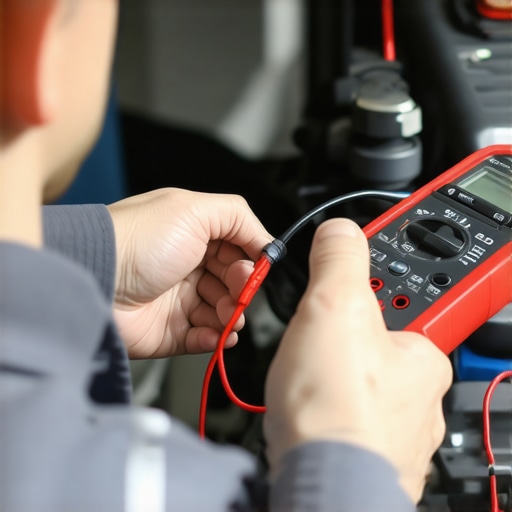
For anyone serious about keeping their car on the road, I recommend picking up a high-quality fuel pressure gauge and a bidirectional scan tool. These aren’t just luxuries; they are how advanced vehicle diagnostics actually work in the real world. I also swear by the Bosch Automotive Handbook. It is the ‘bible’ for understanding the physics behind every component. Combined with top auto repair tips to extend your vehicles lifespan, you’ll be ahead of most entry-level shop techs. Lastly, never underestimate the power of a simple multimeter. Learning how to find a parasitic battery drain will save you more money and frustration than almost any other skill.
#IMAGE_PLACEHOLDER_E#
Your Journey Toward Mechanical Independence Starts Here
Stepping into the world of DIY repair can be intimidating, but you have the tools and the knowledge to succeed. By focusing on the ‘why’ instead of just the ‘what,’ you are already miles ahead of the average driver. Implementing essential auto repair strategies isn’t just about saving money—it’s about the peace of mind that comes from knowing your vehicle inside and out. Don’t let a check engine light ruin your week; use it as an opportunity to learn what your car is trying to tell you. Have you ever replaced a major part like a fuel pump only to find out it was a simple sensor or regulator? Let me know your story below.