
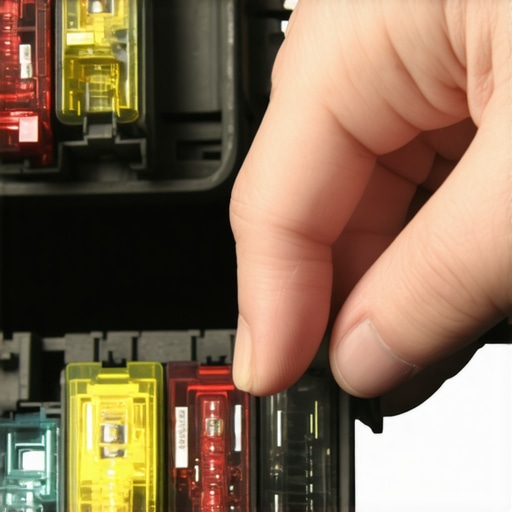
It was 95 degrees in the shade, and I was sitting in the driver’s seat of my old truck, staring blankly at the dashboard. I had just finished a long shift, and all I wanted was to get home and sit in front of the AC. I turned the key. The engine cranked beautifully—rur-rur-rur—but there was no ‘vroom.’ It just would not catch. I felt that sinking pit in my stomach. Earlier that month, I had already tried to see if my battery was actually dead, but the lights were bright and the starter was strong. I spent an hour sweating in that parking lot, convinced I needed a five-hundred-dollar fuel pump, only to realize two days later it was a hidden fuse I did not even know existed.
The Ghost in the Machine That Stops Your Car in Its Tracks
We have all been there. You are ready to go, the car sounds like it wants to start, but it is like someone cut the invisible straw feeding your engine. Usually, the first instinct is to panic and call a tow truck, which is one of those auto repair strategies that ends up costing way too much money for no reason. But before you pull out the credit card or start decoding vehicle diagnostics that look like Greek, you need to look for the hidden fuse. Most people check the big, obvious box under the hood, but many modern vehicles hide the fuel pump circuit in a secondary panel under the dash or even tucked away in a trunk compartment. Today, I am going to show you exactly how to hunt down this tiny culprit. I learned this the hard way after I spent an entire weekend dropping a fuel tank in my driveway for absolutely no reason. I felt like a total amateur when the new pump didn’t work either, but those mistakes are how we learn to identify a bad fuel pump before it actually ruins your week.
Does a Cheap Piece of Plastic Really Have This Much Power?
It sounds like a mechanic’s fairy tale, doesn’t it? The idea that a fifty-cent component can render a two-ton machine completely useless. You might think, ‘If it was just a fuse, wouldn’t my car tell me?’ Unfortunately, car computers are smart, but they are not always specific. According to the Car Care Council, a non-profit organization dedicated to car maintenance awareness, nearly 80 percent of vehicles on the road are in need of at least one service or repair, often something as simple as a fuse or a fluid top-off that the owner has overlooked. A blown fuse isn’t a sign your car is dying; it is a sign a circuit was protected from a surge. If you have ever heard a metallic click when you turn the key, you know how frustrating these electrical gremlins can be. Have you ever been stranded by something that turned out to be a simple five-minute fix? I’d love to hear your story because I need to know I am not the only one who has been tricked by a fuse! We are about to dive into exactly where these hidden panels live and how to test them without any fancy tools or a degree in electrical engineering.First, you need to grab your owner’s manual—that dusty book in the glovebox that most of us treat like a drink coaster. If you don’t have it, a quick search for your year, make, and model online will give you the ‘map.’ Think of your car’s electrical system like the plumbing in your house; the fuel pump fuse is the main shut-off valve. If it’s ‘tripped,’ no amount of cranking will get fuel to the engine. Start by popping the hood, but don’t stop there. While the main power distribution center is usually near the battery, your fuel pump might be controlled by a ‘Fuel System Integrated Module’ or a relay hidden in the cabin. I remember helping a buddy with his older 5-series that just died at a stoplight. We were about to call a flatbed until I found a tiny auxiliary fuse panel tucked behind a trim piece in the trunk. It turns out, that five-amp fuse was the only thing standing between him and a three-mile walk. This is one of those auto repair hacks that can literally save you hundreds in tow fees.
Hunt Down the Passenger Compartment Panel
Most cars have a secondary fuse box located under the dashboard, usually on the driver’s side near your left knee or behind the glove compartment. You have to be a bit of a contortionist to get in there, but it is worth the effort before you start decoding vehicle diagnostics that might lead you down a rabbit hole. Use your phone’s camera to take a picture of the diagram on the back of the panel cover. It’s much easier to read a photo than to try and squint at inverted plastic lettering while your head is wedged against the brake pedal. If you see a symbol that looks like a gas pump or the letters ‘FP,’ that is your target. 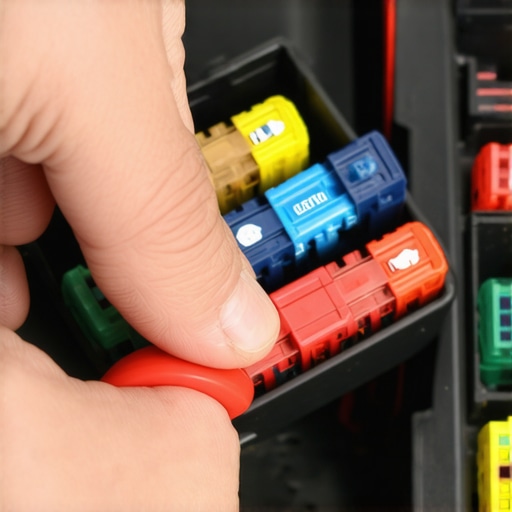
Test the Fuse Without Specialized Tools
Once you find the right fuse, pull it out using the plastic tweezers usually found inside the main engine-bay fuse box. Hold it up to the light. You are looking for the small metal bridge inside the translucent plastic. If that bridge is broken or there is a dark scorch mark, you’ve found your ghost. It is a much simpler fix than brake service or major engine work. If the fuse looks okay but you’re still suspicious, swap it with another fuse of the exact same amperage from a non-essential circuit, like the radio or the cigarette lighter. This is a common part of essential auto repair strategies that turn a breakdown into a minor inconvenience. I have seen people stop letting shops charge you for a free battery test only to find out the battery was fine and the fuel circuit was the real culprit all along. Checking the fuse first is the smartest way to identify a bad fuel pump because it eliminates the electrical ‘middleman’ before you commit to expensive hardware replacements.But even after you have ruled out the fuse, the most common trap I see people fall into is what I call the ‘Parts Cannon.’ This is when a DIYer sees a fault code and immediately buys the part mentioned in the description without checking the circuit. If your scanner says ‘Fuel Rail Pressure Sensor,’ most people buy a sensor. In reality, it could be a frayed wire, a bad ground, or a clogged filter. In my experience, throwing parts at a problem is the most expensive way to learn that decoding vehicle diagnostics requires looking at the ‘why’ and not just the ‘what.’ According to a study by AAA, many car owners spend over $1,200 annually on repairs, and a significant portion of that comes from misdiagnosis or unnecessary part replacements. Don’t let your wallet be a casualty of the Parts Cannon.
Stop Guessing When the Check Engine Light Comes On
One of the biggest mistakes you can make is resetting a fault code and hoping it stays away. I have seen folks do this right before a road trip, thinking they can ‘outrun’ the sensor. This is a massive ‘oops’ factor because how advanced vehicle diagnostics prevent costly breakdowns is by catching a lean condition or a misfire before it melts your catalytic converter. If you ignore the data, you are essentially flying blind. Always check your live data stream—look at fuel trims and O2 sensor voltages. If those numbers look like a heart monitor during a marathon, your problem isn’t just a sensor; it’s a mechanical failure. 
Does Your High-Mileage Engine Actually Benefit from Thicker Oil?
This is where the ‘old school’ advice often fails. Everyone says you should switch to a thick 10W-40 or 20W-50 once your car hits 150,000 miles to stop leaks. In my professional opinion, that is a recipe for disaster on modern engines with Variable Valve Timing (VVT). Those systems rely on extremely precise oil pressure to move the cam phasers. If the oil is too thick, the system won’t react fast enough, and you will end up with a sluggish car and a dashboard lit up like a Christmas tree. I’ve read countless forum posts where owners complain that their engine makes a tapping noise only after an oil change, and nine times out of ten, it’s because they used the wrong viscosity trying to ‘protect’ an old motor. Instead of guessing, look into oil change innovations that use high-quality synthetics with seal conditioners. If you are curious about the nuance, the truth about synthetic oil vs conventional is that synthetic almost always wins because it maintains its flow at high temperatures.
Why Your New Brake Pads Still Squeal Like a Pig
It is incredibly frustrating to spend a Saturday doing a full brake service, only to have them start squeaking the next morning. Most people think ‘cheap pads’ are the culprit, but the advanced mistake is actually failing to clean the hub surface or neglecting the slide pins. If the caliper cannot move freely, the pads will drag and glaze over. This is exactly why your brand new brake pads are already squealing—it is usually a vibration issue, not a material issue. You need to apply high-temp grease to the contact points, not the friction surface, to dampen those micro-vibrations that cause the noise. Have you ever fallen into this trap of replacing a part only to have the same symptom reappear? Let me know in the comments because we have all been there. It is these nuances, like proper lubrication and using essential auto repair strategies, that separate a ‘parts changer’ from a true mechanic. Master the small details, and you will find that auto repair hacks are mostly just about being thorough.You can have all the enthusiasm in the world, but if you are working with a basic socket set and a prayer, you are eventually going to hit a wall. I realized this the first time I tried to troubleshoot a modern transmission issue without a real data stream. I was just guessing, and guessing is the fastest way to turn a weekend project into a week-long nightmare. If you want to move beyond basic part-swapping, you have to invest in a bi-directional scan tool. I personally use an Autel unit because it allows me to actually command the vehicle’s computer to perform tasks, like bleeding an ABS pump during a brake service. Without that capability, you are just pushing old fluid around and hoping for the best. When you start decoding vehicle diagnostics at this level, you stop being a victim of the dealership’s ‘diagnostic fee’ and start actually understanding the machine.
The One Tool That Stopped My Guessing Game
Most people think a code reader is just for turning off the check engine light, but the real magic is in the live data. I remember a car that would stumble only when the AC was on and the wheels were turned. A cheap reader told me nothing. But a real scanner showed me the fuel trim was spiking because of a vacuum leak that only opened up when the engine shifted on its mounts. This is why vehicle diagnostics explained in most manuals are too surface-level. You need to see what the sensors see in real-time. According to the SAE International standard J1979, the standardized diagnostic data we access is vast, yet most DIYers only look at 1% of it. If you learn to read your short-term fuel trims, you can find a leak before it ever triggers a light. 
How do I keep my car running like new for a decade?
Maintaining a vehicle over the long haul isn’t about luck; it is about chemistry and consistency. One of my favorite auto repair tips to extend your vehicle’s lifespan is to stop treating oil changes as a chore and start treating them as an audit. Every third oil change, I send a sample to Blackstone Laboratories for a professional fluid analysis. They can tell you if there are microscopic traces of copper or lead in your oil, which acts as an early warning system for bearing wear. This is the peak of oil change innovations because it moves you from reactive maintenance to predictive maintenance. You are no longer wondering if your engine is healthy; you have a lab report proving it.
The Future of Turning Your Own Wrenches
Looking ahead, the ‘grease monkey’ era is rapidly evolving into the ‘data technician’ era. I predict that within five years, we will see a massive shift toward cloud-based telematics where your car will email you a PDF of exactly which sub-component failed before you even feel a vibration. We are already seeing how advanced vehicle diagnostics prevent costly breakdowns by monitoring battery health and alternator ripple patterns. Speaking of which, here is my challenge to you: tonight, grab a digital multimeter and check your battery’s resting voltage, then check the alternator’s output under load. It is the easiest way to tell if your alternator is dying before it leaves you stranded in a grocery store parking lot. Take ten minutes to do this one check; it’s the kind of proactive habit that separates the pros from the amateurs.
The Hardest Lesson I Learned About Chasing Electrical Ghosts
If there is one thing a decade of grease under my fingernails has taught me, it is that the loudest component in the car is rarely the one at fault. We often assume the fuel pump is dead because we can’t hear it prime, but more often than not, the pump is perfectly healthy—it’s just not getting the signal to wake up. I once spent six hours and two hundred dollars replacing a pump on a Tuesday night, only to find out the real culprit was a corroded ground wire hidden behind a tail light. This is why I advocate for essential auto repair strategies for frequent drivers that prioritize testing over part-swapping. When you realize that the computer is just a series of switches, the ‘magic’ of the machine disappears and you start seeing the logic. Always remember: a pump can’t pump if the electricity is taking a nap in a blown fuse or a loose relay. Learning to identify a bad fuel pump means looking at the whole circuit, not just the mechanical heart.
The Gear That Actually Lives in My Daily Toolbox
You do not need a five-thousand-dollar rolling chest to keep your car on the road, but you do need tools that provide clarity. My first recommendation is always a high-quality digital multimeter; it is the only way to stop guessing if a wire is actually carrying the load it should. Secondly, never underestimate the power of a vehicle-specific service manual—the kind with actual wiring diagrams that show you exactly where those hidden fuse panels live. These are the ultimate auto repair hacks because they give you the dealer’s own playbook. Finally, before any long journey, I rely on vehicle diagnostics explained in my scan tool to check for ‘pending’ codes that haven’t even triggered a light yet. This trio of tools has saved me from more roadside headaches than I can count.
Reclaim Your Confidence Under the Hood
Working on your own vehicle can feel like walking through a minefield of potential mistakes, but the secret is that every master mechanic started by feeling completely lost. The difference is they kept turning the wrench until the confusion turned into a pattern. By taking the time to check the simple things—like that elusive fuel pump fuse—you are training your brain to think systematically. This proactive mindset is one of the best auto repair tips to extend your vehicle’s lifespan because it prevents small electrical hiccups from turning into major mechanical failures. Don’t be afraid to get your hands dirty and fail occasionally; it’s the only way to truly own your car rather than just making payments on it. What is the one ‘simple’ fix that made you feel like a genius—or a total amateur—when you finally tracked it down? Let me know in the comments below!