
I was sitting at a red light last Tuesday when I realized my dashboard was rattling so loudly I could barely hear the radio. It was not just a minor tremor; it was a bone-deep shudder that made my mirrors a blur. I have spent years under the hood, but even I felt that familiar pit of dread in my stomach. Was my engine finally giving up the ghost? I had recently handled some essential auto repair strategies, so I knew the basics were covered, but this felt different. It felt aggressive.
Stop Ignoring the Shake Before Something Snaps
Most of us are guilty of “radio repairs”—you know, turning up the volume so you do not have to hear the car complaining. I did exactly that for a month, assuming it was just a rough idle. I even wasted money on the truth about oil additives hoping for a miracle in a can. The reality is that excessive vibration is usually the car’s final warning before a component decides to depart the vehicle entirely. Today, I am going to show you the specific, hidden reason your engine is trying to shake itself apart, and it is probably not your spark plugs.
Is my car actually safe to drive like this?
That is the big question, right? You are wondering if you are going to lose a wheel on the highway. While a steering wheel vibrating at idle might seem harmless, it is often a sign of failing engine mounts or a harmonic balancer issue. According to the Car Care Council, neglected maintenance is a leading cause of vehicle breakdowns that could have been prevented for a fraction of the cost. I learned the hard way that a “little shake” can quickly turn into a metallic click you hear every time you turn the key. Have you ever felt your car was trying to tell you something but you just could not find the right translation? We need to talk about how advanced vehicle diagnostics prevent costly breakdowns because, trust me, your “calibrated elbow” is not enough to find this specific tear. Let’s get into the nitty-gritty of what is actually happening under your hood.
The first thing you need to do is identify if the vibration is mechanical (the engine itself) or structural (the mounts or drivetrain). I remember a specific 2012 sedan that came into my garage last summer. The owner was convinced the transmission was slipping because the whole car bucked at stoplights. He was already looking into junk car prices, but after five minutes of checking, I found a dry-rotted motor mount. For less than fifty bucks, the car felt brand new again.
Spot the Failure Before You Start Buying Parts
To find the source of a bone-shaking vibration, you have to look past the superficial. Start with a visual inspection of your motor mounts. These are the rubber and steel sandwiches that isolate the engine movement from the chassis. Grab a long pry bar and gently try to nudge the engine near the mounting points. If the engine shifts easily or you see visible cracks in the rubber, you have found your culprit. This is one of the best auto repair hacks save money without sacrificing quality because it prevents you from replacing perfectly good sensors or spark plugs.

The Brake Pedal Trick Every DIYer Needs
If the vibration only happens when you are slowing down, the engine might be fine, but your stopping hardware is toasted. Knowing why your steering wheel vibrates only when you hit the brakes is essential for safety. If the shake is felt in the pedal itself, your rotors are likely warped or have uneven brake pad deposits. This heat-induced warping acts like a record player with a scratched disc, sending pulses back through the hydraulic line. I once saw a driver who ignored this until the vibration actually shook a caliper bolt loose. Do not be that person.
Stop Relying on Your Gut and Use Real Data
Sometimes the shake is not a physical break but a software or sensor hiccup. This is where you need to look into how advanced vehicle diagnostics prevent costly breakdowns. If your engine is misfiring, it will create an unbalanced rotation that feels like a rhythmic thud. A simple OBD-II scanner can tell you exactly which cylinder is failing. Often, the 20 dollar sensor that usually fixes a rough idle—like a Mass Air Flow sensor or an Idle Air Control valve—is the only thing standing between you and a smooth ride.
Check for Play in the Wheel Bearings
If the engine is smooth at a standstill but starts screaming and shaking at 40 mph, it is time to get the wheels off the ground. Using the simple way to check your wheel bearings for play will save you from a catastrophic hub failure. Jack up the front end, grab the tire at the top and bottom, and try to rock it. Any clicking or movement means the bearing is shot. Think of a wheel bearing like the axle on a bicycle; if it is loose, the wheel wobbles. At 60 mph, that wobble becomes a terrifying earthquake.
The most common mistake I see DIYers and even some pros make is treating the symptoms rather than the system. When your car shakes, the immediate reflex is to throw a set of pads or a new sensor at it, but that is exactly how you end up back in the garage two weeks later. Let’s look at the nuances of brake service myths busted what really matters for safety. Everyone tells you to buy the most expensive ceramic pads, but if your caliper slide pins are bone-dry or corroded, those expensive pads will wear unevenly and start vibrating within a month. It is not just about the friction; it is about the movement of the hardware itself.
New Pads Alone Won’t Save Your Stopping Power
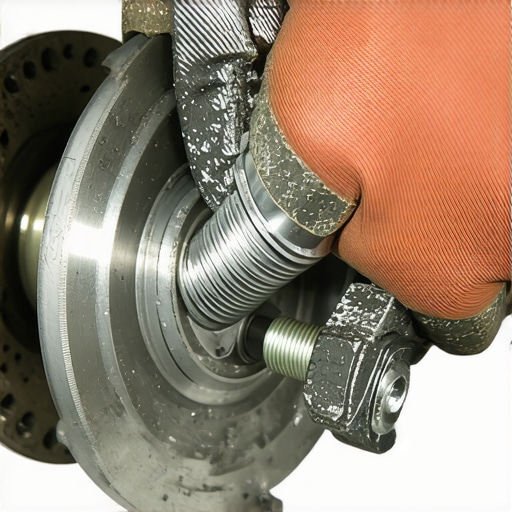
In my experience, the ‘oops’ factor that ruins most brake jobs is neglecting the bracket cleaning. Rust builds up under the stainless steel clips, pinching the pads so they cannot retract. This generates localized heat, which leads to the reason your brake pads are squealing even though they are new. Most people think squealing means cheap pads, but it is actually the sound of a pad that is stuck and vibrating at a high frequency against the rotor. I have seen countless drivers waste money on a second set of pads when a simple wire brush and some high-temp grease were all they needed.
Why does my brake pedal feel different after a long drive?
If you notice your pedal getting ‘mushy’ or sinking further toward the floor after an hour on the highway, you are likely dealing with moisture contamination. Brake fluid is hygroscopic, meaning it actively sucks moisture out of the air. According to SAE International, brake fluid can absorb enough water in just two years to lower its boiling point significantly, leading to vapor lock during heavy use. This is the reason your brake pedal feels different after a long drive and why a simple ‘pad slap’ is never enough. You have to flush the system to maintain hydraulic integrity.
Your Oil Filter is More Important Than the Oil Itself
Another myth is that all oil changes are created equal as long as the oil is synthetic. However, oil change innovations technologies that save your engine focus heavily on the micron-rating of the filter. A cheap five-dollar filter can bypass oil when cold, sending unfiltered grit straight into your rod bearings. If you have ever wondered how to tell if your mechanic actually changed the oil, look at the filter first. If the housing is covered in old road grime while the dipstick looks clean, you have been scammed. A clean engine starts with a high-capacity filter, not just fancy additives.
Finally, we need to stop the cycle of ‘part-darts’ with electronics. We are decoding vehicle diagnostics what your car is trying to tell you, not just following a code. An O2 sensor code rarely means the sensor is bad; it usually means the engine is running too lean or rich because of a vacuum leak elsewhere. Have you ever fallen into this trap? Let me know in the comments. Let’s start looking at the vehicle as a living organism where one joint affects the whole skeleton.
If you want to move beyond being a ‘parts changer’ and become a real troubleshooter, you need to look at the signal, not just the result. I personally swear by a two-channel oscilloscope. While a scanner tells you what the computer thinks is happening, the scope shows you what is actually happening in real-time. This is how I found a failing crank sensor that only acted up when it got hot—something a standard scan would never catch. According to technical standards in ISO 14229-1, also known as Unified Diagnostic Services (UDS), modern vehicle modules communicate through a layered protocol that can mask intermittent electrical noise. By using the secret to finding a parasitic battery drain with a simple multimeter, you can often rule out the ‘ghosts in the machine’ before you start tearing into the dashboard. 
How can I maintain my vehicle’s reliability over the next decade?
The secret isn’t a magic liquid; it’s a religious adherence to the ‘Severe Service’ schedule. Most of us drive in stop-and-go traffic, which qualifies as severe, yet we follow the ‘Normal’ maintenance intervals. To really win the long game, you need top auto repair tips to extend your vehicles lifespan like consistent fluid analysis. I also recommend the secret to keeping your engine bay clean without damaging electronics because a clean engine runs cooler and makes it easier to spot leaks before they become puddles.
Why the Factory Manual Often Undersells Maintenance
We are seeing a trend where manufacturers claim ‘lifetime’ fluids for transmissions and differentials. In my opinion, ‘lifetime’ usually means the life of the warranty, not the life of the car. If you want your vehicle to last, you need to ignore that marketing and stick to essential auto repair strategies that include 30,000-mile fluid swaps. This proactive approach is the foundation of the ultimate guide to brake service for safety and performance. I predict that as we move toward more software-defined vehicles, the ‘tool’ of choice won’t be a wrench, but a laptop with specialized interface cables. If you are serious about your car, go grab a multimeter today and test your battery’s resting voltage—it is the first step in decoding vehicle diagnostics what your car is trying to tell you and could save you from a dead battery tomorrow.
Lessons from the Grease Pit Most Manuals Ignore
After years of turning wrenches, I have realized that the most expensive repairs are not usually caused by bad luck, but by missed signals that were ignored for too long. Here is what I have learned through trial, error, and a lot of grease under my fingernails:
- Trust your senses over the sensor: While how advanced vehicle diagnostics prevent costly breakdowns is a game-changing tool, always start with what you can see, hear, and smell. A code for a lean condition might just be a cracked vacuum hose you can find with a simple visual check.
- Cleanliness serves as a diagnostic tool: I used to think detailing was just for show, but using the secret to keeping your engine bay clean without damaging electronics makes finding a fresh oil leak a ten-second job rather than a week-long guessing game.
- Maintenance is far cheaper than repair: It sounds like a cliché, but following essential auto repair strategies like changing fluids before they turn black is the only way to hit the 200,000-mile mark without a major component failure.
Gear and Knowledge for Your Digital Toolbox
You do not need a professional shop to get professional results, but you do need the right mindset and a few specific tools to stop being a part-changer and start being a technician. If you are ready to stop guessing, here are the resources I rely on daily:
- A Quality Multimeter: This is non-negotiable for modern vehicles. Whether you are troubleshooting a crank-no-start or using the secret to finding a parasitic battery drain with a simple multimeter, it is your most honest friend in the garage.
- Vehicle-Specific Community Forums: While I love a factory service manual, forums often contain auto repair hacks save money without sacrificing quality that official documentation might omit, especially for common engineering quirks.
- Proactive Road-Trip Checklists: Before you head out on a long haul, I always recommend vehicle diagnostics explained easy checks before your road trip to ensure you are not stranded by an easily detectable loose connection.
Take Back Control of Your Drive
There is a profound sense of empowerment that comes from knowing exactly why your car is vibrating and having the confidence to fix it yourself. You do not have to be a master technician to keep your vehicle in peak condition; you just need to stay observant and be proactive with your maintenance. By applying these top auto repair tips to extend your vehicles lifespan, you are not just saving money—you are ensuring your safety and the longevity of your investment. Do not be afraid to get your hands dirty; the car will thank you for the attention. Have you ever found a tiny, cheap part—like the 20 dollar sensor that usually fixes a rough idle—that solved a massive mechanical headache for you? Let me know in the comments below!