
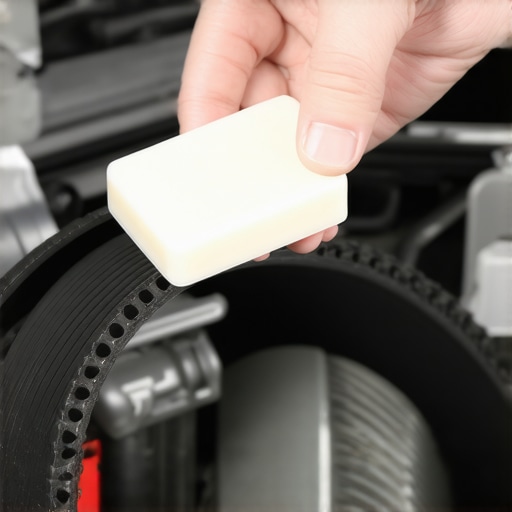
I will never forget the morning I woke up the entire neighborhood just by starting my truck. It was a cold, damp Tuesday, and as soon as that engine turned over, a high-pitched, ear-piercing shriek erupted from under the hood. I sat there, cringing behind the wheel, waiting for the noise to subside. It didn’t. I was certain I was looking at a $400 repair bill for a new tensioner or an expensive pulley. But then, I remembered a trick an old-timer showed me back when I was still learning the ropes of basic car care. I grabbed a dry bar of soap from the bathroom, and within two minutes, the silence was absolute.
Stop the Banshee Under Your Hood with a Bar of Soap
It is one of those sounds that makes every driver’s stomach drop. That rhythmic chirping or steady squeal isn’t just annoying; it feels like an alarm bell for your bank account. Whether you are dealing with why your power steering gets heavy when it rains or just a cold-start screech, the underlying cause is usually the same: friction. Today, I am going to show you how a common household item can provide a temporary reprieve from the noise while you figure out your next move. We aren’t just talking about a quick fix. We are talking about a diagnostic tool that tells you exactly where the problem lies. Before we dive in, let’s get real. I used to be the guy who would spray literally anything on a squeaky part. Once, in a fit of desperation, I sprayed belt dressing on a glazed serpentine belt, and it turned into a sticky, black mess that took hours to clean off. It was a classic rookie mistake. Now, I prefer auto repair hacks that save money without sacrificing quality. Using soap is cleaner, safer, and remarkably effective for pinpointing the source of the noise without making a permanent mess.
Will This Trick Actually Damage Your Belt?
I know what you’re thinking. Putting soap on an engine part sounds like a recipe for disaster. It is a valid concern. However, we aren’t soaking the engine; we are using the dry soap as a temporary lubricant to identify if the noise is coming from the belt surface or a failing bearing. According to industry experts at the Car Care Council, most modern serpentine belts are made of EPDM rubber, which is incredibly durable but prone to glazing over time. The soap helps reduce the surface tension that causes that high-pitched vibration. Have you ever been that person in the grocery store parking lot, turning the key and praying the screeching stops before everyone starts staring? It is a special kind of stress. But before you panic and assume you need a full brake service or an engine overhaul, let’s look at why this neighborly advice works. This simple method can save you from a needless trip to the mechanic if the belt just needs a little adjustment or a cheap replacement. Stick with me, and I will walk you through exactly how to do it safely without losing a finger to a moving pulley.
Keep Your Hands Away from the Spinning Pulleys
Before you touch a single bolt or even unwrap that soap, you must respect the moving parts. An engine belt is like a high-speed treadmill; if you touch it while it’s moving, it won’t just give you a rug burn—it can pull you into the pulleys. Whenever I talk about vehicle diagnostics explained, I emphasize that the engine should be off for any physical application. I once saw a guy try to ‘spray’ a belt while it was running, and the nozzle got caught in the fan. It wasn’t pretty, and the belt snapped instantly. To do this safely, locate the serpentine belt—the long, snake-like rubber piece winding around several round wheels. Ensure the engine is completely off and the keys are in your pocket. This isn’t just about safety; it’s about being able to inspect the belt’s physical condition while it’s stationary.
Rub the Ribs: The Right Way to Soap Your Belt
Grab a bar of dry, cheap bath soap. You don’t want anything with moisturizing beads, heavy lotions, or exfoliating grit; just a standard hard bar will do. Reach down and find a section of the belt where you can see the ‘ribs’ (the grooved side). Rub the soap firmly along that grooved surface for about six inches. Think of it like applying wax to a surfboard or chalking a pool cue. You want a visible, thin layer of soap residue sitting in those grooves. This is one of those top auto repair tips to extend your vehicles lifespan because it stops the belt from overheating due to friction. I remember doing this on an old 2004 Taurus that sounded like a tea kettle. I applied the soap to a dry, glazed section, and when I turned the key, the silence was beautiful. It proved the belt wasn’t failing; it was just slipping on a pulley that had a tiny bit of surface rust from sitting over the winter. #IMAGE_PLACE_HOLDER_B#
Listen Closely: What Happens When the Squeak Stops
Now, start the engine. If the noise vanishes instantly, you have successfully diagnosed the problem: the belt surface is glazed, dry, or slightly misaligned. This is a temporary fix, much like knowing how to identify which wheel bearing is actually failing helps you plan for the real repair before it gets dangerous. If the noise remains or changes pitch but doesn’t go away, the problem isn’t the belt’s grip—it is likely a mechanical failure in a pulley bearing or the alternator itself. Much like choosing the right lubricant in the truth about synthetic oil vs conventional in older high mileage cars, the soap acts as a friction modifier. Using a bar of soap is a diagnostic tool similar to the simple way to check your ball joints with a pry bar; it’s a low-tech method that gives you high-tech answers. If the friction (the squeak) is gone, you know the belt is the culprit and needs a replacement soon. If the screech continues, it’s time to look at the tensioner or the pulleys for play. This simple test prevents you from throwing money at an expensive alternator when all you really needed was a twenty-dollar belt and five minutes of your time. Inspect the belt for any tiny cracks or ‘chunking’ while you have the soap in hand—if you see the underlying cords, stop right there. No amount of soap can fix a structural failure.
The soap trick works because it isolates a single variable, but the biggest mistake I see DIYers make is what I call firing the parts cannon. You get a code for a lean condition and immediately buy an oxygen sensor. But wait—did you check the intake boot for cracks? This is a classic nuance in decoding vehicle diagnostics. Everyone says the computer knows best, but the truth is the computer is a blunt instrument. It only knows when a reading is out of range, not why it happened. In my experience, a ten dollar smoke machine test is worth more than a five hundred dollar sensor swap. This is where auto repair hacks that save money without sacrificing quality transition from cheap tricks to smart engineering.
Why Does Your High-End Scanner Still Give You the Wrong Answer?
It’s frustrating when you invest in a tool and it leads you down a rabbit hole. The Oops factor here is ignoring the Freeze Frame Data. When a code triggers, the car takes a snapshot of exactly what was happening—the temperature, the RPM, the load. If you skip this, you’re guessing. According to the National Institute for Automotive Service Excellence (ASE), a staggering amount of warranty returns on sensors are actually no fault found, meaning the part was fine, but the technician or DIYer misread the data. This is why you see things like why your brand new brake pads are already squealing; the installer addressed the noise, not the sticking caliper slide pin that caused it. This lack of deep-dive analysis is also why some drivers struggle with why your car battery dies every three days even after buying a brand-new unit.
Let’s talk about fluids. People get obsessed with brands, but they ignore the technical specifications that actually matter. Modern oil change innovations mean that your car might actually need a specific viscosity to keep variable valve timing solenoids happy. Using the wrong weight—even if it is premium synthetic—can trigger a check engine light or cause long-term wear. Have you ever fallen into this trap of replacing a part only to have the light come back on two days later? Let me know in the comments. It’s a humbling experience, but it’s how we become better at essential auto repair strategies for frequent drivers. Remember: the cheapest part is the one you didn’t have to buy because you diagnosed it right the first time.
I used to think a tool chest full of wrenches was all I needed to be a ‘real’ mechanic. I was wrong. As cars became rolling computers, my old-school approach started costing me more in wasted parts than a shop would have charged for the labor. Now, I advocate for a hybrid approach: part grit, part data. If you really want to level up, you need to stop using those five-dollar Bluetooth dongles and invest in a bi-directional scanner. While a basic reader just tells you what the car is complaining about, a bi-directional tool allows you to talk back—you can command the fuel pump to turn on or test the cooling fans individually. This is exactly how advanced vehicle diagnostics prevent costly breakdowns before you’re stuck on the shoulder of the highway.
Why Your Basic Code Reader Isn’t Enough Anymore
I’ve seen too many people buy a new mass airflow sensor because of a P0101 code, only to find out the real issue was a tiny vacuum leak. According to the Society of Automotive Engineers (SAE) J1979 standard, which governs OBD-II communication, your car is tracking hundreds of data points every second. If you aren’t looking at ‘Fuel Trims,’ you’re essentially blindfolded. High fuel trims mean your computer is working overtime to add gas because it detects too much air. This is the difference between blindly following a YouTube tutorial and executing essential auto repair strategies for frequent drivers. When I see those numbers spiking, I don’t buy sensors; I reach for my smoke machine to find the leak. This methodical approach is the only way to avoid the truth about using cheap aftermarket sensors in your engine—usually, they aren’t the solution, just an added variable to your headache.
Get More Miles by Thinking Like a Fleet Manager
The secret to cars that last 300,000 miles isn’t luck; it’s a rigorous maintenance schedule that treats every fluid like liquid gold. I’ve started treating my personal truck like a commercial fleet vehicle. That means not just checking the oil, but actually understanding oil change innovations and technologies that save your engine. For instance, I now use oil analysis kits once a year. For twenty-five bucks, a lab tells me if there’s trace copper or iron in my oil, which acts as an early warning for bearing wear. It’s the same philosophy I apply to my stoppers; I don’t wait for the screeching to start a brake service for safety and performance. I measure the pad thickness every time I rotate the tires. By the time most people realize they have a problem, the damage is already done. In the future, I expect we will see even more telematics integrated into consumer cars, where your phone will alert you to a failing water pump three weeks before it actually leaks.
How do I maintain my engine health over time?
Maintenance is about consistency, not intensity. You can’t ignore a car for two years and then expect a ‘tune-up’ to fix the neglect. My recommendation is to keep a digital log of every single repair and observation. When you notice a slight change in how the car idles, write it down. Use the tools available to you to verify your suspicions. If you suspect a vibration, check the suspension components yourself. You can even use top auto repair tips to extend your vehicles lifespan like cleaning your battery terminals and grounds annually to prevent the electrical gremlins that haunt modern vehicles. I want you to try this: next time you have a weird noise or a light on the dash, don’t just search the code. Look up the ‘Live Data’ parameters for that specific system and see if the numbers actually make sense. You’ll be surprised how much the car is willing to tell you if you just know how to listen.
The Day My Pride Cost Me an Entire Engine Rebuild
If there is one thing years under the hood have taught me, it is that your ears are often better than your scanner. I once ignored a faint ticking noise that disappears after the engine warms up, assuming it was just an old car being ‘finicky.’ Two weeks later, I was stranded on the I-77 with a thrown rod. My biggest lightbulb moment was realizing that every sound is a data point. Whether you are performing a brake service for safety and performance or just checking your oil, you have to treat the car like a living thing. Another hard lesson? Modern electronics are fragile. I once fried a computer because I didn’t know the mistake people make when jump starting a modern car. Always look for the ‘why’ before you start pulling parts.
The Exact Gear That Saved Me from a $2,000 Tow Bill
You don’t need a professional shop to get professional results, but you do need more than a basic socket set. I personally swear by three specific things. First, a bi-directional scan tool; it moves you from guessing to knowing. Second, I always keep a copy of my car’s factory service manual—not the generic ones, but the actual technical documents. Third, a simple infrared thermometer. It is incredible for diagnosing a stuck brake caliper or a clogged radiator in seconds. Mastering decoding vehicle diagnostics is the single best investment you can make for your wallet. I also suggest visiting our contact page if you have specific questions about your vehicle’s health.
#IMAGE_PLACEHOLDER_E#
Turn Your Car from a Stress Source into a High-Mileage Hero
Working on your own vehicle can be intimidating, but it is also one of the most rewarding skills you can own. You started today with a bar of soap, and tomorrow you might be handling how advanced vehicle diagnostics prevent costly breakdowns. Don’t let the complexity of modern engines stop you from trying. Every expert was once a beginner who was brave enough to open the hood and ask a question. By implementing essential auto repair strategies for frequent drivers, you aren’t just fixing a machine; you’re taking control of your safety and your financial future. Have you ever had a simple household hack save you from a major mechanical headache? Let me know in the comments below!