
I was merging onto the I-77 last summer, and for a terrifying five seconds, I thought my engine had just given up on life. I floored it, the RPMs climbed, but the car stayed stuck at forty-five miles per hour. It’s a gut-wrenching feeling. I immediately assumed I was dealing with a failing fuel pump or some catastrophic transmission slip. But then the smell hit me—that unmistakable scent of sulfur.
When Your Gas Pedal Feels Like It’s Connected to Nothing
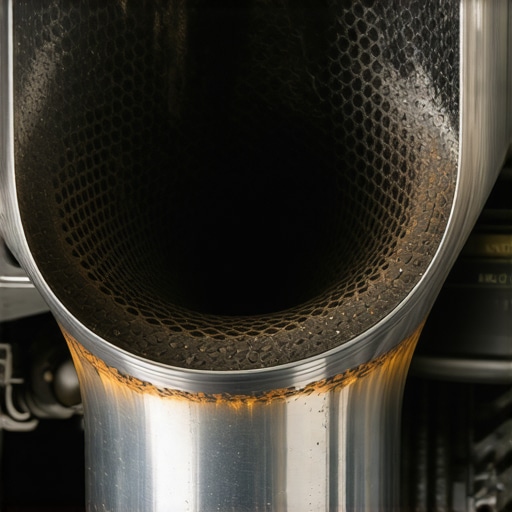
If your car is acting like it’s trying to run a marathon while holding its breath, you’re likely dealing with a clogged catalytic converter. These things are basically the lungs of your exhaust system. When they get backed up, the engine can’t ‘exhale,’ and the backpressure kills your power instantly. I’ll be honest, I wasted two hundred bucks on advanced vehicle diagnostics only to find out my ‘check engine’ light was lying about the actual root cause. Most people assume a ‘cat’ failure is a slow death, but it can happen overnight if you’ve been ignoring a $10 sensor issue.
Does a Clogged Cat Always Mean a Huge Repair Bill?
The fear of a thousand-dollar part keeps people driving on bad converters until the car won’t start at all. You might wonder if you can just ignore it or if the ‘cleaning’ sprays actually work. Here is the reality: if the internal honeycomb has melted, no spray in the world will save it. However, catching it early might save your engine from overheating. I once made the mistake of thinking I could just ‘blow it out’ by driving fast on the highway. Bad move. I ended up with a car that smelled like rotten eggs for a week. According to the EPA, while converters are built for longevity, a single engine misfire can raise the temperature inside the unit to over 1,200 degrees Fahrenheit, melting the substrate almost instantly. Have you ever felt that sudden loss of power while trying to pass someone? It’s terrifying, isn’t it? Today, we’re going to narrow down exactly how to tell if yours is shot before you start looking at how to junk your car out of frustration.
Grab an Infrared Thermometer to Spot the Clog
To stop guessing and start fixing, you need to see what your exhaust is doing in real-time. A catalytic converter’s job is to burn off raw fuel and pollutants, which creates heat. This means a functioning ‘cat’ should actually be hotter at the exit point than at the entrance. If you use a cheap infrared thermometer and find the outlet is cooler than the inlet, you’ve found your bottleneck. I remember lying on my back in a gravel driveway, sweat stinging my eyes, trying to figure out why my old sedan wouldn’t climb a hill. I pointed the laser at the front of the converter: 500 degrees. I pointed it at the rear: 250 degrees. The internal chemical reaction had completely stopped. While vehicle diagnostics explained easy checks before your road trip often focus on fluids, this heat test is the gold standard for exhaust health. 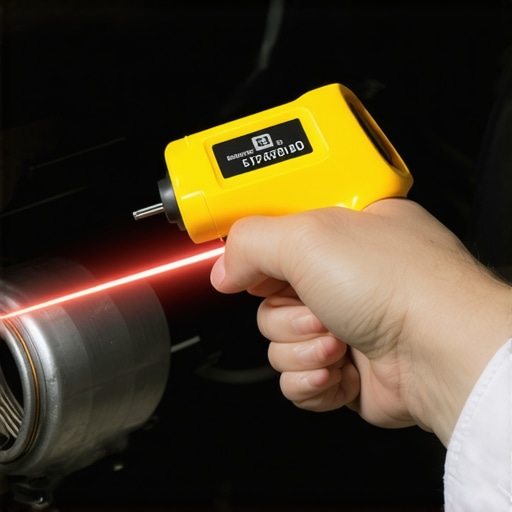
Watch Your Vacuum Gauge for a Choking Engine
If you aren’t comfortable crawling under the car while it’s hot, use a vacuum gauge. This is one of those essential auto repair strategies for frequent drivers that can save you a trip to the dealership. You connect the gauge to a vacuum port on the intake manifold. At idle, the needle should be steady. When you rev the engine to 2,500 RPM and hold it, the vacuum might drop momentarily but should snap right back. If the needle slowly sinks toward zero while you hold the throttle steady, your engine is literally suffocating because the exhaust can’t escape. It’s the automotive equivalent of trying to exhale through a straw while running a sprint. I once spent three hours thinking I had a fuel issue and even performed the simple test for a failing fuel pump, only to realize the engine simply couldn’t breathe out.
The Mallet Test for Internal Shattering
Sometimes the most effective diagnostic tool is a rubber mallet. When the ceramic honeycomb structure inside the converter gets too hot—often due to a $10 sensor issue causing a rich fuel mixture—it can shatter. Give the converter a firm (but not destructive) tap with a mallet. If it sounds like a box of broken glass or marbles, the internal substrate has disintegrated. At this stage, no ‘miracle’ fuel additive will help you. You are looking at a full replacement. Learning how advanced vehicle diagnostics prevent costly breakdowns is great, but physical evidence like a rattle is hard to argue with.
Verify by Removing the Oxygen Sensor
If you are still on the fence, there is one ‘messy’ but definitive trick: remove the upstream oxygen sensor. This sensor sits in the exhaust manifold before the catalytic converter. By unscrewing it, you create a temporary emergency exit for the exhaust gases. If your car suddenly regains its lost power and throttle response (it will be incredibly loud, mind you), you have 100% confirmed that the restriction is in the converter. I used this trick on a friend’s truck last year; we thought the transmission was slipping, but as soon as we gave that exhaust a place to vent, the engine roared back to life. It’s a loud, dirty, but foolproof way to use auto repair hacks to save money without sacrificing quality by avoiding unnecessary part swaps.While the tests I mentioned earlier—like the thermometer and vacuum gauge—are solid, there is a nuance most mechanics won’t tell you: the catalytic converter is almost always a victim, not the criminal. In my years of wrenching, I’ve seen countless people swap out a $1,200 converter only to have the new one fail six months later because they ignored the truth about using cheap aftermarket sensors in your engine. If your engine is burning oil or running rich, that new part is just a fresh sponge waiting to get soaked in soot. When you are decoding vehicle diagnostics what your car is trying to tell you, look specifically at your Long Term Fuel Trims (LTFT). If those numbers are double digits positive, your car is dumping extra fuel to compensate for a perceived lean condition. That unburned fuel then hits the 1,200-degree converter and ignites, turning your exhaust into a localized blast furnace. This is the hidden nuance that kills most converters long before their time.
The P0420 Code Is Not Always a Death Sentence
Many DIYers see a P0420 code and immediately reach for their wallet. But here is the contrarian truth: that code simply means the converter’s efficiency is below a certain threshold. It doesn’t mean the unit is physically clogged or dead. Sometimes, a tiny exhaust leak upstream or a lazy oxygen sensor is the real culprit. I’ve seen cases where understanding why your check engine light turns off on its own is actually a sign of an intermittent fueling issue that is slowly poisoning your exhaust. Before you drop a grand, ensure your fuel trims are within plus or minus 10 percent. If they aren’t, your engine is the problem, not the pipe.
Stop Using Cleaning Sprays on a Melted Core
We’ve all seen the videos promising a miracle in a bottle. Here is the oops factor: these products are solvents designed to remove light carbon deposits. If your internal honeycomb has already suffered thermal distress and melted, you are essentially trying to pour liquid drain cleaner into a solid block of glass. It won’t work. Worse, if the substrate is crumbling, those chemicals can loosen chunks that then fly back and wedge even tighter into the remaining passages. I once watched a guy try to save fifty bucks with a spray, only to have the resulting slurry completely block his exhaust, leaving him stranded in a parking lot. It’s better to use auto repair hacks to save money without sacrificing quality rather than gambling on miracle fluids.
Can You Really Wash Out a Clogged Converter?
Some hardcore enthusiasts swear by removing the cat and soaking it in citric acid or laundry detergent overnight. While this can technically strip away heavy carbon buildup from a rich-running engine, it does nothing for oil ash or lead poisoning of the precious metals inside. According to the Car Care Council, most catalytic converter failures are the result of engine tune-up problems like misfiring or oil consumption. If you don’t fix the root cause, even a clean converter will fail again within weeks. This is why how advanced vehicle diagnostics prevent costly breakdowns is so vital; you have to find out why the exhaust got dirty in the first place. Have you ever fallen into this trap of replacing a part only to have the light come back on a week later? Let me know in the comments below!
Since we are talking about real solutions, let’s look at the gear that actually moves the needle. If you are tired of guessing, you need to stop using those $20 Bluetooth dongles that only read codes. To truly own your car’s health, you need a bidirectional scan tool. Unlike basic readers, these allow you to command the car to perform specific tests, like a forced DPF regen or a fuel pump activation. When I am decoding vehicle diagnostics, I am looking specifically at Mode $06 data. This is the technical ‘backstage’ of your car’s computer. According to the Society of Automotive Engineers (SAE) J1979 standard, Mode $06 provides the actual test results for various sensors. It tells you exactly how close a part is to failing before the ‘check engine’ light even thinks about turning on. It’s the difference between knowing your brakes are thin and understanding how brake service impacts performance before you’re metal-on-metal.
Ditch the Basic Readers for Bidirectional Power
I personally use a mid-tier Autel unit because it lets me look at live data graphing. Watching your oxygen sensors oscillate in a smooth wave tells you the engine is healthy; seeing a flat line or jagged ‘noise’ tells you you’re about to poison your new catalytic converter. If you want to use auto repair hacks to save money without sacrificing quality, the scan tool is your best investment. It stops the ‘parts cannon’—that expensive habit of throwing new sensors at a problem until it goes away. Remember, if you do find a bad sensor, avoid the bargain-bin brands. I’ve seen cheap O2 sensors cause more headaches than they solve, and the truth about using cheap aftermarket sensors is that they often have the wrong resistance values, which confuses the ECU and kills your fuel economy instantly.
How do I keep my exhaust system healthy for the long term?
Maintenance isn’t just about the parts you can see; it’s about the chemistry happening inside the block. The biggest killer of catalytic converters is actually oil blow-by. When your piston rings get tired, they let a tiny bit of oil into the combustion chamber. That burnt oil turns into phosphorus and zinc ash, which coats the precious metals in your ‘cat,’ making them useless. This is why I obsess over oil change innovations and technologies that reduce volatility. To maintain your system, you should be checking your PCV valve every 30,000 miles. A stuck PCV valve increases crankcase pressure, forcing oil into the intake and eventually straight into your expensive exhaust components. It is one of the most overlooked tips to extend your vehicle’s lifespan, yet it costs less than a tank of gas to fix.
The Future of Garage Diagnostics
I predict that within the next five years, the traditional ‘check engine’ light will become obsolete, replaced by real-time predictive telematics that send a report to your phone before a failure occurs. We are already seeing this with high-end electric vehicles, but the aftermarket is catching up. Using how advanced vehicle diagnostics prevent costly breakdowns is no longer just for professional shops; it is becoming a requirement for anyone who wants to keep a car past 150,000 miles. My advice? Get comfortable with your car’s live data stream now. Go into your scan tool today, find the ‘Short Term Fuel Trim’ (STFT) and ‘Long Term Fuel Trim’ (LTFT), and add them together. If the total is higher than 10%, you have a vacuum leak or a fueling issue that is currently eating your catalytic converter alive. Fix it now, or prepare for a four-figure repair bill later.
The Expensive Lesson My First Clogged Converter Taught Me
I spent years thinking that if a part failed, I just needed to swap it out and move on. I was wrong. The hardest lesson I learned is that your catalytic converter is effectively the ‘victim’ of an unhappy engine. If you find yourself constantly resetting codes, you need to look at why your check engine light turns off on its own—it might be an intermittent misfire poisoning your exhaust right now. Another lightbulb moment was realizing that the truth about using cheap aftermarket sensors in your engine is that they often lead to a rich fuel mixture that melts the converter substrate. Just like neglecting a brake service leads to warped rotors, ignoring your fueling leads to a dead exhaust. Finally, never assume a sulfur smell is just ‘bad gas’; it is your car’s way of screaming for help.
The Three Tools I Trust for Exhaust Work
You don’t need a professional shop to get professional results, but you do need the right gear. First, a reliable infrared thermometer is non-negotiable for the heat test. Second, a vacuum gauge is the fastest way to see if your engine is suffocating. Lastly, I cannot stress enough how much a bidirectional scan tool changed my life. Investing in how advanced vehicle diagnostics prevent costly breakdowns saves you from the ‘parts cannon’ frustration. These tools, combined with oil change innovations and technologies, ensure your engine stays clean. For those of us focused on essential auto repair strategies for frequent drivers, these tools are the foundation of a healthy vehicle. #IMAGE_PLACEHOLDER_E#
Take the Wheel of Your Maintenance Today
Don’t let the fear of a high repair bill paralyze you. Most of the tests we covered today cost nothing more than a bit of your time and some basic curiosity. By applying these top auto repair tips to extend your vehicle’s lifespan, you are moving from a reactive driver to a proactive owner. Your car wants to run well; you just have to listen to the data it’s giving you. Mastering vehicle diagnostics is the ultimate power move for any car owner. Have you ever felt that sinking feeling of losing power on the highway only to find a simple sensor was the culprit? Let me know your story in the comments below!