
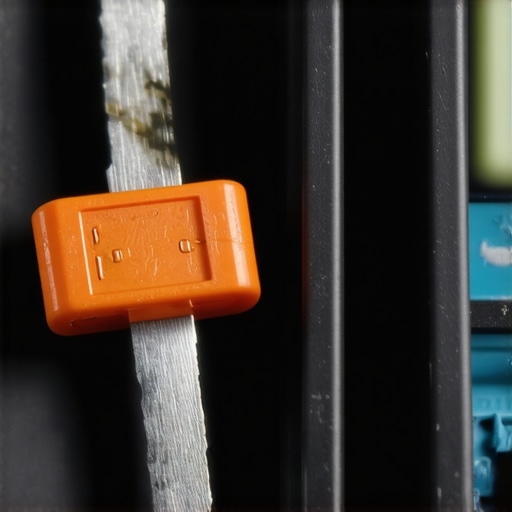
I stood there in a grocery store parking lot, arms full of heavy bags, pressing the ‘unlock’ button on my key fob like my life depended on it. Nothing. Not a click, not a whir, just the mocking silence of a car that refused to let me in. At that moment, I felt like a total amateur. I’d recently handled a complex [oil change](https://repairmycarpro.com/oil-change-innovations-technologies-that-save-your-engine) on my own, yet here I was, defeated by a door. I assumed the worst—a fried Body Control Module or a dead actuator that would cost me half a paycheck. But after hours of sweating over [vehicle diagnostics](https://repairmycarpro.com/decoding-vehicle-diagnostics-what-your-car-is-trying-to-tell-you), I discovered a dirty little secret: many modern vehicles have a ‘hidden’ fuse tucked away from the main panel that specifically handles the lock relay. Today, I’m going to show you how to find that elusive culprit so you don’t end up stranded like I was. Have you ever been locked out of your own car while the electronics hummed perfectly fine otherwise? Let me know in the comments, because I suspect I’m not the only one who has fallen for this trap.
Your Power Locks Aren’t Dead, They’re Just Starving
If you’ve ever dealt with [the clicking sound under your dash that drives you crazy](https://repairmycarpro.com/the-clicking-sound-under-your-dash-that-drives-you-crazy), you know that automotive electrical systems are basically a spaghetti bowl of mystery. When your locks stop responding, the instinct is to blame the key fob battery or the door motor itself. However, electricity is a fickle beast. I remember a buddy of mine who nearly replaced his entire driver-side door harness because he thought the wires had frayed. He was ready to spend $400. I stopped him, grabbed a [basic multimeter](https://repairmycarpro.com/the-20-tool-every-driver-needs-for-basic-electrical-troubleshooting), and found that the circuit was broken at a secondary fuse buried under the passenger-side kick panel. It wasn’t even listed in the main diagram in his owner’s manual. Most people think all fuses live in that one box under the hood, but manufacturers love to hide ‘convenience’ fuses in the weirdest nooks and crannies. According to data from the Car Care Council, nearly 70% of car owners neglect basic electrical maintenance, which often leads to misdiagnosing simple fuse pops as major mechanical failures.
Wait, is this really just a fuse and not an expensive computer failure?
It’s natural to be skeptical. We’ve been conditioned to think that any electronic glitch in a modern car requires a trip to the dealership and a specialized scanner. While [advanced vehicle diagnostics](https://repairmycarpro.com/how-advanced-vehicle-diagnostics-prevent-costly-breakdowns) are incredible for engine issues, a simple fuse is still the most common point of failure for high-draw items like door lock solenoids. These little actuators pull a lot of amps in a short burst, and if they meet any resistance—like a frozen latch or a [creaking door hinge](https://repairmycarpro.com/how-to-stop-your-doors-from-creaking-every-time-they-open)—they can easily blow a fuse that is rated just a hair too low. I once made the mistake of ignoring a slow-moving window, thinking it was just ‘old car charm.’ In reality, that [slow-moving window](https://repairmycarpro.com/why-your-power-windows-are-moving-slower-than-they-used-to) was drawing double the current, eventually taking out the entire accessory circuit. Checking the fuse isn’t just about saving money; it’s about ruling out the simplest variable before you start tearing your interior apart. Trust me, your wallet and your sanity will thank you once we track down this hidden fuse location.
How to Hunt Down the Secondary Fuse Panel
Automotive engineers are brilliant, but they have a twisted sense of humor when it comes to component placement. Most drivers assume that if a fuse isn’t in the big box under the hood or the small panel by the driver’s left knee, it doesn’t exist. That’s where the trouble starts. In many modern vehicles, the power lock system is split into two circuits: one for the signal from your remote and another for the high-current burst that actually moves the metal. These secondary fuses are often tucked behind the glovebox, under the center console, or even in the rear cargo area. I learned this the hard way while working on a 2014 crossover where the locks were completely unresponsive. I spent nearly two hours performing [vehicle diagnostics explained: easy checks before your road trip](https://repairmycarpro.com/vehicle-diagnostics-explained-easy-checks-before-your-road-trip) on the main board, only to find a 7.5-amp fuse hidden behind the cabin air filter housing. Accessing these spots usually requires a plastic trim tool and a bit of patience, but it’s one of those [auto repair hacks that save money without sacrificing quality](https://repairmycarpro.com/auto-repair-hacks-save-money-without-sacrificing-quality).
The Glovebox and Kick Panel Gauntlet
Before you start ordering expensive replacement parts, pull up a digital copy of your specific sub-model’s wiring diagram. Looking for terms like ‘Body Control Module’ (BCM) or ‘Central Locking’ will often reveal these ghost panels. If your manual is useless, check the passenger-side kick panel—the area where a passenger’s right foot would rest. Manufacturers love this spot because it’s close to the main wiring harness but stays dry. I once helped a neighbor who was ready to sell his truck for parts because he thought the electrical system was ‘haunted.’ We popped off that plastic cover, found a single blown fuse, and had his locks clicking in thirty seconds. It’s one of the most [essential auto repair strategies for frequent drivers](https://repairmycarpro.com/essential-auto-repair-strategies-for-frequent-drivers) who put high mileage on their vehicles and experience more vibrations that can loosen older connections.
Stop Guessing and Start Probing with a Multimeter
Visual inspection of a fuse is the biggest trap in DIY repair. I’ve seen dozens of fuses that looked perfectly intact through the plastic window but were actually hairline-fractured inside. Instead of relying on your eyes, you need to use [the 20 tool every driver needs for basic electrical troubleshooting](https://repairmycarpro.com/the-20-tool-every-driver-needs-for-basic-electrical-troubleshooting). Set your multimeter to the ‘continuity’ setting—the one that beeps when the two probes touch. Touch the probes to the two tiny metal pads on the top of the fuse while it is still plugged in. If you hear a beep, the fuse is good. If there’s silence, you’ve found your culprit. This method is far superior to pulling every single fuse one by one, which can actually reset your car’s computer and cause other glitches. This is essentially the same logic used when you [how to find a parasitic battery drain with a basic multimeter](https://repairmycarpro.com/how-to-find-a-parasitic-battery-drain-with-a-basic-multimeter), focusing on isolating the circuit that isn’t behaving.
When a Bad Ground Acts Like a Blown Fuse
If all your fuses test positive for continuity but the locks are still dead, you’re likely dealing with a grounding issue. Every electrical component needs a return path to the frame. If the wire that connects your door harness to the chassis is corroded or loose, it won’t matter how many new fuses you throw at it. This is [the ground wire problem that mimics a bad starter motor](https://repairmycarpro.com/the-ground-wire-problem-that-mimics-a-bad-starter-motor) or other major component failures. Check the ‘accordion’ rubber boot between the door and the car body; wires often snap there from years of opening and closing the door.
Mechanical Friction is the Silent Fuse Killer
Sometimes the fuse blows because the lock itself is working too hard. If your door latches are full of road grime or old, dried-up grease, the actuator has to pull double the amperage to move the mechanism. This spike in power is what pops the fuse. Before you put the new fuse in, take a second to learn [how to stop your doors from creaking every time they open](https://repairmycarpro.com/how-to-stop-your-doors-from-creaking-every-time-they-open) by cleaning and lubricating the latch. Keeping these moving parts fluid is one of the simplest [top auto repair tips to extend your vehicles lifespan](https://repairmycarpro.com/top-auto-repair-tips-to-extend-your-vehicles-lifespan) and ensures that your electrical repairs actually stick.Just like that hidden fuse I mentioned earlier, many people assume a vehicle’s computer is the ultimate authority on what is broken. However, establishing true expertise in your garage means understanding that a scan tool is just a starting point, not a magic wand.
Stop Treating Your OBD-II Scanner Like a Magic Wand
A lot of DIYers think that plugging in a cheap scanner and seeing a code like “P0171 – System Too Lean” is the equivalent of a final diagnosis. In my experience, that is where the most expensive mistakes happen. Most people assume the sensor named in the code is the part that needs replacing. But a sensor is often just the messenger, reporting a symptom rather than the cause. For example, [why your scanner says p0420 but the converter is actually fine](https://repairmycarpro.com/why-your-scanner-says-p0420-but-the-converter-is-actually-fine) is a classic case where an exhaust leak upstream can trick the computer into thinking your catalytic converter is dead.
Is your P0420 code actually lying about your catalytic converter?
According to a technical report by CarMD, the P0420 code consistently ranks as one of the most frequently misdiagnosed issues in the industry. Owners often spend $1,000 or more on a converter when a simple oxygen sensor or a pinhole leak was the true culprit. Real expertise involves [decoding vehicle diagnostics](https://repairmycarpro.com/decoding-vehicle-diagnostics-what-your-car-is-trying-to-tell-you) by looking at live sensor data rather than just the error code. Learning [how advanced vehicle diagnostics prevent costly breakdowns](https://repairmycarpro.com/how-advanced-vehicle-diagnostics-prevent-costly-breakdowns) is a skill that separates the pros from the parts-changers. 
The Dangerous “While You’re At It” Trap
We have all been there: you are doing a simple oil change and decide to cut a small corner to save time. But here is the “oops” factor that kills engines: [why you should never skip the crush washer on your drain plug](https://repairmycarpro.com/why-you-should-never-skip-the-crush-washer-on-your-drain-plug). That tiny piece of copper or aluminum is designed to deform once to create a perfect seal; reusing it leads to slow drips that can eventually starve your engine of oil. Similarly, [the mistake of using the wrong oil viscosity in cold weather](https://repairmycarpro.com/the-mistake-of-using-the-wrong-oil-viscosity-in-cold-weather) can lead to dry-start wear that shortens your engine life by years.
Don’t Ignore Physical Clues for Electrical Gremlins
Finally, remember that the computer cannot see physical degradation. It cannot see a corroded battery cable or [the ground wire problem that mimics a bad starter motor](https://repairmycarpro.com/the-ground-wire-problem-that-mimics-a-bad-starter-motor). Before you condemn an expensive alternator or motor, check the physical connections for tension and cleanliness. These are the [essential auto repair strategies for frequent drivers](https://repairmycarpro.com/essential-auto-repair-strategies-for-frequent-drivers) that ensure your repairs actually stick. Have you ever fallen into this trap of replacing a sensor only to find out it was a simple wire? Let me know in the comments, because we have all been there.After years of busting my knuckles on stubborn bolts, I’ve realized that the difference between a ‘parts changer’ and a true home mechanic is the ability to actually command the vehicle’s systems. For me, the game-changer wasn’t a bigger socket set; it was moving up to a bidirectional scan tool. Unlike those basic readers that just read codes and clear lights, a bidirectional tool allows me to perform an ‘active test.’ If I suspect a fuel pump is failing, I don’t just wait for a check engine light; I use the tablet to command the pump to turn on at 100% duty cycle. It’s a core part of how to tell if your fuel pump is dying before it leaves you stranded. This level of control is absolutely essential for modern systems like the ultimate guide to brake service for safety and performance, where you often need to manually cycle an ABS solenoid just to get the air out of the lines during a fluid swap.
How can I make my brake system last a decade?
Long-term reliability is about chemistry, not just metal and friction. Most people wait until they hear a terrifying squeal to check their pads, but that’s a purely reactionary approach. I personally flush my brake fluid every two years regardless of how many miles I’ve driven. Brake fluid is hygroscopic, meaning it acts like a sponge for moisture in the air. According to technical documentation from Bendix, brake fluid with just 3% water content can lower the boiling point by nearly 100 degrees, leading directly to why your brake pedal feels spongy after a long drive. By performing regular flushes, you prevent internal corrosion in the expensive ABS module and calipers. If you are working in your driveway solo, I swear by the trick to bleeding brakes alone without a helper using a negative-pressure vacuum bleeder. It turns a frustrating two-person coordination act into a twenty-minute solo job that ensures a rock-hard pedal every time.
Why Your Next Essential Tool Might Be a Tablet Not a Wrench
The future of DIY auto repair is rapidly moving toward ‘software-defined vehicles.’ We are approaching a point where we won’t just be checking for how to tell if your car starter is going bad; we’ll be recalibrating ADAS cameras after a simple wheel alignment. We already see this trend with why your lane keep assist acts erratic after a standard wheel alignment. Mastery in the garage now requires a laptop as much as a 10mm socket. These top auto repair tips to extend your vehicles lifespan are evolving, but the fundamentals of physics remain the same. To stay ahead, I recommend picking up a mid-range bidirectional scanner and learning how to read ‘Short Term Fuel Trim’ data. It is the single best way to catch a vacuum leak or a failing injector before it ruins your catalytic converter. Give it a try this weekend—plug in your scanner and watch how your engine reacts when you artificially create a small vacuum leak. Seeing that data move in real-time will change how you look at your engine forever.
Hard-Won Truths from My Years Under the Hood
After a decade of troubleshooting everything from dead locks to phantom misfires, I have realized that the biggest obstacle isn’t a lack of tools, but a lack of patience. First, always assume the simplest solution is the right one; I have seen people pull engines when they just needed to know the simple test for a blown head gasket you can do at home. Second, never trust a new part blindly. Parts arrive ‘Dead on Arrival’ more often than you think, and if you don’t test them, you will go in circles. Third, your eyes are your best diagnostic tool—look for the the radiator hose failure you cannot see from the top before you start replacing sensors.
#IMAGE_PLACEHOLDER_E#
Tools That Saved My Sanity More Than Once
If you are serious about taking control of your car, you need a setup that goes beyond a standard wrench set. I highly recommend investing in a mid-range bidirectional scanner to help with decoding vehicle diagnostics accurately. Next, grab the 20 tool every driver needs for basic electrical troubleshooting—a basic multimeter is the only way to verify those ‘hidden’ fuses we talked about. Finally, bookmark a reliable source for factory wiring diagrams; generic manuals often miss the specific ‘convenience’ circuits that modern cars rely on.
The Satisfaction of a Job Done Right
There is a unique kind of confidence that comes from knowing exactly how your machine works. When you stop fearing the ‘Check Engine’ light and start seeing it as a puzzle to solve, you unlock a new level of ownership. Whether you are performing a complex brake service or just hunting down a parasitic drain, remember that every mistake is just a tuition payment for your mechanical education. Keep your hands dirty and your mind sharp—mastering vehicle diagnostics is a journey, not a destination.
Have you ever replaced a major part only to realize it was just a blown fuse or a loose wire the whole time? Let me know your most frustrating ‘simple fix’ story in the comments below!