

I’ll never forget the day my old sedan decided to play games with me right in the middle of a July heatwave. Everything was fine for the first twenty minutes, but as soon as the temp gauge hit that sweet spot in the middle, the car started acting like it was driving on ice. I’d press the gas at a green light, the engine would scream like a banshee, but the car wouldn’t budge for a terrifying three seconds before slamming into gear. I honestly thought I was looking at a one-way trip to the scrap yard. It turns out, heat is the ultimate snitch; it reveals every tiny weakness your transmission is trying to hide under normal conditions. Today, I’m going to help you figure out exactly why your car is throwing a tantrum only when things get toasty, so you don’t end up stranded on the shoulder or overpaying for a full rebuild you might not even need yet.
Why Your Gearbox Acts Up Once the Engine Warms Up
Transmissions are basically giant hydraulic puzzles, and they rely on fluid that stays at a very specific thickness—or viscosity—to work right. When things get hot, that fluid naturally thins out. If there is a microscopic leak in an internal seal or if your fluid is old and degraded, that thin fluid just slips right past the seals where it’s supposed to be building pressure. I remember one time early on when I completely ignored a tiny weep near my cooler lines, thinking I could just top it off whenever I remembered. Big mistake. That small leak eventually let enough air into the system that my gears started hunting like they were lost in the woods. Before you panic about a full internal failure, you should really learn how to check your transmission fluid without a dipstick to see if the level is actually the culprit of your hot-weather woes.
Is a slipping transmission always a death sentence for your car?
I get it—the moment you feel that “flare” between gears, you start calculating the cost of a new vehicle in your head. But here is the truth: sometimes it is just the fluid’s way of telling you it is tired and can no longer handle the heat. According to the experts at the Society of Automotive Engineers (SAE), the chemical properties of transmission fluid begin to break down rapidly once temperatures exceed the standard operating range. If your fluid is burnt or filled with friction material, it won’t hold the pressure needed to grip those clutch plates when it’s hot. Sometimes, the reason why your automatic transmission hesitates to engage drive is simply a matter of a clogged filter or a failing solenoid rather than a mechanical catastrophe. Have you ever felt that heart-sinking lurch at a stoplight after an hour of driving? I’d love to hear your story, because you’re definitely not alone in this struggle.
Oftentimes, the culprit is something called “heat soak.” When the metal components in your transmission expand from the heat, any existing internal wear becomes much more apparent than when the metal is cold and contracted. It’s like a pair of shoes that feels fine when you first put them on but starts pinching your toes once your feet swell at the end of a long day. If you’ve been noticing a weird vibration along with the slipping, you might want to look into the shudder when shifting that feels like a rumble strip to see if your torque converter is actually the one failing you under the summer sun. We are going to break down the diagnostic steps next, starting with the easiest checks you can do in your own driveway without a professional scanner.
Stop the Slip Before You Buy a New Car
When your car starts acting up only after it reaches operating temperature, you aren’t just dealing with a mechanical part; you are dealing with physics. Transmission fluid is like honey when it is cold—thick and grippy. But as it heats up, it turns into something more like water. If your internal components are worn, that ‘watery’ fluid can’t create the hydraulic pressure needed to hold the clutch packs together. I learned this the hard way with a beat-up truck I bought for five hundred bucks. Cold, it shifted like a dream. After twenty minutes of driving, it felt like the engine was disconnected from the wheels. It turns out, performing vehicle diagnostics explained: easy checks before your road trip would have shown me the fluid was essentially cooked and lost its ability to protect the internals.
Look for the Campfire Scent in Your Fluid
The first thing you need to do is pull that dipstick (if you have one) and give it the sniff test. If it smells like a burnt marshmallow or a campfire, your fluid has oxidized. This happens when the fluid gets so hot that its chemical bonds break down. Once that happens, it can no longer provide the friction needed for the clutches. If you see tiny black specks in the fluid, those are actually bits of your clutch material. At that point, a simple fluid swap might not be enough, but it is always the cheapest first step. I once spent a whole Saturday morning changing fluid on a neighbor’s sedan that was slipping badly; we used high-quality synthetic fluid, and to my surprise, the slipping stopped immediately. It is a prime example of how oil change innovations and technologies in the lubricant world can sometimes save an aging system from the brink.
Ensure Your Radiator Is Not Suffocating the Transmission
Most people don’t realize that their transmission cooling is often tied directly into the bottom of the engine radiator. If your engine is running slightly hot, or if the internal cooling passages are clogged, your transmission temperature will skyrocket. If you have noticed that your engine temperature spikes at red lights, there is a very high chance your transmission fluid is also thinning out beyond its limits at those same moments. Grab an infrared thermometer and aim it at the transmission cooler lines after a long drive. If the ‘in’ line is 200 degrees and the ‘out’ line is also 200 degrees, your cooler is clogged and is doing absolutely nothing to help your gearbox survive the heat.
Test the Electronics Before Tearing Out the Gears
Sometimes the ‘slip’ isn’t mechanical at all—it is a brain farts from the computer. Modern transmissions use solenoids, which are basically little electric gates that open and close to direct fluid. Heat increases electrical resistance. If a solenoid is on its last legs, the heat might be enough to make it stick or fail to activate. This often triggers a ‘limp mode’ where the car stays in one gear to protect itself. You can find more about the solenoid failure that locks your car in limp mode to see if your symptoms match. Using a basic OBD-II scanner can help you find what your car is trying to tell you before you commit to a multi-thousand dollar rebuild. I’ve seen cases where a fifty-dollar sensor swap fixed a ‘slipping’ issue that a shady shop quoted as a total transmission failure.
We’ve looked at the hardware, but let’s talk about the ‘brain’ side of things because this is where even experienced DIYers lose a lot of money. Most people think an OBD-II scanner is a magic wand—you plug it in, it gives you a code, and you go buy that part. In my experience, that is the fastest way to drain your bank account. A code is just a compass pointing you to a neighborhood; it isn’t the exact house number. For instance, you might see a code for a lean condition and immediately think you need a new oxygen sensor. But quite often, the sensor is actually working perfectly and just reporting the truth: you have a vacuum leak or a dirty mass airflow sensor. This is where how advanced vehicle diagnostics prevent costly breakdowns by forcing you to look at the ‘why’ rather than just the ‘what.’
Why does your scanner say P0420 when the catalytic converter is perfectly fine?
This is a classic trap. The P0420 code specifically points to ‘catalyst efficiency below threshold,’ but a simple exhaust leak or a faulty downstream sensor can trick the computer into thinking the converter has died. According to a report by the Car Care Council, nearly 25% of check engine light repairs are misdiagnosed on the first attempt because people focus on the symptom rather than the source. If you’ve ever replaced an expensive part only for the light to come back on two days later, you know exactly what I’m talking about. You really need to understand why your scanner says P0420 but the converter is actually fine before you spend $800 on a new cat. 
Don’t Delete the Evidence Before You Find the Fault
The biggest ‘oops’ factor I see? People clearing codes the second they appear. When you hit ‘erase,’ you’re not just turning off the light; you’re deleting the ‘Freeze Frame’ data. This is a snapshot of exactly what was happening—the RPM, the engine load, and most importantly, the temperature—the moment the fault occurred. Without that data, finding an intermittent heat-related slip becomes ten times harder. Instead of guessing, look for auto repair hacks to save money without sacrificing quality, like checking for loose ground wires or testing sensor resistance when they are hot. Also, be wary of ‘cheap’ fixes. The truth about using cheap aftermarket sensors in your engine is that their resistance values often drift when they get hot, leading to more ghost codes. Have you ever fallen into this trap and replaced a part that didn’t need replacing? Let me know in the comments. Digging into decoding vehicle diagnostics and what your car is trying to tell you is the difference between a successful fix and a frustrating weekend under the hood.
I used to think a basic code reader was enough until I met a stubborn German SUV that refused to release its rear brake pads. That’s when I realized that as cars get smarter, our toolboxes have to keep up. If you’re serious about your car’s longevity, you need to move past ‘parts cannon’ territory and into the world of active testing.
Stop Guessing and Start Testing with Bi-Directional Tools
The single biggest game-changer for my home garage was investing in a bi-directional scan tool. Unlike the cheap $20 dongles that just read codes, these units let you talk back to the car. I’ve used mine to command fuel pumps to turn on, pulse injectors to check for clogs, and even cycle the ABS pump. This is critical for modern brake service for safety and performance, especially when you need to bleed air out of a complex modulator. I personally use an Autel unit because it handles the proprietary ‘handshakes’ required by newer modules, but even a mid-range Launch scanner will save you from pulling your hair out over an intermittent electrical ghost. 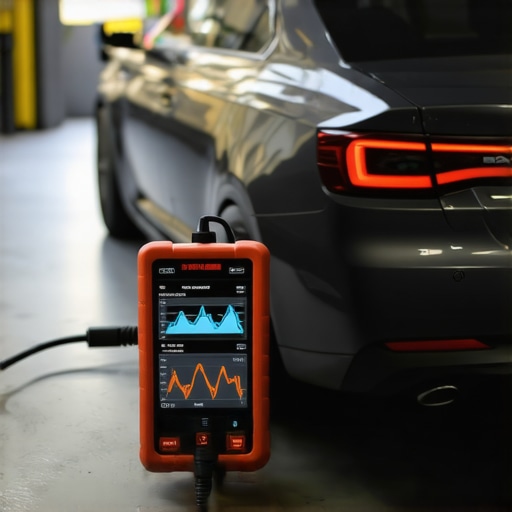
Can my car really last 300,000 miles without a total rebuild?
The short answer is yes, but not if you only follow the manufacturer’s ‘lifetime fluid’ suggestions. There is a massive difference between a car that survives the lease period and one that thrives for decades. To scale your maintenance properly, you need to become a fluid detective. According to technical documentation from Bosch Mobility Solutions, even a 10% deviation in fuel system pressure can cause long-term wear on cylinder walls due to ‘wash-down’ from unburnt fuel. I don’t just change my oil; I use top auto repair tips to extend your vehicles lifespan like checking the copper content in my brake fluid. If you ignore the brake fluid color that means you need a flush immediately, you’re essentially letting acid eat your calipers from the inside out. I make it a habit to use test strips every six months—it’s a five-minute check that prevents a $1,200 repair bill.
The Future of the Driveway Mechanic
We are entering an era where ‘Right to Repair’ is becoming a digital battleground. Many manufacturers are implementing Secure Gateway (SGW) modules that lock out third-party tools. However, the trend is shifting toward cloud-based subscriptions for DIYers. In the next few years, I expect we’ll be using our smartphones to perform advanced vehicle diagnostics that prevent costly breakdowns via remote manufacturer patches. Until then, sticking to proven auto repair hacks to save money without sacrificing quality, such as using a multimeter to check for parasitic draws, is your best defense against the dealership service desk. My challenge to you: Go out to your driveway right now, pop the hood, and actually look at your brake fluid and transmission fluid levels. If either one looks like dark coffee, you know what your weekend plans are.
Hard Truths I Learned While Stuck in a Parking Lot
One of the biggest myths that held me back for years was believing that “lifetime” transmission fluid actually lasts a lifetime. In reality, that fluid has a shelf life dictated by the heat it survives. I’ve realized that the cooling system is often the unsung hero—if your radiator is failing, your transmission doesn’t stand a chance. Another lightbulb moment? Realizing that a fluid change is actually a cheap diagnostic test. If new fluid doesn’t fix the slip, you know for sure the damage is internal, saving you from guessing with expensive sensors. Most importantly, I learned that auto repair hacks to save money without sacrificing quality often start with just paying attention to smells and sounds before they become smoke.
Gear That Actually Belongs in Your Trunk
If you’re ready to move beyond the “parts cannon” approach, I recommend starting with a few specific tools. First, a mid-range bi-directional scanner is worth its weight in gold for seeing real-time data. I also never travel without an infrared thermometer; it’s the only way to verify if your transmission cooler is actually doing its job. For those focused on long-term health, grab a pack of fluid test strips—they reveal chemical breakdown long before your eyes can. Combining these with the ultimate guide to brake service for safety and performance will give you a complete picture of your vehicle’s health.
Take Control of Your Drive Again
Mechanical issues can feel overwhelming, but remember that every complex machine is just a collection of simple systems working together. By using how advanced vehicle diagnostics prevent costly breakdowns, you’re shifting from being a victim of your car’s whims to being its caretaker. Don’t let a little summer heat intimidate you. With the right knowledge and a few simple checks, you can keep your car on the road for years to come. Implementing top auto repair tips to extend your vehicles lifespan is the best investment you can make in your daily commute. Have you ever had a car that only acted up when the sun was out? I’d love to hear how you finally tracked down the problem in the comments below!