
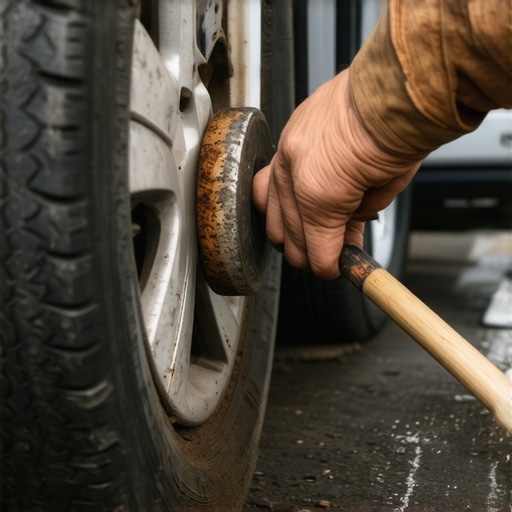
I’ve been there—standing in the driveway, or worse, on the shoulder of a busy road, staring at a wheel that refuses to move. You’ve successfully loosened all the bolts, but the wheel is acting like it’s welded to the hub. It’s a special kind of frustration that makes you want to sell the car right then and there. A few years back, I actually spent forty-five minutes kicking the tire like a madman, only to realize I was just bruising my foot while the car shook precariously on the jack. It was a hot July afternoon, and I was trying to do a quick rotation before a long road trip. I even tried to pry it off with a giant pry bar and ended up scratching my expensive alloy wheels—a mistake that cost me a few hundred bucks in resale value later. Mastering auto repair hacks is what separates a frustrating afternoon from a quick twenty-minute fix. Today, I’m going to show you the “controlled violence” method that professionals use to break that seal without damaging your car or your pride. Have you ever found yourself screaming at a piece of rubber that just won’t budge?
That Moment You Realize the Lug Nuts Were the Easy Part
This happens more often than you’d think, especially if you live somewhere with heavy snow and road salt. The technical term for this ‘marriage’ between your wheel and the hub is galvanic corrosion. According to the structural integrity experts at ASM International, when two dissimilar metals like aluminum and steel come into contact in the presence of an electrolyte like road salt, they create a bond that is surprisingly difficult to break. It’s almost like the metal molecules are holding hands and refusing to let go. This is the stage where standard auto repair tips usually stop being helpful and you start considering calling a tow truck. If you are already struggling with the hardware, you might need to check out how to get a stuck lug nut off before you even worry about the rim itself. It’s better to take it slow than to snap a stud and turn a minor annoyance into a major repair.
Will I actually break something by forcing it?
I get this question all the time from neighbors who see me out in the garage with a mallet. People are terrified they’re going to snap an axle, blow out a strut, or bend a suspension component by hitting the tire. It’s a valid fear, and frankly, a healthy one. If you just start whaling on the wheel with a heavy sledgehammer while the car is poorly supported by a flimsy scissor jack, you are absolutely asking for a disaster. These strategies for frequent drivers aren’t just about using raw muscle; they’re about leverage, heat, and physics. We are going to use the weight of the car itself and a few precisely placed strikes to make the wheel pop off like it was never stuck in the first place, ensuring you get back on the road without a trip to the local shop.
Keep Those Lug Nuts on by a Thread
First things first, thread your lug nuts back on. I learned this the hard way on a rusty old pickup in my early twenties. I was kicking the tire with everything I had, and when it finally broke free, it didn’t just fall—it launched. Because I didn’t have the nuts on as a safety catch, the rim bounced off the concrete and nearly took out my shins. Now, I always spin the nuts on until they touch the wheel, then back them off two or three full turns. This creates a crucial ‘catch’ for the wheel while still giving it enough room to wobble loose. If you are already struggling with hardware, you might need to review how to get a stuck lug nut off before you even worry about the rim itself. This small step ensures the wheel stays contained once the bond breaks.
Give it the Old Mule Kick
Now for the method that looks crude but works wonders. Sit on the ground with your back to the wheel and kick the outer edge of the tire with your heel—hard. Alternate sides—left, right, top, bottom. It’s like breaking a stubborn seal on a jar; you’re trying to rock the rim off its axis. If you’re hearing the clunking sound in your floorboards while you’re doing this, it’s just the suspension absorbing the energy, which is fine. If the kick doesn’t work, grab a heavy rubber mallet. Don’t hit the metal rim; hit the rubber tire from the inside out if you have enough clearance. This is a common hurdle during a thorough brake service when rotors and wheels are practically fused together. 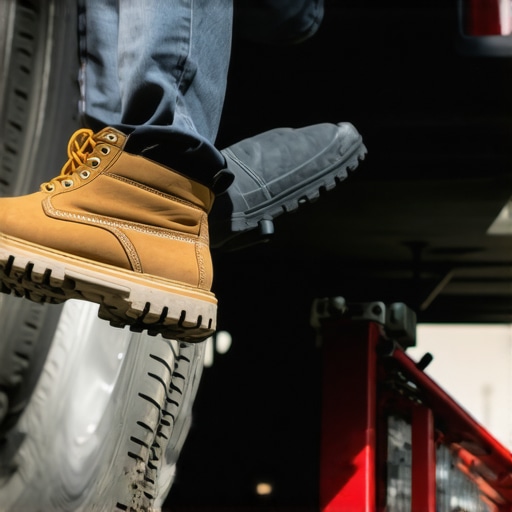
Let Physics Do the Heavy Lifting
If the wheel still won’t budge after a few kicks, it’s time to use the car’s own weight against the rust. Lower the jack until the tire is just barely touching the ground. You want enough pressure to stress the hub-centric ring but not enough to fully crush the tire side-wall. Sometimes, just the act of lowering the vehicle is enough to hear that beautiful ‘crack’ of the corrosion breaking. This is one of those auto repair hacks that saves you hours of sweat. If that fails, and you’ve verified there are no underlying suspension issues through easy checks before your road trip, you can try the ‘rolling method.’ With the lug nuts loose but present, start the car and move it forward and backward literally six inches while tapping the brakes. The torque from the drivetrain is often the only thing strong enough to shear that salt-bond.
Don’t Forget the Cleanup Before Reassembly
Once the wheel finally pops off, you aren’t done. If you just slap the wheel back on, you’re guaranteeing this happens again in six months. Take a wire brush and scrub the mating surface of the hub and the back of the wheel until you see shiny metal. I once skipped this step on a client’s car and ended up with a phantom vibration that felt like I needed to check the ball joints with a pry bar, but it was just rust keeping the wheel from sitting flush. Apply a very thin layer of high-temp anti-seize to the hub-centric ring—the center part where the wheel sits—but never on the lug nut threads themselves unless specified by the manual. These strategies for frequent drivers keep your car serviceable even in the worst salt-belt conditions.
The Great Warped Rotor Lie
Speaking of those hubs, there is a massive misconception that drives me crazy in the DIY community: the ‘warped rotor’ myth. Every time a driver feels a shimmy in the wheel, they assume the metal has physically bent due to heat. In reality, it is almost always uneven pad deposition. When you get your brakes smoking hot and then come to a dead stop with your foot firmly on the pedal, a tiny amount of pad material transfers to one spot on the rotor. This creates a high spot of ‘cementite’ that is harder than the rest of the disc. According to the brake systems experts at StopTech, true rotor warping—where the metal actually deforms into a wavy shape—is incredibly rare in passenger vehicles. This is exactly why your brake pedal vibrates when you aren’t even stopping sometimes; the pads are just skipping over those microscopic hills of material.
The Over-Torque Trap That Ruins Hubs
Here is the ‘oops’ factor that kills more rotors than heat ever will: the impact wrench. Most people (and unfortunately, some budget shops) just blast the lug nuts on until the gun stops spinning. This uneven clamping force distorts the hub and the rotor hat. If you don’t use a calibrated torque wrench, you are essentially pulling the rotor out of alignment. This leads to lateral runout, which feels like a warp but is actually an installation error. It is a common reason why your brakes squeal even after you replaced the pads. If the rotor isn’t sitting perfectly flat against that clean hub we talked about earlier, it will wobble, hit the pads intermittently, and cause noise or vibration. 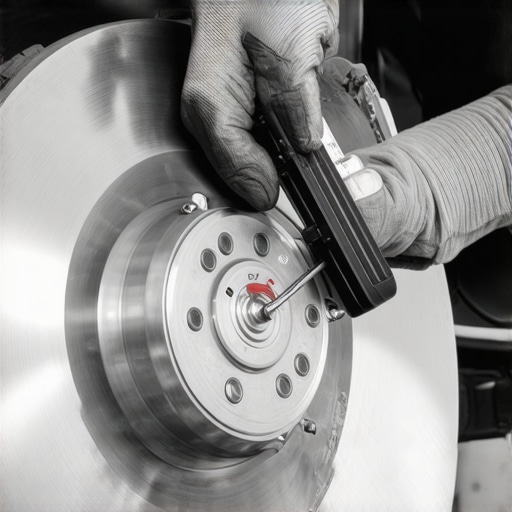
Why does the pedal feel like mush after a long descent?
This is where we separate the casual drivers from the enthusiasts. If you have ever felt your stopping power vanish while driving through the mountains, you are likely experiencing fluid fade rather than pad fade. Brake fluid is hygroscopic, meaning it absorbs water from the air over time. That water lowers the boiling point of the fluid significantly. When you are heavy on the brakes, that water turns into steam bubbles, which are compressible. This is the reason your brake pedal feels different after a long drive in demanding conditions. To avoid this, you need to master the trick for a perfect brake bleed every single time to ensure no air or moisture remains in the lines. This is a core part of the ultimate guide to brake service that most people ignore because they think a pad swap is enough. Don’t fall for the trap of thinking new hardware fixes everything; the chemistry of your fluid matters just as much as the thickness of your pads. Have you ever fallen into this trap and blamed the rotors when it was actually the fluid or the installation? Let me know in the comments.That question of installation vs. hardware is exactly why my garage looks the way it does today.
The One Tool I Refuse to Work Without
I spent years using a cheap ‘clicker’ torque wrench I found in a bargain bin, only to realize later that it was off by nearly 15% at higher ranges. If you are serious about your vehicle, you need a split-beam torque wrench. I personally use a Precision Instruments model because unlike traditional click-style wrenches, you do not have to turn it back to zero after every use to maintain calibration. When you are applying essential auto repair strategies for frequent drivers, precision isn’t a luxury; it is the difference between a secure wheel and a sheared stud.
Why a Cheap Scanner is Better Than a Guess
We have all seen the guy who starts replacing sensors the moment a light pops up on the dash. That is a fast way to go broke. I never touch a wrench until I have plugged in my OBDII interface. For most of you, a simple Bluetooth dongle paired with an app like BlueDriver is plenty. It is the first step in decoding vehicle diagnostics and understanding what your car is trying to tell you. I have used these to find everything from a loose gas cap to a failing catalytic converter before it left me stranded. According to the Automotive Handbook by Robert Bosch GmbH, modern onboard diagnostics (OBD) systems monitor over 150 different parameters in real-time, meaning your car is often smarter than the person driving it. Using how advanced vehicle diagnostics prevent costly breakdowns is about listening to that data before the ‘check engine’ light turns into a ‘replace engine’ light. 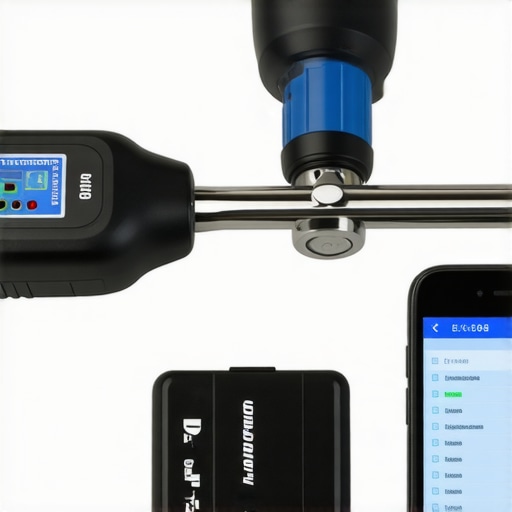
How do I keep my car running smoothly for the long haul?
Maintenance isn’t just about the big jobs; it is about the habit of inspection. Every time I do an oil change, I spend five minutes looking for ‘wetness’—signs of leaks that haven’t hit the ground yet. Following top auto repair tips to extend your vehicles lifespan means being proactive. Check your CV boots for tears, look at your belt for glazing, and always peek at your brake lines for corrosion.
The Future of Your Driveway Repairs
I predict we are moving toward a ‘software-first’ repair world. Soon, you won’t just be checking oil levels; you will be managing battery thermal cycles and checking Over-The-Air (OTA) update logs. We are already seeing oil change innovations and technologies that save your engine through ultra-low viscosity fluids and sensor-driven drain intervals. The tools are getting smarter, but the physics of a rusted-on wheel or a bad brake bleed will always require a human touch. My challenge to you: Before your next project, pick up a dedicated hub-cleaning tool for your drill. It is a small investment that will make your next brake job feel like a professional factory assembly.
What I Learned After Breaking a Stud on a Sunday Night
The most expensive mistakes I’ve made always happened when I was in a hurry. I used to think that more force was the answer to every problem, but that just leads to snapped bolts and bruised knuckles. I learned the hard way that patience is a mechanical tool just as much as a socket wrench. If you find a bolt that refuses to move, don’t just pull harder; use the secret to removing a rusted bolt without snapping the head before you turn a ten-minute job into a weekend nightmare.
Another ‘lightbulb moment’ was realizing that a clean mating surface is non-negotiable. If you leave even a thin layer of scale on that hub, you’re going to experience the vibration at 65 mph that feels like an earthquake. It’s not just annoying; it’s actually dangerous because it stresses your wheel bearings over time. Lastly, never ignore what the computer is saying. I spent years guessing at sensors before I finally committed to decoding vehicle diagnostics properly—it saved me thousands in unnecessary parts.
Tools That Keep Me from Throwing My Wrench
If you’re ready to stop being a ‘parts swapper’ and start being a mechanic, there are three things you need in your cabinet. First, get a high-quality wire cup brush for your cordless drill; it makes cleaning hubs a five-second job instead of a five-minute sweat session. Second, invest in a split-beam torque wrench so you can trust your wheel’s clamping force without the constant recalibration headaches of cheaper models. Third, a reliable OBDII Bluetooth dongle is essential for how advanced vehicle diagnostics prevent costly breakdowns. #IMAGE_PLACEHOLDER_E# These aren’t just gadgets; they are foundational to the best auto repair hacks I use every single week.
Your Path to Masterful Auto Repair
Working on your own car shouldn’t feel like a battle against the machine. It’s a series of puzzles that physics and the right information can solve for you. Whether you are performing a simple oil change or diving into the ultimate guide to brake service, the goal is always the same: safety, reliability, and the pride of doing it yourself. Don’t be afraid to get your hands dirty, but always remember that the smartest tool in the garage is the person who knows when to step back and think before they strike. Auto repair is a skill that pays dividends for a lifetime, so keep learning and keep wrenching.
Have you ever had a wheel so stuck you thought it was part of the axle? Let me know your best (or worst) stories in the comments below!