

I will never forget the rainy Tuesday my sedan tried to steer itself into a ditch the second I touched the brake pedal. One moment I was cruising perfectly straight on the highway, and the next, I felt a violent tug toward the left curb as I slowed for an exit. It felt like a ghost was wrestling me for control of the wheel. If you have ever felt that terrifying lurch while decelerating, you know exactly the kind of white-knuckle stress I am talking about. Today, I am going to help you pinpoint exactly why your car pulls to the left when you hit the brakes so you can stop dreading every red light. I spent years as a DIYer before I realized that a car that tracks straight normally but dives during braking is almost never an alignment issue—it is a cry for help from your braking system. Early in my journey, I made the expensive mistake of paying for three wheel alignments in a single month, only to discover the real problem was a $20 rubber hose. We are going to avoid that waste of money today by looking at the components that actually matter. Have you ever experienced that sudden, heart-stopping swerve when you try to slow down?
Your Steering Wheel Should Not Be Choosing Its Own Path
When your vehicle behaves perfectly while your foot is off the pedal but acts out during braking, it usually means one side of your car is doing more work than the other. Think of it like a rowing team where only the left side of the boat is digging into the water; naturally, you are going to spin. I learned this the hard way after ignoring a slight vibration for weeks, only to find my left front caliper was practically seized. This isn’t just an annoyance; it’s a critical safety risk. According to the National Highway Traffic Safety Administration (NHTSA), brake-related issues are the leading cause of crashes attributed to mechanical failure, making it vital to follow a ultimate guide to brake service for safety and performance. We are going to look into stuck pistons, collapsed hoses, and even uneven pad wear to find your culprit.
Is this going to cost me a fortune at the shop?
It is easy to assume the worst when your car starts acting erratic, but many of these fixes are simpler than you think. There are plenty of brake service myths that might lead you to believe you need a whole new front end, when in reality, a simple fluid flush or a new set of pads might be the cure. I once helped a neighbor who was convinced he needed a new steering rack, only for us to find a pebble wedged in his rotor. Before you let a shop talk you into a thousand dollars of work, we need to understand the mechanics of the pull. In the next section, I will walk you through the exact diagnostic steps to see if your brake hardware is the villain in this story.To solve this, we need to get our hands a little dirty and move beyond theory. First, you need to lift the front end and get those wheels off so you can see the hardware in action.
Verify Your Caliper Is Doing Its Job
Think of the caliper as a giant hydraulic clamp. If the ‘slide pins’—those small metal rods that allow the caliper body to move back and forth—are bone-dry or encrusted with rust, the clamp gets stuck. If the right side stays loose while the left side bites hard, the car will pivot toward the stronger side every single time. While you are under there, it is a great time to be decoding vehicle diagnostics what your car is trying to tell you by looking at the wear patterns on the pads. If the left inner pad is paper-thin and the outer one looks brand new, you have found your smoking gun. This mechanical imbalance is a classic reason for that steering wheel tug.
Hunt for the Stealthy Collapsed Brake Hose
This is arguably the trickiest part of the whole diagnostic process. A brake hose is like a straw, but it is multi-layered. If the inner lining of the rubber hose fails, it can collapse and act like a one-way check valve. I once spent an entire Saturday afternoon chasing a pull on an old SUV. I replaced the pads and the rotors, yet the pull remained. I finally realized the rubber hose had failed internally. When I hit the pedal, the pressure forced fluid past the blockage to stop the car, but when I let go, the fluid could not return to the master cylinder. The left brake stayed partially ‘on’ all the time, heating up the rotor until it glowed. It was a messy, frustrating job—I ended up with brake fluid all over my driveway and a ruined pair of work boots—but replacing that twenty-dollar hose fixed what I thought was a massive steering failure. This is why knowing the brake fluid color that means you need a flush immediately is so helpful; dark, murky fluid is a sign that those rubber lines are degrading from the inside out and likely contaminating your system. 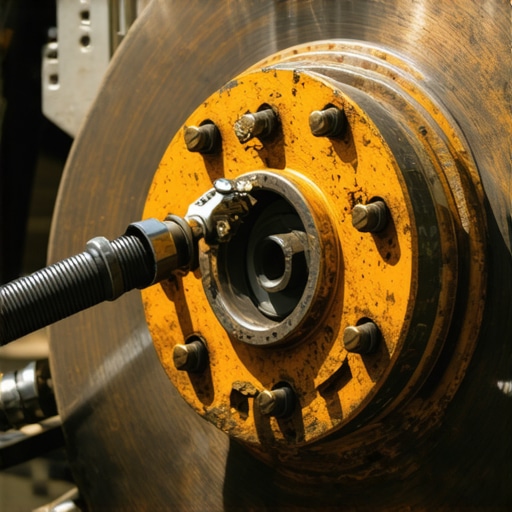
Spot Friction Contamination on the Rotors
Sometimes the hardware is mechanically sound, but the chemistry of the friction surface is compromised. If you have a leaky wheel bearing or a torn CV boot, grease can spray onto your brake rotor. Grease is the absolute enemy of friction. If your right rotor is coated in even a thin, invisible film of oil, it will not grab with the same force as the left. The left side, being clean and dry, will do all the stopping, pulling you toward the shoulder. While you are checking the rotors, take a moment to look at the surrounding suspension components. You can use a pry bar to how to spot a bad ball joint using a floor jack because a loose joint can also cause a shift in steering geometry that mimics a brake pull.
Listen for Mechanical Warning Signs
Do not ignore the sounds that accompany the pull. If the swerve is joined by a rhythmic clicking, you might be dealing with more than just a hydraulic issue. Often, the clicking sound when you turn that means your cv axle is toast can coincide with braking issues because the grease from the failing axle joint has contaminated the braking surface. It is all part of a connected system. You want to look for any signs of wetness around the caliper piston or the bleeder screw. Even a microscopic leak can introduce air into the system. Air is much more compressible than fluid, leading to an uneven distribution of pressure and that terrifying sensation of losing control.Most DIYers and even some junior techs fall into a classic trap: they assume that because the car pulls left, the left side is the problem. In my experience, the opposite is just as likely. If your right front caliper has completely died or the pads are glazed to the point of having zero friction, the car isn’t ‘pulling’ left as much as the left side is the only side actually working. This is where you need to move past basic brake service myths and realize that a silent failure on the passenger side is a frequent culprit for a driver-side pull. Have you ever fallen into this trap? Let me know in the comments.
Stop Blaming the Left Side Immediately
When you are chasing a pull, you have to look at the ‘lazy’ side first. A common nuance people miss is that a vehicle can track perfectly straight while cruising but dive during braking because one side is simply failing to participate. If the right side isn’t engaging, your left side becomes the ‘anchor’ and the vehicle pivots around it. I always recommend using an infrared thermometer after a short test drive with multiple stops. If the left rotor is 300 degrees and the right is only 100, the ‘pull’ is actually a symptom of a dead right caliper. This is part of how advanced vehicle diagnostics prevent costly breakdowns; you are looking for the absence of action, not just a mechanical bind.
The Grease Trap That Destroys Modern Calipers
Here is the ‘oops’ factor I see all the time: using the wrong lubricant. I once saw a neighbor use standard chassis grease on his brake slide pins. Within two months, the rubber dust boots had swollen to twice their size, trapping moisture and locking the pins. Petroleum-based greases attack the EPDM rubber used in modern brake systems. You must use a high-quality silicone or ceramic-based lubricant to ensure free movement. If you don’t, you’ll be right back where you started, wondering why your car pulls to the left when you hit the brakes despite having brand new pads and rotors. 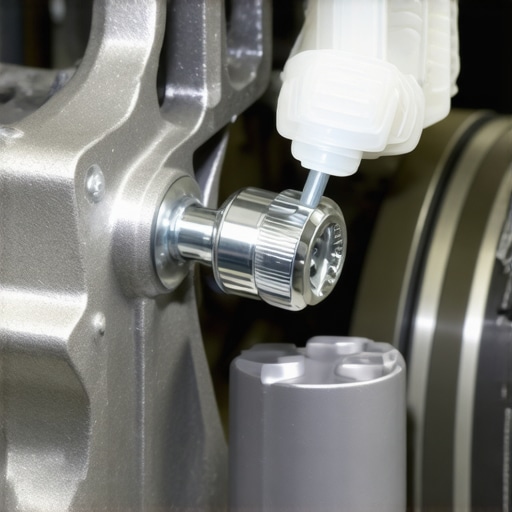
Can a Failing Master Cylinder Actually Mimic a Stuck Caliper?
While it’s rare, internal bypass in the master cylinder can cause this. Modern cars use a ‘diagonal split’ hydraulic system for safety. If one primary seal inside the master cylinder fails, you might lose pressure to the right front and left rear simultaneously. According to the Car Care Council, neglected brake fluid is the primary cause of internal hydraulic failure, often leading to uneven pressure distribution that technicians misdiagnose as mechanical binding. If you have neglected your maintenance, you might need the trick for a perfect brake bleed every single time to even begin diagnosing a hydraulic imbalance. Don’t forget that external factors like the tire wear pattern that reveals a bent control arm can also exacerbate a brake pull. Sometimes the pull isn’t hydraulic at all but electronic. An ABS sensor giving false readings can cause the pump to pulse on one side prematurely. This is why the truth about using cheap aftermarket sensors in your engine and brake systems is so critical—saving twenty dollars on a sensor can result in a car that is unpredictable during an emergency stop.To get these jobs done right without the guesswork, you need to stop relying on ‘feel’ and start using data. My absolute favorite tool for solving a brake pull isn’t a fancy computer—it’s a $20 non-contact infrared thermometer. After a ten-minute drive, I point that laser right at the center of the rotors. If the temperatures are within 10-15% of each other, I know my hydraulic balance is okay. If there’s a 100-degree difference, I’ve found my ‘lazy’ side. This is one of those auto repair hacks save money without sacrificing quality that professionals use but rarely talk about. I also swear by a Motive Products Power Bleeder. Instead of begging my wife to pump the pedal while I scream commands from under the car, I can pressurize the whole system from the reservoir and flush out every air bubble alone. It ensures you get the trick for a perfect brake bleed every single time, which is the only way to be sure your pedal pressure is even. 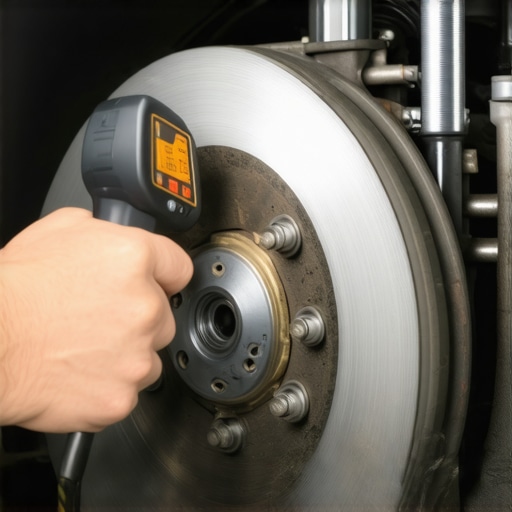
How do I prevent the pull from coming back next season?
The biggest enemy of your braking system isn’t wear; it’s moisture. Brake fluid is hygroscopic, meaning it drinks water right out of the air. Over time, that water causes the internal pistons to pit and the slide pins to seize. If you are serious about top auto repair tips to extend your vehicles lifespan, you should be testing your fluid’s copper content or moisture level annually. Experts at Akebono, a leader in ceramic friction technology, emphasize in their technical literature that nearly 70% of ‘pulsation’ and ‘pull’ complaints are actually related to improper installation or contaminated hardware rather than the pads themselves. This is why I always use a wire brush to clean the hub surface until it shines before putting on a new rotor. Any tiny bit of rust can cause ‘runout,’ leading to a steering wheel shake that eventually turns into a pull. Looking ahead, the days of simple hydraulic lines are numbered. We are seeing a massive shift toward ‘Brake-by-Wire’ systems in electric vehicles and high-end hybrids. In these cars, your pedal is just a sensor, and a computer decides how much pressure to apply to each wheel. While this should theoretically eliminate mechanical pulls, it means how advanced vehicle diagnostics prevent costly breakdowns will soon involve more software updates and fewer wrenches. Even oil change innovations technologies that save your engine are being integrated with braking data to predict when your pads are thinning out. If you want to master your car’s health, start by adopting essential auto repair strategies for frequent drivers. My challenge to you: next time you have the wheels off, don’t just look at the pads. Pull those slide pins out, wipe off the old gunk, and apply fresh silicone paste. You’ll be amazed at how much smoother the car stops when the hardware can actually move.
The Most Expensive Lesson My Driveway Ever Taught Me
After decades of turning wrenches, I have realized that the most frustrating repairs often have the smallest culprits. If you are struggling with why your car pulls to the left when you hit the brakes, remember these lightbulb moments I had to learn the hard way:
- The ‘Opposite Side’ Rule: Most people attack the side the car pulls toward, but more often than not, the passenger side is the one that has given up. If the right side does nothing, the left side becomes a pivot point.
- Grease is Not Just Grease: Using the wrong lubricant on slide pins is a death sentence for your calipers. Always stick to high-temp silicone to prevent the rubber boots from swelling and locking the system up.
- Listen to the Fluid: Dark fluid is more than just ‘dirty’; it is a chemical warning that your internal hoses are dissolving and could collapse at any moment, creating a dangerous pressure trap.
My Go-To Kit for Diagnosing Brake Drama
You do not need a shop full of industrial equipment to find the source of a pull. I swear by these three things every time a car acts up in my driveway:
First, grab a non-contact infrared thermometer. It is the fastest way to see if one brake is working harder than the rest without even taking the wheels off. Second, I highly recommend a pressure bleeder like the ones mentioned in the trick for a perfect brake bleed every single time; it ensures no air is left to cause uneven pressure. Finally, keep a simple wire brush and some brake cleaner handy. Often, just cleaning the hub surface to ensure the rotor sits perfectly flat can solve ‘phantom’ pulls that feel like mechanical failures. These are the kind of auto repair hacks save money without sacrificing quality that keep your car on the road for years longer than average.
Take Back Control of Your Commute
Driving should not be a wrestling match between you and your steering wheel. By taking a methodical approach—checking for heat imbalances, inspecting your slide pins, and ensuring your fluid is fresh—you are doing more than just fixing a pull; you are mastering the safety of your vehicle. Staying ahead of these issues is a core part of top auto repair tips to extend your vehicles lifespan. Do not let a small mechanical hiccup turn into a major safety risk. You now have the knowledge to identify exactly why your car pulls to the left when you hit the brakes and the confidence to handle it yourself or speak intelligently to a mechanic. Have you ever replaced a part only to find the problem was on the complete opposite side of the car? Let me know your most frustrating diagnostic stories in the comments below!