

I was standing in the pouring rain with three heavy bags of groceries and a case of water balanced on one knee. I thumbed my key fob, expecting that satisfying pop. Nothing happened. I tried again, pressing harder as if that would help. Still nothing. I climbed into the driver’s seat, soaked and frustrated, and mashed the interior release button. I heard a faint, pathetic click, but the trunk stayed shut. It is a specific kind of helplessness when your own vehicle decides to hold your belongings hostage. This isn’t just a minor annoyance; it is a sign that something in your car’s complex electrical or mechanical ecosystem has failed. We are going to solve this today so you aren’t stuck crawling through your backseat just to retrieve your spare tire or your shopping bags.
That Muffled Click That Means You Are Stuck
The frustration of a trunk that refuses to budge usually boils down to three main culprits: a dead signal, a blown fuse, or a mechanical jam. When neither the remote nor the button works, you are likely looking at an electrical disconnect. Have you ever been stuck in a parking lot, groceries in hand, wondering if your car had developed a personal vendetta against you? It’s a common headache, but before you assume the worst, we need to look at the logic of your car’s locking system. Often, the car is trying to tell you something, much like when your door locks start acting possessed. We will walk through the diagnostic steps to identify if your actuator has died or if it is simply a matter of a confused computer module.
Is this going to cost me hundreds at the shop?
Actually, many trunk release issues are surprisingly inexpensive to fix if you catch them early. According to data from Consumer Reports, electrical glitches in secondary systems like trunks and windows are frequently caused by simple fuse failures or loose wiring harnesses rather than the expensive motors themselves. If you can hear a motor trying to move, your problem is likely mechanical; if there is dead silence, we are hunting for an electrical ghost. Using a bit of basic vehicle diagnostics can save you a $150 diagnostic fee at the dealership.
My Embarrassing Mistake with a Valet Switch
I remember back when I first started getting serious about DIY repairs. I had a sedan where the trunk wouldn’t open for three days. I was convinced the latch was seized. I spent an hour in the heat, nearly ripping the emergency release cable out of the trunk lining. It turned out I had accidentally bumped the “valet lockout” switch inside my glovebox while reaching for a map. It was a total rookie move that taught me to always check the simplest solution first. Since then, I’ve realized that easy checks before a trip are vital. Just like knowing how to fix a stuck power window with a simple tap, sometimes the fix for a trunk is just as unintuitive. We are going to look at the latch mechanism next to see if a bit of grease or a new fuse is all you need to get back to business.
Hunt Down the Electrical Ghost Before Buying Parts
If you have ruled out the valet switch, it is time to follow the power. Think of your car’s electrical system like a series of garden hoses; if there is a kink or a shut-off valve—which in this case is a fuse—the water simply won’t reach the end. I once spent an entire Saturday morning tearing apart the rear deck of my old sedan, thinking the actuator had burned out. My hands were covered in grease, and I had broken three plastic clips. The culprit ended up being a tiny 10-amp fuse that cost less than a cup of coffee. This is one of those auto repair hacks that saves you a massive headache if you check it first.
Start with the Fuse Box and Save Your Sanity
Open your owner’s manual and find the diagram for the fuse panel, which is usually tucked under the dash or inside the engine bay. Look for labels like ‘Trunk,’ ‘Lid,’ or ‘Rear Access.’ Pull the fuse and hold it up to the light. If the metal bridge inside the plastic is broken, you have found your ghost. Replacing it is as simple as plugging in a new one with the same amperage. This is exactly why easy checks before a trip are so crucial; you do not want to find this out at a gas station in the middle of a downpour.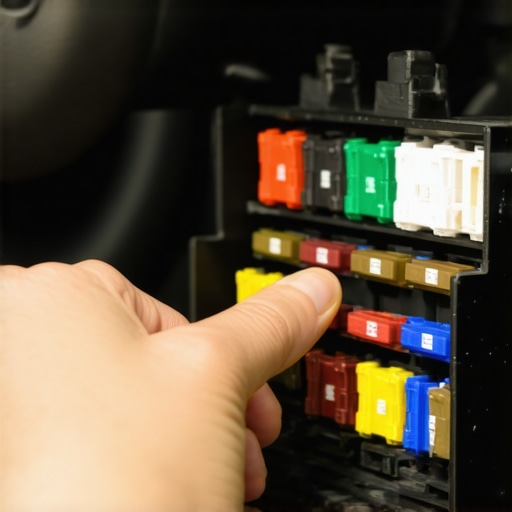
Listen for the Tell-Tale Click of the Actuator
Next, we move to the actuator itself. If the fuse is fine but the trunk remains stubborn, have a friend press the release button while you put your ear near the trunk lid. Do you hear a faint whirring or a sharp clunk? If you do, the electrical signal is successfully traveling through the wires, but the mechanical arm is either jammed or the motor is too weak to pull the latch. Much like fixing a stuck power window with a physical jolt, sometimes a firm palm-slap on the lid while someone holds the button can bypass a minor jam. It is all about decoding vehicle diagnostics through sound and feel. If you hear absolutely nothing, the solenoid itself is likely dead and needs replacement.
How to Manually Override the System Without Breaking Anything
If the trunk is completely non-responsive, you will need to perform a manual override. This usually involves folding down the rear seats and crawling into the trunk with a flashlight. Look for a glow-in-the-dark emergency handle or a small plastic access cover on the latch mechanism. Popping this cover and moving the lever with a screwdriver will release the latch manually. While you are back there, check for any obstructions like a loose grocery bag or a piece of carpet caught in the mechanism. If the latch moves freely now but won’t stay closed later, you might be facing a similar issue to a trunk that won’t stay open, which often requires a simple adjustment of the striker plate or a shot of lithium grease. Always use the right tools for the job; I once tried to pry a latch with a butter knife and ended up with a nasty cut and a scratched-up trunk.Let’s dig deeper into why we often misdiagnose these systems. Most drivers—and even some amateur mechanics—treat an OBD-II scanner like a crystal ball. They see a code for a ‘Lean’ condition and immediately replace the oxygen sensor. In reality, that code is just the car’s way of saying it’s feeling ‘off,’ not pinpointing the root cause. It could be a simple $5 vacuum leak rather than a $200 sensor. This is where advanced vehicle diagnostics come into play. It’s not about just reading the code; it’s about interpreting the live data stream behind it to see what the sensors are actually seeing in real-time. 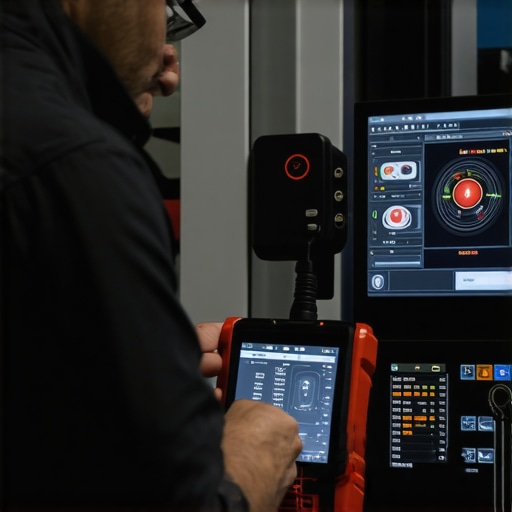
Look Past the Diagnostic Trouble Code
Many people believe that once they have the code, the job is 90% done. I’ve found that the code is usually just the first 10%. In my experience, jumping to conclusions without following the data leads to what I call ‘parts cannon’ repair—firing expensive components at the car and hoping one sticks. This is why decoding vehicle diagnostics properly is the difference between a Saturday morning fix and a week-long headache. It is a common mistake to ignore the ‘freeze frame’ data which tells you exactly what was happening when the fault occurred, like engine RPM and temperature. Back to our trunk mystery—modern systems use ‘logic’ to prevent opening. If the car thinks it’s moving, even if it’s stationary but has a faulty speed sensor, it will lock you out. This is where vehicle diagnostics explained for modern cars becomes vital.
Why does my brake pedal feel different after a long drive?
This is a question I get from seasoned drivers all the time. They’ve done their brake service, but the pedal still feels ‘spongy’ after an hour on the highway. Most think it’s just the pads getting hot. However, the hidden nuance is often brake fluid contamination. Brake fluid is hygroscopic, meaning it absorbs moisture from the air over time. According to a study by the National Highway Traffic Safety Administration (NHTSA), brake failure plays a significant role in thousands of accidents annually, and fluid degradation is a silent contributor that many enthusiasts overlook. When that moisture turns to steam under heavy use, your pedal gets soft because you are compressing gas instead of liquid. It’s one of those brake service myths that ‘fluid is fine as long as it’s full.’ Always check the copper content or moisture level of your fluid during a service.
Avoid the Torque Trap to Save Your Threads
The biggest ‘oops’ factor I see with DIYers is the ‘tighter is better’ mentality. I once snapped a bolt on a thermostat housing because I thought I needed that extra quarter-turn for a ‘good seal.’ That mistake cost me half a day of drilling and tapping. Overtightening is especially dangerous on aluminum components like cylinder heads or oil pans. If you do find yourself in that mess, knowing the secret to removing a broken bolt will save your sanity, but prevention is much easier. Use a torque wrench. It feels like an extra step, but it’s the hallmark of professional-grade work. Another subtle error is using the wrong oil weight because of a sale. Modern engines are built with such tight tolerances that the wrong viscosity can actually prevent the oil from reaching critical components, regardless of the truth about oil additives. Have you ever fallen into this trap of over-tightening or misdiagnosing a simple issue? Let me know in the comments.I’ve learned the hard way that the right tools make the difference between a ten-minute fix and a three-day disaster. I stopped using cheap test lights years ago because they can actually draw enough current to fry a delicate Engine Control Unit (ECU). Today, my go-to is a high-impedance multimeter like the Fluke 88V. This tool is a staple in my kit because it allows me to measure voltage drops across a fuse without pulling it, which is the most efficient way of finding a parasitic battery drain with a simple multimeter. If your trunk isn’t popping, it’s usually because of a tiny drop in voltage that a cheap tool simply won’t catch. When you understand the flow of electricity, you stop being a part-changer and start being a technician. This level of precision is exactly how advanced vehicle diagnostics prevent costly breakdowns by identifying weak signals before they lead to a total system blackout. 
Stop Guessing and Start Measuring with a Professional Multimeter
According to the ASE (Automotive Service Excellence) Advanced Engine Performance Specialist (L1) technical documentation, the integrity of a ground circuit is just as vital as the power feed. I’ve seen countless DIYers replace a trunk actuator when the real issue was a frayed ground wire in the trunk hinge harness. To avoid this, use your multimeter to check for continuity between the latch and the chassis. If the resistance is high, your motor isn’t getting the ‘push’ it needs to move the lever. This diagnostic mindset applies to every part of your car, from keeping up with oil change innovations to performing a brake service that actually lasts. By focusing on the data provided by your tools, you are implementing the top auto repair tips to extend your vehicle’s lifespan.
How do I maintain these intricate electrical systems over time?
The secret is prevention through cleanliness and lubrication. Every six months, I take a can of electronics cleaner and a small tube of dielectric grease to my car’s exposed connectors, including the trunk latch and the hood release. This prevents the micro-corrosion that leads to those ‘ghost’ failures where things work only half the time. It is a simple habit that mirrors how we should handle mechanical parts, like preventing the tire rotation mistake that ruins your tread.
Predictive Apps and the End of the Dipstick
Looking ahead, I predict the ‘greasy-fingered’ era of diagnostics is slowly merging with the world of telematics. We are moving toward a future where your car won’t just throw a code when the trunk fails; it will send a push notification to your phone weeks in advance, noting that the actuator’s motor is drawing 15% more current than normal. This predictive maintenance is the next logical step in decoding vehicle diagnostics. Grab a multimeter this weekend and test your battery’s resting voltage—it’s the first step to becoming your own master technician and finally taking control of your vehicle’s health.
What My Worst Repair Mistakes Taught Me About Wires
The most important thing I’ve learned is that electricity doesn’t just stop; it gets tired. Micro-corrosion on a connector can drop 12 volts down to 9, which is enough to keep a light on but not enough to fire a trunk actuator. I used to waste hours on decoding vehicle diagnostics that seemed contradictory, only to find a loose ground wire. Another lightbulb moment? Always check the ‘trunk wire harness’ specifically where it bends at the hinge. Those wires flex every time you open the lid, and eventually, the copper inside snaps while the plastic insulation remains perfectly intact. If you’ve ever wondered why your car’s interior lights won’t turn off or why the trunk latch is acting up, the hinge harness is the first place I look now.
Gear That Actually Belongs in Your Glovebox
You don’t need a professional shop to handle most issues if you have access to the right data. I personally trust three specific things for my daily driver. First, a Bluetooth OBD-II adapter paired with an app like Torque Pro; it’s the best way to see what the car is thinking in real-time. Second, a small tube of dielectric grease to protect every electrical connection you touch. Finally, a dedicated fuse puller—the plastic ones built into the fuse box lids are notoriously fragile. Using these tools is one of the top auto repair tips to extend your vehicle’s lifespan because it allows you to catch small electrical resistance issues before they fry expensive computer modules.
Your Path to a Bulletproof Vehicle
Taking care of your car isn’t just about the big stuff like a brake service or an engine rebuild; it’s about the confidence that comes from knowing how every system connects. When you stop fearing the ‘click’ that doesn’t happen and start reaching for your multimeter, you’ve graduated from being a driver to being a guardian of your machine. High-quality auto repair is a skill that pays dividends every single time you hit the open road. Go ahead, open that fuse box and see what’s inside—you might be surprised at how much control you actually have. Have you ever had your trunk lock you out at the worst possible moment? Let me know your story in the comments below!