

I remember sitting in my old truck last February, teeth chattering as I waited for the light to turn green on 4th Street. My temperature gauge was right where it should be, sitting right in the middle, but the air coming out of my vents was nothing more than a lukewarm whisper. The moment I hit the gas and got up to 40 mph? Boom. Blissful, toasted warmth. It felt like the car was playing a cruel game of “keep away” with my comfort. If you have ever felt that blast of arctic air the second you take your foot off the accelerator, you are not crazy, and your car isn’t haunted—it is actually trying to tell you something very specific about its internal health.
Why Your Dashboard Turns into an Icebox at Every Red Light
I’ll be honest with you: I once spent an entire weekend and nearly two hundred dollars replacing a heater core because I thought it was clogged. It was a miserable, back-breaking job that required pulling half the dash apart. The result? No change. I felt like a total amateur when I realized the actual culprit was a simple air pocket in the cooling system. This happens more often than you’d think. When you are driving, your engine RPMs are higher, which forces the water pump to spin faster. This extra pressure can push coolant through a partially blocked system or over an air bubble, but when you stop, that flow drops to a crawl. If you’ve also noticed that your engine temperature spikes at red lights, you are likely dealing with a circulation issue that needs immediate attention. Today, we are going to dive into why this happens and how you can stop shivering at stop signs.
Is this repair going to drain your bank account?
This is the big fear, right? You imagine a mechanic telling you the whole engine needs to come out. But here is the reality: many times, the fix is as simple as topping off your fluids or using a few auto repair hacks to save money. According to the Car Care Council, cooling system neglect is the number one cause of roadside breakdowns, yet most of these issues start with small, cheap-to-fix symptoms like a finicky heater. Don’t ignore it.
The Frustrating Physics of the Lukewarm Idle
It is a visceral feeling when the heat dies. You can almost hear the silence of the heater core failing to get the hot liquid it craves. Interestingly, the logic is very similar to why your car ac only blows cold air while moving, just on the opposite end of the temperature spectrum. It all comes down to flow and efficiency. Have you ever sat at a long traffic light just praying for the light to turn green so your fingers would stop tingling from the cold? If so, you need to start with some basic vehicle diagnostics to see what your car is trying to scream at you through those chilly vents. For instance, did you know the average water pump moves up to 2,000 gallons of coolant per hour at highway speeds? When that efficiency drops at an idle, your comfort is the first thing to go. Let’s look at how to get that flow back where it belongs.
Start with the Overflow Tank Before You Panic
The first thing you need to do is check your coolant levels, but do it when the engine is cold. Think of your cooling system like a straw in a glass of soda. If the liquid is too low, the straw just sucks up air. When your coolant is low, there isn’t enough volume to consistently reach the heater core when the water pump is spinning slowly at an idle. Open the hood and look at the plastic reservoir. If it is below the ‘Full’ line, you have a starting point. However, don’t just add water; you need the correct 50/50 mix to protect your internals. If you find yourself constantly topping it off without seeing a puddle on your driveway, you might need the trick to spotting a hairline crack in your radiator, as even a pinhole leak can introduce enough air to kill your cabin heat. This is one of the most vital top auto repair tips to extend your vehicles lifespan because a low coolant level eventually leads to a warped cylinder head.
Force the Air Out of Your Cooling System
If your fluids are full but the heat is still intermittent, you likely have a ‘burp’ problem. Air pockets love to settle in the highest point of the engine, which is often the heater core. I remember working on a neighbor’s old sedan one Saturday; I was convinced the thermostat was shot. After an hour of frustration and sticky hands, I used a spill-free funnel—a great tool for auto repair hacks to save money—and watched a massive air bubble gurgle to the surface. Suddenly, the vents went from refrigerator-cold to campfire-hot. To do this yourself, park on an incline with the nose of the car pointing up, remove the radiator cap (again, only when cold!), and let the engine run. As the thermostat opens, the air should migrate toward the radiator and escape.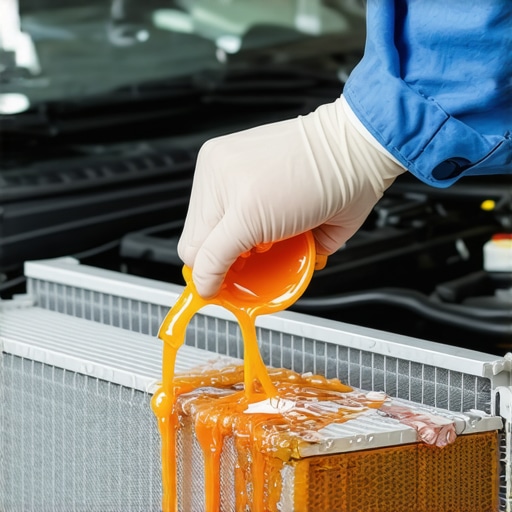
Determine if Your Water Pump Is Still Pumping
Sometimes the issue is mechanical. Your water pump has an internal impeller that moves the fluid. Over time, those blades can erode or the shaft can slip. At highway speeds, the pump is moving fast enough to overcome its own inefficiency, but at a red light, it just doesn’t have the muscle to push coolant through the narrow tubes of your heater core. You should check for any weeping or crusty buildup around the pump pulley. Learning how to spot a bad water pump before your engine overheats is a skill that saves both your comfort and your engine. If you hear a faint grinding or chirping noise while idling, that is your pump’s way of saying it is ready to retire.
The Two-Hose Test for a Clogged Heater Core
If you’ve bled the air and the pump is fine, you might have a partial blockage in the heater core itself. This is the ‘cholesterol’ of your car’s veins. To check this, find the two rubber hoses going through your firewall into the cabin. With the engine warmed up and the heat on high, carefully touch both hoses. They should both be hot. If one is scorching and the other is lukewarm, the coolant is getting stuck inside the core. This is where decoding vehicle diagnostics becomes a hands-on experience. You can often fix this by performing a ‘back-flush,’ where you use a garden hose to push water through the core in the opposite direction of normal flow to dislodge any scale or sediment.I see it all the time in DIY forums: someone spends hours flushing their cooling system, only to have the same lukewarm air a week later. There is a common belief that a thorough flush is a cure-all for cooling issues. But here is the contrarian reality: if your cooling system is old and neglected, a high-pressure flush can actually do more harm than good. It can dislodge scale that was acting as a seal on a pinhole leak or, worse, shove debris deeper into the narrow vanes of your heater core. I have seen many drivers try to save a buck with Stop Leak chemicals, but in my experience, those bottles are essentially liquid sandpaper for your water pump and a permanent plug for your heater.
Does your car really need that low-temperature thermostat?
Many performance enthusiasts think that installing a thermostat that opens at 160 degrees instead of the factory 190 will keep their engine safer. This is a massive oops factor. Modern engines are designed to run hot for a reason. According to research by SAE International, running an engine below its intended operating temperature prevents the oil from reaching the ideal viscosity needed to properly lubricate high-friction areas. Not only does this lead to poor cabin heat, but it also forces the vehicle to stay in open-loop mode, where it dumps extra fuel into the cylinders. This is one of those spark plug gap errors that is killing your gas mileage alongside the thermal inefficiency. 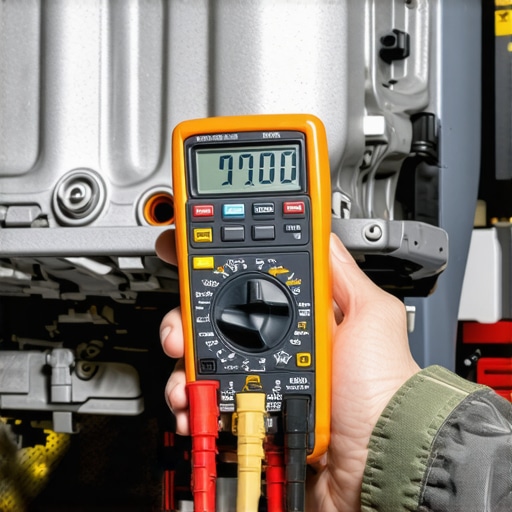 Let us talk about the New Part Fallacy. We have all been there: you replace a sensor or a pump, and the problem persists, so you assume that part was not the issue. But with the rise of budget white-label auto parts, DOA (Dead On Arrival) components are shockingly common. I once spent three days chasing a rough idle only to find the brand new mass airflow sensor was faulty from the factory. This is why how advanced vehicle diagnostics prevent costly breakdowns by testing the part’s output, not just reading the code. It is the same with oil changes; people assume any filter will do, but the oil filter brand that causes low oil pressure lights is a real phenomenon that can mimic a dying oil pump. Another nuance people miss is the Synthetic Myth in older vehicles. Everyone tells you synthetic is always better, and while it flows better, it can also find leaks that conventional oil would have ignored. If you are curious, check out the truth about synthetic oil vs conventional in older high mileage cars before you make the switch and end up with a spotted driveway. Don’t fall into the trap of assuming the most expensive fix or the newest part is always the right one. Have you ever fallen into this trap where you replaced a part only to find out the brand new one was broken too? Let me know in the comments.Moving past the part-swapping headache, I have realized that the difference between a ‘parts changer’ and a true mechanic comes down to the gear in your toolbox. If you want to stop the cycle of intermittent heat, you need to stop guessing. I personally never touch a cooling system now without my infrared thermal camera. While decoding vehicle diagnostics often starts with a code reader, a thermal imager lets you actually see the hot coolant entering the heater core and the cold spots where a clog is forming. It’s like having X-ray vision for your engine.
Stop Guessing with Real-Time Data
Most people use a cheap OBD-II scanner just to clear lights, but the real power is in the ‘Live Data’ stream. When my heater started acting up, I plugged in my scanner and watched the Coolant Temperature Sensor (CTS) readings in real-time. If your dashboard gauge says ‘Normal’ but your live data shows the temp is fluctuating wildly between 160 and 210 degrees, you have a pocket of air or a failing thermostat that a simple visual check will never find. This is how how advanced vehicle diagnostics prevent costly breakdowns; you catch the thermal instability before it cracks a cylinder head.
How do I maintain my car’s heating system over time?
The secret is not just about the heater; it is about the chemistry of your fluids. Coolant is not just ‘anti-freeze’; it is a cocktail of corrosion inhibitors. Over time, those inhibitors break down, and the liquid becomes acidic, eating away at your heater core from the inside out. I recommend a professional pH test of your coolant every two years. According to technical documentation from Mitchell 1 ProDemand, even a slight shift in coolant acidity can accelerate scale buildup by 30% in high-heat areas like the heater core. Pair this with regular oil change innovations that keep your engine running at the correct friction levels, and you create an environment where components last twice as long as the manufacturer’s estimate. 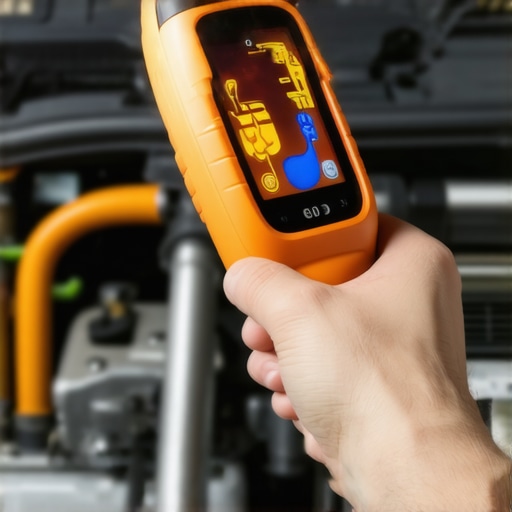
The Future of Keeping Your Cabin Warm
I predict we are moving toward a world where vehicle diagnostics will be entirely predictive. We are already seeing luxury brands implement sensors that measure the flow rate of the coolant through the core, sending a notification to your phone before you ever feel a chill. Until that becomes standard for the rest of us, sticking to top auto repair tips to extend your vehicles lifespan remains your best defense. This includes being proactive with other systems, like getting a proper brake service to ensure your calipers are not sticking and adding unnecessary load and heat to the engine. Using simple auto repair hacks to save money, like using a vacuum filler for your coolant, ensures that air pockets never have a chance to form in the first place. My challenge to you: grab an inexpensive infrared thermometer this weekend and measure the temp of your upper and lower radiator hoses. If there is more than a 20-degree difference once the engine is hot, you have found your next project.
Three Myths About Cabin Heat That Wasted My Saturdays
I used to think that as long as the engine didn’t explode, a weak heater was just a minor inconvenience I could live with. That was a huge mistake. I eventually learned that a lukewarm vent is actually an early warning system for a neglected cooling system. Another hard lesson I learned was assuming that ‘more is better’ when it comes to fluids. Overfilling your reservoir can create pressure imbalances that eventually lead to leaks in the most inconvenient places. I also realized that some auto repair hacks to save money, like using tap water instead of distilled, can actually corrode your aluminum components from the inside out. Realizing that cabin heat is a direct indicator of engine health changed my entire approach to vehicle maintenance. #IMAGE_PLACEHOLDER_E#
The Gear That Saved My Knuckles and My Sanity
If you are tired of guessing why your fingers are freezing, I recommend investing in three specific things. First, a spill-free funnel kit makes bleeding air pockets out of your system completely foolproof. Second, an inexpensive infrared thermometer allows you to check for radiator clogs without getting burned. Third, a basic OBD-II scanner that supports live data is essential. These are the foundation of vehicle diagnostics explained for every driveway mechanic who wants to do it right. I also trust professional-grade databases like Mitchell 1 for wiring diagrams when the blend door actuators start acting up. Utilizing how advanced vehicle diagnostics prevent costly breakdowns is the only way to truly transition from being a ‘parts changer’ to a ‘problem solver.’
Take Back Control of Your Cabin Climate
You do not have to shiver at every red light and wait for the green to feel warm again. Whether it is a simple air pocket or a failing water pump, you now have the roadmap to find the culprit and fix it. Remember that consistent maintenance, including things like oil change innovations and staying on top of your brake service, keeps the entire vehicle in harmony. Keeping your cooling system healthy is one of the best top auto repair tips to extend your vehicles lifespan and ensure your comfort during the winter months. So, go out there, pop the hood, and get that campfire heat back in your vents where it belongs. Have you ever spent a fortune on a major part only to realize a tiny air bubble was the real problem? Let me know in the comments below!