
I still remember the first time I felt my heart drop into my stomach on a frigid January morning. I had just backed out of my driveway and started accelerating down the street. The engine revved higher and higher—2,500, 3,000, then 4,000 RPM—but the car refused to shift into second gear. It felt like the transmission was slipping into oblivion. I panicked. I pulled over, certain I was looking at a three-thousand-dollar repair bill. I’ve been there, and if you’re reading this, you probably are too. You’re wondering if your car is about to give up the ghost or if it’s just being ‘moody’ because of the weather. Today, I’m going to help you figure out exactly what’s happening under that hood so you don’t make the same expensive mistakes I did early on.
Stop Panicking About That Cold Morning Hesitation
It is incredibly easy to jump to the worst-case scenario when your car acts up. However, many people don’t realize that why your automatic transmission hesitates to engage drive is often a matter of physics rather than mechanical failure. Transmission fluid is hydraulic oil, and just like syrup in a fridge, it gets thicker when it’s cold. This thickness, or viscosity, affects how quickly the fluid can move through the tiny passages in your transmission’s valve body. I once spent a weekend worrying myself sick over a late shift, only to find out I was just being impatient with the warm-up process. [IMAGE_PLACEHOLDER] I even made the mistake of using the wrong oil viscosity in a different vehicle once, which made everything ten times worse. Most modern vehicles are actually programmed by the manufacturer to hold gears longer when the engine is cold. According to experts at the Car Care Council, this is often done to help the engine and the catalytic converter reach operating temperature faster, which reduces emissions. So, that ‘late’ shift might actually be your car’s computer trying to be helpful!
Is a late shift always a sign of a broken gearbox?
Not necessarily, but you need to know what to look for. Have you ever felt that terrifying moment where the engine screams but the car barely moves? Before you call a tow truck, you should learn how to check your transmission fluid without a dipstick if your car doesn’t have one, because low fluid is a much more common culprit than a dead gear. We are going to dive into the difference between ‘cold-blooded’ behavior and a real mechanical emergency. I want to save you the stress and the unnecessary shop visits that I suffered through when I was first learning the ropes of auto repair. Tell me, have you noticed if your car shifts perfectly fine once the heater finally starts blowing warm air?If the shifting problems disappear as soon as the cabin warms up, you are almost certainly dealing with a viscosity issue.
Differentiate Between Physics and Mechanical Failure
Think of your transmission fluid as the hydraulic lifeblood of your vehicle. When it is warm, it flows like water, reaching every tiny valve and clutch pack instantly. When it hits sub-zero temperatures, it turns into something closer to thick molasses. This thickness prevents the fluid from building enough pressure to engage the gears, leading to that terrifying hesitation. But how do you know if the lag is just ‘cold blood’ or a sign of an actual mechanical disaster?
Run Your Own Driveway Diagnostic
Before you pay a shop for an expensive inspection, perform a simple stall test and fluid check. If your car has a dipstick, pull it out while the engine is running and at operating temperature. You are looking for a bright cherry red color. If it looks like old coffee or smells like burnt toast, physics is not your only problem. Even if you do not have a traditional dipstick, you can still learn how to check your transmission fluid without a dipstick using the overflow plug method. I once helped a neighbor who was convinced her car was dying after a cold snap. We checked the fluid, and it was nearly two quarts low because of a tiny leak in the cooler line. A $15 fix saved her a $4,000 transmission replacement. 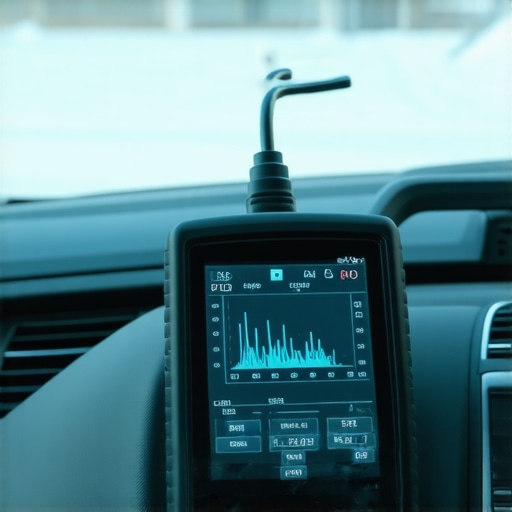
Plug in a Scanner for the Full Story
Modern cars are incredibly chatty if you have the right digital translator. Do not wait for a check engine light to illuminate your dashboard. Often, the transmission control module (TCM) will store ‘pending’ codes that do not trigger a warning light but clearly indicate a struggling solenoid or a slipping clutch. You should focus on decoding vehicle diagnostics to see if there is a mismatch between the engine speed and the output shaft speed. If the computer sees the engine revving but the wheels are not turning at the expected rate, it knows a internal component is failing. Understanding how advanced vehicle diagnostics prevent costly breakdowns is the difference between a proactive owner and a stranded one.
Watch Out for the Limp Mode Trap
If your car suddenly refuses to shift past second or third gear regardless of how warm the engine gets, you might be trapped in ‘Limp Home Mode.’ This is a protective software state designed to prevent you from shredding the gears. I once dealt with a car that felt like it was stuck in heavy mud. I assumed the gears were physically broken, but it turned out to be the solenoid failure that locks your car in limp mode. It was an electrical issue caused by a corroded connector, not a mechanical failure of the gearbox itself.
Don’t Ignore Slips During Sharp Turns
Have you noticed the car hesitates or ‘neutralizes’ specifically when you are making a sharp right or left turn? This is a classic symptom of low fluid levels rather than cold weather. As you turn, the fluid sloshes to one side of the transmission pan, and the pickup tube sucks in air instead of oil. This is why your transmission slips when you take sharp corners. I learned this the hard way during a rainy commute; the car felt like it hit a patch of ice, but it was actually the transmission briefly losing pressure.
Proactive Steps to Save Your Gearbox
If your fluid is clean but the shifts are still harsh in the morning, you need to adjust your driving habits to protect the internal seals. Do not just start the car and slam it into Drive. I follow top auto repair tips to extend your vehicles lifespan, which includes a three-minute idle period on mornings below freezing. This allows the pump to push that cold fluid through the valve body safely. If you are a high-mileage driver, you should also consider essential auto repair strategies for frequent drivers, like shortening your fluid exchange intervals to ensure the additive package in your oil is always strong enough to handle the winter stress.While temperature affects your transmission fluid, there are other fluids and systems where our intuition often leads us astray. Let’s dig deeper into the nuances of maintenance that many high-mileage drivers overlook.
Stop Dumping Good Oil Just Because It Looks Dirty
One of the biggest myths I see in the car community is the idea that black oil equals ‘bad’ oil. I’ve seen people panic and change their oil at 2,000 miles because the dipstick looked dark. In reality, modern oil change innovations mean that high-quality synthetic lubricants are actually designed to darken. They contain dispersants that hold soot and contaminants in suspension to keep them from depositing on your engine’s internals. If your oil stayed golden for 10,000 miles, I’d actually be worried it wasn’t cleaning anything! According to the Society of Automotive Engineers (SAE), these additives are essential for protection, and color is a poor metric for oil health. Of course, you still need to watch for the real reason your engine oil is disappearing without a leak, such as PCV system failures, but don’t let a little darkness scare you into wasting money. 
Don’t Let New Pads Mask a Rotting Caliper
Another common ‘trap’ is the classic DIY ‘pad slap.’ We’ve all been there: the brakes squeak, you buy a $40 set of pads, and swap them out in an hour. But here is the hidden nuance: if you aren’t following the ultimate guide to brake service for safety and performance, you’re likely ignoring the caliper slide pins and the fluid itself. I once worked on a truck where the owner had replaced the pads three times in a year. The ‘oops’ factor? A seized slide pin was causing one pad to drag constantly. Beyond mechanical parts, the brake fluid color that means you need a flush immediately is often overlooked. Brake fluid is hygroscopic, meaning it absorbs water. This lowers the boiling point and corrodes your ABS module from the inside out. Checking for brake service myths can save you from a pedal-to-the-floor emergency.
Is Your Scanner Telling the Truth or Just Repeating a Symptom?
When a light pops up on the dash, the local parts store might tell you exactly what part to buy based on the code. This is where most people get diagnostics completely wrong. For example, why your scanner says p0420 but the converter is actually fine is one of the most expensive lessons a driver can learn. A code is just a starting point, not a diagnosis. Real expertise comes from decoding vehicle diagnostics by looking at live data streams. Is the oxygen sensor responding? Is there a vacuum leak causing a lean condition that looks like a bad converter? Understanding how advanced vehicle diagnostics prevent costly breakdowns is about finding the root cause, not just treating the symptom. Following top auto repair tips to extend your vehicles lifespan means being a detective, not a parts changer. Have you ever replaced a part only to find out the real problem was something much simpler? Let me know in the comments! Using essential auto repair strategies for frequent drivers will keep you on the road while others are stuck at the shop.I used to think that a $20 code reader from the local big-box store was all I needed to be a ‘pro’ at home. I was wrong. That little device told me what was broken, but it never told me why. To truly scale your DIY skills and achieve long-term results, you have to move beyond just reading codes and start decoding vehicle diagnostics using live data. When I finally invested in a mid-range bidirectional scanner, it felt like someone had finally turned the lights on in a dark room. Instead of just seeing ‘P0300 Misfire,’ I could see which cylinder was struggling in real-time and check the fuel trim levels to see if the engine was running lean. Understanding how advanced vehicle diagnostics prevent costly breakdowns is the single biggest step you can take toward automotive independence.
Upgrade From a Code Reader to a Real Diagnostic Tool
Most people stop at the ‘check engine’ light, but you should be looking at your Short Term Fuel Trim (STFT). If your STFT is constantly adding more than 10% fuel, you have a vacuum leak or a failing sensor that is slowly killing your catalytic converter. I’ve used these auto repair hacks to save money without sacrificing quality to pinpoint issues that even local shops missed because they were in too much of a hurry to look at the data graphs. 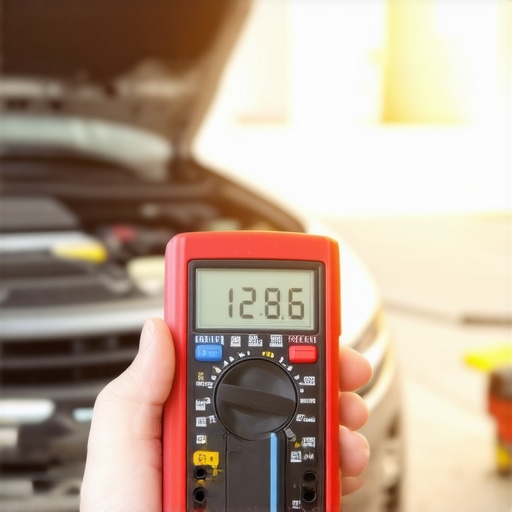
The Multimeter Is Your Secret Weapon Against Electrical Chaos
Electrical issues are the leading cause of ‘phantom’ problems that make people sell perfectly good cars. I always keep a high-quality digital multimeter in my trunk. Why? Because you can’t always trust a dashboard gauge. For instance, the ground wire problem that mimics a bad starter motor can make you spend $200 on a part you don’t need. If you know how to find a parasitic battery drain with a basic multimeter, you can solve the mystery of why your car won’t start after a cold night without just blindly buying a new battery every year. Before you assume the worst and learn how to tell if your car starter is going bad, always check the voltage drop across your battery cables first.
How do I keep my high-mileage engine healthy for another decade?
The secret isn’t a ‘magic’ oil additive; it is consistency and data-driven decisions. Following essential auto repair strategies for frequent drivers means performing fluid analysis once a year. I’ve seen 200,000-mile engines that look brand new inside because the owner performed a transmission drain-and-fill every 30,000 miles instead of waiting for a ‘lifetime fluid’ to fail. According to technical documentation in the Bosch Automotive Handbook, mechanical components rarely fail instantly; they degrade over thousands of duty cycles, usually due to contaminated lubricants or heat stress. Looking forward, the trend is moving toward ‘predictive maintenance’ where your car’s onboard telematics will warn you of a failure before it even happens. For now, you are the telematics. I strongly encourage you to grab a multimeter this weekend and perform a simple voltage test on your battery—it’s the easiest way to start thinking like a real technician.
Hard Truths About Keeping Your High-Mileage Engine Alive
Over the years, I’ve realized that the biggest enemy of a long-lasting car isn’t high mileage; it’s a lack of curiosity. I’ve seen engines hit 300,000 miles on “bad” luck and others fail at 60,000 because of “good” neglect. One major lightbulb moment for me was realizing the truth about using cheap aftermarket sensors in your engine; those twenty-dollar knock-offs often send slightly off-kilter data to your car’s computer, causing poor fuel economy for months before they finally die. Another lesson? Don’t fall for brake service myths that tell you to wait for a squeal to check your rotors. By the time you hear it, the damage is already done. Lastly, remember that auto repair hacks to save money without sacrificing quality are only useful if you actually apply them consistently. Consistency beats intensity every single time in the world of maintenance.
The Kit Every Driver Actually Needs in the Trunk
If you want to stop feeling helpless when a light flashes on the dash, you need more than a spare tire. I personally trust three main sources of truth: a high-quality bidirectional scanner for decoding vehicle diagnostics, a digital multimeter for electrical gremlins, and the actual factory service manual for your specific year and model. Most people rely on YouTube, but a manual gives you the exact torque specs that prevent you from snapping bolts. I also swear by keeping a small bottle of soapy water in the car—it sounds silly until you need to find a slow leak in a tire on a rainy Tuesday night. These tools aren’t just about fixing things; they are about the peace of mind that comes from knowing exactly what is happening with your machine. [IMAGE_PLACEHOLDER_E]
Claim Your Power Over the Machine
Automotive maintenance shouldn’t feel like a series of expensive surprises. When you shift your mindset from being a passive driver to an active caretaker, the entire experience changes. You start to hear the small changes in engine tone and feel the subtle vibrations in the pedal before they turn into a three-thousand-dollar nightmare. By mastering how advanced vehicle diagnostics prevent costly breakdowns, you are taking back control of your finances and your safety. Modern auto repair doesn’t require you to be a master mechanic; it just requires you to be observant and willing to learn. You’ve got the knowledge now—it’s time to go out there and pop the hood with confidence.
Have you ever had a simple diagnostic tool save you from a massive repair bill? Let me know in the comments below!