
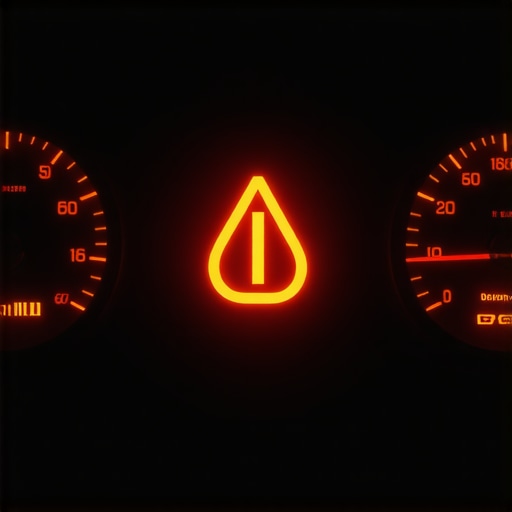
I was sitting at a stoplight, the rain drumming on my roof, when that dreaded red oil can icon started its rhythmic dance on my dashboard. My stomach did a somersault. I had just changed the oil on my beloved high-mileage SUV not even twenty-four hours prior. At first, I panicked, thinking my oil pump had finally decided to retire early. I pulled over, checked the dipstick—the level was perfect. That’s when it hit me: I had grabbed a cheap, generic orange-can filter from the local big-box store instead of my usual high-flow brand because I was in a hurry. I thought, “Hey, it’s just a filter, right?” Wrong.
The Hidden Way a Cheap Filter Starves Your Engine
I learned the hard way that not all filters are created equal, and sometimes, saving five bucks is the most expensive mistake you can make. The culprit is usually a combination of poor internal construction and a bypass valve that doesn’t meet OEM specifications. When you see that light flicker, especially when idling, it is often because the filter is literally restricting the flow or failing to hold pressure. It is a classic symptom of using low-quality aftermarket parts that don’t play nice with your engine’s oiling system. I remember a few years back, I made the same rookie mistake with a different car, and it led to that terrifying tapping noise at startup because the anti-drainback valve was basically useless. This is a common issue with brands that use cardboard end-caps instead of metal, which can warp under the heat and pressure of modern engines. If your filter isn’t sealing internally, you aren’t just getting dirty oil—you are getting low oil pressure. I felt like such a novice; I have been working on cars for decades, and yet I let a shiny marketing label trick me into a subpar choice. It is like buying the cheapest possible brakes; you just do not do it if you value your vehicle’s longevity.
Are budget filters actually worth the risk?
Many people think a filter is just a metal can with some paper inside, but that is far from the truth. According to technical research papers from SAE International, oil filter bypass valves must be precisely calibrated to open only when the pressure differential is too high, ensuring the engine is not starved. Cheap brands often use weak springs that open too early or, worse, stay stuck, which can trigger sensors and cause that light to flash like a Christmas tree. It is a specialized kind of auto repair hack that actually ends up costing you more in the long run. If you are seeing a light, you need to learn how to tell if your oil filter is actually doing its job before you do permanent damage to your bearings. Have you ever noticed your oil light acting up right after a fresh service? It might not be your engine failing—it might just be the four-dollar canister you just screwed on. Today, we are going to identify exactly which brands are notorious for this and how decoding your vehicle diagnostics can help you differentiate between a filter issue and a failing oil pump. This is not just about brand loyalty; it is about making sure your engine gets the life-blood it needs to reach that three-hundred-thousand-mile milestone.
Identify Whether Your Filter is Starving the Engine
When your oil light flickers, you need to determine if the issue is a mechanical failure within the pump or a flow restriction caused by the filter itself. Start by decoding vehicle diagnostics using a mechanical oil pressure gauge rather than relying solely on the dashboard sensor. I once spent an entire Saturday afternoon tearing down a valve cover because I assumed my lifters were shot, only to realize the oil pressure switch was getting a false reading because of a collapsed filter element. If you attach a mechanical gauge to the pressure port and the readings are within five PSI of the factory spec, your pump is fine; the filter is the bottleneck. High-quality filters use synthetic blend media that maintains its structure under high heat, whereas the cheap ‘bargain bin’ options use thin cellulose that can literally fold over itself, blocking the oil passages.
The Simple Filter Swap Diagnostic
Before you drop the oil pan, try the most basic of essential auto repair strategies for frequent drivers: swap the filter. It sounds too simple to work, but it is the most effective way to isolate the variable. Drain about half a quart of oil, spin off the suspect filter, and install a premium-tier version from a reputable manufacturer. If the light vanishes and your idle pressure stabilizes, you have your answer. I recall a specific instance with a neighbor’s 2012 Accord that was throwing a low-pressure code. He was convinced he needed a three-thousand-dollar engine replacement. We swapped his three-dollar filter for a high-flow synthetic version, and that car is still on the road today with 240,000 miles.
Verify the Anti-Drainback Valve Function
A major red flag for a failing filter is why your engine makes a tapping noise only at startup. This happens because a low-quality anti-drainback valve—usually made of cheap nitrile instead of silicone—hardens and allows oil to drain out of the upper engine into the pan overnight. When you start the car, the pump has to fill the filter before it reaches the bearings, leaving your engine dry for those first critical seconds. 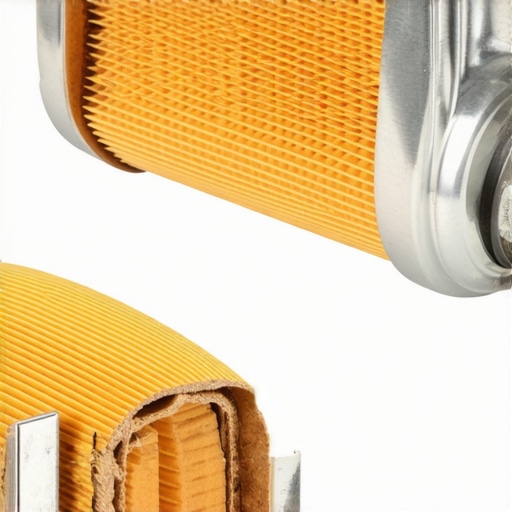
Avoid Common Installation Blunders
Sometimes the filter isn’t the problem, but the way it was installed is. When you perform an oil change, you must ensure the old gasket didn’t stick to the engine block. This ‘double-gasking’ will cause a massive pressure drop and a mess in your driveway. Furthermore, you must understand why you should never skip the crush washer on your drain plug. A small leak at the plug or the filter base can introduce air into the system, leading to cavitation. This aeration makes the oil pump work harder and can cause the pressure sensor to trip. This is similar to the issues seen with the truth about using cheap aftermarket sensors in your engine, where the component simply cannot handle the operating environment of a high-performance or high-mileage vehicle. Always lubricate the new filter gasket with a finger-full of fresh oil to ensure a perfect seal that won’t bind when you torque it down.
Stop Falling for the Synthetic Magic Bullet
Most people think that switching to a full synthetic is a ‘fix-all’ for a noisy engine, but that is one of the biggest synthetic oil myths circulating in garages today. While synthetic lubricants offer superior thermal stability, they are not a mechanic in a bottle. In fact, if your internal clearances are already out of spec, the thinner base stock of certain high-performance synthetics might actually make the clicking sound coming from your engine at low speeds even more pronounced. I have seen countless enthusiasts dump forty dollars of premium oil into a dying motor hoping for a miracle, only to find that the reason your engine consumes oil without a visible leak is actually a mechanical failure like worn valve guides or a clogged PCV system—issues that no amount of fancy lubrication can resolve. You have to stop treating oil as a repair and start treating it as a component of a larger system.
Why your choice of viscosity is actually a software decision
In modern engines equipped with variable valve timing (VVT), the oil acts as much as a hydraulic fluid as it does a lubricant. If you decide to go ‘old school’ and use a 10W-40 when the manufacturer calls for 0W-20, you are effectively slowing down the hydraulic response of the cam phasers. This lag often triggers a P0011 or P0012 code, and suddenly you are decoding vehicle diagnostics for a timing error that was entirely self-inflicted. According to technical standards from the Society of Automotive Engineers (SAE) J300, even a slight deviation in the viscosity index can prevent VVT solenoids from functioning within their millisecond-level window. This isn’t just about engine wear; it is about keeping the engine’s computer happy.

The dangerous trap of thick oil stabilizers
One major ‘Oops’ factor I see among DIYers is the reliance on honey-thick oil stabilizers to stop minor leaks. While they might quiet a rattle for a week, these additives can be a death sentence for high-mileage engines. These thickeners can clog the microscopic screens found in oil control valves, leading to the very starvation issues we discussed earlier. It is much better to follow top auto repair tips to extend your vehicles lifespan by sticking to the factory-recommended weight and focusing on the health of your filtration. Using a thick stabilizer to stop a leak is a classic example of auto repair hacks that trade long-term reliability for a temporary quiet. You are essentially trading a gasket leak for a potential bearing failure. Have you ever fallen into this trap where you thought a thicker oil or a fancy additive would fix a mechanical rattle? Let me know in the comments below.
Stop Guessing and Start Using Pro-Grade Tools
I finally stopped throwing parts at my cars when I invested in a bi-directional scan tool. For years, I used those cheap ten-dollar dongles that just read codes, but decoding vehicle diagnostics goes way beyond reading a P0420 code. A professional tool like the Autel MaxiCOM or an Innova pro-series allows me to manually trigger the ABS pump during a brake service to bleed air out of the internal modules—something you simply cannot do with a standard wrench. It is the difference between a spongy brake pedal and a firm, reliable stop. When I am chasing an intermittent misfire, I do not just look for a code; I look at the live fuel trim data. If your long-term fuel trims are over 10 percent, you have a vacuum leak or a fuel delivery issue, even if the light is not on yet. This level of insight is why I consider a high-end scanner the most important investment for any driveway mechanic.

How do I keep my car running like new for decades?
The secret is not just changing the oil; it is monitoring the chemical health of your engine. I have made it a habit to send my used oil samples to Blackstone Laboratories for a professional spectral analysis. They can detect parts-per-million of copper, lead, or tin, which tells you your rod bearings are wearing down before they ever start making that clicking sound at low speeds. This data-driven approach is one of the most essential auto repair strategies for frequent drivers. By spending thirty dollars on a lab report, you can identify if your engine oil is disappearing because of a piston ring issue or a simple failure in the PCV system. This precision is exactly how advanced vehicle diagnostics prevent costly breakdowns by catching failures months before they leave you stranded on the shoulder.
Predictive maintenance is the next frontier
Looking ahead, I see the DIY world shifting toward AI-integrated telematics. We are moving away from reactive repairs and into a world where your smartphone will alert you that your alternator is overcharging the battery before you smell the sulfur. Oil change innovations, such as on-board sensors that measure the dielectric constant of the lubricant in real-time, are becoming standard in many imports and will soon hit the domestic market. To stay ahead, I highly recommend you start keeping a digital log of every repair and diagnostic session. Use a dedicated app to track everything from your last brake fluid flush to the specific torque specs you used on your wheel bearings. This data becomes your vehicle’s medical record, and it is the only way to achieve top auto repair results that actually hold up over time. My advice? Grab a scanner and a notebook today and start documenting the health of your ride—do not wait for the dashboard to start flashing like a Christmas tree.
Hard Truths About Maintaining High-Mileage Engines
After decades of getting my knuckles bloody, I have realized that the cheap parts tax is the most expensive bill you will ever pay. It usually starts with a four-dollar filter and ends with a tow truck because that budget canister could not handle the cold-start pressure. I have also learned that your ears are your best diagnostic tool, but they need data to back them up. If you hear a noise, do not just guess; use decoding vehicle diagnostics to confirm the source before you start unbolting expensive components. Lastly, remember that preventative maintenance is a marathon, not a sprint. Consistency with high-quality fluids is what keeps an engine healthy past the 200,000-mile mark. One of the most effective auto repair hacks is simply buying the right part the first time.
#IMAGE_PLACEHOLDER_E#
The Gear That Lives in My Tool Chest
I do not believe in buying tools just to have them, but these three items have saved me thousands of dollars over the years. First, a mechanical oil pressure gauge is essential for verifying if your pump is actually failing or if your dashboard sensor is simply lying to you. Second, I swear by spectral oil analysis from professional labs; it is one of the most essential auto repair strategies for frequent drivers to catch bearing wear months before it becomes a catastrophe. Finally, invest in a bi-directional scanner that shows live data streams. These tools transform you from a simple parts-changer into a true diagnostic technician who can solve problems without the guesswork.
Build a Better Bond With Your Car
Do not let a flashing dashboard light or a strange rattle intimidate you into thinking your car is a lost cause. Every time you perform a high-quality oil change or swap out a faulty sensor yourself, you are taking direct control of your vehicle’s longevity. Use these top auto repair tips to extend your vehicles lifespan to turn your driveway into a pro-grade shop. You have the knowledge and the diagnostic mindset now; it is time to put it to work and keep your ride on the road for the long haul. Have you ever been surprised by how much a simple part like an oil filter changed your engine’s performance or noise level? Let me know your stories in the comments below!