
I still remember the cold November morning when my old sedan started making a sound like a garbage disposal full of spoons every time I pulled out of my driveway. My heart sank. I immediately assumed my power steering pump was Toast. I spent $150 on a new one, spent four hours in the freezing rain swapping it out, and you know what happened? The noise didn’t go away. I had completely misdiagnosed the problem because I fell for the most common myth in auto repair. That was the day I realized that decoding vehicle diagnostics is about listening to the character of the noise, not just the location. Today, I am going to save you from that same headache by showing you exactly what is causing that metallic protest from your front end.
Stop Blaming the Power Steering for Everything
It is the easiest thing to point a finger at, right? You turn the wheel, you hear a noise, so it must be the steering system. But if your fluid is topped off and you aren’t hearing a high-pitched whine, your pump is probably fine. Most of the time, that deep, gut-wrenching grind is actually coming from your wheel bearings or your CV joints. According to a recent advisory from the NHTSA, ignoring suspension and drivetrain noises is one of the leading causes of preventable roadside breakdowns. This isn’t just about a pesky sound; it is about keeping your wheels literally attached to your car. If you have been ignoring a “click” that turned into a “crunch,” you might be closer to a major failure than you think. Have you ever felt a vibration in your feet while this noise is happening? Drop a comment and let me know—I am curious if your symptoms match my first big mechanical fail.
Is this fix actually worth the effort?
You might be sitting there thinking that drive axles and bearings are only for the pros. I used to think the same thing until I realize that most of these parts are held on by just a few bolts. If you can handle a basic oil change, you can likely handle a wheel bearing hub. The fear of the unknown is usually more expensive than the actual repair bill.
Watch Out for the CV Joint Trap
One of the biggest mistakes I made early on was ignoring a torn rubber boot on my axle. I thought it was just a cosmetic issue. Little did I know, that tiny tear was letting all the grease out and letting all the road salt in. Within a month, I wasn’t just hearing a grind; I was hearing a rhythmic snapping sound every time I accelerated through a corner. This is why learning how to identify a bad CV joint early is a total game changer for your wallet. If the noise changes when you shift weight—like when you’re turning left versus right—you are almost certainly dealing with a bearing or an axle issue rather than a pump problem. By catching it now, you avoid the much scarier scenario of your wheel seizing up while you are doing 65 on the highway. We are going to dive into the exact steps to pinpoint the culprit without spending a dime at a shop.You don’t need a PhD in mechanical engineering to figure this out, but you do need to stop guessing. The first thing I do when a car comes in with a front-end groan is the ‘Sway Test.’ Find a safe, empty road where you can safely weave slightly within your lane. Think of your car like a boat; when you turn, the weight shifts to the ‘outside’ wheels. If the noise gets louder when you steer left, you are putting weight on the right side. If the noise increases, that right-side wheel bearing is the most likely candidate. I remember a buddy of mine who swore he had a transmission issue because of a vibration at 65 mph, but five minutes of swaying proved it was just a dry bearing.
The Weight Shift Trick for Bearings
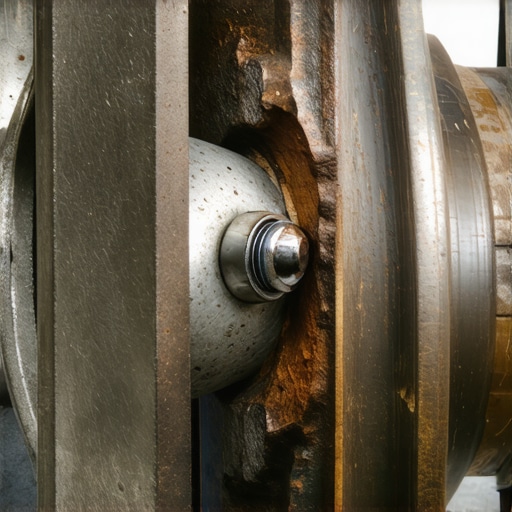
A wheel bearing is basically a set of metal balls in a race. When they lose lubrication, they grind. By shifting the car’s weight, you are literally pressing those metal balls harder into the race. If the sound changes frequency or volume based on which way you are turning, you can almost guarantee it’s a bearing. This is one of the most effective checks before a road trip because it requires zero tools.
Catch a Bad CV Joint in the Driveway
Now, if the noise is more of a ‘click’ than a ‘growl,’ we are looking at the CV axle. CV joints are like your elbows; they allow the wheels to turn while still receiving power. The easiest way to spot a failure is to look for ‘black butter’—that thick, nasty grease that sprays all over the inside of your wheel when the rubber boot tears. If you see grease on the rim, stop what you’re doing. Knowing how to identify a bad CV joint before it snaps is the difference between a $100 part and a $500 tow bill.
The Hands-On Shake Test
If the road test is inconclusive, it’s time to get dirty. Jack up the front end of the car (use jack stands, please—I’ve seen a car fall, and it isn’t pretty). Grab the tire at the very top and very bottom and try to rock it back and forth. It should be rock solid. If it wiggles, your bearing is gone. While you are there, it is the perfect time to use the simple way to check your ball joints with a pry bar to ensure the rest of your suspension isn’t the real cause of the wobbling. #IMAGE_PLACE_HOLDER_B# I once spent an entire Saturday chasing a rattling sound that I thought was a wheel bearing, only to find out a heat shield had rusted loose. It taught me that top auto repair tips always start with a thorough visual inspection before you ever pick up a wrench. Don’t be the person who replaces an entire axle when a $5 plastic clip or a loose bolt was the real culprit. Look for shiny spots where metal is rubbing, or boots that look like they’ve exploded. Physical evidence doesn’t lie, even when your ears do.
You’ve probably heard the advice that a $20 code reader is all you need to beat the mechanics at their own game. While I love a good shortcut, this is one of the most dangerous myths in the DIY community.
Stop Trusting Your OBD-II Scanner Blindly
Most people think that if the scanner says P0300 (misfire), they should immediately go out and buy new spark plugs. But in my years under the hood, I’ve seen that same code triggered by everything from a vacuum leak to a clogged fuel injector. Decoding vehicle diagnostics isn’t about reading a screen; it’s about understanding the system. If you just throw parts at a code, you are playing an expensive game of ‘guess and check.’ According to ASE (Automotive Service Excellence), a diagnostic code is merely a starting point that identifies a circuit or system malfunction, not the specific component that failed. If you aren’t decoding vehicle diagnostics by checking the wiring and connectors first, you are likely wasting money on parts you don’t need.
Why Do My New Brake Pads Still Squeak?
This is the question that drives most weekend warriors crazy. You spent the afternoon on a brake service, followed all the YouTube tutorials, and yet, three days later, they sound like a dying bird. The nuance most people miss is the caliper slide pins. If those pins are bone dry or seized, your brand new pads won’t retract properly, causing heat build-up and glazing. This is a classic case where why your brand new brake pads are already squealing has nothing to do with the pads themselves and everything to do with the hardware. Always use high-temp silicone grease on those pins; it’s the difference between a silent stop and an embarrassing screech at every red light.
Synthetic Oil Won’t Kill Your High-Mileage Engine
I frequently hear ‘old-school’ mechanics claim that switching to synthetic oil in an engine with 150,000 miles will cause it to start leaking like a sieve. This is a total ‘oops’ factor that scares people away from better protection. The truth is, synthetic oil doesn’t create leaks; it simply cleans out the sludge that was plugging an existing hole. If your seals are healthy, the truth about synthetic oil vs conventional in older high-mileage cars is that the superior lubrication will actually extend your engine’s life, not shorten it.  Modern oil technology has evolved past the limitations of the 1980s, and staying stuck in that mindset is a surefire way to leave performance on the table. Have you ever fallen into this trap where a simple fix turned into a parts-cannon nightmare? Let me know in the comments—I’d love to hear your diagnostic ‘war stories.’
If you really want to stop guessing and start fixing, you need to upgrade from a basic code reader to a bi-directional scan tool. While a cheap reader only tells you what the computer sees, a bi-directional tool lets you talk back. I use mine to manually trigger the fuel pump or pulse the ABS valves during a brake service to ensure every bit of air is purged. It is one of those auto repair hacks that turns a three-hour struggle into a twenty-minute win. According to technical standards from SAE International, specifically the J1979 protocol, the ability to perform active component testing is what separates a parts-changer from a true technician. If you cannot command a radiator fan to turn on through the software, you are just hoping the sensor is the problem rather than actually proving it.
The Maintenance Schedule the Dealers Do Not Mention
Dealers love to sell you lifetime transmission fluid. But if you talk to any high-mileage specialist, they will tell you that lifetime usually just means until the warranty expires. I personally change my differential and transfer case fluids every 50,000 miles, regardless of what the glossy brochure says. This level of essential auto repair is what keeps a car feeling tight and responsive long after the odometer hits six figures. When you neglect these forgotten fluids, you are not saving money; you are just deferring a massive bill for a new transmission or gear set.
How do I keep my car running for 300,000 miles?
It comes down to consistency and the quality of your consumables. Do not just grab the cheapest filter on the shelf; use the ones with synthetic media that actually trap the microscopic particles that wear down your engine bearings. I have seen engines that were pristine inside at 250,000 miles because the owner stayed obsessed with top auto repair tips like regular coolant flushes. This prevents electrolysis, a silent killer that eats through head gaskets and aluminum components from the inside out.  Looking ahead, I predict that remote diagnostics will become the norm for DIYers. We are quickly moving toward a world where your phone will alert you to a failing alternator before you ever notice your headlights dim. This predictive technology will turn repairing into preventing. Getting comfortable with advanced vehicle diagnostics now is the best way to future-proof your skills as a home mechanic. My challenge for you this weekend is to go beyond the hood: find your vehicle’s factory service manual (not just the owner’s manual) and look up the Severe Service intervals. Most of us drive in severe conditions—short trips, stop-and-go traffic, or extreme heat—and following that schedule is the single most important thing you can do to avoid the scrap yard. Take five minutes to audit your last three years of maintenance; if you have not touched your brake fluid or coolant, you have got work to do.
The Day I Finally Stopped Firing the Parts Cannon
I spent years thinking every ‘check engine’ light meant a sensor was toast. The real lightbulb moment was when I realized sensors are usually just the messenger. If you want to master auto repair, you have to look at what is making the sensor angry. Sometimes it is just a loose ground or a tiny vacuum leak you can find by learning how to find a vacuum leak with a cigar and a piece of hose. My biggest takeaway? Never buy a part until you have tested the circuit. It takes ten extra minutes with a multimeter, but it saves you hundreds of dollars in ‘oops’ purchases. Most people fail because they rush the diagnostic phase; the pros succeed because they treat it like a crime scene investigation.
Gear That Actually Makes a Difference
If you are serious about how advanced vehicle diagnostics prevent costly breakdowns, I recommend three things that changed the game for me. First, get a quality long-handled pry bar—it is the best tool for checking suspension health without guessing. Second, a magnetic bolt tray is worth its weight in gold because losing one subframe bolt can turn a two-hour job into a two-day nightmare. Third, I always keep a bottle of high-temp silicone grease handy. Using it on every brake job is one of those auto repair hacks that prevents the squealing that drives everyone crazy. These tools do not just make the job easier; they make the results professional.
Your Garage Is Ready for You
You do not need a professional shop to keep your car in top shape. By staying ahead of essential auto repair strategies for frequent drivers, you are not just saving money; you are gaining the confidence that your vehicle won’t let you down in the middle of a rainstorm. Start with one small check this weekend and see how much better it feels to know exactly what is happening under your hood. The future of your car is in your hands, not the mechanic’s. What is the weirdest sound your car has ever made that turned out to be a simple fix? Let me know in the comments!