
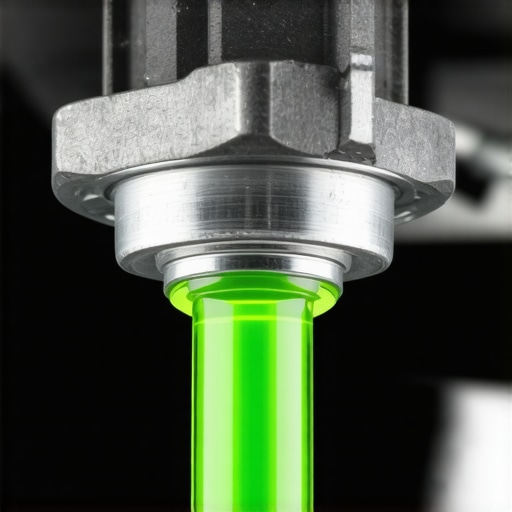
I remember sitting on my oil-stained driveway, staring at a thermometer that was climbing way too fast for a car that just had ‘fresh’ coolant. I had done everything by the book—or so I thought. I opened the radiator petcock, let the old green fluid drain, and poured in the new stuff. I felt like a pro. But two days later, that familiar sweet smell of hot antifreeze returned. I had fallen for the classic DIY trap. I only drained the radiator, leaving nearly 50% of the old, degraded coolant trapped deep inside the engine block. This wasn’t just a minor oversight; it was an invitation for corrosion to eat my water pump from the inside out. If you’ve ever wondered the reason your coolant reservoir is bubbling after a drive, even after a service, you might be dealing with the exact same mistake I made. Today, I’m going to show you where that secret plug lives so you can stop doing half-way repairs and actually protect your engine. I’ve spent years refining auto repair hacks to save money, and this one is the biggest game-changer for cooling system longevity.
Stop Leaving Dirty Fluid Inside Your Engine
You see, your radiator is just the heat exchanger; it isn’t the entire storage tank. A huge portion of your car’s coolant sits around the cylinders in the engine block’s water jackets. When you only drain from the bottom of the radiator, you’re basically taking a bath and only washing your feet. The old fluid remains, often thick with scale and depleted additives. I learned this the hard way when I realized why your engine temperature spikes at red lights despite a supposedly clean system. Most manufacturers design the system so that the thermostat and the internal casting hold onto that old fluid like a jealous hoarder. Finding the engine block drain plug is the only way to get a true 100% exchange. Have you ever felt like your DIY maintenance wasn’t actually making the car run better?
Does hunting for the block plug actually matter?
I know what you’re thinking because I thought it too: ‘Is it really worth the hassle of crawling under the car to find a tiny bolt that hasn’t been moved in a decade?’ The answer is a resounding yes. According to technical data from sources like AAA, leaving just 25% of old coolant can significantly lower the boiling point of your new mixture and accelerate the failure of your radiator hoses from the inside. It’s the difference between a cooling system that lasts 200,000 miles and one that leaves you stranded on the shoulder of the highway in July. We are going to dive into exactly how to locate these elusive plugs and the one trick I use to get them loose without snapping the head off.I remember working on an old 90s truck in a cramped garage. I had already drained the radiator, but I knew the block was still holding onto several quarts of brown sludge. I finally found the plug tucked behind the motor mount, reached in with a long extension, and gave it a firm yank. The sudden rush of hot, stagnant fluid caught me right in the chest before I could move the drain pan. It was a mess, but it proved the point: that fluid would have never left on its own. Most people think the radiator drain is the only exit door, but it is more like a side window. To get the basement empty, you need to find the engine block drain plug. On most V-type engines, you will find one on each side, usually near the freeze plugs. On inline engines, it is often hidden behind the exhaust manifold. If you are having trouble identifying these parts, learning how advanced vehicle diagnostics prevent costly breakdowns can help you understand your engine’s layout much better.
Locate the Hidden Plug Behind the Exhaust
Think of your engine block like a complex plumbing system in an old house. Just because you turned off the main valve does not mean the pipes are empty. To find the plug, you will need a high-lumen light and perhaps a telescoping mirror. It is usually a small, brass or steel bolt that looks slightly out of place among the larger mounting hardware. Finding this is one of those essential auto repair strategies for frequent drivers who want to avoid a cooling system nightmare on the side of the road. Once you spot it, do not just go at it with an impact wrench; these parts require a delicate touch.
Break the Bond Without Breaking the Bolt
These plugs have lived through thousands of heat cycles. They are often seized, crusty, and waiting to ruin your afternoon. I always use a 50/50 mix of acetone and ATF or a professional-grade penetrant. Let it soak for at least an hour. If you force it and the head snaps off, you are looking at a drilling and tapping job that will make you regret ever opening the hood. Check out the secret to removing a rusted bolt without snapping the head for my specific leverage technique. I always use a 6-point socket—never 12-point—to ensure I do not round the corners of the bolt. 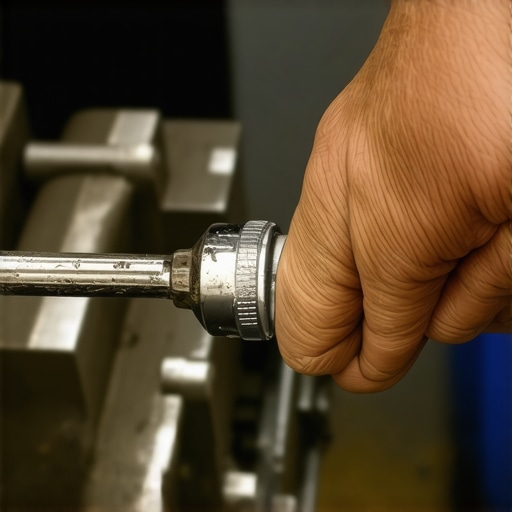
Flush the Remaining Sludge
When that plug finally cracks loose, be ready to move. Unlike the controlled stream of a radiator petcock, the block drain is often a high-pressure geyser at first. This is where the real top auto repair tips to extend your vehicles lifespan come into play: catch that fluid and inspect it. If the old coolant looks gritty or has metallic flakes, you are seeing the early warning signs of a failing water pump or internal block erosion. This level of care is the same you would apply to a brake service for safety and performance where every drop of old fluid matters for the integrity of the system.
Watch for the Air Pocket Trap
Once the block is empty and you have replaced the plug with a new gasket or appropriate thread sealant, you face the final hurdle: air. Air is the enemy of heat transfer. If you do not bleed the system correctly, you will end up wondering why your engine temperature spikes at red lights despite the new fluid. Using a spill-free funnel is my favorite hack. It allows the air to rise to the highest point and escape while the fresh coolant takes its place in the deep recesses of the water jackets.
Stop treating your OBD-II scanner like a grocery list. One of the biggest myths in the DIY community is that a diagnostic trouble code tells you exactly what part to buy. It doesn’t. It only tells you which circuit or system is operating outside of its expected parameters. For example, a code for a lean oxygen sensor often leads people to buy a new sensor, when the real culprit is a cracked vacuum hose or a leaking intake manifold gasket. When you start decoding vehicle diagnostics, you have to look at the data stream, not just the code. I have seen countless owners waste hundreds of dollars firing the ‘parts cannon’ at a problem that required a five-dollar piece of rubber hose. This is where how advanced vehicle diagnostics prevent costly breakdowns truly pays off; it is about finding the root cause, not just silencing the symptom.
Why does your new oil filter keep triggering the warning light?
You might think all oil filters are created equal as long as they fit the threads, but that is a dangerous assumption. Many modern engines rely on specific internal bypass valve pressures. I’ve diagnosed several cases where a generic, budget-brand filter caused a low-pressure warning because it couldn’t handle the flow rate required by the variable valve timing system. In fact, using the oil filter brand that causes low oil pressure lights can lead to catastrophic internal wear before you even realize there is a problem. According to a study by the National Institute for Automotive Service Excellence (ASE), nearly 30% of premature engine failures can be traced back to improper filtration or incorrect fluid specifications rather than actual mechanical defects. Have you ever fallen into this trap and replaced a part only to have the light come right back on? Let me know in the comments. 
The Critical Nuance of Modern Oil Changes
The old-school rule of thumb was ‘thicker is better’ for high-mileage engines. That is a trap in the era of tight tolerances. If your car calls for 0W-20, putting in 10W-30 to ‘stop a leak’ is a recipe for disaster. Heavy oil cannot reach the upper valvetrain quickly enough during a cold start, which is why your engine makes a tapping noise only after an oil change. Furthermore, if you notice why your engine oil level rises between oil changes, you aren’t gaining oil; you are likely dealing with fuel dilution, a serious issue that ruins the lubricating properties of your expensive synthetic blend. This level of detail is what separates a basic service from top auto repair tips to extend your vehicles lifespan.
Don’t Ignore the Squeal After a Brake Job
Lastly, let’s talk about the ‘half-way’ brake job. Simply slapping new pads onto old, glazed rotors is a mistake I see every weekend. Most people wonder why your brand new brake pads are already squealing, and the answer is usually a failure to properly clean the hub surface or lubricate the slide pins. In the ultimate guide to brake service for safety and performance, the focus isn’t just on the friction material, but the hardware that allows the caliper to move freely. If those pins seize, your new pads will wear unevenly in weeks. Using the truth about using cheap aftermarket sensors also applies here—cheap brake hardware kits often lose their tension under heat, leading to that annoying rattle you can’t seem to shake. True expertise comes from realizing that every component in a system relies on the integrity of the parts surrounding it.
Stop Guessing and Start Measuring with Better Gear
I used to think my basic socket set and a twenty-dollar code reader were all I needed to be a ‘master’ of my own garage. I was wrong. If you want to move beyond basic part-swapping and actually master how advanced vehicle diagnostics prevent costly breakdowns, you have to invest in tools that provide real-time data. I finally bit the bullet and bought a bi-directional scan tool. Unlike the cheap ones that just clear codes, this allows me to command the car’s computer to test individual components, like turning on a fuel pump or cycling an ABS solenoid. It is the only way to truly succeed at decoding vehicle diagnostics without wasting money on ‘maybe’ fixes. According to the Society of Automotive Engineers (SAE) International standard J1979, the diagnostic data stream provides much more than just error codes; it offers real-time fuel trim and timing data that is essential for catching failures before they trigger a light. This is one of those auto repair hacks to save money because it stops you from buying parts you don’t need.
How do I maintain my car’s complex systems over time?
The secret isn’t just fixing what breaks; it’s about a proactive rotation of deep maintenance tasks that most people ignore. While everyone remembers the 3,000-mile interval, very few people consider oil change innovations like magnetic drain plugs or bypass filtration systems that keep your oil pristine for longer. To keep a car for 300,000 miles, you need to be looking at the things that don’t have a sensor—like the grease in your slide pins or the acidity level of your brake fluid. In the ultimate guide to brake service for safety and performance, I always emphasize that flushing the fluid is more important than changing the pads. If you use a simple copper-strip test on your fluid, you can see the internal corrosion before it kills your master cylinder. These top auto repair tips to extend your vehicles lifespan are what separate a ‘beater’ from a reliable daily driver.

The Digital Shift in Your Driveway
Looking ahead, the DIY world is moving away from just wrenches and toward software. We are entering an era where ‘coding’ a new battery to the alternator or calibrating a steering angle sensor is just as common as an oil change. I predict that within the next five years, the most valuable tool in your box won’t be a torque wrench, but a laptop with a pass-thru interface. This transition is already happening with brake service myths busted by the need for electronic parking brake retraction modes. If you aren’t prepared for this shift, you’ll be locked out of your own car’s maintenance. I highly recommend performing a ‘health check’ using vehicle diagnostics explained for road trips at least twice a year. Don’t wait for a light; look at your live data while the car is running perfectly so you know what ‘normal’ actually looks like. I want you to try this one advanced tip: next time you change your oil, take a sample and send it to a lab for an oil analysis. It’s like a blood test for your engine and will tell you exactly how much life is left in your bearings before they even start to make a sound.
Hard-Earned Truths from a Decade Under the Hood
It’s easy to get discouraged when a repair doesn’t go perfectly, but those moments are where the real learning happens. I spent years thinking I was saving money by skipping the ‘extra’ steps, only to realize that doing it right the first time is the only true way to practice auto repair hacks to save money. One major ‘lightbulb’ moment for me was realizing that a diagnostic tool is a guide, not a dictator. If I had spent more time decoding vehicle diagnostics instead of just swapping parts, I would have saved thousands. Another lesson? Never trust a ‘clean’ looking fluid. Chemical degradation is invisible to the naked eye until it’s already caused damage to your seals and gaskets.
The Gear That Changed Everything for My Garage
I don’t believe in buying every shiny new tool, but a few specific items have paid for themselves ten times over. First, a high-quality bi-directional scan tool is non-negotiable for anyone serious about how advanced vehicle diagnostics prevent costly breakdowns. It moves you from guessing to knowing. Second, I swear by Blackstone Labs for oil analysis; it’s the only way to see if your oil change innovations are actually working. Finally, for those performing a brake service for safety and performance, a pressure bleeder is a game-changer that makes a two-person job a solo breeze.
Take Back Control of Your Car’s Health
You don’t need a degree in mechanical engineering to keep your vehicle running perfectly; you just need the willingness to look deeper than the surface. Whether you are hunting down a hidden drain plug or finally tackling that brake job, the confidence you gain by doing it yourself is priceless. Your car is a complex machine, but it’s one you can master with patience and the right top auto repair tips to extend your vehicles lifespan. Don’t be afraid to get your hands dirty—it’s the best way to ensure your ride stays reliable for the long haul.
#IMAGE_PLACE_HOLDER_E#
What was the one repair that almost made you give up on DIY maintenance? Let me know in the comments below, and let’s troubleshoot it together!