
I remember pulling into my driveway after a crisp weekend trip to the mountains, feeling like a pro for keeping my high-mileage sedan in such good shape. The next morning, I pulled the dipstick just to be safe, and my heart sank. It was bone dry. I scrambled underneath the car with a flashlight, expecting to see a shimmering puddle of black gold, but the pavement was spotless. My garage floor was as dry as a desert. It is a haunting feeling when your car is essentially drinking its own lifeblood behind your back. You start wondering if you missed a major sign during your last oil change or if the engine is simply on its last legs. It’s frustrating, confusing, and honestly, a bit spooky.
The Phantom Oil Thief Living Under Your Hood
If you are staring at a clean driveway but a low dipstick, you aren’t crazy. Your engine is consuming oil internally, meaning it’s being burnt off in the combustion chamber or escaping through the exhaust system before it ever has a chance to hit the ground. Years ago, I made the amateur mistake of replacing my entire oil pan gasket because I was convinced the oil had to be leaking out somewhere. I spent a whole Saturday covered in grease, only to find the oil level still dropping a week later. Talk about a blow to the ego. That’s why advanced vehicle diagnostics are so vital; they stop you from throwing parts at a problem you haven’t actually identified yet. Today, we are going to dive into the specific mechanical gremlins—like stuck PCV valves and worn valve seals—that cause this disappearing act, and I’ll show you how to spot the signs before they lead to a total meltdown.
Is my engine actually dying or is this just a cheap fix?
This is the big fear, isn’t it? We assume that disappearing oil means the piston rings are fried and the car is destined for the scrap heap. While that is a possibility, many people are shocked to find out it’s often a $20 plastic valve or a simple change in oil viscosity that solves the issue. According to a study by Consumer Reports, some modern engines are even designed to consume a small amount of oil between service intervals, though “normal” is a very subjective term in the mechanic world. Before you panic, you need to know if you’re dealing with a maintenance hiccup or a structural failure. Have you ever checked your oil only to find it’s vanished without a single drop on the ground? It’s a common headache, especially when you’re trying to figure out the truth about synthetic oil vs. conventional in your older ride. We are going to look at the ‘why’ behind this mystery right now, so you can stop carrying a quart of oil in your trunk like a security blanket. If you’ve been noticing a weird scent along with the disappearing oil, it might be time to check if your car smells like sweet syrup or something more burnt, as these clues are the breadcrumbs leading to the solution.
Stop the Vacuum Effect at the PCV Valve
Start by inspecting the Positive Crankcase Ventilation (PCV) valve, which is basically your engine’s way of breathing. Think of it like a straw with a tiny check-ball inside. If that ball gets stuck open, the engine’s vacuum starts drinking oil like a toddler with a juice box. I remember a buddy of mine once traded in a perfectly good SUV because he thought the engine was ‘cooked’—it was burning a quart every 400 miles. I bought it off him for peanuts, swapped a $15 PCV valve, and it never burned a drop again. It is one of those top auto repair tips to extend your vehicles lifespan that most people overlook because the part is so small and plastic. 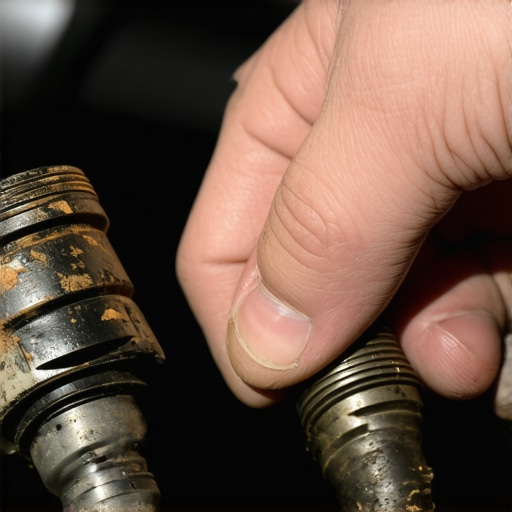 If you see oil in your intake snorkel or a film of grease near the throttle body, you have likely found your thief.
Watch for Blue Smoke at Startup
Next, you need to watch for blue smoke at startup. This usually points to worn valve seals. Imagine these seals as tiny squeegees that keep oil from sliding down the valve stems and into the combustion chamber. When they get brittle, oil seeps past while the car is sitting. When you turn the key, that pooled oil burns off in a puff of cerulean mist. Knowing the blue smoke from your exhaust and what it costs to fix can save you from a major headache. If the smoke disappears after the engine warms up, your seals are likely the culprit, rather than the more expensive piston rings. This is a common issue that mimics a total engine failure but is often just a matter of aging rubber.
Switch to a High-Mileage Oil Blend
Do not ignore the thickness of the oil you are using. As engines age, the tolerances between moving parts widen. If you are still using a super-thin 0W-20 in an engine with 200,000 miles, that oil is basically water; it will slip past seals that it should not. This is where the truth about synthetic oil vs. conventional becomes crucial for older vehicles. Switching to a slightly thicker high-mileage blend with seal conditioners can often ‘swell’ those old gaskets just enough to stop the consumption. It is a much cheaper alternative to a full rebuild and can buy you several more years of driving without needing to carry a case of oil in the trunk.
Test Your Compression Before Panicking
Finally, perform a dry and wet compression test to check your piston rings. If the rings are worn or ‘stuck’ from carbon deposits, oil is not being scraped off the cylinder walls properly. Use a gauge to see if your cylinders are holding pressure. If the numbers are low, decoding vehicle diagnostics through a simple pressure tool can confirm if the engine is truly tired. I once had a cylinder show 90 PSI dry, but it jumped to 130 PSI after I squirted a little oil in the spark plug hole. That is the classic sign that the rings are the problem. Always verify this before you wonder how to tell if your mechanic actually changed the oil or performed the job correctly, as internal wear is rarely the fault of the technician.
Once you have ruled out the rings with a compression test, you are left with the most frustrating part of the puzzle: the nuances of modern engine design. Most people assume that any oil loss is a sign of a mechanical failure, but there is a contrarian reality in the automotive world. Many manufacturers now claim that consuming a quart of oil every 1,000 to 1,500 miles is ‘within spec.’ I personally find that ridiculous, but it highlights a shift in how engines are built. Modern cars often use ‘low-tension’ piston rings to reduce friction and improve fuel economy. While this helps your MPG, it also means the seal isn’t as tight as it was in the cast-iron blocks of the 90s. According to research published by SAE International, these high-efficiency designs are more prone to oil vapor escaping into the intake system, especially under high load. This is why you might see your oil level drop during a road trip even if your oil change was performed perfectly. It is not necessarily a ‘broken’ engine; it is a trade-off for efficiency that requires more frequent monitoring.
Why does the oil vanish faster during long highway sprints?
I get this question from advanced DIYers all the time. You can drive around town for a month and the dipstick stays full, but three hours at 75 MPH and you are down half a quart. This happens because sustained high RPMs increase the temperature of the oil, making it less viscous and easier for it to slip past the valve guides. Additionally, the constant vacuum pressure in the intake manifold pulls more oil mist through the PCV system during highway cruising. This is a classic ‘trap’ for many drivers. They see the drop after a trip and panic, thinking they have a blown head gasket or a massive leak. Before you start worrying about how advanced vehicle diagnostics prevent costly breakdowns, check your intake plumbing for oil residue. If the inside of your air intake is coated in oil, you are dealing with excessive blow-by, not a structural engine failure.
The Ghost Leak Trap to Avoid
The biggest ‘oops’ factor I see involves owners who mistake internal consumption for an external leak. They see a low dipstick and immediately pay a shop to replace the valve cover gaskets or the oil pan. It is exactly like seeing a low reservoir and assuming a leak when the reason your brake fluid level is low is actually just worn-out pads. You are treating the symptom, not the disease. If your garage floor is dry, stop looking for puddles and start looking at your combustion health. Sometimes, a simple carbon cleaning service can unstick those low-tension rings, restoring the seal without a single wrench touching a gasket. I’ve seen people spend $1,200 on seals only to find the oil still disappearing because they ignored the internal carbon buildup. This is why decoding vehicle diagnostics accurately is the difference between a cheap fix and a financial nightmare.
Use Additives with Extreme Caution
When the oil starts disappearing, the temptation to pour a ‘stop-leak’ miracle in a bottle is high. However, be careful. While some conditioners can help soften brittle seals, others contain heavy thickeners that can clog the small oil passages in modern Variable Valve Timing (VVT) systems. Before you dump anything into your crankcase, you need to understand the truth about oil additives and if they actually save your engine or simply mask a deeper issue. In many cases, simply stepping up to a slightly higher quality full synthetic oil with a better ‘NOACK’ volatility rating will reduce oil loss more effectively than any mystery liquid. Have you ever fallen into the trap of replacing parts for a leak that didn’t exist? Let me know in the comments. Keeping your car on the road requires looking past the obvious and understanding the hidden mechanics at play. If you’re struggling with other weird symptoms, like your car not starting after you get gas, it might all be connected to how your engine handles internal pressures and vapors.
To truly master this mystery, I rely on a tool that most people think is only for plumbers or surgeons: the digital borescope. I remember being completely baffled by a late-model truck that was eating oil despite having a pristine service record and no external drips. I snaked a 5mm camera through the spark plug port and saw ‘carbon tracking’ on the cylinder walls. Without that visual, I would have been guessing and likely replacing parts I didn’t need. This level of visual detail is exactly why advanced vehicle diagnostics are the only way to avoid the dreaded ‘parts cannon’—that expensive habit of replacing sensors until the problem accidentally goes away. If you are serious about doing your own work, skip the fancy chrome wrenches for a second and invest in a decent Wi-Fi inspection camera. It lets you verify if your top auto repair tips to extend your vehicles lifespan are actually making a difference or if internal wear has already won. 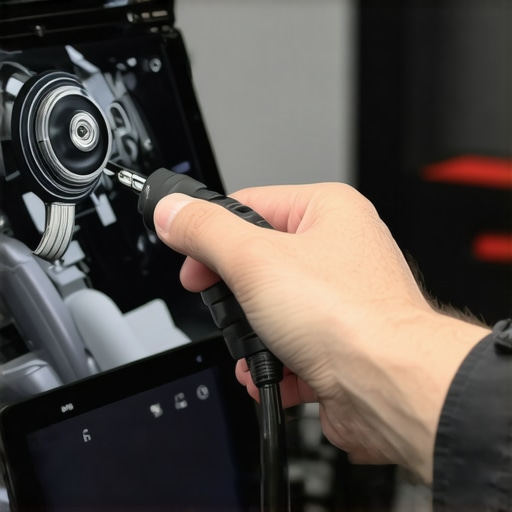 For those of us who spend hours on the interstate, implementing essential auto repair strategies for frequent drivers means checking more than just the oil level; it means inspecting the health of the PCV system and the air intake path.
How can I prevent internal oil loss as my car gets older?
Keeping an engine healthy for 200,000 miles requires a mental shift in how you view maintenance. You cannot simply follow the owner’s manual for a 10,000-mile interval once the internal seals start to age and lose their elasticity. I personally advocate for shorter oil change intervals and using higher-quality filters that trap smaller particulates. This is one of those classic auto repair hacks to save money without sacrificing quality: spend $20 more on high-end synthetic oil today to save $4,000 on an engine swap three years from now. I also recommend keeping a digital multimeter in your toolbox. While it might seem unrelated to oil, checking for an electrical parasitic drain is part of the same diagnostic philosophy of looking deeper. Understanding the secret to finding a parasitic battery drain with a simple multimeter taught me that every system in a car is interconnected. If your battery is weak, your electronic pressure sensors might give false readings, leading you to think there is an oil pressure issue when there is actually just an electrical hiccup. I also keep a close eye on my braking system, as a car that can’t stop is just as dangerous as one with a dry crankcase. Reviewing the ultimate guide to brake service for safety and performance ensures my entire vehicle is balanced and safe. According to the GM Technical Service Bulletin #10-06-01-008M, a clogged PCV orifice can create a high-vacuum environment that literally pulls oil through the valve guides and into the combustion chamber. This isn’t a problem a generic code reader will find; you have to know the specific technical history of your engine. Looking ahead, I predict that within the next decade, we will see ‘oil health’ sensors become standard. Instead of a basic warning light, your car’s ECU will analyze the molecular structure of the lubricant in real-time, warning you of fuel dilution or micro-shavings before they cause a failure. It is the next logical step in decoding vehicle diagnostics. If you have been chasing a ghost oil leak, I want you to try one thing: clean your entire intake tract with a safe solvent, drive 500 miles, and then check the throttle body for fresh residue. It is the best way to finally catch the thief in the act.
The Hardest Lesson I Learned About Ghost Leaks
After decades of turning wrenches, I have realized that a car’s silent thirst for oil is usually a communication problem, not just a mechanical one. One of the biggest auto repair hacks to save money without sacrificing quality is learning to listen to these subtle cues before the ‘low oil’ light ever flickers. I once spent months dreading a piston ring job that turned out to be a simple clogged breather. The lesson? Never assume the worst until you’ve checked the cheapest parts first. It’s also vital to remember that ‘normal’ consumption is a moving target. What is acceptable for a high-performance turbo engine is a red flag for a naturally aspirated commuter car. Always verify your consumption rate manually over 3,000 miles to establish a baseline before you dive into expensive repairs.
My Essential Toolkit for Tracking Oil Thieves
If you want to move beyond guessing, you need the right gear in your garage. I never tackle this issue without a digital borescope; it is the only way to see carbon buildup on the valves without tearing the head off. I also swear by a high-quality vacuum gauge to check for those hidden leaks that mimic internal burning. For those planning a long drive, performing easy checks before your road trip can save you from a highway breakdown. Finally, I trust SAE-certified high-mileage oils because they contain specific esters that actually swell old rubber seals, unlike some generic products. Knowing the truth about oil additives and if they actually save your engine is the final piece of the puzzle, helping you avoid snake oil while using products that actually work.
Take Control of Your Engine’s Future
You don’t have to be a victim of a vanishing dipstick level. By understanding the vacuum pressures and seal integrity of your vehicle, you shift from being a worried driver to a proactive owner. Every advanced vehicle diagnostic step you take builds a better relationship with your machine and ensures it stays on the road for the long haul. Your car isn’t trying to trick you; it’s just waiting for you to find the source of the problem. Have you ever had a car that ‘drank’ oil with no explanation? What was the fix that finally worked for you? Let me know in the comments below!