
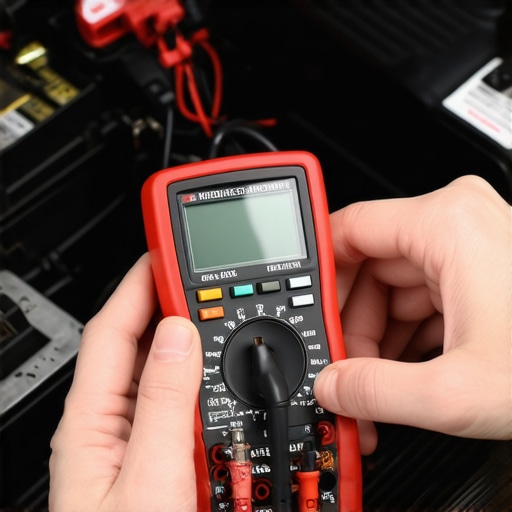
I remember standing in my driveway last winter, the freezing rain soaking through my jacket, while my sedan emitted a pathetic, rhythmic clicking instead of a roar. I was fuming. I had just shelled out over a hundred dollars for a ‘premium’ battery four months ago. I felt like the universe—or at least the local auto parts store—was personally out to get me. It wasn’t until I sat down and started decoding vehicle diagnostics on my own that I realized I was the one making the mistake. I was replacing the lightbulb when the wiring was on fire. If you are constantly jump-starting your ride, we are going to fix that today. I’ll show you a simple trick to determine if your alternator is the true culprit behind your dead-battery woes.
Stop Buying New Batteries Before Checking This
When I first started working on my own vehicles, I thought a dead battery was just a part of life, like taxes or a squeaky floorboard. I once replaced three batteries in a single year on an old truck because I didn’t realize my alternator was slowly ‘cooking’ them. That was a costly lesson in how to tell if your car alternator is overcharging the battery. The truth is, your battery is often just a storage tank. If the pump (the alternator) is broken, the tank stays empty, and no amount of ‘new tank’ is going to solve that. You might be surprised to learn that a failing charging system is one of the most common reasons for premature battery failure, turning a fifty-dollar repair into a five-hundred-dollar headache if left unchecked.
Is My Car Too Smart for a DIY Test?
You might think modern cars, with their complex sensors and computers, require a thousand-dollar diagnostic tool just to see if the charging system is healthy. I used to think that too. I’d be terrified of touching anything electrical for fear of ‘bricking’ the car’s brain. But for most vehicles on the road, the basic laws of physics still apply. A simple multimeter is all you need to get a clear answer, and you don’t need to be an electrician to read the numbers. It’s about empowerment, not just saving a few bucks at the mechanic.
The Real Reason Your Battery Keeps Giving Up
It’s a vicious cycle. You jump-start the car, drive for twenty minutes, and think you’re fine. But if the alternator isn’t pushing current back into those lead plates, the battery is essentially dying a slow, painful death. According to experts at Battery University, deep-cycling a starter battery—which isn’t designed for it—can lead to permanent capacity loss very quickly. You’re likely experiencing why your car battery dies every three days because the alternator isn’t doing its one and only job. We need to stop the bleeding. Using a few auto repair hacks, I’m going to guide you through a voltage test that will tell you more than any ‘idiot light’ on your dashboard ever could. Have you ever felt like your car was eating your wallet one battery at a time? Let’s find out if we can save you that next trip to the shop.
Check the Resting Voltage Before You Crank
To get started, you need a digital multimeter. Think of it as a stethoscope for your car’s electrical heart. Set the dial to DC voltage, usually the 20V setting. With the engine off and the key in your pocket, touch the red probe to the positive terminal and the black to the negative. You are looking for a solid 12.6 volts. Anything less than 12.2V means the battery is only about 50% charged. I remember doing this on my neighbor’s old hatchback last summer; it read 11.8V, which immediately told me the battery was struggling to hold any significant energy. This is the baseline for why your car battery dies every time it gets cold outside—if the resting charge is low in the heat, it will be non-existent in the frost. 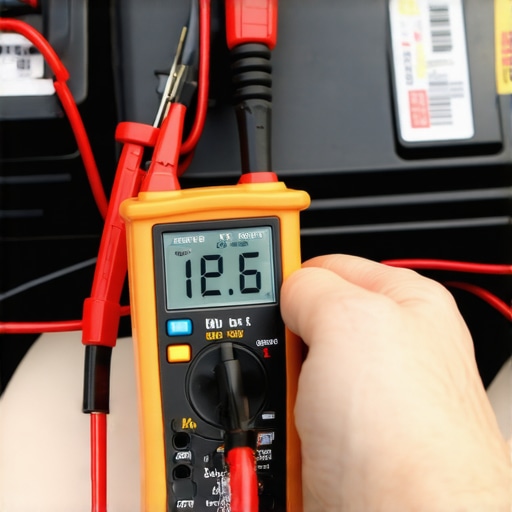
Watch the Numbers Jump When the Engine Fires Up
Now, have a friend start the car while you keep those probes on the battery terminals. This is where the magic happens. As soon as the engine roars to life, that number on your screen should jump. A healthy alternator should be pushing between 13.5 and 14.7 volts. If the number stays at 12.6 or, even worse, starts slowly counting down like a doomsday clock, your alternator has retired without giving you notice. It is essentially a water pump that is no longer pushing water back into the storage tank. This simple check is one of those auto repair hacks that keeps you from being stranded at a gas station with a trunk full of groceries and a car that won’t budge.
The Ground Wire Trap That Fooled Me
I once spent two hours in a muddy driveway chasing what I thought was a ‘dead battery’ on a rainy Tuesday. I had the new battery ready to go, but the multimeter showed the alternator was putting out 14.2V, yet the battery was still sitting at 12.1V. I realized the electricity wasn’t making the trip from the alternator to the battery. It turns out that the ground wire problem that mimics a bad starter motor can also look exactly like a dead battery or a fried alternator. Check your cables for ‘green fuzz’ or white corrosion. If the connection is loose or dirty, the alternator can’t do its job, and the battery won’t take the charge. Use a wire brush to clean those terminals until they shine like a new dime.
Put the Charging System Under Real Stress
The final test is the ‘load test.’ With the engine still running, go ahead and turn on everything: the high beams, the heater on full blast, the rear defroster, and the radio. A strong alternator will barely flinch, keeping the voltage above 13.0V. If you see the numbers plummet into the 12s, the alternator’s internal diodes are likely failing. Following top auto repair tips to extend your vehicles lifespan means catching these subtle drops before they leave you calling a tow truck. You also need to watch for the opposite problem; knowing how to tell if your car alternator is overcharging the battery is vital because seeing 15V or higher means the regulator is broken and you’re about to fry every expensive sensor in your dashboard.Once you’ve mastered the multimeter, you start to realize that much of what we’ve been told about car maintenance is designed to sell parts, not save engines. Take the classic 3,000-mile oil change. While it was gospel in the 1970s, modern engine chemistry has changed the game entirely. I’ve seen people throw away perfectly good synthetic oil because of an arbitrary sticker on their windshield, completely ignoring oil change innovations that allow for double or even triple that distance. In fact, research from the AAA (American Automobile Association) suggests that millions of drivers are wasting money by changing oil far more frequently than manufacturers recommend. By ignoring the science, you’re succumbing to the synthetic oil myth that costs you fifty dollars every visit.
Does Your Engine Really Need That Expensive Oil Filter?
The ‘oops’ factor usually kicks in when people try to save money in the wrong places. I once had a client whose car had a mysterious low oil pressure light that only appeared on the highway. We nearly replaced the entire oil pump before realizing it was simply the oil filter brand that causes low oil pressure lights. Cheap filters often lack a proper bypass valve or have restrictive media that starves your engine of lubrication during high-load scenarios. Worse yet is the mistake of using the wrong oil viscosity in cold weather. Modern engines use oil as a hydraulic fluid for variable valve timing; if the weight is off by even a small margin, the car won’t just run poorly—it might throw a code and enter limp mode. 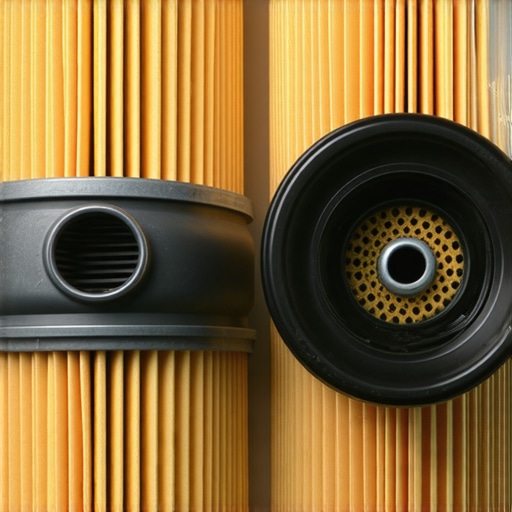
Why the Check Engine Light is Often a Liar
Most drivers think a diagnostic code is a shopping list. If the code says ‘Oxygen Sensor,’ they immediately buy an oxygen sensor. But in my years under the hood, I’ve learned that decoding vehicle diagnostics is about finding the root cause, not just the symptom. That sensor might be reading ‘lean’ simply because you have a two-dollar cracked vacuum hose, not a faulty sensor. This is the same logic we apply to stopping power. Don’t believe brake service myths that claim every squeak requires a full rotor replacement. Often, it’s just a lack of anti-seize lubricant on the caliper pins or a pebble caught in the dust shield. Have you ever fallen into this trap of replacing the part the computer blamed, only to have the light come back on two days later? Let me know in the comments below.I’ve spent too many Saturdays chasing ghosts under the hood to trust a cheap, generic code reader anymore. If you really want to stop the cycle of endless parts-swapping, you need a bidirectional scan tool. Unlike those ten-dollar dongles that just spit out a code, a real scanner lets you command the car to perform tests, like cycling the fuel pump or testing an individual fuel injector. I personally rely on an Autel unit because it provides live data streaming, allowing me to see exactly when a sensor is lagging. This is a huge part of how advanced vehicle diagnostics prevent costly breakdowns by catching a failing component before it leaves you stranded. When you can see the fuel trim numbers adjusting in real-time, you’re no longer guessing—you’re performing surgery with a scalpel instead of a sledgehammer.
The Diagnostic Gear That Actually Earns Its Keep
Beyond the scanner, my most-used tool is a dedicated power probe. It lets me apply 12 volts directly to a component to see if it actually works. I once spent four hours diagnosing a blower motor only to realize the motor was fine, but the relay was dead. If I had used the probe first, I would have known in thirty seconds. For those who are on the road constantly, having a small kit of professional-grade tools is one of the essential auto repair strategies for frequent drivers. It’s about reducing the time your car is on jacks and increasing the time it’s on the pavement. 
How do I keep my vehicle reliable for a decade or more?
The secret to longevity isn’t just fixing things when they break; it’s about fluid chemistry and heat management. I’ve seen engines reach 300,000 miles on original internals simply because the owner never skipped a coolant flush or an ATF change. You need to look past the marketing and learn how to tell if your oil filter is actually doing its job by inspecting the pleats during an oil change. If you see metal flakes or collapsed media, your ‘maintenance’ isn’t actually maintaining anything. Following these top auto repair tips to extend your vehicles lifespan requires a shift in mindset: treat your car like a high-performance machine that requires clean ‘blood’ to survive.
Stop Neglecting the Fluids That Stop You
We focus so much on the engine that we often ignore the brake system until the pedal feels like a wet sponge. Most people don’t realize that brake fluid is hygroscopic—it literally sucks moisture out of the air. Over time, this water lowers the boiling point of the fluid and corrodes your calipers from the inside out. I highly recommend investing in a pressure bleeder like the ones from Motive Products. It makes the job a one-person affair and is the trick for a perfect brake bleed every single time. By keeping that fluid clear and gold instead of dark brown, you ensure the ultimate guide to brake service for safety and performance isn’t just a manual you read, but a standard you live by. Looking forward, I predict we’ll see even more integration between our smartphones and car computers, with AI-driven diagnostics predicting part failures weeks before they happen. For now, grab your multimeter and test your battery’s resting voltage tonight—it’s the first step to taking back control of your garage.
The Hardest Lesson I Learned Under the Hood
I used to be a ‘parts cannon’ enthusiast. Every time a light popped up, I fired money at it until it went away. The biggest shift for me happened when I realized that a car is just a series of conversations between components. If you listen closely, you can stop the expensive arguments before they start. I learned that cleaning a terminal is often more effective than buying a new alternator, and that the mistake people make when jump starting a modern car can actually fry the very electronics you’re trying to save. Always verify with a meter before you reach for your credit card. Most importantly, don’t let the complexity of a modern engine intimidate you; the basics of voltage and fluid pressure haven’t changed in fifty years.
#IMAGE_PLACE_HOLDER_E#
Gear That Actually Earns Its Spot in My Toolbox
You don’t need a professional shop to do professional work, but you do need tools that don’t lie to you. Here is what I personally trust every single weekend:
- A Reliable Multimeter: I prefer brands like Fluke or Klein because consistency is everything when you are hunting for a parasitic drain.
- The Motive Products Pressure Bleeder: This changed my life for the ultimate guide to brake service for safety and performance. It turns a frustrating two-person job into a ten-minute solo task.
- Autel Diagnostic Scanners: Having the ability to see live data prevents you from falling for the ‘code is a shopping list’ trap.
- RepairMyCarPro Guides: When I’m stuck on a specific symptom, I check back on how advanced vehicle diagnostics prevent costly breakdowns to see if I’m missing a larger pattern.
Take the Keys Back into Your Own Hands
There is a specific kind of pride that comes from hearing your engine turn over and knowing exactly why it’s running so smoothly. You aren’t just saving money; you are gaining the peace of mind that comes from knowing your vehicle is safe for your family. By mastering vehicle diagnostics and staying on top of your fluids, you are extending the life of your second-largest investment. Don’t be afraid to get your hands a little dirty this weekend—your car will thank you for it. Have you ever replaced an expensive part only to find out it was a simple five-dollar fuse or a loose wire? Let me know in the comments below!