
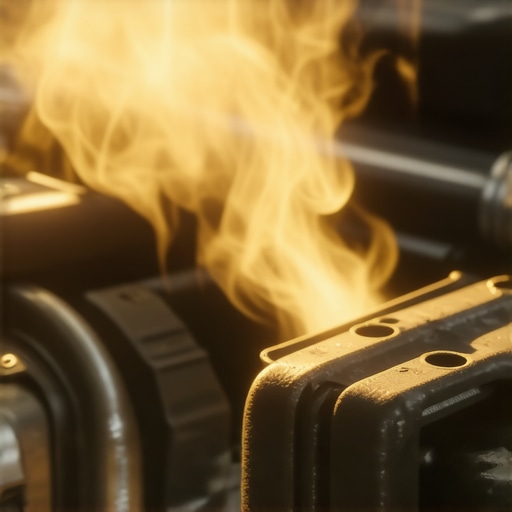
The first time it happened, I actually looked around my floorboards for a stray waffle or a forgotten takeout bag. I was idling at a red light in the middle of a humid July afternoon, and the unmistakable, sugary aroma of maple syrup filled the cabin of my SUV. It was thick. It was sweet. It was genuinely weird. I pulled over, popped the hood, and crawled under the front bumper with a flashlight, certain I would see a neon-green crime scene on the asphalt. Nothing. No puddles, no dripping hoses, just a bone-dry driveway and a very confused driver. If you have ever stood in your driveway sniffing the air like a bloodhound only to find absolutely no evidence on the ground, you know exactly how maddening this phantom scent can be. You are not losing your mind, and your car hasn’t secretly become a mobile pancake house.
Where is that Breakfast Smell Coming From?
Most folks assume that a coolant leak always results in a visible mess. I used to think the exact same thing until I learned the hard way. Years ago, I ignored a faint sweet scent for weeks because my garage floor stayed clean. Then, mid-commute, my dashboard lit up like a Christmas tree and white steam started pouring from the vents. It turns out, your car can “consume” its coolant in ways that never touch the pavement. According to the Car Care Council, cooling system failure is a leading cause of engine-related breakdowns, and it often starts with these invisible, evaporating leaks. When you are decoding vehicle diagnostics on your own, you have to look for the leaks that hide. It might be a radiator hose failure you cannot see from the top or a slow seep from the heater core that is being absorbed by your cabin carpet. Today, I am going to help you track down this ghost before it leaves you stranded on the shoulder with a warped head gasket. Have you ever smelled something sweet in your car and just hoped it would magically fix itself? Tell me I am not the only one who has tried to ignore the “pancake warning” for too long.
Is this really going to cost me a fortune to fix?
I get it. Every time a car makes a weird noise or a strange smell, we immediately hear the sound of a cash register ringing. You are probably worried about a catastrophic engine failure or a thousand-dollar repair bill. While a sweet smell can indicate serious issues, sometimes the culprit is just a ten-dollar radiator cap or a slightly loose clamp that only leaks when the system is under max pressure. Before you start panicking and looking at new car listings, we need to perform some easy checks before your next road trip. We will dive into why your coolant reservoir is bubbling or why that sugary scent only seems to appear when you turn on the defrost. Let’s roll up our sleeves and save your engine from a very expensive meltdown.
Stop the leak before it stops your engine
Finding a phantom coolant leak is less about looking for puddles and more about following your nose and your fingertips. When you are dealing with a scent that only appears when the engine is hot, you are looking for a ‘flash leak’—coolant that hits a hot component and evaporates instantly. I remember crawling into the passenger footwell of my old truck once, convinced I had a window seal leak because of a weird dampness. I reached down to pull up the floor mat and my fingers came away covered in a slimy, neon-green film that smelled exactly like a diner at breakfast time. The heater core hadn’t failed enough to fog the windows yet, but it was weeping just enough to turn my carpet into a sponge. That is the thing about coolant; it is a master of disguise. If your garage floor is dry, you have to start thinking like a fluid.
Feel for the swamp under your floor mats
The heater core is essentially a small radiator behind your dashboard. When it springs a pinhole leak, the sweet-smelling air is blown directly into the cabin through your vents. Before you assume the worst about your engine block, run your hand across the carpet on the passenger side. If it feels greasy or damp, you’ve found your ghost. This is where how advanced vehicle diagnostics prevent costly breakdowns by catching a failing core before it bursts and scalds your feet.
Pressure testers are your best friend
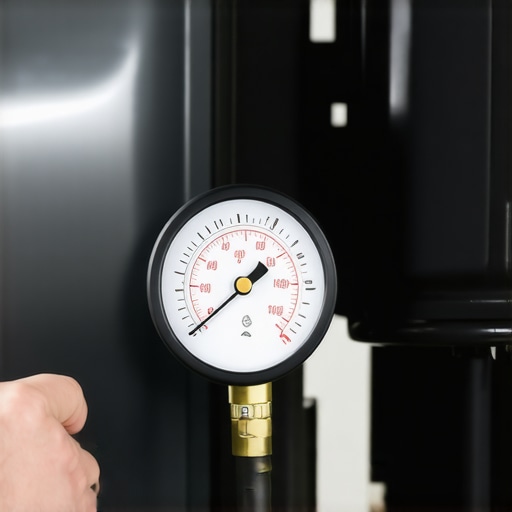
If the interior is dry, you need to simulate the heat and stress of a long drive without actually burning your hands. A cooling system pressure tester is a simple hand pump that attaches to your radiator or reservoir. By pumping it up to the PSI listed on your radiator cap, you force the coolant out of any tiny cracks. It is like finding a tiny hole in a balloon by dunking it in water. You will often hear a faint ‘hiss’ or see a tiny squirt of fluid from a hose. While you are under there, keep an eye out for the hidden drain plug that ruins a DIY radiator flush, as these can often develop slow seeps from aged O-rings. 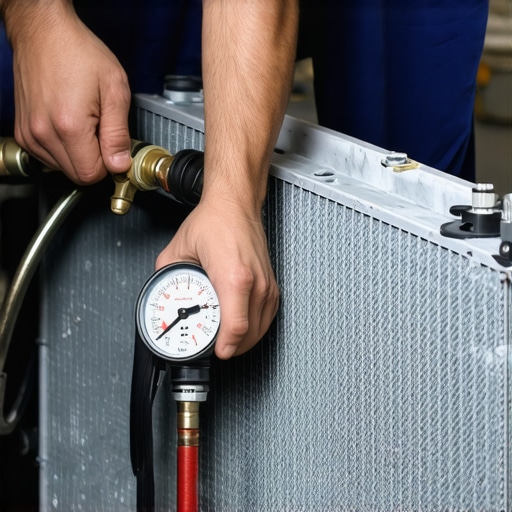
Check the radiator cap seal
Never overlook the simplest component. The radiator cap is designed to hold a specific amount of pressure to raise the boiling point of your coolant. If the rubber gasket is cracked or the spring has weakened, it will vent sugary steam into the engine bay. You won’t see a drop on the ground, but you will definitely smell it. If you have noticed that your engine temperature spikes at red lights, a faulty cap that can’t maintain pressure is a prime suspect. It is a ten-dollar part that can save a three-thousand-dollar engine.
The cardboard trick for overnight ghosts
If you still can’t find it, use the cardboard trick to find a tiny oil leak overnight, but adapt it for coolant. Slide a large, clean piece of white cardboard under the entire front end of the car after a long drive. Because coolant is dyed bright colors, even a single evaporated drop will often leave a crusty, ‘chalky’ residue on the white surface by morning. This tells you exactly which side of the engine bay to focus on. Look for white or blue crust around water pump weep holes or thermostat housings. These are the footprints left behind by the ‘pancake’ ghost.
Everyone tells you to grab a ten-dollar bottle of ‘Stop Leak’ the moment you smell that maple syrup scent under the hood. In my professional experience, that is the single worst piece of advice you can follow. While those chemical sealants might temporarily plug a pinhole, they are essentially ‘dumb’ fluids; they do not know the difference between a leak and the narrow, essential passages in your heater core. I have seen enthusiasts turn a minor hose weep into a full dashboard-removal project because they clogged their interior heat exchanger with ‘miracle’ goop. This is exactly why how advanced vehicle diagnostics prevent costly breakdowns; they prioritize finding the mechanical source rather than masking the symptom with sludge.
Stop Pouring Liquid Band-Aids Into Your Radiator
The real ‘oops’ factor in modern cooling systems comes from assuming all green, orange, or purple liquids are interchangeable. Mixing Inorganic Additive Technology (IAT) with Organic Additive Technology (OAT) coolants can trigger a chemical reaction that creates a thick, brown sludge. This jelly-like substance stops flowing through your radiator fins, leading to localized hot spots that can warp a cylinder head in minutes. According to the experts at the National Institute for Automotive Service Excellence (ASE), diagnostic trouble codes are merely data points, not a direct command to go shopping for parts. When you are decoding vehicle diagnostics on your own, remember that a sensor might be reporting a lean condition or a temp spike because the fluid chemistry is failing, not because the electronic component is dead. Avoid the truth about using cheap aftermarket sensors when the real culprit is often a five-dollar chemical mismatch or a trapped air pocket.
Your Scanner Is Only Telling You Half The Truth
I have seen countless DIYers get frustrated when they replace a thermostat and the ‘Check Engine’ light stays on. The onboard computer is smart, but it can be easily fooled. It might tell you the engine is taking too long to reach operating temperature, but it won’t tell you that a tiny air pocket is trapped behind the housing. This is a common trap to avoid when performing vehicle diagnostics explained: easy checks before your road trip. If you do not bleed the system using the proper vacuum tool or bleeder valve, that ‘ghost’ smell will return as the pressurized air forces coolant out of the overflow bottle. Sometimes, the solution is as simple as the 20 dollar part that usually fixes an evap system leak rather than a massive cooling system overhaul.
Why Is My Coolant Vanishing Without A Trace?
This is the question that keeps most drivers up at night. If there is no puddle on the driveway and no white smoke from the tailpipe, you might be dealing with an internal ‘seepage’ into the combustion chamber. A microscopic amount of coolant gets burned off during each power stroke. It is not enough to create a noticeable cloud of steam, but it is more than enough to trigger your sense of smell. Before you assume your engine block is cracked, check the radiator hose failure you cannot see from the top. Often, the leak is on the hidden underside of a bypass hose, dripping directly onto the hot exhaust manifold and vaporizing instantly before it can ever hit the ground. Have you ever fallen into this trap of replacing expensive parts before finding the actual leak? Let me know in the comments.
Stop guessing and start analyzing the data stream
I used to think my cheap twenty-dollar code reader was the peak of automotive technology. I would plug it in, get a P0128 code, and immediately throw a thermostat at the problem. Half the time, the light would come back on three days later. That is because reading a code is not the same as performing a diagnostic. To truly master these ghost leaks and engine stumbles, you need to look at ‘Live Data.’ When I upgraded to a bi-directional scan tool, it changed my life. I could finally see the coolant temperature sensor’s raw voltage in real-time. If the voltage spiked or dropped erratically while the engine was idling, I knew I had a wiring harness issue, not a mechanical failure. This is exactly how advanced vehicle diagnostics prevent costly breakdowns by stopping the ‘parts cannon’ before it costs you hundreds of dollars.
If you are serious about your car’s health, I recommend investing in a tool that supports the SAE J1979 standard for diagnostic communication. This allows you to see ‘Mode $06’ data—which is essentially the car’s internal self-test results before they even trigger a dashboard light. It is like getting a sneak peek at your car’s report card before the teacher mails it home. Using these essential auto repair strategies for frequent drivers can help you catch a failing water pump bearing or a slightly dragging brake caliper long before you smell smoke or maple syrup.

How can I keep my engine healthy for the next decade?
Maintenance is not just about reacting to smells; it is about preventing the chemical breakdown that causes them. I have made it a personal rule to perform a cooling system pressure test every two years, even if I do not smell a thing. Rubber hoses degrade from the inside out due to electrochemical degradation. By the time you see a crack on the outside, the inner lining is already gone. This proactive approach is one of the top auto repair tips to extend your vehicles lifespan. I also keep a close eye on my fluid chemistry. Just like oil change innovations and technologies have extended service intervals, modern coolants are better than ever—but they are not invincible. Over time, the anti-corrosive additives in your coolant get ‘used up,’ leaving your aluminum engine head vulnerable to pitting.
We are moving toward a world where cars are more like computers on wheels. Even in the electric vehicle (EV) space, thermal management is everything. Those massive battery packs require complex liquid cooling loops that are even more sensitive than your old SUV’s radiator. Mastering these auto repair hacks to save money now will prepare you for the high-voltage systems of tomorrow. Do not forget that your stopping power is just as vital as your cooling; keeping up with the ultimate guide to brake service ensures that when you finally find that leak, you can safely pull over to fix it. My best advice for an advanced DIYer? Pick up a chemical block tester kit today. It is a simple blue liquid that turns yellow if it detects combustion gases in your radiator. It is the only way to 100% confirm a head gasket failure before you start tearing the top of your engine off. Give it a shot—it might just save you from a three-thousand-dollar mistake.
The Hard Truth About Those Breakfast Smells Under the Hood
After years of wrenching, I have realized that the ‘syrup smell’ is actually a gift. It is a polite warning from your engine before it decides to quit. One big lesson I learned the hard way is to never trust a dry garage floor; some of the most expensive leaks only happen while you are cruising at highway speeds when the system is fully pressurized. I also discovered that the best auto repair hacks to save money usually involve buying a ten-dollar radiator cap early rather than a two-thousand-dollar cylinder head later. Finally, always remember that your car is a closed system; if your fluid level is dropping, it is going somewhere, even if you haven’t seen the puddle yet.
My Go-To Kit for Tracking Down Cooling Nightmares
If you want to stop guessing and start fixing, you need the right gear in your garage. I personally rely on a sturdy cooling system pressure tester because it allows me to find leaks safely while the engine is cold and stationary. I also keep a bi-directional scan tool handy to monitor real-time temperature data, which is a staple of how advanced vehicle diagnostics prevent costly breakdowns. Lastly, a chemical combustion leak detector is my secret weapon for confirming a blown head gasket before I ever commit to a major teardown. #IMAGE_PLACEHOLDER_E#
Don’t Let a Tiny Seep Turn Into a Towed Truck
Taking charge of your car’s health does not require a master’s degree in engineering. It just takes a little curiosity and the willingness to look where others do not. By mastering these top auto repair tips to extend your vehicles lifespan, you turn a potential disaster into a Saturday afternoon victory. Keep your eyes on the gauges, your nose open for sugar, and never skip those vehicle diagnostics explained: easy checks before your road trip. Your car takes care of you every day; paying attention to that ‘pancake’ smell is how you return the favor. Have you ever found a leak in a place you didn’t even know existed? Let me know your ‘mystery puddle’ stories in the comments!