

I still remember the smell—that damp, earthy funk that tells you something is very wrong inside your vehicle. It was three days after a massive thunderstorm, and I stepped into my driver’s seat only to feel my left sneaker sink into a literal puddle. My first thought? I’d left the window cracked. I checked; they were all tight. Then I blamed the door seals. I spent a whole weekend and $40 on weatherstripping, thinking I’d fixed it. I hadn’t. The next rain came, and the sloshing was back. It turns out, I was looking at the symptoms, not the source. Most people think a flooded floor means a hole in the floor or a bad door seal, but more often than not, it’s a tiny, hidden tube designed to help that is actually doing the opposite. Today, we are going to find that elusive drain tube and get your interior dry before the mold takes over. [IMAGE_PLACEHOLDER]
Stop Taping Your Windows and Start Looking Under the Dashboard
If you’ve been scouring forums or looking for auto repair hacks save money without sacrificing quality, you know how frustrating a mystery leak can be. The culprit is almost always the sunroof drain or the A/C evaporator drain. These little rubber hoses are supposed to carry water away from your car’s interior and dump it on the pavement. But when they get clogged with pine needles, dust, or road grime, that water has nowhere to go but your carpet. It’s a classic case of a small part causing a massive headache. If you don’t catch it early, you’ll be looking at top auto repair tips to extend your vehicles lifespan just to keep the chassis from rusting out from the inside. One mistake I made early on was assuming that because I could see water dripping under the car, the drain must be clear. In reality, it was partially clogged, backing up just enough to overflow into the cabin during heavy downpours.
Is a tiny piece of debris really enough to ruin my interior?
Absolutely. It sounds like a joke, but a single leaf can cause hundreds of dollars in mold remediation costs. According to experts at Car and Driver, water intrusion is one of the most common causes of electrical gremlins that can eventually lead to how advanced vehicle diagnostics prevent costly breakdowns. I learned this the hard way after my power locks started clicking on their own because the moisture had seeped into the wiring harness. If your car is acting possessed, check the hidden fuse that kills your power locks, but then look for the water source. Similar to how the hidden drain plug that ruins a diy radiator flush can catch you off guard, these sunroof drains are tucked away in the pillars where you’d never think to look. Have you ever stepped into your car and felt that dreaded squish under your feet? Tell me about your struggle in the comments—did you also waste money on door seals you didn’t need? In the next section, we’ll grab a simple piece of weed eater string and clear those lines for good.
Locate the Hidden Entry Points First
Open your sunroof all the way and stand up through the opening. In the front corners of the assembly, you will see two small holes about the size of a drinking straw. These are the gateways to your drainage system. Think of them like the gutters on your house; if they get packed with leaves, the water eventually overflows into the ‘attic’ of your car. I remember the first time I found mine; they were completely buried under a thick layer of wet oak pollen. If you can’t see the holes, you’ve already found your problem. Cleaning these out is one of those auto repair hacks save money without sacrificing quality because the alternative is paying a shop to pull your interior apart. Use a damp cloth to wipe away the surface muck before you start pushing anything deeper into the tubes.
The 10-Minute Weed Eater String Trick
Don’t reach for a metal coat hanger. I made that mistake once on an old sedan and ended up piercing the rubber hose halfway down the A-pillar, which turned a simple clog into a permanent leak that required removing the entire headliner. Instead, grab about six feet of heavy-duty weed eater string or thick nylon fishing line. The plastic is rigid enough to push through a clog but flexible enough to follow the curves of the drain tube without causing damage. Gently feed the line into the hole. If you feel resistance, don’t jam it. Twist the line as you push, much like a plumber’s snake. This is part of decoding vehicle diagnostics what your car is trying to tell you—if the line stops, that’s where the debris has settled. 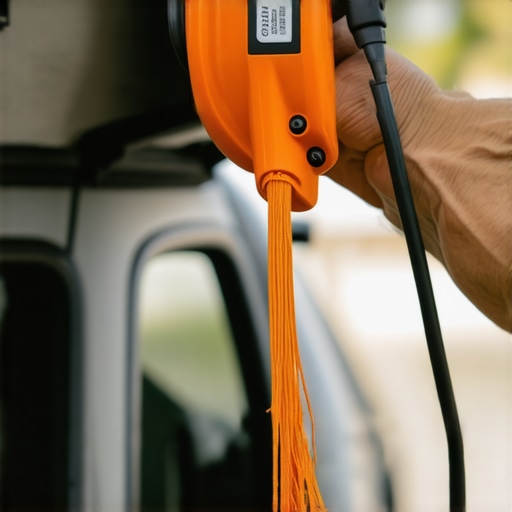
How to Test Your Work Without Flooding the Seat
Once you’ve fed the line through until you see it poking out from under the car (usually behind the front wheel well), pull it back out and get a bottle of water. Slowly pour a small amount into the sunroof track near the drain hole. If you see a steady stream hitting the pavement, you’ve won. If the water pools up, the clog is deeper or the exit grommet is pinched. Similar to how the hidden drain plug that ruins a diy radiator flush can be hard to reach, these exit points are often tucked behind plastic fender liners. If the sunroof drains are clear but your passenger floor is still wet, it is time to look at the A/C evaporator drain.
Check the Under-Car Exit Point Too
The A/C drain is a short rubber hose that pokes through the firewall on the passenger side. When this gets clogged by spider webs or road grime, the condensation from your air conditioner backs up into the HVAC box and spills onto the floor. You’ll often notice this because the reason your ac smells like vinegar when you first turn it on is usually related to standing water in the vents. Get under the car and look for a small black hose. Give it a gentle squeeze or use your weed eater string to clear the tip. I’ve seen a gallon of water dump out of one of these in seconds once the blockage was cleared. Keeping these lines open is one of the most essential auto repair strategies for frequent drivers who want to avoid that musty ‘old car’ smell and protect the sensitive electronics under the dashboard.
Stop Blasting Compressed Air Into Your Pillars
I see this advice on every DIY forum: ‘Just take a blow gun and blast the drain holes with 90 PSI.’ Please, for the love of your upholstery, do not do this. While it feels like a quick fix, the drain tubes in most modern vehicles are not glued on; they are friction-fitted onto plastic nipples. If you hit a stubborn clog with high-pressure air, you won’t clear the debris—you’ll pop the hose right off the connector inside your A-pillar or roof lining. Now, instead of a slow leak, you have a disconnected hose dumping 100% of the rain directly into your headliner. This is where auto repair hacks save money without sacrificing quality can turn into a thousand-dollar professional restoration job. I’ve seen enthusiasts spend weeks chasing a ‘window leak’ when they had actually blown their own drainage system apart. Have you ever tried a ‘quick fix’ that ended up making the problem ten times worse? Let me know in the comments because I’ve definitely been there.
Can a simple water leak really trigger a total electrical failure?
It sounds dramatic, but in the world of how advanced vehicle diagnostics prevent costly breakdowns, moisture is the ultimate silent killer. Modern cars often house critical components like the Body Control Module (BCM) or the airbag sensors under the seats or behind the kick panels—exactly where that sunroof water pools. According to the National Institute for Automotive Service Excellence (ASE), environmental contamination, specifically water intrusion, is a leading cause of intermittent electrical ‘ghosts’ that most scanners can’t easily pin down. If you notice your lights flickering or why your headlights dim when you use the power windows, don’t just assume it’s a weak battery; it could be corrosion at a ground wire caused by that ‘tiny’ leak you ignored last summer. 
The Critical Connection Most Mechanics Overlook
When you are decoding vehicle diagnostics what your car is trying to tell you, you have to look at the ‘exit grommet.’ Most people focus on the top of the drain, but the bottom is where the real failure happens. Many manufacturers use a ‘one-way’ rubber flap at the end of the drain tube to keep spiders and road noise out. Over time, road grime and oil vapor turn that flap into a sticky seal that stays shut. No matter how much you clean the top, the water will stay trapped in the tube until it overflows. It’s similar to how the brake fluid color that means you need a flush immediately tells you there is internal degradation, the state of your drain exits tells you the health of your entire weather-sealing system. If you want to truly master essential auto repair strategies for frequent drivers, make it a habit to snip the very tip of those rubber ‘duckbill’ valves during your annual inspection. It ensures the water always has an exit strategy, even if a few pine needles make it past the sunroof seal. If your car is already showing signs of aging, checking these small details is among the top auto repair tips to extend your vehicles lifespan without spending a dime at a shop.I’ve spent too many hours on my back in a driveway to ever trust a ‘fixed’ leak without proof. To truly master the art of interior preservation, I stopped guessing and started using a dedicated inspection camera. A cheap 5mm USB borescope that plugs into your phone is my absolute favorite tool for this job. I feed the flexible camera head directly into the sunroof tracks to see exactly where the debris is bunched up. This isn’t just about being fancy; it is one of the most effective auto repair hacks save money without sacrificing quality because it prevents you from blindly poking and potentially puncturing a drain line. If you are serious about top auto repair tips to extend your vehicles lifespan, you need to see the problem before you try to solve it.  Once you have confirmed the line is clear, I always suggest checking for moisture-related parasitic draws. If water has reached the kick panels, it can bridge electrical connections and drain your battery overnight. I use a basic digital multimeter to check the draw at the fuse box. If you’ve been wondering why your car battery dies every three days, look for green corrosion on the pins of your Body Control Module. This kind of decoding vehicle diagnostics what your car is trying to tell you is what separates a weekend tinkerer from someone who actually maintains their vehicle’s value.
How can I prevent my sunroof drains from clogging every year?
Maintenance is actually quite simple once you know the schedule. I make it a habit to wipe down the rubber seals of the sunroof every time I wash the car. Most people don’t realize that dirt on the seal eventually washes down into the drain holes. According to technical documentation like Toyota’s T-SB-0022-12, keeping the area around the A/C evaporator and sunroof openings clean is the only way to prevent long-term odor and water damage. While you are at it, don’t forget that the cabin filter mistake that ruins your fan motor is often linked to the same debris that clogs your drains. If the filter is packed with leaves, they will eventually crumble and find their way into the drainage channels. Integrating these checks into your essential auto repair strategies for frequent drivers will save you thousands in potential interior restoration costs. Looking ahead, I predict we will see more manufacturers moving away from these passive gravity-fed drains and toward sealed, pressurized systems that are much harder to clog. Until then, you are the first line of defense. If you want to avoid how advanced vehicle diagnostics prevent costly breakdowns, start by keeping your floorboards dry. My challenge to you: grab a spray bottle tomorrow morning and test your sunroof drains; if that water doesn’t hit the ground in three seconds, you have work to do.
The Hidden Truth About Why Most ‘Fixed’ Leaks Come Back
After years of tinkering, I’ve realized that most people fail at stopping leaks because they treat the symptom rather than the system. I once saw a driver replace his entire sunroof seal—a $300 job—only to find a puddle the next morning because a single pine needle was wedged in the exit grommet. This is the essence of decoding vehicle diagnostics what your car is trying to tell you; the water isn’t the enemy, the lack of an exit strategy is. I’ve also learned that moisture is patient. It will sit in your wire looms for months, slowly corroding pins until your dashboard lights up like a Christmas tree. If you want to avoid how advanced vehicle diagnostics prevent costly breakdowns, you have to treat drain maintenance as a seasonal chore, just like checking your oil. The biggest myth is that ‘it’s just a little water.’ In modern cars, there is no such thing as a harmless leak.
The Three Tools That Save My Upholstery Every Spring
To do this job right, you need to move beyond the kitchen-sink approach. I never start a season without my flexible USB borescope; it allows me to see deep into the A-pillar to ensure the rubber hose hasn’t disconnected from the track. [IMAGE_PLACEHOLDER] Next, a 10-foot coil of weed eater string is your best friend because it won’t puncture the fragile drain lines like a wire hanger would. Finally, I always keep a bottle of silicone spray handy to lubricate the sunroof tracks, which prevents the debris from sticking in the first place. Using these specific items is one of those auto repair hacks save money without sacrificing quality that separates the pros from the frustrated amateurs. Also, remember that the cabin filter mistake that ruins your fan motor is often the first warning sign that your car’s filtration and drainage systems are overwhelmed by outdoor debris.
Stop the Rot Before It Starts
Your vehicle is a complex machine that relies on keeping the outside world out and the inside world dry. By mastering these simple drainage checks, you are taking a massive step in top auto repair tips to extend your vehicles lifespan. Don’t let a five-cent piece of debris lead to a thousand-dollar mold remediation or a fried ECU. Take twenty minutes this weekend to run the water test we discussed—your floorboards (and your wallet) will thank you. If you want to stay ahead of other common issues, consider performing vehicle diagnostics explained easy checks before your next big drive to ensure your car is ready for any weather. Have you ever discovered a ‘mystery leak’ that turned out to be something incredibly simple? Let me know in the comments below!