

I was stuck in a three-mile backup on the interstate when my dashboard started vibrating like a cheap motel bed. I’d ignored the signs for weeks—the slightly weaker airflow, the dusty smell, and that faint chirping noise. Suddenly, a puff of acrid smoke drifted from the vents and the fan died completely. In that sweltering moment, I realized my $20 neglect was about to cost me a $400 repair bill. I’m here to make sure you don’t repeat my prideful laziness. Most people treat cabin filters as a ‘maybe later’ item during an oil change, but that’s a dangerous game for your blower motor’s lifespan. Today, I’m going to show you exactly how a clogged filter creates backpressure that fries your electronics and how you can spot the damage before it’s too late.
Your HVAC Fan Is Working Harder Than You Think
I used to be the guy who told the mechanic, ‘No thanks, I’ll do the filter myself,’ and then proceeded to forget about it for two years. It’s an easy trap to fall into. We focus so much on oil change innovations and high-tech engine tweaks that we forget the simple paper element hidden behind our glovebox. When that filter gets packed with leaves, dust, and pet hair, your blower motor has to pull twice the amperage just to move a fraction of the air. It’s like trying to run a marathon while breathing through a thick wool sock. Eventually, the blower motor resistor—the little guy that controls your fan speeds—overheats and snaps. I learned this the hard way when I started hearing that clicking sound under your dash that drives you crazy, which I now know was the motor struggling to spin against the resistance.
Does a Dirty Filter Actually Burn Out the Motor?
The short answer is a resounding yes. According to the Car Care Council, a clogged cabin air filter can significantly restrict airflow, leading to reduced HVAC efficiency and putting unnecessary strain on the blower motor. It’s not just about ‘bad air’; it’s about mechanical stress. If you’ve noticed your fan only works on ‘High’ or if it makes a high-pitched whine, you’re already in the danger zone. This is one of those auto repair hacks that actually saves you hundreds: change the filter every 15,000 miles, or you’ll be decoding vehicle diagnostics to find out why your AC system just went dark. Have you ever noticed your windows fogging up more than usual even with the defroster on? That’s your first big red flag. Let’s look at the specific steps I took to diagnose my failing fan before the motor completely seized up.
Look for These Early Warning Signs
First, start with a basic physical check. If you turn your AC to ‘Max’ and it sounds like a jet engine but feels like a gentle breeze, you have a blockage. It’s the most basic form of vehicle diagnostics explained for the average owner. I remember trying to cool down my car after a hike in 90-degree heat; the fan was screaming, but I wasn’t getting any relief. I realized then that my filter was basically a solid brick of North Carolina pine needles. If you let this go, the heat buildup from the lack of airflow will eventually melt the plastic housing or pop the thermal fuse in your blower motor resistor.
The Simple Hand Test for Airflow
Hold a thin tissue up to your center vents while the fan is on high. If the tissue doesn’t dance or barely flutters, the air isn’t reaching you. This restriction is exactly what forces the motor to draw more power, leading to the smoky disaster I experienced. By performing these how advanced vehicle diagnostics prevent costly breakdowns at home, you catch the strain before the electronics fry.
Pull the Filter Before You Buy Parts
In most modern cars, the filter is tucked right behind the glovebox. You usually just have to squeeze the sides of the box to let it drop down. Once you slide the filter tray out, don’t just look at the top. Spread the pleats. If you see gray soot or actual organic matter, it’s toast. This is one of those top auto repair tips to extend your vehicles lifespan because a clean filter protects the evaporator core from getting ‘furred’ with dust, which is a $1,000 job to clean. It’s just as vital as knowing how to tell if your oil filter is actually doing its job; if the air isn’t clean, the mechanical components downstream take the hit.
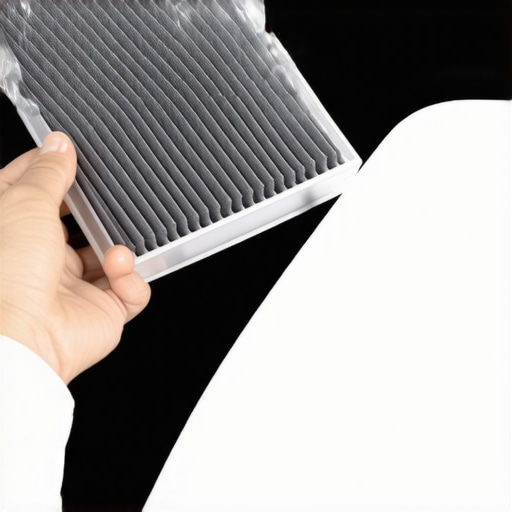
While you’re in there, listen closely. If you hear a thumping while the filter is out, you might need to learn how to stop the annoying rattle behind your dashboard, as debris often falls into the blower fan itself. I once found a handful of acorns sitting on top of the squirrel cage fan, which was causing a vibration so bad I thought my transmission was falling out.
When Your Fan Only Works on One Speed
If your fan only works on the highest setting but stays silent on lower speeds, your resistor has checked out. This happens because the lower speeds use resistors to drop the voltage, creating heat. Without airflow from a clean filter to cool that resistor, it literally cooks itself. I once tried to ‘save’ a resistor by cleaning it, but the damage was internal and irreparable. Adopting essential auto repair strategies for frequent drivers means replacing both the filter and the resistor at the same time to ensure the new part doesn’t fail within a week. It’s a simple plug-and-play fix that saves a $400 bill at the dealership.
Just as a clogged cabin filter causes a chain reaction that kills your blower motor, many owners fall into the trap of thinking a single warning light points to a single broken part. We live in an era where everyone has a $20 code reader from the internet, leading to the most expensive mistake in modern car ownership: the ‘parts cannon.’ This is the ‘oops’ factor I see weekly, where a driver buys three different sensors because a screen told them to, without ever testing the circuit. If you want to know how advanced vehicle diagnostics prevent costly breakdowns, you have to understand that a code is a symptom, not a diagnosis. For example, why your scanner says p0420 but the converter is actually fine is usually down to a tiny vacuum leak or a faulty O2 sensor, not a $1,200 exhaust component. When you trust the cheap reader blindly, you’re often fighting the symptom rather than the cause. 
Stop Replacing Parts Just Because a Code Popped Up
I’ve seen enthusiasts spend an entire weekend replacing an alternator only to find the battery still dying because of a simple ground wire problem that mimics a bad starter motor. This is where the nuance of expertise comes in. Most people think ‘high-quality parts’ means only buying name brands, but the real trick is avoiding the truth about using cheap aftermarket sensors in your engine. Modern ECUs are incredibly sensitive to voltage variances; a cheap knock-off sensor might send a signal that’s technically within range but slightly ‘noisy,’ causing your transmission to shift hard or your engine to stumble. This leads many down a rabbit hole of thinking they need a new gearbox when they really just needed an OEM-spec sensor. Have you ever fallen into this trap? Let me know in the comments.
Why Your Brake Pads Are Only Half the Story
When it comes to safety, there is a dangerous myth that ‘changing the brakes’ just means swapping the pads. This is a classic example of brake service myths busted. In my experience, the condition of your slide pins and the chemical state of your fluid are far more critical than the brand of friction material you choose. Most drivers ignore their brake fluid until the pedal feels like a marshmallow, but by then, internal corrosion has already started. According to a report by the Car Care Council, brake fluid is one of the most neglected fluids in a vehicle, with nearly 20 percent of cars on the road having moisture-contaminated fluid that could lead to system failure. If you aren’t checking the brake fluid color that means you need a flush immediately, you are gambling with your stopping distance.
Is Your Brake Fluid Secretly Rotting Your System From the Inside?
Brake fluid is hygroscopic, meaning it actively sucks moisture out of the air. Over time, this water lowers the boiling point of the fluid, which is why your brake pedal feels spongy after a long drive through the mountains. More importantly, that water creates rust inside your steel brake lines and ABS valves. You might save $100 today by skipping a flush, but you’ll pay $1,500 later for an ABS module. This is why I always recommend how to stop your brakes from squealing without a mechanic by focusing on the hardware and lubrication, not just the pads. True expertise is realizing that the small, ‘invisible’ maintenance tasks are what actually keep a car on the road for 200,000 miles.
The Scanners I Use to Stop Guessing
To really level up your maintenance game, you have to stop using those generic $20 dongles and move to a bi-directional scan tool. I personally switched to a professional-grade handheld because it allows me to perform ‘active tests.’ This means I can command the fuel pump to turn on or cycle the ABS valves without ever starting the engine. If you are serious about decoding vehicle diagnostics, you need to see live data streams, not just static codes. According to the Society of Automotive Engineers (SAE) J1979 standard, while basic OBDII data is mandatory for emissions, the real ‘gold’ is in the manufacturer-specific PIDs that show you exactly what your sensors are seeing in real-time. This level of detail is how you achieve how advanced vehicle diagnostics prevent costly breakdowns by catching a lazy O2 sensor before it kills your fuel economy.
Why You Need a Pressure Bleeder for Your Brakes
I used to do the ‘old school’ two-person pump method for brake service, but it’s inconsistent and often leaves tiny air bubbles in the ABS module. Now, I swear by a Motive Power Bleeder. It uses pressurized air to push fresh fluid through the system from the reservoir down, ensuring no air gets sucked back in. It makes the ultimate guide to brake service for safety and performance much easier to follow when you can do the whole job yourself in twenty minutes. It’s also the only way to ensure you’ve fully flushed out the brake fluid color that means you need a flush immediately. #IMAGE_PLACE_HOLDER_D#
How do I keep my car running for another decade?
The secret to longevity isn’t just buying expensive parts; it is about consistency and documentation. I keep a physical logbook in my glovebox for every single auto repair hack and maintenance item I perform. Over time, you start to see patterns—like your tires wearing unevenly every 10,000 miles, which might indicate it’s time for a professional alignment. These top auto repair tips to extend your vehicles lifespan only work if you stay ahead of the curve. Looking into the future, the DIY scene is shifting toward ‘Secure Gateway Modules’ (SGW), which will require us to have cloud-authenticated diagnostic tools just to clear a maintenance light. The era of ‘analog’ repair is fading, and we need to adapt to these software-heavy systems now. I highly recommend you try this today: grab a digital multimeter and check your battery voltage while the engine is running. If you see anything over 15 volts, you need to learn how to tell if your car alternator is overcharging the battery before it fries your expensive new electronics.I was stuck in a three-mile backup on the interstate when my dashboard started vibrating like a cheap motel bed. I’d ignored the signs for weeks—the slightly weaker airflow, the dusty smell, and that faint chirping noise. Suddenly, a puff of acrid smoke drifted from the vents and the fan died completely. In that sweltering moment, I realized my $20 neglect was about to cost me a $400 repair bill. I’m here to make sure you don’t repeat my prideful laziness. Most people treat cabin filters as a ‘maybe later’ item during an oil change, but that’s a dangerous game for your blower motor’s lifespan. Today, I’m going to show you exactly how a clogged filter creates backpressure that fries your electronics and how you can spot the damage before it’s too late.
Your HVAC Fan Is Working Harder Than You Think
I used to be the guy who told the mechanic, ‘No thanks, I’ll do the filter myself,’ and then proceeded to forget about it for two years. It’s an easy trap to fall into. We focus so much on oil change innovations and high-tech engine tweaks that we forget the simple paper element hidden behind our glovebox. When that filter gets packed with leaves, dust, and pet hair, your blower motor has to pull twice the amperage just to move a fraction of the air. It’s like trying to run a marathon while breathing through a thick wool sock. Eventually, the blower motor resistor—the little guy that controls your fan speeds—overheats and snaps. I learned this the hard way when I started hearing that clicking sound under your dash that drives you crazy, which I now know was the motor struggling to spin against the resistance.
Does a Dirty Filter Actually Burn Out the Motor?
The short answer is a resounding yes. According to the Car Care Council, a clogged cabin air filter can significantly restrict airflow, leading to reduced HVAC efficiency and putting unnecessary strain on the blower motor. It’s not just about ‘bad air’; it’s about mechanical stress. If you’ve noticed your fan only works on ‘High’ or if it makes a high-pitched whine, you’re already in the danger zone. This is one of those auto repair hacks that actually saves you hundreds: change the filter every 15,000 miles, or you’ll be decoding vehicle diagnostics to find out why your AC system just went dark. Have you ever noticed your windows fogging up more than usual even with the defroster on? That’s your first big red flag. Let’s look at the specific steps I took to diagnose my failing fan before the motor completely seized up.
Look for These Early Warning Signs
First, start with a basic physical check. If you turn your AC to ‘Max’ and it sounds like a jet engine but feels like a gentle breeze, you have a blockage. It’s the most basic form of vehicle diagnostics explained for the average owner. I remember trying to cool down my car after a hike in 90-degree heat; the fan was screaming, but I wasn’t getting any relief. I realized then that my filter was basically a solid brick of North Carolina pine needles. If you let this go, the heat buildup from the lack of airflow will eventually melt the plastic housing or pop the thermal fuse in your blower motor resistor.
The Simple Hand Test for Airflow
Hold a thin tissue up to your center vents while the fan is on high. If the tissue doesn’t dance or barely flutters, the air isn’t reaching you. This restriction is exactly what forces the motor to draw more power, leading to the smoky disaster I experienced. By performing these how advanced vehicle diagnostics prevent costly breakdowns at home, you catch the strain before the electronics fry.
Pull the Filter Before You Buy Parts
In most modern cars, the filter is tucked right behind the glovebox. You usually just have to squeeze the sides of the box to let it drop down. Once you slide the filter tray out, don’t just look at the top. Spread the pleats. If you see gray soot or actual organic matter, it’s toast. This is one of those top auto repair tips to extend your vehicles lifespan because a clean filter protects the evaporator core from getting ‘furred’ with dust, which is a $1,000 job to clean. It’s just as vital as knowing how to tell if your oil filter is actually doing its job; if the air isn’t clean, the mechanical components downstream take the hit.
While you’re in there, listen closely. If you hear a thumping while the filter is out, you might need to learn how to stop the annoying rattle behind your dashboard, as debris often falls into the blower fan itself. I once found a handful of acorns sitting on top of the squirrel cage fan, which was causing a vibration so bad I thought my transmission was falling out.
When Your Fan Only Works on One Speed
If your fan only works on the highest setting but stays silent on lower speeds, your resistor has checked out. This happens because the lower speeds use resistors to drop the voltage, creating heat. Without airflow from a clean filter to cool that resistor, it literally cooks itself. I once tried to ‘save’ a resistor by cleaning it, but the damage was internal and irreparable. Adopting essential auto repair strategies for frequent drivers means replacing both the filter and the resistor at the same time to ensure the new part doesn’t fail within a week. It’s a simple plug-and-play fix that saves a $400 bill at the dealership.
Just as a clogged cabin filter causes a chain reaction that kills your blower motor, many owners fall into the trap of thinking a single warning light points to a single broken part. We live in an era where everyone has a $20 code reader from the internet, leading to the most expensive mistake in modern car ownership: the ‘parts cannon.’ This is the ‘oops’ factor I see weekly, where a driver buys three different sensors because a screen told them to, without ever testing the circuit. If you want to know how advanced vehicle diagnostics prevent costly breakdowns, you have to understand that a code is a symptom, not a diagnosis. For example, why your scanner says p0420 but the converter is actually fine is usually down to a tiny vacuum leak or a faulty O2 sensor, not a $1,200 exhaust component. When you trust the cheap reader blindly, you’re often fighting the symptom rather than the cause.
Stop Replacing Parts Just Because a Code Popped Up
I’ve seen enthusiasts spend an entire weekend replacing an alternator only to find the battery still dying because of a simple ground wire problem that mimics a bad starter motor. This is where the nuance of expertise comes in. Most people think ‘high-quality parts’ means only buying name brands, but the real trick is avoiding the truth about using cheap aftermarket sensors in your engine. Modern ECUs are incredibly sensitive to voltage variances; a cheap knock-off sensor might send a signal that’s technically within range but slightly ‘noisy,’ causing your transmission to shift hard or your engine to stumble. This leads many down a rabbit hole of thinking they need a new gearbox when they really just needed an OEM-spec sensor. Have you ever fallen into this trap? Let me know in the comments.
Why Your Brake Pads Are Only Half the Story
When it comes to safety, there is a dangerous myth that ‘changing the brakes’ just means swapping the pads. This is a classic example of brake service myths busted. In my experience, the condition of your slide pins and the chemical state of your fluid are far more critical than the brand of friction material you choose. Most drivers ignore their brake fluid until the pedal feels like a marshmallow, but by then, internal corrosion has already started. According to a report by the Car Care Council, brake fluid is one of the most neglected fluids in a vehicle, with nearly 20 percent of cars on the road having moisture-contaminated fluid that could lead to system failure. If you aren’t checking the brake fluid color that means you need a flush immediately, you are gambling with your stopping distance.
Is Your Brake Fluid Secretly Rotting Your System From the Inside?
Brake fluid is hygroscopic, meaning it actively sucks moisture out of the air. Over time, this water lowers the boiling point of the fluid, which is why your brake pedal feels spongy after a long drive through the mountains. More importantly, that water creates rust inside your steel brake lines and ABS valves. You might save $100 today by skipping a flush, but you’ll pay $1,500 later for an ABS module. This is why I always recommend how to stop your brakes from squealing without a mechanic by focusing on the hardware and lubrication, not just the pads. True expertise is realizing that the small, ‘invisible’ maintenance tasks are what actually keep a car on the road for 200,000 miles.
The Scanners I Use to Stop Guessing
To really level up your maintenance game, you have to stop using those generic $20 dongles and move to a bi-directional scan tool. I personally switched to a professional-grade handheld because it allows me to perform ‘active tests.’ This means I can command the fuel pump to turn on or cycle the ABS valves without ever starting the engine. If you are serious about decoding vehicle diagnostics, you need to see live data streams, not just static codes. According to the Society of Automotive Engineers (SAE) J1979 standard, while basic OBDII data is mandatory for emissions, the real ‘gold’ is in the manufacturer-specific PIDs that show you exactly what your sensors are seeing in real-time. This level of detail is how you achieve how advanced vehicle diagnostics prevent costly breakdowns by catching a lazy O2 sensor before it kills your fuel economy.
Why You Need a Pressure Bleeder for Your Brakes
I used to do the ‘old school’ two-person pump method for brake service, but it’s inconsistent and often leaves tiny air bubbles in the ABS module. Now, I swear by a Motive Power Bleeder. It uses pressurized air to push fresh fluid through the system from the reservoir down, ensuring no air gets sucked back in. It makes the ultimate guide to brake service for safety and performance much easier to follow when you can do the whole job yourself in twenty minutes. It’s also the only way to ensure you’ve fully flushed out the brake fluid color that means you need a flush immediately. #IMAGE_PLACE_HOLDER_D#
How do I keep my car running for another decade?
The secret to longevity isn’t just buying expensive parts; it is about consistency and documentation. I keep a physical logbook in my glovebox for every single auto repair hack and maintenance item I perform. Over time, you start to see patterns—like your tires wearing unevenly every 10,000 miles, which might indicate it’s time for a professional alignment. These top auto repair tips to extend your vehicles lifespan only work if you stay ahead of the curve. Looking into the future, the DIY scene is shifting toward ‘Secure Gateway Modules’ (SGW), which will require us to have cloud-authenticated diagnostic tools just to clear a maintenance light. The era of ‘analog’ repair is fading, and we need to adapt to these software-heavy systems now. I highly recommend you try this today: grab a digital multimeter and check your battery voltage while the engine is running. If you see anything over 15 volts, you need to learn how to tell if your car alternator is overcharging the battery before it fries your expensive new electronics.
The Hardest Lesson I Learned While Chasing Ghost Noises
Looking back at my sweltering day on the interstate, the hardest lesson wasn’t the repair itself; it was realizing that I had transitioned from a proactive owner to a reactive one. When you wait for a part to fail before you look at it, you aren’t just paying for the part—you’re paying for the inconvenience and the potential damage to everything connected to it. I’ve since learned that a car is a living ecosystem. If the ‘lungs’ (your filters) are clogged, the ‘heart’ (the motor) is going to give out. My biggest lightbulb moment was realizing that true auto repair expertise isn’t about knowing how to replace an engine; it’s about knowing how to never have to.
The Short List of Gear I Trust to Save My Bank Account
I don’t believe in buying every gadget in the catalog, but a few specific tools have saved me thousands in labor costs over the years. First, the Motive Power Bleeder is the only tool I trust for a solo brake flush. Second, a high-quality digital multimeter is essential for diagnosing ground wire problems that mimic a bad starter motor. Finally, I always recommend a bi-directional scan tool for those deep dives into manufacturer data. I trust these specifically because they remove the guesswork, and in the garage, guessing is the most expensive thing you can do.
#IMAGE_PLACEHOLDER_E#
Take the Reins of Your Vehicle’s Future
Don’t be intimidated by the sensors, the wires, or the complex HVAC boxes hidden under your dash. At the end of the day, your car is a machine that needs care, and no one cares about your safety or your wallet as much as you do. Whether you are performing a simple how to identify which wheel bearing is actually failing check or just swapping a $20 filter, every action builds your confidence. Take charge of your maintenance today, and your car will take care of you for the next 100,000 miles. Have you ever been blindsided by a major repair that started as a small, ignored noise? Let me know your story in the comments below!