
I remember pulling into my driveway last July. The sun was setting, the cicadas were screaming, and as I hopped out of my old sedan, I was hit with the most delightful scent of maple syrup. For a split second, I thought my wife was making late-night waffles. Then I remembered she was out of town. That sweet, sugary aroma wasn’t breakfast; it was the smell of my bank account slowly draining onto the asphalt. It’s a trick the automotive gods play on us—making a serious mechanical failure smell like a Sunday brunch. I learned the hard way that when your car starts smelling like a candy factory, it’s not a treat; it’s a warning signal that you need to start decoding vehicle diagnostics before things get expensive.
Don’t Let That Sugary Scent Fool You
The culprit is almost always ethylene glycol, the main ingredient in your car’s coolant. When this stuff gets hot and escapes the pressurized confines of your cooling system, it vaporizes and creates that distinct syrupy smell. If you’re smelling it after you turn the engine off, it’s usually because the heat-soak—the period where the engine temperature actually rises slightly after the water pump stops—is forcing coolant out of a tiny leak. I once ignored this smell for three weeks because I didn’t see any green fluid on my garage floor. I figured if the needle wasn’t in the red, I was fine. That mistake cost me a warped cylinder head. The reality is that why your car smells like maple syrup but there is no puddle is often due to the coolant evaporating off a hot engine block before it ever hits the ground.
Is a faint smell really worth the repair bill?
You might be wondering if you can just keep topping off the reservoir and call it a day. I’ve been there. But here is the catch: a small leak is a weak point in a high-pressure system. According to the Car Care Council, cooling system failure is the leading cause of engine-related breakdowns on the highway. What starts as a whiff of syrup today can turn into a blown hose or a bad water pump tomorrow. Today, I’m going to walk you through how to sniff out the source of that leak, whether it’s a pinhole in the radiator or a failing heater core hiding behind your dashboard. We are going to solve this together so you don’t end up stranded.
Before we dive into the greasy details, I have to ask: have you ever noticed that sweet smell only during the winter, or does it seem to follow you regardless of the season? Let me know in the comments, because the timing of the smell actually tells us a lot about where to look first. Now, let’s get under the hood and find where that sugar is hiding.
Track the White Crusty Trails Under the Hood
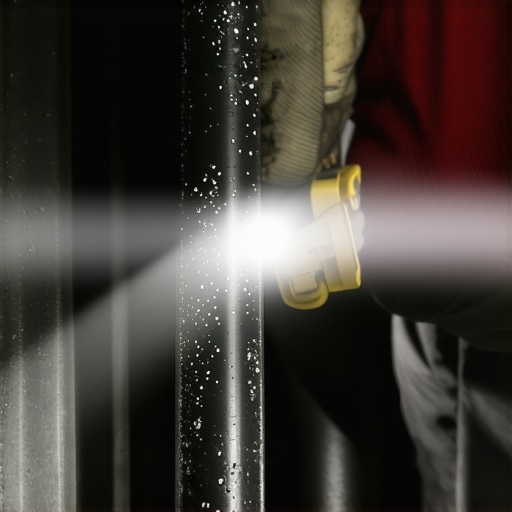
Finding a coolant leak is part detective work and part patience. Think of your cooling system like a pressure cooker; once it gets up to temperature, even the smallest pinhole will spray under pressure. Start your search by looking for ‘coolant tracks.’ When ethylene glycol evaporates, it leaves behind a chalky, white, or colored residue that looks exactly like salt stains on winter boots. I recommend doing this after a short drive when the system is still pressurized but the engine is off. Grab a bright LED flashlight and scan the seams where the plastic radiator tanks meet the aluminum core. This is a common failure point where the seals eventually give up the ghost. If you see any dampness or that tell-tale crust, you’ve found your culprit and can use the trick to spotting a hairline crack in your radiator to confirm the damage before you start tearing things apart.
Finding Hairline Cracks Before They Burst
Sometimes the leak is so small it only reveals itself as a fine mist that hits the hot engine and vanishes instantly. I remember one rainy Tuesday when I was convinced my radiator was toast. I spent an hour squinting at the hoses, but found nothing until I wiped a paper towel under the water pump pulley. It came back soaked in neon orange. That simple swipe saved me from replacing the wrong part. You should also perform how to tell if your radiator is clogged without taking it apart because internal pressure build-up from a clog can actually force coolant out of the weakest hose connection. Use your hand (carefully) to squeeze the upper and lower radiator hoses. They should feel firm but not rock-hard when the engine is warm. If they feel crunchy or excessively soft, they are likely deteriorating from the inside out.
Why the Floorboards Tell the Real Story
If the engine bay looks bone dry but the maple syrup smell is overpowering inside the car, you need to look at your heater core. The heater core is essentially a miniature radiator tucked behind your dashboard. When it leaks, it’s not going to drip on your driveway; it’s going to soak your interior carpet. Reach down and feel the carpet in the passenger-side footwell. If it feels greasy or damp, that is a clear sign of a failing heater core. This is one of those top auto repair tips to extend your vehicles lifespan: never ignore interior dampness, as the moisture can lead to mold and electrical corrosion in the dash. Also, keep an eye on your windows; if they fog up with a greasy film that’s hard to wipe away when you turn on the defroster, your heater core is definitely leaking vapor.
The Thermostat and Pressure Cap Check
Don’t overlook the simple components. A faulty radiator cap that no longer holds its rated pressure (usually 13-16 psi) will allow coolant to boil over into the overflow tank or escape as steam. Similarly, if your engine is running hotter than usual, you should run the simple test to see if your thermostat is stuck open or closed. A stuck-closed thermostat causes localized overheating, which spikes the pressure and creates leaks in places that were otherwise healthy. It’s all about maintaining the balance of the system. By systematically checking the residue, the hose integrity, and the interior floorboards, you can narrow down the source of that sweet smell without spending a dime at a shop first.
But here is the thing—even if you find the source of that sweet aroma, there is a trap most DIYers fall into that makes the situation ten times worse. I am talking about the ‘stop-leak’ additives you see on every auto parts store shelf. In my twenty years of turning wrenches, I have seen more engines killed by ‘magic in a bottle’ than by actual mechanical failure. While these products might plug a pinhole for a day, they also tend to gum up the narrow passages of your heater core and the tiny fins of your radiator. If you want to actually fix the problem, you need to look at top auto repair tips to extend your vehicles lifespan rather than looking for a shortcut that turns a $100 repair into a $2,000 cooling system overhaul. One of the biggest myths I encounter is that ‘Long Life’ or ‘Lifetime’ coolant actually lasts for the life of the car. It is a marketing term, not a mechanical reality. According to technical reports from SAE International, the chemical inhibitors that prevent corrosion in your engine block eventually deplete, regardless of how many miles you drive. When the pH level of your coolant drops, it becomes acidic and starts eating your gaskets and aluminum components from the inside out. This is why how advanced vehicle diagnostics prevent costly breakdowns involves more than just looking for drips—it involves testing the chemistry of the fluid with litmus strips to check for oxidation before it can do damage. 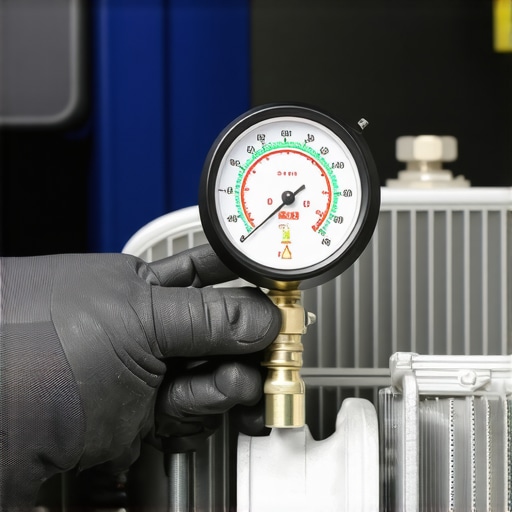
Why Does the Temperature Needle Wait Until It Is Too Late?
Here is a secret the manufacturers do not want you to know: your dashboard temperature gauge is often ‘buffered.’ This means it is programmed to stay perfectly in the middle as long as the temperature is within a broad ‘safe’ range. By the time that needle finally moves toward the red, your engine is already dangerously close to a catastrophic overheat. To get ahead of this, you should be proactive with how to tell if your radiator is clogged without taking it apart by checking for temperature variances across the radiator surface while the engine is running. If you rely solely on the dashboard, you are flying blind. Another common mistake is assuming that every sweet smell is a coolant leak. While nine times out of ten it is, high-mileage cars can sometimes exhibit strange odors that mimic ethylene glycol when certain synthetic oils break down under extreme heat near the exhaust manifold. This is a nuance often discussed when comparing the truth about synthetic oil vs conventional in older high mileage cars, as the different additive packages react uniquely to thermal stress. However, if your windows are fogging up with a sticky residue, don’t overthink it—it’s the heater core. Have you ever fallen into the ‘stop-leak’ trap or ignored a smell until it was too late? Let me know in the comments, and let’s see if we can help you avoid the next big repair bill.
Once you move past the ‘wait and see’ phase, you need a strategy that doesn’t involve crossing your fingers. Personally, I stopped guessing the moment I bought a cooling system pressure tester kit. This isn’t just another gadget gathering dust; it is the single most important tool for vehicle diagnostics explained in a way that actually gives you peace of mind. By manually pumping the system to about 15 psi, you can find a leak in a dead-cold engine without the risk of getting sprayed by boiling 220-degree fluid. I use it every time I suspect a leak because it reveals those tiny ‘weep’ marks on the water pump that only appear under load. If you’re serious about your car’s health, grab a loaner tool from your local parts shop and see what’s really happening under pressure. #IMAGE_PLACE_HOLDER_D#
How can I keep my cooling system healthy for the long haul?
Maintenance isn’t a one-and-done event; it’s a rhythm. To keep the sweet smell of maple syrup at bay, you have to look beyond the fluid level. I make it a point to check my radiator cap every year. People forget that these caps are actually valves designed to vent pressure; if the spring gets weak, your coolant boils at a lower temperature, leading to the exact failures we’ve been talking about. This is one of those top auto repair tips to extend your vehicles lifespan that costs almost nothing but saves thousands. According to technical documentation from the Gates Corporation, nearly 40% of engine failures are cooling-related, often caused by electrochemical degradation. This happens when the coolant’s protective additives wear out and the liquid itself starts carrying an electrical charge—literally eating the metal from the inside out. Don’t forget about the hidden drain plug that ruins a diy radiator flush if you’re doing the work yourself, as leaving old, acidic fluid in the block defeats the purpose of the new stuff. You should also stay updated on oil change innovations, as modern lubricants are now being designed to help dissipate heat more efficiently, acting as a secondary cooling system for your internal components.
The Future of Keeping Your Engine Cool
We are entering an era where your car won’t just wait for a leak; it will predict it. Many new vehicles are moving toward electric water pumps and electronic thermostats that can vary the flow based on real-time data rather than just mechanical heat. This means how advanced vehicle diagnostics prevent costly breakdowns will eventually involve software updates and sensor calibrations rather than just checking hoses. I predict that within the next decade, we’ll see ‘smart’ coolants that change color or send a signal to your dash the moment the pH level becomes dangerously acidic. For now, we still have to do the legwork. If you haven’t checked your battery lately, remember that the simple test to see if your battery is actually dead is a good parallel habit; if one system is aging, the others usually aren’t far behind. My challenge to you today: go out to your car when it’s cool, squeeze your upper radiator hose, and check for that ‘crunchy’ feeling. If you feel it, your hoses are telling you they’re ready to retire. Catch it now before you’re the one smelling syrup on the side of the highway.
Lessons My Overheated Engine Taught Me the Hard Way
Looking back at years of greasy knuckles, there are a few things I wish someone had whispered in my ear before I saw steam rolling out of my hood. First, the “Sniff Test” is usually more accurate than your dashboard’s temperature gauge for early detection. If you smell sugar, believe your nose, not the needle. Second, a clean engine bay isn’t just for show; it makes spotting those white, crusty coolant tracks ten times easier. I’ve found that using auto repair hacks to save money without sacrificing quality often starts with just keeping things clean enough to see a problem before it escalates.
Third, I learned that “lifetime” coolant is a myth that leads to expensive repairs. Testing the pH level of your fluid every year can save your head gaskets from being eaten by acidic slush. Finally, never trust a visual inspection alone when the car is cold. Some leaks only show up when the metal expands under heat, which is why how advanced vehicle diagnostics prevent costly breakdowns is such a critical concept to grasp—it’s about looking deeper than the surface.
Tools I Keep in My Garage to Stop the Sweet Smell
If you want to move from “guessing” to “knowing,” you need a few essentials. I always recommend using a professional cooling system pressure tester. Most auto parts stores will actually let you borrow one for free, and it is the only way to find a leak without risking a burn from hot steam. I also swear by UV Dye Kits; you simply add the dye to the reservoir, run the engine, and then use a blacklight to find exactly where the neon glow is coming from. For those who want to understand the foundational logic of their machine, Deanna Sclar’s book on auto repair is still the gold standard. Combining these tools with essential auto repair strategies for frequent drivers will keep you on the road and out of the breakdown lane.
Take Control of Your Car’s Health Today
It’s easy to feel overwhelmed when your car starts talking to you in scents and sounds. But remember, every expert mechanic started exactly where you are—wondering why their car suddenly smelled like a pancake house. By mastering decoding vehicle diagnostics, you aren’t just saving yourself from a massive repair bill; you’re building the confidence to handle whatever the road throws at you. Don’t let a tiny leak turn into a ruined engine. Grab a flashlight, pop the hood, and start your detective work today. Have you ever tried one of those “stop-leak” bottles, or did you go straight for the mechanical fix? Share your story in the comments below!