

I was driving across a high-rise bridge last November when a sudden gust of wind nearly pushed my sedan into the next lane. My knuckles turned white. My heart raced. I’d driven this stretch a thousand times, but this felt different—my car was acting like a kite instead of a two-ton machine. I initially blamed the weather, but deep down, I knew something was wrong with the metal and rubber underneath me.
Stop Fighting the Steering Wheel When the Wind Picks Up
If you feel like you’re wrestling with the wheel just to stay centered, you aren’t crazy, and the wind hasn’t suddenly become a hurricane. Most drivers ignore the subtle signs of wear until a breezy afternoon turns into a white-knuckle survival exercise. I learned the hard way that throwing money at new tires doesn’t help if your underlying hardware is failing. Early in my DIY days, I replaced a perfectly good set of tires because I thought the tread was “hunting” for grip, only to find out my ball joints were actually the culprit. Today, we are going to pinpoint exactly why your car is losing its composure and how to get it grounded again. Have you ever felt like your car has a mind of its own the moment the trees start swaying?
Is my car actually unsafe or am I just being paranoid?
It’s a fair question to ask yourself when the chassis starts shimmying. Every vehicle moves a little in a crosswind, but if you notice that your steering feels loose at high speeds or you’re hearing a clunking sound in your floorboards, the wind is just exposing a problem that was already hiding. According to the National Highway Traffic Safety Administration, mechanical failures in tires and suspension are leading contributors to loss-of-control crashes during adverse weather conditions. If you’ve felt that terrifying “sideways hop” lately, you’re in the right place. We’re going to look at everything from dead shocks disguised as bad alignment to simple tire pressure fixes that restore your confidence on the road.
Take Control of Your Stability with These Inspections
First, stop assuming you need a $1,000 steering rack replacement. Most of the time, high-speed wind acts as a giant magnifying glass for small, inexpensive mechanical errors. Think of your tires as the shoes of your car; if they aren’t tied right or the soles are worn unevenly, you’re going to trip when the pace picks up. I remember my old 2004 sedan used to drift so badly I thought I had a bent frame. After three days of stressing out, I realized I was just a victim of the tire pressure mistake that ruins your tread in weeks. Correcting it cost me four quarters at a gas station air pump and five minutes of my life.
Start with Your Tire Pressure Before Buying Parts
Don’t trust your car’s TPMS light to tell you everything is fine. Those sensors often only trigger when a tire is dangerously low, not when they are simply uneven. If your driver-side front tire is at 32 PSI and the passenger-side is at 26 PSI, the car will naturally want to pivot. In a crosswind, this delta makes the car feel incredibly twitchy. Grab a manual gauge and match all four tires to the sticker inside your driver-side door jamb. This is one of those auto repair hacks to save money without sacrificing quality because it rules out the simplest variable first.
Run the 10-Second Bounce Test on Your Fenders
Shocks and struts are the heavy lifters of vehicle stability. Their job is to keep the tire pressed firmly against the pavement. If they are worn out, your car will oscillate like a bobblehead after every bump. When wind hits the side of a car with dead shocks, the body lifts and rolls because the dampeners can’t fight the force. Walk to each corner of your car and push down hard. If the car bounces more than once and a half, your shocks are toast. You might even see the tire wear pattern that means your alignment is perfect but your shocks are dead, which usually looks like rhythmic ‘cupping’ or scalloping on the rubber.
Hunt for Play in Your Suspension Hardware
Once you’ve cleared the tires and shocks, it’s time to get physical with the front end. If your steering feels loose at high speeds, it’s because there is ‘play’ somewhere between your hands and the road. This is where I once made a massive mess. I tried to tighten my steering rack without checking the tie rods first, ended up stripping a bolt, and spent six hours drilling it out. I should have just done a simple shake test.
Use a Pry Bar to Find Secret Weak Points
Jack up the front of the car and secure it on jack stands. Grab the tire at the 12 and 6 o’clock positions and shake it. If it wobbles, you are looking at the simple way to check your wheel bearings for play. If it moves when you grab it at 3 and 9 o’clock, your tie rods are likely the issue. For the most elusive culprit, you need to use the simple way to check your ball joints with a pry bar. Slide the bar between the control arm and the knuckle; if you can squeeze the joint together with minimal effort, that metal-on-metal gap is exactly why the wind is pushing you around. 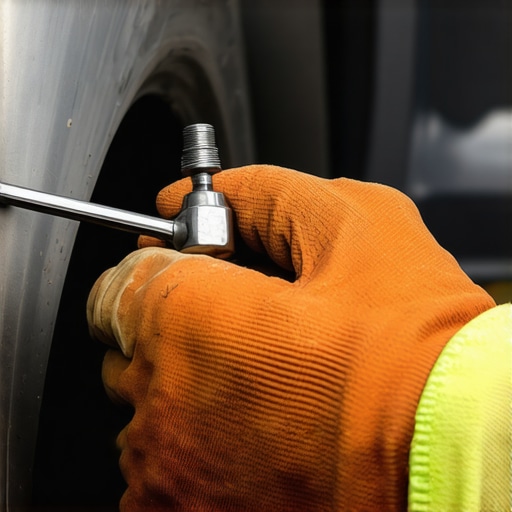
Stop Trusting the Computer Blindly
Most DIYers and even some professionals treat a scan tool like a crystal ball. They see a code for a lean oxygen sensor and immediately buy a $150 replacement. This is the biggest mistake in modern repair. In reality, decoding vehicle diagnostics requires understanding that the sensor is often just the messenger. If you have an intake leak, the sensor is accurately reporting too much air; replacing the sensor won’t fix the hole in your rubber boot. I once spent a whole weekend chasing a misfire, only to realize it was the spark plug gap error that is killing your gas mileage, not a failing coil pack. Before you throw parts at a problem, you need to verify the circuit. A study by the National Institute for Automotive Service Excellence (ASE) highlights that ‘parts-changing’ without testing is the leading cause of inflated repair costs. Always remember: the code tells you where the pain is, not what caused the wound. 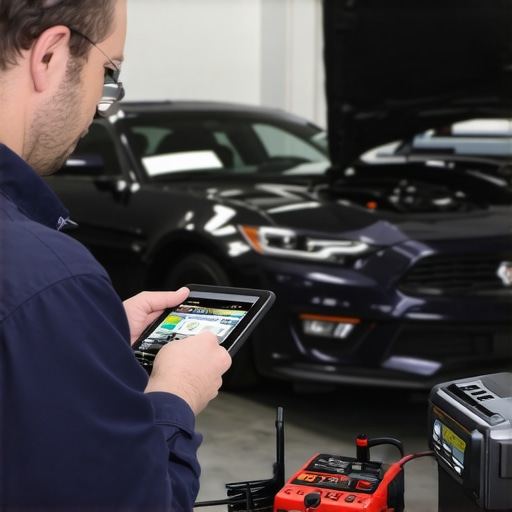
The Silent Killer of New Brake Pads
Everyone says that if your brakes squeak, you need new pads. But have you ever wondered why your brakes squeal even after you replaced the pads? The ‘oops’ factor here is ignoring the caliper slide pins and the abutment clips. If those pins aren’t lubricated with high-temperature silicone grease, the pads won’t retract properly. They’ll stay dragged against the rotor, glaze over from heat, and start screaming within a week. We often focus on the friction material, but brake service myths often ignore the hydraulic health of the system. If you aren’t flushing your fluid, you’re inviting internal corrosion that can seize a caliper entirely. I’ve seen people replace rotors three times because of a ‘warp’ that was actually just uneven pad deposits caused by sticky pins. Using auto repair hacks to save money without sacrificing quality means cleaning what you already have before buying something new.
Why does my brake pedal feel soft only after a long drive?
This is a classic case of moisture contamination in the brake fluid. Brake fluid is hygroscopic, meaning it absorbs water from the air. When you’re stuck in traffic or coming down a mountain, that water turns to steam inside your lines. Since steam is compressible and fluid is not, your pedal sinks. This is the reason your brake pedal feels different after a long drive, and it’s a major safety hazard that a simple pad swap won’t fix. You need a full system bleed to restore your stopping power. While you’re at it, don’t forget to check for the reason your brake fluid level is low but you see no leaks—it often indicates your pads are simply worn down and the piston is extended. Have you ever fallen into this trap? Let me know in the comments.I used to think my basic $20 code reader was enough until I tried to replace an electronic parking brake on a late-model SUV. I was stuck. Modern cars don’t just want you to turn a wrench; they want you to talk to them. This is where decoding vehicle diagnostics moves from a hobby to a necessity. I personally recommend investing in a mid-range bidirectional scan tool. Unlike a basic reader that just clears lights, a bidirectional tool allows you to command the car to perform specific tasks, such as cycling the ABS pump to purge trapped air or recalibrating a throttle body. According to the technical documentation provided by SAE International regarding the J1979 standard, while generic OBDII codes are helpful for emissions, manufacturer-specific P1 codes contain the granular data you need to actually solve intermittent driveability issues.
Invest in a Real Scanner Instead of Guessing
If you are serious about DIY maintenance, your toolbox should include a high-quality torque wrench and a multimeter. I’ve seen too many people strip aluminum oil pan threads because they thought they could feel the right tightness. Using auto repair hacks to save money without sacrificing quality means knowing which tools are worth the investment. For example, a simple vacuum gauge can tell you more about your engine’s internal health than a dozen sensors ever will. It’s an old-school method that still works on the most advanced modern engines.
How can I keep my car running for 300,000 miles?
The secret to extreme longevity isn’t a magic oil additive; it’s a relentless fluid replacement schedule. I follow essential auto repair strategies for frequent drivers that prioritize replacing so-called “lifetime” fluids. In my experience, no fluid is truly for a lifetime. If you want your vehicle to last, you must look at top auto repair tips to extend your vehicles lifespan, such as swapping out your transmission fluid every 60,000 miles and your coolant every five years. This prevents the internal oxidation that eats aluminum radiators from the inside out. Even the latest oil change innovations and synthetic blends won’t save an engine if the cooling system fails and causes a head gasket leak. 
Prepare for the Era of Subscriptions and Software
In the next few years, I predict that the DIY landscape will shift heavily toward software-defined maintenance. We are already seeing manufacturers lock certain service functions behind digital paywalls. To stay ahead, you need to get comfortable with laptop-based interfaces and J2534 pass-thru devices. The days of just needing a socket set are fading, but the reward for those who learn the digital side is a car that runs better and longer than anything on the road. For your immediate next step, I want you to try the cardboard trick to find a tiny oil leak overnight. It is the single easiest way to catch a weeping seal before it turns into a catastrophic failure. Combining these proactive checks with the ultimate guide to brake service for safety and performance will ensure your vehicle remains grounded, safe, and efficient for years to come.
The Most Expensive Lesson I Learned Chasing Ghost Vibrations
Looking back at my years of driving, the hardest lesson wasn’t how to rebuild an engine, but how to listen to the car’s subtle hints. I once spent hundreds of dollars on professional suspension tuning only to realize that the tire rotation mistake that ruins your tread in months was the true source of my highway wobbles. It taught me that complexity is rarely the answer when a car feels unsettled or starts acting like a kite on the bridge.
- Don’t assume a shake means a major failure; check your tire balance and pressure first.
- Clean sensors often solve more drivability problems than replacing them ever will.
- A well-maintained cooling system is the cheapest insurance for your engine’s future longevity.
My Personal Checklist for a Bulletproof Road Trip
Before I head out on any long-distance drive, I run through a specific routine that goes beyond just checking the oil dipstick. I use vehicle diagnostics explained easy checks before your road trip to ensure the computer isn’t hiding any pending codes that haven’t tripped the dashboard light yet. I also keep a simple vacuum gauge in my trunk; it’s an old-school, analog way to verify engine health when modern electronics get confusing. #IMAGE_PLACE_HOLDER_E#
Restore Your Confidence Behind the Wheel
Maintenance is more than just a chore; it’s a way to reclaim your safety on the open road and stop fearing the weather. When you follow top auto repair tips to extend your vehicles lifespan, you aren’t just saving money at the shop—you’re building a relationship with your machine. Start with the small wins, stay curious about every strange sound, and you’ll find that your car will take care of you for as long as you take care of it. Have you ever found a massive car problem that turned out to be a ten-dollar fix? Tell me your story in the comments below!