

I remember one Tuesday morning last January when I sat in my driveway for fifteen minutes, teeth chattering, waiting for my defrost to actually… well, defrost. I was convinced my thermostat was shot. It felt like my car was personally offended by the cold. But after a lot of trial and error (and one very expensive mistake where I ignored a small leak), I realized that a slow-to-warm heater isn’t just a nuisance; it’s a symptom. Today, I’m going to help you pinpoint exactly why your toes are freezing and how to fix it without a massive shop bill.
Your Morning Shiver Doesn’t Have to Last This Long
Most of us think that as the engine gets hot, the air gets hot. Simple, right? But if you find that your heater only blows hot air when you are driving, you’re dealing with a flow issue. I spent years thinking my car was just ‘cold-blooded.’ I even tried covering my radiator with cardboard—a trick my grandpa taught me—which, honestly, is a bit of a band-aid for a larger problem. Decoding vehicle diagnostics can tell you a lot more about your cooling system than a piece of cardboard ever will.
Is a Failing Heater Just an Expensive Repair Waiting to Happen?
You might be worried that a cold cabin means a three-thousand-dollar heater core replacement. I’ve been there, staring at the dash and dreading the bill. The truth is, it’s often something much smaller, like a stuck valve or an air pocket. One mistake I made early on was ignoring why your car smells like maple syrup inside the cabin. I thought it was just my air freshener acting weird. It wasn’t. It was a slow coolant leak that eventually led to a massive headache because I didn’t act fast.
The Real Reason You’re Still Wearing Gloves at the Wheel
If your car takes ten miles of highway driving to get lukewarm, your thermostat might be stuck open. It’s essentially letting the radiator do too much work too soon, preventing the engine from ever reaching its ‘happy place.’ Interestingly, the American Automobile Association (AAA) notes that cooling system failure is a leading cause of roadside breakdowns, often preceded by poor heater performance. Have you ever noticed your temperature gauge acting wonky, or does it just sit at ‘Cold’ forever? I’d love to hear if you’ve faced this—drop a comment and let me know. Before you go out and buy a new car just to stay warm, we need to look at how to spot a bad water pump and other simple checks you can do in your own driveway.The first move is always to check the coolant level in the overflow tank. If the level is low, the water pump can’t grab enough fluid to send it through the heater core. Think of the heater core as a mini-radiator tucked behind your glovebox. If it doesn’t get enough ‘hot juice,’ you’re just circulating cold air. I once ignored a low reservoir in my old sedan, thinking I could make it through the week. I ended up shivering through a 40-minute commute because the pump was sucking air. If you’re doing this yourself, be careful not to miss the hidden drain plug that ruins a DIY radiator flush, which can leave old sediment trapped in the system.
Burp the System to Kill Air Pockets
Air is the ultimate heat killer. It creates a ‘lock’ that prevents hot coolant from circulating. To fix this, you need to ‘burp’ the cooling system. With the engine cold, remove the radiator cap and attach a spill-proof funnel. Start the engine and let it run until it reaches operating temperature. You’ll see bubbles rising in the funnel—that’s the air escaping. Once the bubbles stop and the heater starts blowing hot, you’ve won. Decoding vehicle diagnostics during this process can help you see if the coolant temperature sensor is finally reading a steady, warm number instead of jumping around. 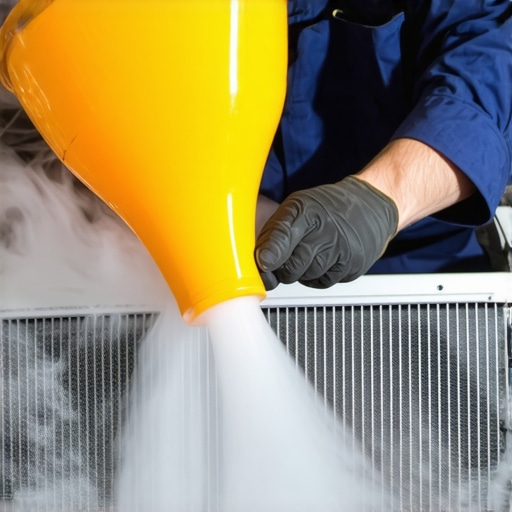
Test the Thermostat Gatekeeper
The thermostat is the bouncer of your engine’s cooling system. If it’s stuck open, it lets all the coolant flow to the radiator immediately, which keeps the engine too cold to provide heat to the cabin. You can test this by feeling the upper radiator hose after starting the car. It should stay relatively cool for a few minutes and then suddenly get very hot. If it warms up slowly along with the engine, that bouncer is sleeping on the job and needs to be replaced. Keeping an eye on these components is part of the top auto repair tips to extend your vehicles lifespan.
Clean Out the Clogged Heater Core Straw
If your engine is hot but your vents are cold, your heater core might be clogged. Imagine trying to drink a thick milkshake through a pinched straw—that’s your coolant trying to get through scale and rust. Locate the two rubber hoses entering the firewall. With the engine warm, carefully touch both. If one is scorching and the other is lukewarm, you have a blockage. You can sometimes fix this by performing a ‘back-flush’ with a garden hose, pushing water in the opposite direction of normal flow to dislodge the junk. Just like oil change innovations have improved engine health, using a high-quality coolant flush can prevent these clogs from forming in the first place.
Check the Simple Airflow Blockages
Sometimes the problem isn’t the fluid at all; it’s the air. A severely clogged cabin air filter can restrict flow so much that the heat never reaches your face. I’ve seen filters pulled out of cars that looked like they were made of dryer lint and squirrel snacks. This is the cabin filter mistake that ruins your fan motor because the motor has to work twice as hard to pull air through the muck. If your fan sounds like it’s struggling or whistling, swap that filter before you start tearing into the dashboard.
We often talk about car repairs like they are binary—something is either broken or it’s fixed. But after decades under the hood, I’ve realized the most frustrating issues live in the gray areas. Take that lukewarm heater we were just talking about. You can swap the thermostat and flush the core, but if you don’t understand the chemistry of what’s happening inside those lines, you’re just guessing. I’ve seen people spend hundreds on parts when the real culprit was a $10 bottle of the wrong coolant brand that turned their system into a gel-filled mess.
Stop Blaming Your Rotors for Every Little Shake
One of the biggest myths I hear is that a vibrating brake pedal means you have ‘warped’ rotors. In my experience, and backed by the famous technical white papers from racing expert Carroll Smith, physical warping of a cast-iron rotor is actually quite rare under normal driving conditions. What you’re usually feeling is an uneven transfer of brake pad material onto the rotor surface, often caused by getting the brakes hot and then sitting at a red light with your foot firmly on the pedal. This creates a ‘patch’ of material that causes that thumping sensation. Instead of just throwing money at new parts, learning brake service myths busted can save you from replacing perfectly good rotors. If you’ve already swapped them and still hear noise, you might need to investigate why your brakes squeal even after you replaced the pads to ensure the hardware was shimmed correctly.
Can You Really Trust a Cheap OBD-II Scanner for Everything?
I love a good bargain, but relying on a $20 Bluetooth scanner to diagnose a complex engine hesitation is like trying to perform surgery with a butter knife. These tools give you the ‘what’—like a P0171 code for a lean condition—but they rarely tell you the ‘why.’ Beginners often see a sensor code and immediately replace that sensor, only to find the light comes back on two days later. The sensor wasn’t broken; it was doing its job by reporting that something else (like a vacuum leak) was wrong. This is where how advanced vehicle diagnostics prevent costly breakdowns by looking at live data streams rather than just reading static codes. Knowing how to read fuel trims can tell you if your engine is compensated for a leak before it even triggers a light.

Have you ever fallen into this trap of replacing a sensor just because a code told you to? Let me know in the comments. It’s a mistake almost everyone makes once, myself included. Another area where ‘common wisdom’ fails is in the oil aisle. There is a persistent belief that switching an old car to synthetic will cause it to start leaking. In reality, the truth about synthetic oil vs conventional in older high-mileage cars is that synthetic doesn’t *cause* leaks; it simply cleans out the sludge that was plugging an existing hole. While it might cost more upfront, the synthetic oil myth that costs you fifty dollars every visit usually refers to people changing their oil way too frequently based on outdated 3,000-mile rules. Modern lubricants are designed for the long haul. Before you wrap up any cooling or brake project, make sure you know the trick for a perfect brake bleed every single time, because even a tiny bit of air left in the system can make all your hard work feel like a failure.
If you’re serious about moving from ‘person with a wrench’ to a home-grown specialist, you have to stop guessing and start measuring. I used to think a multimeter was only for checking if a battery was dead. Then I spent a weekend diving into the Bosch Automotive Handbook by Robert Bosch GmbH—essentially the technical bible for automotive engineering—and it changed how I look at my engine. I realized I could use a high-quality meter to test duty cycles on fuel injectors or voltage drops across ground wires. This level of precision is what separates a weekend warrior from someone who truly understands essential auto repair strategies for frequent drivers.
Invest in Tools That Talk Back to You
For the longest time, I resisted buying a bi-directional scan tool because of the price tag. I thought my basic code reader was enough. I was wrong. A bi-directional tool doesn’t just read the mail; it sends it. It allows you to command the car’s computer to turn on the fuel pump, move the ABS valves, or test the cooling fans in isolation. This is the heart of how advanced vehicle diagnostics prevent costly breakdowns. Instead of replacing a fan and hoping it works, you can tell the computer to turn it on and listen for the click. If you are tired of the ‘parts cannon’ approach, this is your next logical step in auto repair hacks to save money without sacrificing quality.

How do I maintain my vehicle’s health over the long haul?
Consistency is the boring answer, but the real secret is ‘predictive logging.’ I keep a small notebook—or a spreadsheet if you’re fancy—where I track my fuel trims and transmission temperatures once every few months. If I see my long-term fuel trim creeping up toward +10%, I know I have a tiny vacuum leak starting before the Check Engine light ever flickers. This proactive mindset is one of the top auto repair tips to extend your vehicles lifespan. It moves you away from emergency repairs and into a world where you dictate when the car goes into the garage.
The Future of Your Driveway Repairs
I genuinely believe we are heading toward a ‘software-first’ era of maintenance. As we see more hybrid and electric systems, the mechanical ‘clunk’ is being replaced by electronic glitches. In the next decade, knowing how to use a scope to visualize CAN bus communication will be as important as knowing how to use a socket set. We are seeing oil change innovations that focus on chemical longevity, but the real shift is in telematics. Your car is already talking; you just need to learn the language. I challenge you to try one advanced diagnostic move this weekend: grab a multimeter and perform a voltage drop test on your battery terminals. You might be surprised at the ‘hidden’ resistance that’s making your starter work harder than it needs to.
It has taken me years of cold commutes and steaming hoods to realize that car maintenance isn’t just about turning bolts—it is about outsmarting the machine. I hope these insights help you keep your cabin warm and your engine cool without the typical shop stress.
Why My Biggest Repair Failures Became My Best Teachers
The first time I tried to fix a cooling issue, I ended up replacing an entire radiator when the real problem was a two-dollar plastic bleeder screw that was drawing in air. That mistake taught me that precision beats power every time. I eventually learned that most cooling system failures come down to chemistry; using the wrong fluid can lead to internal corrosion that no amount of flushing can fully reverse. If you feel stuck, remember that auto repair hacks to save money without sacrificing quality often start with patience and a very thorough inspection of the small things, like hose clamps and vacuum lines. My biggest ‘lightbulb moment’ was realizing that the car is always trying to tell you what is wrong through subtle vibrations or smells—you just have to learn to listen. This proactive mindset is one of the top auto repair tips to extend your vehicles lifespan and keep you off the side of the highway.
Equip Your Garage Like a Pro Without Breaking the Bank
You do not need a five-figure tool chest to do expert-level work, but you do need tools that provide data. I never go under the hood without a Digital Multimeter anymore; it is the only way to verify if a sensor is actually receiving power or if you have a ground issue causing your gauges to dance. I also highly recommend picking up a vehicle-specific service manual—not just the generic ones, but the actual manufacturer technical data if you can find it. For those looking for essential auto repair strategies for frequent drivers, I suggest investing in a mid-range bi-directional scanner that allows you to activate components manually. Finally, keep a simple cooling system pressure tester in your kit; it is the fastest way to find a leak without having to wait for the engine to get dangerously hot.
Drive With Confidence Instead of Anxiety
Getting your hands dirty is about more than just saving money; it is about the peace of mind that comes from knowing exactly how your vehicle works. When you understand the relationship between your thermostat, your water pump, and your heater core, you no longer panic when the air feels a little cool—you just start a mental checklist. If you ever find yourself facing a problem that seems impossible to solve, feel free to contact us or check back for more deep-dives into complex diagnostics. The future of your car is in your hands, so don’t be afraid to keep learning and keep wrenching. Have you ever replaced a part thinking it was the fix, only for the check engine light to pop back on two days later? Let me know about your most frustrating ‘parts cannon’ moment in the comments below!