

I was cruising down the bypass last Tuesday, thinking about what to grill for dinner, when it happened. The needle hit 65, and suddenly my coffee was jumping out of the cup holder like it was possessed. It wasn’t a gentle hum or a subtle shimmy; it was a bone-rattling, teeth-chattering vibration that made me wonder if my front wheels were about to depart the vehicle entirely. I’ve been around cars long enough to know that vibrations are the language of a dying part, but this felt personal. It felt like an earthquake had localized itself specifically under my driver’s seat. For a long time, I just ignored smaller rattles, thinking I could just stay under the speed limit and be fine. That was a massive mistake. I eventually learned that ignoring a shake at highway speeds is a recipe for a much bigger bill down the road. Today, I’m going to share exactly how I diagnosed the problem and what you can do to get your smooth ride back.
Stop the Jackhammer Feeling in Your Steering Wheel
When your car starts acting like a massage chair gone rogue, your first instinct is probably to panic or, if you’re like me, to turn up the radio and pretend it isn’t happening. But here is the reality: that specific 65 mph shake is almost always a very clear signal from your suspension or tires. I once spent three months vibrating down the road because I didn’t want to deal with advanced vehicle diagnostics. By the time I finally took it in, my tires were cupped, and my struts were shot. I could have saved five hundred bucks if I’d just listened to the car when the earthquake first started. We are going to look at the simple stuff first, like wheel weights and tire balance, before moving into the heavy-duty components. Most people think their car is dying, but often, the solution is much simpler than a full engine teardown.
Is this terrifying rattle actually going to cost me a fortune?
This is the question that keeps most of us from visiting the shop. We fear the “bad news” more than we fear the vibration. But here’s a surprising fact: According to the Car Care Council, neglected maintenance is the leading cause of unexpected roadside breakdowns in the United States. Most of the time, that 65 mph shake is just a lost wheel weight or a slightly out-of-round tire. It’s a fix that takes thirty minutes, not three days. If you’ve been sticking to essential auto repair strategies for frequent drivers, you’re already ahead of the game and likely facing a minor adjustment rather than a total overhaul. Have you ever felt your car try to shake itself into pieces the second you merge onto the highway? It’s a terrifying moment, but we can fix it together.
Hunt for the Missing Wheel Weight
First things first: you need to look at your tires like they are the only thing keeping you on the planet—because they are. Think of your wheel like a spinning top. If you stick a tiny piece of gum on one side of that top, it is going to wobble. That is exactly what happens when a lead wheel weight flies off on the highway. I remember spending a Saturday afternoon looking at my rims and noticing a clean, rectangular spot where a weight used to be. A quick trip for a balance fix cured 80% of my issues. If you notice a weird ‘chopping’ look on the tread, you might be looking at the tire wear pattern that reveals a bent control arm, which no amount of balancing will fix. Check your tire pressure too, because the tire pressure mistake that ruins your tread in weeks is often the silent killer of a smooth ride.
Grab a Pry Bar and Check Your Ball Joints
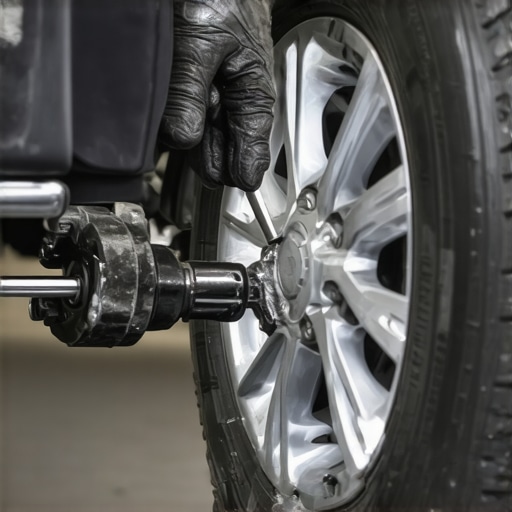
If the tires look perfect, we have to go deeper into the skeleton of the car. This is where most DIYers get intimidated, but it is just physics. You are looking for ‘play’ where there should be none. I once had a rattle that sounded like a loose bolt in a tin can every time I hit a pothole. I used the simple way to check your ball joints with a pry bar and found my lower joint was basically a loose tooth. It is a terrifying realization when you see your wheel assembly moving independently of the car. While you are under there, it is the perfect time to see if you can identify which wheel bearing is actually failing by giving the wheel a good shake at the 12 and 6 o’clock positions. If it moves even a millimeter, that bearing is toasted.
Stop Your Rotors from Turning Into Potato Chips
Does the vibration get worse when you tap the pedal? If your steering wheel tries to jump out of your hands the moment you slow down for an exit, your rotors are likely warped. Think of it like trying to stop a record player by pressing your finger against a vinyl that has been left in the sun—it is going to pulse and kick back. This is a core part of the ultimate guide to brake service for safety and performance. I once ignored a pulsing pedal for a month, thinking it was just ‘character’ in an old truck. It turned out my caliper was sticking, cooking the rotor until it looked like a piece of burnt toast. Dealing with this early prevents the need for advanced vehicle diagnostics later on when the ABS light starts screaming at you and your wallet. You should also check for the brake fluid color that means you need a flush immediately to ensure the whole system is functioning as it should.
Most mechanics will tell you your rotors are warped the second they feel a pulse, but here is a secret: they usually aren’t. In my years under the hood, I’ve found that true warping—where the metal actually bends—is incredibly rare. Instead, what you’re feeling is ‘disc thickness variation’ caused by uneven brake pad material transferring onto the rotor surface. According to research by SAE International, this ‘cementite’ buildup creates microscopic high spots that mimic the feeling of a bent rotor. If you jump straight to a replacement without checking this, you’re falling for one of the biggest brake service myths out there. Often, shops will use cheap, low-carbon replacements that dissipate heat poorly, leading to the same problem a month later. Sometimes, a few aggressive ‘bedding’ stops can actually scrub that surface clean and save you a few hundred bucks. Then there is the diagnostic trap. We see a Check Engine Light and assume the car is screaming for a major overhaul. But decoding vehicle diagnostics is about looking for the root cause, not just the symptom. I once saw a driver replace his entire fuel system because of a ‘lean’ code, only to realize it was a five-dollar rubber vacuum hose with a hairline crack. If you don’t know how to tell if your mechanic actually changed the oil or performed the tests they billed for, you are essentially flying blind. Always ask to see the ‘freeze frame’ data from the scanner—it’s the digital black box that shows exactly what was happening the second the light triggered. This level of detail prevents you from being talked into a ‘parts cannon’ approach where expensive components are swapped until the problem accidentally disappears. 
Why Does My Transmission Only Shudder When I’m Coasting?
If your vibration vanishes the moment you let off the gas, you aren’t looking at a wheel balance issue; you’re likely dealing with the transmission shudder that disappears when you lift off the gas. This is a nuance most beginners miss. It usually points toward a failing torque converter clutch or worn CV axles that only manifest their flaws under the stress of acceleration. This is often misdiagnosed as a bad engine mount, which is a costly ‘oops’ to make. Speaking of expensive mistakes, there is a massive debate about the truth about synthetic oil vs. conventional in older high-mileage cars. People often claim synthetic will ‘create leaks’ in an old engine. The reality is that synthetic oil has high detergent content that cleans out old sludge. If that sludge was the only thing keeping a worn-out gasket from leaking, the oil will ‘reveal’ the leak, not cause it. We also need to talk about the ‘3,000-mile’ rule. It’s the ultimate comfort blanket, but in the world of modern chemistry, it is often a waste. Following top auto repair tips to extend your vehicles lifespan often means trusting the manufacturer’s oil life monitor rather than a sticker on the windshield. Have you ever fallen into this trap where a simple maintenance task revealed a nightmare? Let me know in the comments.
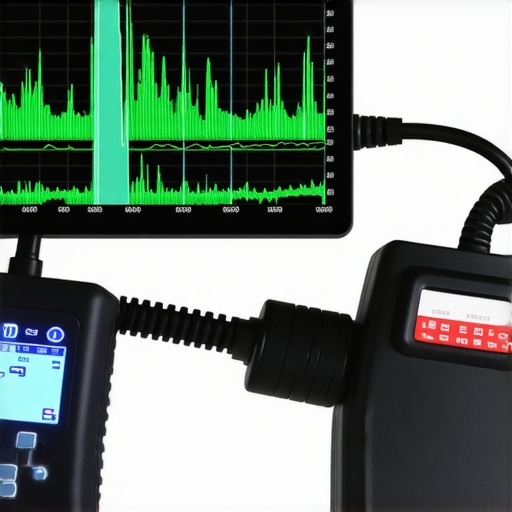
I realized early on that my basic socket set wasn’t going to cut it if I wanted to stop chasing ghosts under the chassis. If you’re serious about stopping that 65 mph vibration for good, you need a decent OBD2 scanner that does more than just clear codes. I use a mid-tier bidirectional tool because it lets me see live data streams, which is the cornerstone of advanced vehicle diagnostics. While most people are guessing, I’m looking at real-time wheel speed sensor data to see if a bearing is starting to drag before it ever starts humming. Using auto repair hacks save money without sacrificing quality often starts with having the right information before you even touch a wrench. If you’re a high-mileage commuter, these tools are part of the essential auto repair strategies for frequent drivers that turn a reactive nightmare into a proactive afternoon in the garage.
How do I maintain my vehicle’s stability over time?
Consistency is your best friend when it comes to long-term results. I keep a digital log of every fluid swap and bolt torque, focusing heavily on top auto repair tips to extend your vehicles lifespan. For instance, did you know that using the wrong filter can actually trigger a warning light? I’ve seen the oil filter brand that causes low oil pressure lights ruin a perfectly good engine just because of a faulty bypass valve. You have to stay on top of oil change innovations technologies that save your engine, especially as synthetic blends get more sophisticated. I also recommend a high-quality torque wrench. Most people ‘hand-tighten’ their lug nuts, but uneven torque is the number one cause of disc thickness variation, which we already know leads to that dreaded brake pulse. Following the ultimate guide to brake service for safety and performance means hitting exactly 80 to 100 foot-pounds every single time the wheels come off.
The Future of Keeping Your Ride Smooth
As we move toward more integrated vehicle systems, I predict we are going to see a shift from DIY diagnostics to ‘predictive maintenance’ powered by AI. Your car won’t just tell you something is broken; it will tell you the exact day a bushing is expected to fail based on your driving habits. This is why decoding vehicle diagnostics is such a critical skill to learn now. According to the Bosch Automotive Handbook, the complexity of sensor networks in modern vehicles has tripled in the last decade, meaning the ‘parts cannon’ approach is officially dead. You need to be a data detective. If you want to really master your machine, I challenge you to pull up your short-term fuel trims next time you’re idling in the driveway. If they’re climbing over 10%, you’ve got a vacuum leak waiting to turn into a rough idle. Catch it now, and you won’t be the guy vibrating down the highway next Tuesday.
The Expensive Realization That Transformed My Repair Style
If there is one thing I’ve learned from years of chasing ghosts in the chassis, it’s that your car is rarely lying to you. I used to think I could outsmart a vibration by just driving faster or slower, but that’s a dangerous game. The hardest lesson was accepting that ‘good enough’ is never enough when it comes to rotating mass. A tire that is only slightly out of balance might feel fine at 40 mph, but it becomes a sledgehammer at 70. I also learned that brake service myths busted what really matters for safety often center on the idea that parts always need replacing when they might just need cleaning or proper torquing. My ‘lightbulb moment’ came when I realized that a vibration isn’t just an annoyance; it’s a parasitic force eating your bearings and bushings every second you’re on the move.
#IMAGE_PLACEHOLDER_E#
My Tested Arsenal for Chasing Down Rattles
You don’t need a professional lift to get professional results, but you do need to stop guessing. I never go into a diagnosis without my bidirectional OBD2 scanner; it is the heart of how advanced vehicle diagnostics prevent costly breakdowns. By looking at live data, I can see exactly what the car sees. I also swear by a high-quality, click-type torque wrench. Using one ensures that I’m following the ultimate guide to brake service for safety and performance by preventing the uneven clamping force that causes ‘warped’ rotors. Finally, I always keep a bottle of soapy water handy—it’s one of those auto repair hacks save money without sacrificing quality that helps you find vacuum leaks or tire punctures in seconds. These tools transform you from a parts-changer into a diagnostic expert.
Reclaim Your Peace of Mind on the Open Road
Taking care of your car shouldn’t feel like a chore or a source of anxiety. It is an investment in your safety and your wallet. When you apply top auto repair tips to extend your vehicles lifespan, you aren’t just fixing a machine; you’re ensuring that you can get to work, take that road trip, or pick up the kids without that nagging fear of a breakdown. The next time you feel that subtle shimmy in the steering wheel, don’t turn up the radio. Grab your tools, start decoding vehicle diagnostics, and show your car that you’re listening. You have the knowledge and the strategy to keep your ride smooth for the next hundred thousand miles. Have you ever had a mystery vibration that felt impossible to solve? Let me know in the comments below!