
I was three hours into a summer road trip when my SUV started acting like it had the hiccups. Every time I hit a slight incline, the car would shudder, and I felt that sinking sensation in my gut that every driver dreads. I pulled over into a dusty gas station, popped the hood, and… nothing. No yellow handle. No dipstick. I felt like a total amateur standing there while my family waited for me to “fix it,” but my car was part of the new wave of “sealed” units. That moment of absolute helplessness is exactly why I’m sharing this today. If you are staring at your engine bay with that same confused look, take a deep breath; we are going to solve this together.
The Sealed Transmission Myth and Why Your Car is Lying to You
Manufacturers started removing dipsticks about a decade ago under the guise of “lifetime fluid.” It sounds wonderful on a sales brochure, doesn’t it? But here is the cold, hard truth: no fluid is truly “lifetime.” Heat, friction, and microscopic metal shavings eventually turn that vibrant red hydraulic oil into a brown, gritty mess. When your transmission slips only when the car is hot, it is a cry for help that you cannot hear because you cannot see the fluid level. According to Transmission Digest, roughly 60% of new vehicles are now shipped without a traditional dipstick, a design choice meant to reduce contamination but one that often leaves owners in the dark. By decoding vehicle diagnostics and learning the level-plug method, you can regain control. I will show you how to check your transmission fluid without a dipstick using basic tools you probably already have in your garage.
Is Lifetime Fluid Actually a Recipe for Disaster?
I’ll be honest with you: I fell for the “sealed” trap early in my DIY career. I ignored a minor hesitation for months because the manual said the transmission was maintenance-free. By the time I finally crawled under the car to check the overflow plug, I’d burnt the clutches so badly the fluid smelled like a charcoal grill. I even made the rookie mistake of using the wrong socket and stripping the check-plug, a $500 lesson in patience and using the right tools. It was a painful realization that the automatic transmission hesitates to engage drive for a reason, and it usually starts with fluid level. Have you ever felt like your car was intentionally hiding its problems from you just to get you back into the dealership service department? You are not alone. Before we dive into the greasy details, have you noticed your car shifting strangely lately, or are you just trying to be proactive?
Get the Car Level and Your Mind Right
Before you even touch a wrench, you need to treat your car like a precision instrument. Checking a sealed transmission is like trying to measure the water in a pool by opening a drain valve halfway up the side—if the pool is tilted, your reading is worthless. I learned this the hard way on my old crossover. I parked on a slight incline in my driveway, pulled the check plug, and saw nothing. I panicked and dumped in two quarts of expensive synthetic fluid. Ten miles later, the fluid had expanded so much from being overfilled that it started foaming, causing a transmission shudder that disappears when you lift off the gas. I had to drain it all and start over. To avoid my mistake, ensure the vehicle is on a perfectly flat surface and use a scan tool to monitor the transmission temperature. Most manufacturers require the fluid to be between 100°F and 120°F for an accurate reading. Utilizing advanced vehicle diagnostics is the only way to be sure you aren’t guessing.
Finding the Secret Plug Under the Chassis
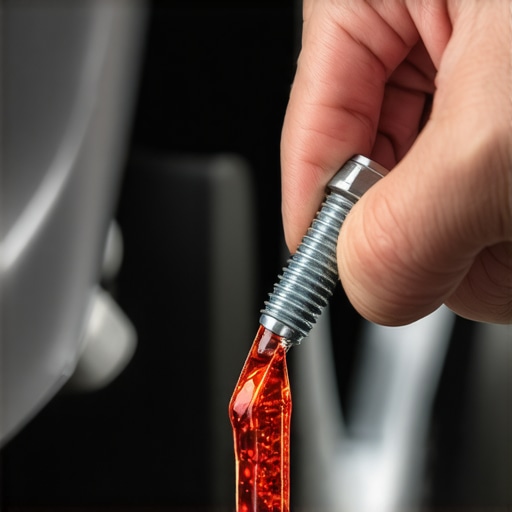
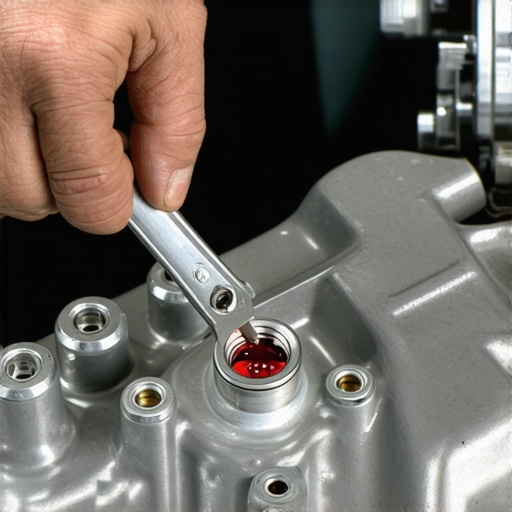
You aren’t looking for a yellow handle anymore; you are looking for a bolt. Most sealed units have two plugs: a drain plug at the very bottom and a check plug (or overflow tube) slightly higher up on the pan or the side of the casing. This is where top auto repair tips become essential. You need to identify which is which before you accidentally drain your entire transmission onto your garage floor. Once the engine is running and the fluid is warm, you’ll carefully loosen the check plug. If the level is correct, a thin stream—about the thickness of a toothpick—should trickle out. If nothing comes out, you are low. If a gallon gushes out, you were dangerously overfilled. This process is the backbone of decoding vehicle diagnostics through physical inspection.
The Drip Test that Saves Your Gears
When you finally see that fluid, pay attention to the color and smell. Healthy fluid is translucent and reddish. If it looks like muddy coffee or smells like a burnt matchbook, your level might be the least of your concerns. This is often why a solenoid failure that locks your car in limp mode occurs; the grit in the old fluid clogs the tiny passages in the valve body. I once helped a neighbor who complained that his car felt sluggish. We pulled his check plug and the fluid was so thick it looked like molasses. We didn’t just top it off; we performed a full exchange. By following essential auto repair strategies, we saved him a $4,000 rebuild. Remember, the goal isn’t just to see fluid; it’s to ensure the fluid is capable of doing its job under pressure. If you notice the transmission slips only when the car is hot, it is a sign that the fluid’s viscosity has broken down and can no longer maintain the hydraulic pressure needed to hold the clutches together.
Once you have conquered the mystery of the sealed transmission, it is easy to get overconfident about the routine stuff. But in my years under the chassis, I have realized that the most common maintenance tasks are where people make the most expensive mistakes. While most drivers assume a brake job is a simple weekend task, I have seen more professional-level errors in this area than anywhere else.
Stop Blaming the Pads for Every Brake Squeal
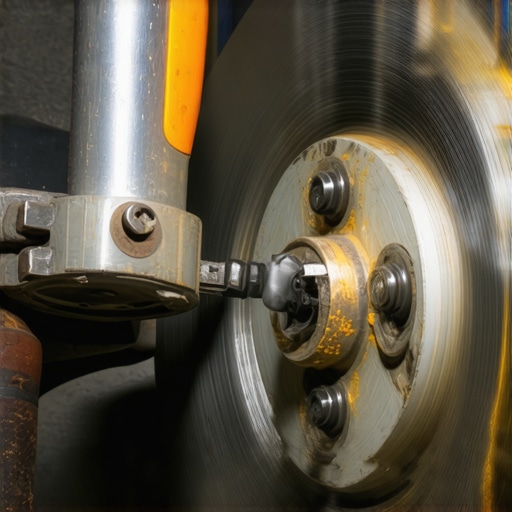
Everyone tells you that swapping pads is a beginner job, but the pads themselves are rarely the whole story. The real secret to a quiet, professional stop isn’t the friction material—it’s the prep work. If you ignore the slide pins or the hub surface, you are setting yourself up for failure. By looking past the brake service myths busted what really matters for safety, you realize that even a microscopic layer of rust between the hub and rotor can cause lateral runout. This lack of precision is exactly why your brake pedal vibrates when you stop on a hill. A study by the Society of Automotive Engineers (SAE) indicates that rotor lateral runout as small as .002 inches can lead to significant pedal pulsation and uneven wear over time. Have you ever fallen into this trap of thinking a simple pad swap was enough, only to have the vibration return a month later? Let me know in the comments.
Why Do Your Brand New Pads Still Squeal Like a School Bus?
It is the most frustrating sound in the world. You have spent the afternoon following the ultimate guide to brake service for safety and performance, yet your car sounds like a freight train. Usually, this happens because you skipped the bedding-in process or reused old, worn-out hardware clips. This is why your brand new brake pads are already squealing—the friction material hasn’t properly transferred a thin, even layer to the rotor surface. Professional mechanics know that high-frequency vibration between the pad and the caliper is the culprit, which is why specialized brake grease on the contact points is non-negotiable.
The Oil Filter Choice That Sabotages Your Engine
Then there is the oil change. We have been conditioned to think synthetic oil is a magic bullet that fixes everything, but the synthetic oil myth that costs you fifty dollars every visit suggests that frequency and filtration matter more than the brand on the bottle. If you pair high-end synthetic oil with a bargain-bin filter, you might be facing the oil filter brand that causes low oil pressure lights due to restrictive flow or a failing anti-drainback valve. Furthermore, ignoring the mistake of using the wrong oil viscosity in cold weather can lead to dry starts that wear out your bearings faster than any high-mileage interval ever could. Real expertise means looking at the system as a whole, rather than just buying the most expensive liquid on the shelf.
Why Your Code Scanner Is Only Giving You Half The Story
Many DIYers think a code scanner is a crystal ball. They see an O2 sensor code and immediately replace the sensor, only to find the light back on two days later because the real issue was a cracked vacuum hose. This is the core of how advanced vehicle diagnostics prevent costly breakdowns: understanding that a diagnostic trouble code is merely the starting point of an investigation, not the final answer. Mastering decoding vehicle diagnostics requires you to look at live data streams and fuel trims rather than just blindly following a scanner’s suggestion. Have you ever replaced a part just because the scanner told you to, only to realize the problem was elsewhere?
The Two Tools That Turned My Garage into a Pro Shop
If you really want to stop guessing and start fixing, you need to graduate from a basic code reader to a bidirectional scan tool. While a cheap scanner tells you that you have a misfire, a bidirectional tool allows you to manually pulse fuel injectors or toggle the cooling fan while you are standing right there under the hood. It changed the game for me when I was tracking down a ghost in my electrical system. Instead of tearing out the dash, I used the tool to command the door locks, proving the actuator was the culprit, not the wiring. This level of precision is how advanced vehicle diagnostics prevent costly breakdowns by letting you test components in isolation. I also swear by a simple infrared thermometer. It’s the fastest way to find a clogged radiator or a sticking brake caliper—just point, shoot, and look for the heat spike that shouldn’t be there.

How do I keep my car running like new for the next decade?
Consistency is your best friend, but so is the quality of your consumables. I’ve seen engines destroyed not by age, but by the smallest oversights. For instance, why you should never skip the crush washer on your drain plug isn’t just about avoiding a puddle on the floor; it’s about maintaining the integrity of the oil pan threads. When I’m doing a long-term health check, I always use the cardboard trick to find a tiny oil leak overnight. It’s a low-tech way to catch a weeping gasket before it becomes a gusher on the highway. According to a technical service bulletin from Aisin Seiki, the world’s largest manufacturer of automatic transmissions, fluid breakdown accelerates exponentially once operating temperatures exceed 220°F. This is why I advocate for essential auto repair strategies that prioritize cooling system health just as much as the oil itself. If you want that engine to hit 300,000 miles, you have to look for oil change innovations and technologies that save your engine, like high-efficiency synthetic filters that capture particulates smaller than 20 microns.
Your Car Is Becoming a Rolling Computer
Looking ahead, the days of the purely mechanical fix are fading. We are moving toward a world of software-locked components and over-the-air updates. I predict that within five years, even basic the ultimate guide to brake service for safety and performance will require a software handshake with the car’s main ECU just to retract the electronic parking brake. This shift means that decoding vehicle diagnostics will become more about digital literacy than just knowing how to swing a hammer. To stay ahead of the curve and use top auto repair tips to extend your vehicles lifespan, I challenge you to do more than just read your next error code. Pull up the ‘Freeze Frame’ data on your scanner next time a light pops up; it will tell you exactly what the engine was doing the second the failure occurred. It’s the difference between being a parts-changer and a true diagnostic technician.
Lessons from the Grease Pit That Save Your Wallet
If there is one thing a decade of wrenching has taught me, it is that your intuition is often better than a dealer’s service advisor. I spent years thinking I needed a specialized degree to touch a modern engine, but most of it comes down to patience and the right information. First, never ignore the ‘small’ smells; a faint scent of burnt syrup or hot metal is your car’s only way of whispering for help before it has to scream. Second, the internet is your greatest ally, but your own hands are the best teachers. Applying auto repair hacks to save money without sacrificing quality isn’t about being cheap; it’s about being smart. I’ve realized that the most intimidating tasks, like bleeding brakes or hunting for an electrical parasitic draw, are just a series of small, logical steps. Don’t let the plastic engine covers fool you—underneath it all, the physics of internal combustion hasn’t changed that much.
The Toolbox That Turned My Garage into a Sanctuary
You don’t need a professional lift or a $10,000 tool chest to keep your car healthy. My essential list starts with a reliable bidirectional scan tool, which is the only way to perform vehicle diagnostics explained through easy checks before your road trip. Beyond the digital stuff, I never start a job without a high-quality torque wrench; guessing ‘tight enough’ is how you end up with snapped bolts and ruined weekends. I also highly recommend keeping a dedicated notebook in your glovebox to track the date and brand of every filter and fluid you swap. This simple habit turns a confusing maintenance history into a clear roadmap for longevity. If you are tired of the noise, knowing how to stop your brakes from squealing without a mechanic is a skill that pays for itself the very first time you use it.
Take Back the Keys to Your Own Machine
There is a profound sense of freedom that comes from knowing you aren’t at the mercy of a tow truck. Whether you are performing a simple oil change or diving deep into a transmission fluid check, you are participating in a tradition of self-reliance. Modern auto repair might be getting more digital, but the heart of the machine still needs a human who cares enough to look closely. By following top auto repair tips to extend your vehicles lifespan, you aren’t just saving money—you are ensuring your family is safe on every summer road trip and winter commute. You have the tools, you have the knowledge, and now you have the confidence to pop that hood and get to work. Have you ever found a DIY fix that saved you a fortune at the dealership? Let me know below.