
It was a rainy Tuesday, and I was already running ten minutes late for a parent-teacher conference. I hopped into my old sedan, turned the key, and heard that soul-crushing click-click-click. My first instinct? I cursed the battery. I’d just bought it eight months prior, but I figured I’d gotten a lemon. I spent forty-five minutes jumping the car, only for it to die again three miles down the road at a stoplight. That was the day I learned a very expensive lesson: your battery is often just the victim, not the criminal. The real culprit was my alternator, and looking back, it had been screaming for help for weeks. I just didn’t know how to listen. Today, I want to show you how to read those early warning signs so you don’t end up like I did—standing on a soggy shoulder waiting for a tow truck.
Stop Blaming Your Battery for Everything
Most people assume that if a car won’t start, the battery is the end-all-be-all of the problem. But think of your battery like a fuel tank and the alternator like the gas station. If the station closes down, the tank eventually runs dry. I once made the mistake of letting a shop talk me into a premium battery when my charging system was actually the issue. It was a classic case of throwing good money after bad. You need to look for the subtle clues, like a dashboard that flashes like a holiday display or headlights that seem to dim every time you hit the power windows. These aren’t just electrical quirks; they are the desperate gasps of an alternator that can no longer keep up with the demand. According to data from the Car Care Council, electrical system failures are among the top five reasons for vehicle breakdowns, yet they are the most frequently ignored by drivers until the car literally stops moving.
Is This Extra Diagnostic Work Really Worth the Hassle?
You might be wondering if you really need to poke around under the hood if the car is currently starting fine. I get it; we’re all busy. But catching this early is the difference between a $200 part and a $600 emergency repair bill involving a tow. If you notice your battery dies every few days despite being relatively new, your alternator is likely the
Grab a Multimeter and Stop Guessing
Most drivers play a guessing game with their electrical systems, but you can get a definitive answer in under five minutes with a $20 multimeter. Think of the multimeter like a stethoscope for your car’s heart. I remember a time I was helping a neighbor with his stalled truck; he was convinced his battery was junk because it kept dying. We hooked up the meter and found his battery was sitting at a healthy 12.6 volts while the engine was off, but the moment we fired it up, the number barely budged. That’s the red flag. To do this yourself, set your meter to DC voltage. A healthy battery should read about 12.6V at rest. If you run the simple test to see if your battery is actually dead and it passes, move to the next phase. Start the engine and watch those numbers. You want to see the voltage jump to somewhere between 13.5 and 14.5 volts. If it stays at 12 or starts dropping while the engine is running, your alternator has retired without giving notice. 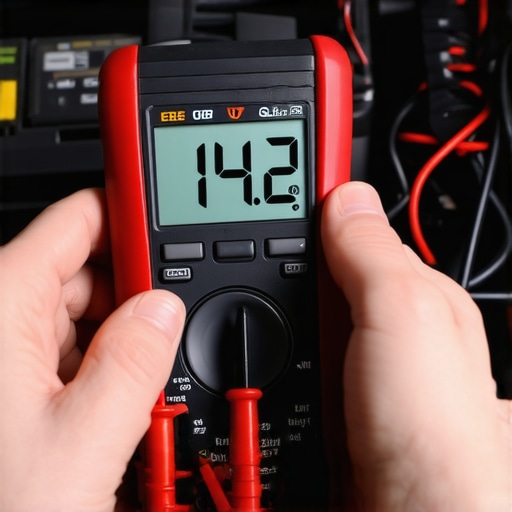
Watch the Numbers Under Load
The real test happens when you demand power. Turn on the high beams, the heater on full blast, and the rear defroster. If your alternator is healthy, it should maintain that 13.5V+ range even with everything screaming for juice. I once had a sedan that looked perfect on the meter until I turned the AC on; the voltage tanked to 11.8V instantly. This is often why your headlights dim when you use the power windows or other accessories. The alternator is technically spinning, but it can no longer produce enough current to keep the reservoir full. This kind of deep-dive into decoding vehicle diagnostics saves you from the frustration of buying three batteries in a single year.
Look for Physical Clues That Don’t Require Tools
Sometimes your eyes and ears are better than any electronic sensor. Pop the hood and look at the drive belt. If it’s glazed, cracked, or loose, the alternator isn’t spinning fast enough to generate a charge. I’ll never forget the time I spent two hours chasing an electrical ‘ghost’ only to realize the belt was just slightly greasy and slipping silently. If you hear a high-pitched squeal, you might need to know how to fix a squealing belt with a bar of soap as a temporary diagnostic trick, but usually, a noisy belt means the alternator’s pulley or internal bearings are toast.
The Magnetic Trick for Quick Verification
There is a low-tech ‘cheat’ I use when I’m without my toolbox. With the engine running (and being extremely careful of moving parts), hold a metal screwdriver near the side of the alternator or the nut on the pulley. A working alternator creates a strong magnetic field while it’s generating electricity. You should feel a distinct magnetic pull tugging at the screwdriver. If there’s zero magnetism, the internal brushes or the voltage regulator have likely failed. Using the simple test to see if your alternator is killing your battery through this magnetic check is a great way to confirm what your dashboard lights are already hinting at.
The Synthetic Oil Myth That Drains Your Wallet
Most drivers believe that switching to high-priced synthetic oil is a cure-all for aging engines, but that is a dangerous oversimplification. While oil change innovations have vastly improved engine longevity, simply pouring in expensive fluid without checking your seals can lead to a mess. In my years under the hood, I have seen owners spend a fortune on high-end brands only to realize the truth about synthetic oil vs conventional in older high mileage cars is that synthetics can actually find and exploit tiny leaks that conventional oil was too ‘lazy’ to penetrate. It is not that synthetic oil causes leaks, but its superior flow properties can reveal existing weaknesses in old gaskets. If you are not seeing puddles, you might still be losing oil internally; always verify the real reason your engine oil is disappearing without a leak before you double your maintenance budget on ‘miracle’ fluids.
Your Fancy Oil Filter Might Be Killing Your Oil Pressure
One of the most common ‘oops’ factors I encounter is the belief that any filter off the shelf will do. This is a massive mistake. A study by SAE International has shown that flow restriction in sub-par filters can lead to significant engine wear during cold starts. I have even seen cases where a specific oil filter brand causes low oil pressure lights to flicker because the internal bypass valve is too stiff for the car’s oil pump. You think you have a mechanical failure, but you really just have a $5 part choking your engine. Always pair your oil with a filter that meets or exceeds OEM specifications to ensure the flow rate stays consistent. 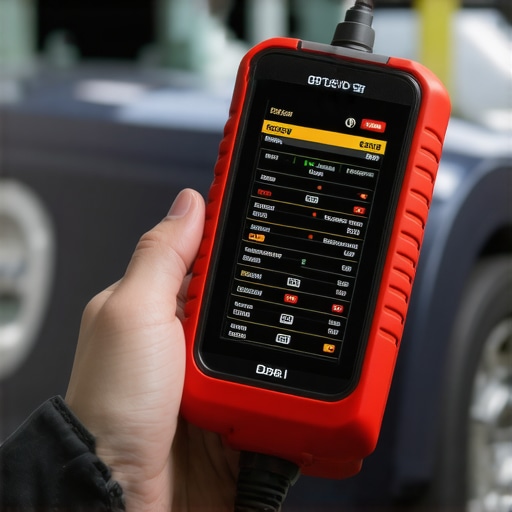
Can a $20 Sensor Really Save a $1,500 Catalytic Converter?
Advanced diagnostics often reveal that catastrophic failures start with a minor, ignored glitch. For instance, if your car starts to hesitate, you might be dealing with the sensor that causes your car to stall at stop signs—usually a simple MAP or O2 sensor. If you ignore this, the engine runs ‘rich,’ dumping unburnt fuel into the exhaust. Eventually, you will notice why your car smells like rotten eggs during acceleration, which is the literal scent of your catalytic converter melting down. By investing in how advanced vehicle diagnostics prevent costly breakdowns, you catch these sensor errors before they turn a minor tune-up into a mortgage-sized repair bill. The same logic applies to your brakes; don’t just wait for the squeal. Check the brake fluid color that means you need a flush immediately because moisture-contaminated fluid will rot your ABS module from the inside out. Have you ever fallen into this trap of ignoring a small light only to face a massive bill later? Let me know in the comments. We can all learn from those ‘expensive’ experiences.I finally broke down and bought a bi-directional scan tool after chasing a phantom misfire for three weeks that had me ready to sell the car for scrap. If you are serious about essential auto repair strategies for frequent drivers, you need to see what the computer sees in real-time. A basic reader just gives you a code, but a pro-sumer tool like the Autel MaxiCOM allows you to toggle the fuel pump or test injectors individually from the palm of your hand. This level of detail is exactly how I identified the 10 dollar sensor that causes your car to stumble during acceleration without wasting money on an entire fuel rail. Using these auto repair hacks to save money without sacrificing quality allows you to maintain a professional standard in your own driveway. 
Trust Your Torque Wrench More Than Your Elbow
One of the biggest mistakes I see in DIY maintenance is the ‘good enough’ approach to tightening bolts. I used to think my elbow was calibrated, until I snapped a caliper bolt and had to drill out the remains. When it comes to brake service myths busted, the idea that you can just ‘feel’ the right tightness is the most dangerous one. According to Bosch technical documentation on modern Electronic Stability Control (ESC) systems, even a minor variance in sensor mounting or wheel hub torque can trigger a cascade of safety system shutdowns or erratic ABS behavior. Keeping a high-quality click-type or digital torque wrench in your kit is non-negotiable for top auto repair tips to extend your vehicles lifespan. Using the right specs prevents the warped rotors and stretched studs that lead to those ‘mystery’ vibrations later on.
How do I maintain this diagnostic routine over time?
Consistency is the secret sauce to keeping a high-mileage vehicle on the road. I keep a small digital log—just a simple spreadsheet—where I note every weird sound and the corresponding scan tool data. This longitudinal view helps you spot trends before they become failures. As we move into the next decade, I predict that AI-integrated telematics will become the norm for DIYers, where your car will likely email your phone a predictive grocery list of parts before a component actually fails. For now, we have to be the brains of the operation. I strongly encourage you to hook up a scan tool this weekend and look at your ‘Long Term Fuel Trims.’ If they are more than 10% positive or negative, you have a vacuum leak or a fuel delivery issue brewing that hasn’t triggered a light yet. Catching it now is the ultimate win for your wallet.
The 300 Dollar Lesson My Wallet Never Forgot
Looking back at that rainy Tuesday, I realized I was trying to save time by guessing, but guessing is the most expensive way to fix a vehicle. I learned that the charging system is a team, and if one player fails, the others just look like they are the problem. Never replace a part without a test result that proves it’s dead. Another big realization was that high-quality parts aren’t just for luxury cars; they are insurance for your daily driver. Following essential auto repair strategies for frequent drivers means you prioritize the components that keep you from being stranded on the shoulder. Finally, I stopped fearing the computer. Those codes aren’t a foreign language; they are the most direct way your car can ask for help before a minor issue becomes a catastrophe.
My Personal Diagnostic Kit for High-Mileage Heroes
If you want to move beyond basic maintenance, you need to arm yourself with more than just a set of wrenches. I always keep a digital multimeter handy because it removes all the “maybe” from electrical work. For anyone serious about top auto repair tips to extend your vehicles lifespan, a bi-directional scan tool is the single best investment you can make. It’s like having a master mechanic sitting in the passenger seat providing real-time data. I also highly recommend keeping a dedicated torque wrench specifically for the ultimate guide to brake service for safety and performance—your life literally depends on those bolts being tightened to exact factory specifications. These aren’t just gadgets; they are the keys to your mechanical independence and long-term savings.
Turn Your Driveway Into a Fortress of Reliability
Don’t let a bit of grease or a confusing dashboard light intimidate you. Every professional mechanic started exactly where you are: curious, maybe a little nervous, and probably holding a socket wrench the wrong way. By applying these auto repair hacks to save money without sacrificing quality, you aren’t just saving a few bucks—you are gaining a level of self-reliance that most people never experience. Before you head out on your next long drive, run through some vehicle diagnostics explained through easy checks to ensure your peace of mind and the safety of your passengers. You’ve got the knowledge now; it’s time to pop the hood and take charge of your machine. What was the “expensive lesson” that finally convinced you to start doing your own auto repair? Let me know in the comments below!